Translate

Sunday, January 24, 2016

"Letters of Excommunication :What Will Separate Us From the Love of Christ?" by Judy Lee, RCWP

https://judyabl.wordpress.com/2016/01/24/letters-of-excommunicationwhat-will-separate-us-from-the-love-of-christ/

On January 13th, 2016 the National Catholic Reporter briefly told the story of a letter of excommunication sent to a Roman Catholic woman in Kansas who was newly ordained to the priesthood. I share this story below noting that it is not unlike the stories of many of the over 200 ordained Roman Catholic Women worldwide who continue in their sacramental ministries and works of mercy regardless of such mean spirited and meaningless communications, for we reject the church’s “excommunication” penalty for following God’s calling and conscience. We also congratulate Rev. Georgia Walker whose life has been dedicated to peace and justice action on her Priestly Ordination.  After Rev. Walker’s story I will share my own responses to Bishop Frank Dewane who sent me not one but two letters in 2008 when I was ordained a  priest by the Roman Catholic Women Priests.

But,first, the words of the Scriptures that set us on solid ground in the face of man-made rules and clarify our rejection of the church’s so called self- excommunication:
Romans 8: 14-19:
“Those who are led by the Spirit of God are the children of God. For the Spirit that God has given you does not enslave you and trap you in fear;instead,through the Spirit God has adopted you as children, and by that Spirit we cry out “Abba”! God’s Spirit joins with our spirit to declare that we are God’s children. And if we are children,we are heirs as well: heirs of God and coheirs with Christ sharing in Christ’s suffering, and sharing in Christ’s glory. Indeed I consider the sufferings of the present to be nothing compared with the glory that will be revealed in us. All creation eagerly awaits the revelation of the children of God”.
We, women and men and all people led by the Spirit are children of God, (not only sons of God but daughters of God) we are co-heirs of God, and called according to God’s purposes.
And (Romans 8:28) ” We know that God makes everything work together for the good of those who love God and have been called according to God’s purpose”.
Romans 8:33-39.
“Who will bring a charge against God’s chosen ones? Since God is the One who justifies,who has the power to condemn: Only Christ Jesus, who died–or rather, was raised–and sits at the right hand of God,and who now intercedes for us!
What will separate us from the love of Christ? Trouble? Calamity? Persecution? Hunger? Nakedness? Danger? Violence? As scripture says,”For your sake, we’re being killed all day long; we’re looked upon as sheep to be slaughtered”. Yet in all of this we are more than conquerors because of God who has loved us.  For I am certain that neither death nor life, neither angels nor demons, neither the present nor the future, neither heights nor depths–nor anything else in all creation–will be able to separate us from the love of God that comes to us in Christ Jesus, our Savior”.
It is in this spirit that we reject the power of men who choose to ordain only themselves (since the 12th Century) to excommunicate us based upon their own rules (Canon Law 1024) .
From the National Catholic Reporter Jan 13,2016
Kansas City’s first woman priest has been excommunicated
Georgia Walker after her ordination Jan. 3 at St. Mark Hope and Peace Lutheran Church in Kansas City, Mo. (Dawn Cherie Araujo)
Dawn Cherie Araujo  |  Jan. 13, 2015
Georgia Walker, the woman ordained earlier this month as Kansas City’s first female priest by the Association of Roman Catholic Women Priests, has been excommunicated.
In a letter delivered to Walker’s home Monday afternoon by certified mail, Kansas City-St. Joseph Bishop Robert Finn said Walker had been advised of the “seriousness of her contemplated course of action to attempt to receive sacred ordination” and that her excommunication was effective immediately. He added, however, that the diocese remained ready to assist Walker “if or when she seeks such process in good faith.”
Walker says she plans to continue attending Mass at her parish church, St. James, though she will not be taking part in any liturgy.
“I’m not going to take Communion,” she told NCR. “I won’t in any way compromise the parish, but I attend to still be part of the community and go there for worship on Sunday.”
Bridget Mary Meehan, the Association of Roman Catholic Women Priests bishop who presided over Walker’s Jan. 3 ordination, posted to her blog both Finn’s letter and a personal response, arguing that women ordained through the association are not leaving the church, but are leading it.
“The principal consecrating Roman Catholic male bishop who ordained our first women bishops is a bishop with apostolic succession within the Roman Catholic Church in communion with the pope. Therefore, our bishops validly ordain deacons, priests and bishops,” she continued.
In an email to NCR, diocesan director of communications Jack Smith verified the accuracy of the letter, saying the excommunication is not an action of Finn or the diocese, but “merely a notice recognizing that under church law, Ms. Walker has incurred automatic excommunication because of her participation in a simulated ordination. We do hope and pray that Ms. Walker is reconciled to the Church and are eager to assist her in approaching the Vatican to reverse this automatic excommunication if she chooses.”
Previously, the diocese’s vicar general, Fr. Charles Rowe, had invited Walker to meet with him in order to discuss her ordination. However, the two were unable to schedule a meeting.
[Dawn Cherie Araujo is a staff writer for Global Sisters Report, a special project of the National Catholic Reporter. Her email address is daraujo@ncronline. Follow her on Twitter @dawn_cherie.]
My story: 
I received two letters of “warning”  from Bishop Frank Dewane of the Diocese of Venice in Florida, one before my Diaconate ordination and the other before my priestly ordination.
The following is a letter I wrote to three wonderful women who also became Roman Catholid Women Priests:  Gloria Carpeneto of Maryland and Gabriella Velardi Ward of New York who were to be ordained Roman Catholic Priests with me, and Mary Ann Schoettly who would be ordained a transitional Deacon in Boston on July 20,2008.
“Dear Gloria, Gabriella and Mary Ann and Sisters moving in the Spirit toward Ordination in July,and all my sisters and brothers,
Watch your mailboxes and the knocks at the door today-the good news and affirmation of our courageous stand may come to you as it has to me. I received my letter from the Bishop (Frank J. Dewane, Diocese of Venice Florida) this morning by Certified mail. It is the letter the other Bishops have used and says that “recent reports indicate ” my intention “to be ordained in Massachusetts in July”. He “writes out of concern for my mortal soul”-to which I say , and what of your own? He says I am “separating myself from the Catholic church of my own choice” (“What or who shall separate me from the love of Christ?”-Romans 8:33-39 is wonderful! and that I am asked to refrain from “participating in what will be a mockery of the Sacrament of Holy Orders”. (And what of the mockery of a one gender dominated church?) He quotes JPII and encourages me not to “separate myself from the Catholic church!” I am writing to assure him that I have not done so nor will I-but I will be ordained in obedience to the Spirit! I will answer this letter by return Certified Mail. We have plenty of answers on hand so I do not even have to be totally original. Just letting you know that this time may be coming for you as well. It does cause a momentary knife-like twist in the area of the heart-but the scar grows quickly and peace and righteous indignation take its place and we rejoice. Rejoice for me and when it happens-Rejoice!
Love and Peace,
Judy”
And this is my response to the Bishop:

April 22, 2008

Frank J. Dewane

Bishop of Venice in Florida
P.O. Box 2006
Venice, Florida 34284-2006

Dear Bishop Dewane:
Your sources are correct that I am answering the call of the Spirit and intend to be ordained a priest in Massachusetts in July.  I will continue by the grace of God to serve the poorest of the poor of this diocese primarily in an outdoor church in Fort Myers where often over a hundred hungry and homeless people are fed, clothed, sheltered and counseled and join me in worship each week.  I am known as the pastor of the poor and there is no other diocesan Roman Catholic clergy present there although over forty volunteers assist me in this work of mercy.  I will continue to serve God’s people as Jesus did with the “justitia, pax et gaudium” (justice, peace and joy) that the shield of this diocese promises them.  After July, I will do this as a priest, offering the bread of life and cup of salvation to them as well. Please, therefore, replace your concern for the salvation of my soul with your concern for God’s poorest in your diocese.
I will be ordained by Bishops in valid succession who are, along with their priests and deacons, breaking Canon Law 1024 limiting sacred orders to men.  We note that canon law is often contradictory and that Canon 849 states that baptism, not gender, is the gateway to all of the sacraments. We also note that recent scholarship, such as that of Gary Macy and Dorothy Irvin, confirms that women were ordained in the first twelve hundred years of the church’s history and that this evidence contradicts the later prohibition.
Regarding the church’s teaching we note that a teaching or law of the church is authoritative only if it is “received” by the sensus fidelum, the community of faith.  If the community of faith does not accept the law it has no effect on us.  St. Augustine taught that an unjust law is no law at all. Since 70% of U.S. Catholics favor women’s ordination, and this is a worldwide sentiment as well, we do not “receive” or accept the Church’s prohibition against the ordination of women and the second-class citizenship it imposes on women.
All people have a moral obligation to disobey an unjust law. Pope Benedict XVI said this, written when he was Cardinal Ratzinger, in the commentary section of the Doctrine of Vatican II, volume V, p. 134:  “Over the Pope as the expression of the binding claim of ecclesiastical authority, there still stands one’s own conscience, which must be obeyed before all else, if necessary even against the requirement of ecclesiastical authority.”
I do not and will not separate myself, nor can you separate me from the Body of Christ.  Romans 8:31-39 is clear: “Who should bring a charge against God’s chosen ones…?”  Nothing and no one can separate us from the love of God in Christ Jesus.
Roman Catholic Womenpriests are leading the way to a renewed Roman Catholic Church in which the full equality of women and all people will be a reality.  Like Mary of Magdala, apostle to the apostles, and the women deacons, priests and bishops who served in the early centuries of our church, we are offering a model of a renewed priesthood in a community of equals. We pray that you and our brothers will be there at our side as one Church.
Sincerely yours in Christ,
Judith A.B.Lee”
I have not had one moment of regret about my priestly ordination in July of 2008. I have had great joy and the heartaches of loving and serving God’s poorest people, but not even one regret.  Long before and ever since I have served the poor and homeless as is my calling. I often do this with Rev. Judith Beaumont my life partner and co-Pastor at Good Shepherd who was ordained a Roman Catholic Priest in January 21st of 2012 with almost 400 people present in affirmation. We send her blessings and hearty congratulations! Felicidades! as she embarks upon her fourth year in Priestly service. She too received two letters from Bishop Dewane. Her life was an entire life of service, especially as a Benedictine Sister of over 34 years. We met serving the homeless in Hartford, Connecticut in 1988 where she was the Director of My Sisters’ Place, a four tier program and residences for homeless women and children, the mentally ill and women and men in need of a single room occupancy residence that was erected,along with a residence for women and children with her dedicated hard work.  Service is our call but priestly service only became possible when the Roman Catholic Women Priest Movement came into existence. (Please see http://www.romancatholicwomenpriests.org for the history/herstory of this).  The difference for us now is that as Priests we  also serve God’s people, especially the outcast and the poor, Sacramentally.  September 2016 marked our 2oth Baptism( of children and adults) in our Good Shepherd Inclusive Catholic Community, in Fort Myers, Florida. (I was also blessed to baptize a baby in Bogota, Colombia). I cannot count how many anointings of the sick and dying (formerly called Last Rites) we have been blessed to give. We presented sixteen young people and adults for Confirmation in 2014 and presided at a marriage of a formerly homeless man and woman. I have “heard confessions” and offered the Sacrament of Reconciliation. And we offer the Eucharist regularly at the Good Shepherd and other places. For us, the sharing of the Sacraments are the most holy of moments and we are humbled and awed to be able to include people on the margins in God’s expansive and abundant love.
It is not we who are out of communication with God and God’s people. We continue to pray for the Church as Jesus did
“that all may be one.”
Thanks be to God,
Rev. Dr. Judy Lee, RCWP
CO-Pastor the Good Shepherd Inclusive Catholic Community , Fort Myers, Florida
Below Pastor Judy Beaumont and I with our God Shepherd Community Dec 2015
DSCF1437
DSCF1077
Pastor Judy Beaumont and I with Rev. Gabriella Velardi Ward, Pastor of the St. Praxedis Inclusive Catholic Community in New York and Rvda. Marina Teresa Sanchez Mejia of Cali, Colombia who is celebrating her second year of Priestly Ordination, as of January 17,2014.  Felicidades Rvda. Marina Teresa y Rvda. Judy Beaumont en el aniversario de sus ordenaciones presbiteral de 17 de enero, 2014 y 21 de enero, 2012. Amor y Bendiciones!  

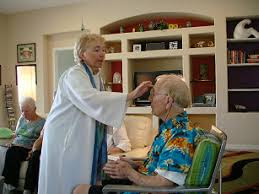
Visit with Eileen Miller at Braden River Rehabilitation Center, Bradenton, Flordia

Eileen Miller and Bridget Mary Meehan
Today, I visited Eileen Miller at the Braden River Rehabilitation Center. Eileen is growing stronger each day and feels the love and support of our Mary Mother of Jesus Inclusive Catholic Community. She is now able to lift her arm much higher and is working on exercises to strengthen her legs.  Her son joined us in conversation and prayer.  
Bridget Mary Meehan, ARCWP, www.arcwp.org

Saturday, January 23, 2016

MMOJ Liturgy: Celebrating the life and teachings of Rev Martin Luther King Jr. Co Presiders: Sally Brochu ARCWP, Katy Zatsick ARCWP Music ministers Mindy Simmons and Alicia Bartol-Thomas January 23 2016

Mary Mother of Jesus Inclusive Catholic Community
Celebrating the life and teachings of Rev Martin Luther King
Black Lives Matter- 50 years later
“Injustice anywhere is a threat to justice everywhere.” Rev MLK
Co Presiders: Sally Brochu ARCWP, Katy Zatsick ARCWP
Music ministers Mindy Simmons and Alicia Bartol-Thomas
January 23 2016
Left to right:Sally Brochu, ARCWP and Katy Zatsick, ARCWP, Co-Presiders

Katy Zatsick, ARCWP, Co-Presider and Liturgist for MLK MMOJ LITURGY
Welcome
Gathering Song: “We shall not be moved”-led by Mindy and Alicia
“We Shall Not Be Moved”

We shall not, we shall not be moved
Just like a tree that’s standing by the water
We shall not be moved

We’re fighting for our freedom,
We shall not be moved
We’re fighting for our freedom,
We shall not be moved
Just like a tree that’s standing by the water
We shall not be moved

Black and White together
We shall not be moved
Black and White together
We shall not be moved
Just like a tree that’s standing by the water
We shall not be moved

We shall not, we shall not be moved
Just like a tree that’s standing by the water
We shall not be moved
(https://www.youtube.com/watch?v=dbOQhyuKifw)

Opening Prayer All:
God made us a family.  We need one another, we love one another.
We forgive one another and seek reconciliation.
We work together and we play together.
Together we use God’s word as Rev Martin Luther King did so well
so that together we grow in Christ and our ministry for justice.
Together we love all women and men without exclusion.
Together we serve our God individually and
as a community working for the equality of all.
Together we hope for the in breaking of the kindom of God in our time and place.  Guide and help us bring equality, peace and justice to our communities and nation.  In our Brother Jesus name we pray.  Amen

A Litany of Celebration, Repentance and Commitment.
Presider: Rev Martin Luther King had a dream. The ideals of justice and freedom and the belief that all are created equal in the eyes of God are noble principles. But they are meaningless unless they become the personal possession of each one of us.
ALL: For Zion’s sake I will not keep silent. I will struggle with myself. I will not rest until the dream of justice and freedom becomes my personal dream. I must realize that I am not an innocent bystander. I can help realize the dream by my action, or delay it by in inaction.
Presider: Martin’s dream of a day when people from all races and nations, even the offspring of slaves and former slave owners, can sit at a table as brothers and sisters and find ways of transforming their differences into assets. That was Martin’s dream. What is your dream?
ALL: My dream is that one day soon I will find a way to stop just celebrating the dream and start living it. It must become a part of my daily life; or nothing much will change.
Presider: The dream is not about an ideal world; it is about the real world. Martin King’s poetic refrain, “I Have a Dream,” is a call for us to remember the real world where injustice abounds.
ALL: When I am in the shelter of my home I must remember the homeless. When I eat, I must remember the hungry. When I feel secure I must remember the insecure. When I see injustice I must remember that it will not stop unless I stop it.
Presider: I have a dream!
ALL: I also have a dream. I have a dream that the Holy Spirit will arouse in me that very flame of righteousness that caused Martin King to become a living sacrifice for the freedom and liberation of all of God’s children. Then I will be able to resist racial injustice everywhere I see it, even within myself.  Amen.                                                          (The United Presbyterian Church)
First Reading: Nehemiah 8: 2-4, 5-6, 8-10
…This is the Word of God All: Thanks be to God.

Responsorial Psalm: “How Could Anyone Ever Tell You”-led by Mindy and Alicia
All: How could anyone ever tell you,
you are anything less than beautiful
How could anyone ever tell you,
you are less than whole.
How could anyone help but notice
that your loving is a miracle
And how deeply you’re connected to my Soul

Second Reading from “Beyond Vietnam” by Dr. Martin Luther King Jr.
(“Terrorism” replaces “communism” in the original speech to make the message as timely as it was 50 years ago. Author Sharif Abdullah in “Finding our Way in the Land of the Blind; original wording other wise kept)

This kind of positive revolution of values is our best defense against terrorism.  War is not the answer. Terrorism will never be defeated by the use of atomic bombs or nuclear weapons. .. These days demand wise restraint and calm reasonableness.  We must not call everyone a terrorist or an appeaser…who recognizes that hate and hysteria are not the final answer to the problem of these turbulent days.  We must not engage in a negative anti-terrorism, but rather in a positive thrust for democracy, realizing that our greatest defense against terrorism is to take offensive action on behalf of justice.  We must with positive action seek to remove those conditions of poverty, insecurity and injustice which are the fertile soil in which the seed of terrorism grows and develops.
…A genuine revolution of values means in the final analysis that our loyalties must become ecumenical rather than sectional. Every nation must now develop an over riding loyalty to mankind as a whole in order to preserve the best in their individual societies.  This call for a worldwide fellowship that lifts neighborly concern beyond one’s tribe, race class and nation—is in reality a call for an all-embracing and unconditional love…
This too is the Word of God All: Thanks be to God.

“Alleluia” sung before and after Gospel
Gospel:  A reading from the Gospel according to Luke 1:1-4, 4:14-21
ALL:  Glory to you O God.
Reader:   The good news of Jesus, the Christ!
ALL:  Glory and praise to you, Jesus the Christ!

Dialog homily
Watching a portion of MLK’s “I have a dream speech…” August 23 1963


Were you involved in the Civil Rights movement? What has it meant for your life?
Today we see the “Black Lives Matter” movement.  What does this mean for you?
What are the teachings of Martin Luther King calling you to in 2016? Challenging you?
An Affirmation of Faith  All:  I refuse to believe that we are unable to influence the events which surround us.  I refuse to believe that we are so bound to racism and war, that peace, brotherhood and sisterhood are not possible. I believe there is an urgent need for people to overcome oppression and violence, without resorting to violence and oppression. I believe that we need to discover a way to live together in peace, a way which rejects revenge, aggression and retaliation. The foundation of this way is love. I believe that unarmed truth and unconditional love will have the final word in reality. I believe that right temporarily defeated is stronger than evil triumphant. I believe that peoples everywhere can have three meals a day for their bodies, education and culture for their minds, and dignity, equality and freedom for their spirits. I believe that what self-centered people have torn down, other-centered people can build up.
By the goodness of God at work within people, I believe that brokenness can be healed. “And the lion and the lamb shall lie down together, and everyone will sit under their own vine and fig tree, and none shall be afraid.” Amen                    (Based on the Writings of Dr. King–The United Presbyterian Church)
Intercessions of the Community
Presider: With hearts filled with loving compassion, we lift up the needs of our community and country at this time.
Presider: That all persons who suffer the abuse of discrimination especially those of color may be healed and empowered, we pray.
Response: God of compassion, bring justice and peace through us.
Presider:  That all persons bound by hatred, hostility, and violence will be healed
and set free, we pray.  R.
Presider:  That the sick may be healed, especially (mention names), we pray.  R.
Presider:  (Other Intentions)
Presider: We offer these and all our unspoken intentions trusting in your compassion as we gather around the banquet table of your love today.

Preparation of the Gifts
Co-Presiders:  Blessed are you, God of all life, through your goodness we have bread, wine, all creation, and our own lives to offer.  Through this sacred meal may we become your ministers of Compassion, justice and peace in our families, country and world.
ALL:  Blessed be God forever.

(Please gather around the table)
Presider:  God is with us, loving and healing through us.
ALL:  Namaste
Presider:  Let us lift up our hearts asking Sophia Spirit of God to fill us.
ALL:  We lift our hearts up with compassion for all and open to serve your justice.
Presider:  Let us give thanks to our God.
ALL:  It is our joy to give God thanks and praise.
Eucharistic Prayer
ALL:  We are holy, holy, holy, We are whole… you are holy, holy, holy, You are whole… , I am holy, holy, holy, I am whole…We are holy, holy holy…we are whole.

Side 1                                                             Side 2
In the beginning was God                               In the beginning, the Source of all that is
In the beginning, God yearning                       God, moaning
God, laboring                                                  God, giving birth
God, rejoicing                                                  God, baptizing
And God loved what She had created.

All: And God said, “It is good”
Then God knowing that all that is good
is shared                                                       Held the earth tenderly in Her arms
God longed to share the good earth         God yearned for relationship
And humanity was born                           In this Yearning of God

All: We are born to share the earth
In the earth was the seed                                In the seed was the grain
In the grain was the harvest                            In the harvest was the bread
In the bread was the power
God said, “All shall eat of the earth                 All shall eat of the seed
All shall eat of the grain                                   All shall eat of the harvest
All shall eat of the bread

All: All shall eat of the power
God said, “You are my people,                       My priests, my friends,
My lovers,                                                       My sisters,
And my brothers                                             All of you shall eat
Of the bread                                                    and the power
Then God gathering up His courage              in love said,

All: Let there be bread
And God’s people,                                          her daughters and sons,
Knelt on the earth                                            planted seeds
Prayed for the rain                                          sang for the grain
Gathered the harvest                                      cracked the wheat
Pounded the corn                                           kneaded the dough
Kindled the fire                                                filled the air with the smell of fresh baking

All: And there was bread
Our brother Jesus                                           our brother Jesus
Took the bread                                                on the night before he died
Jesus blessed the bread                                 and broke the bread
And gave it to his friends                                and to us, and said

All: Take this all of you. This is my body. Do this to remember me.

After their meal                                               Jesus took the cup of wine
He blessed it                                                   and gave it to them, to us
And Jesus said,

All: Take this all of you and drink from it. This is the cup of my life blood, of the new and everlasting covenant. Every time you drink of it, remember me.

The priestly People of God say today            All shall eat of the bread
And the power                                                 All shall have the power
And bread                                                       We say, “Let there be bread!”
And power!                                                      Let us eat the bread and the power
And all will be filled.

All: And all will share power
All:  Through Christ, with Christ, in Christ, all praise and glory are yours, God of justice and compassion through the power of Sophia Holy Spirit.  Amen.

Now let us take hands                                    and pray in Jesus’ words
For the sharing of the bread                           and power

Sing: All:  Our Mother and Father, who are in heaven…
Now let us embrace                                        and share the peace that comes
From the                                                         Sharing of power
——Share a sign of Peace with those nearest you

Prayer for the breaking of the bread
By the power of God                                      The people are blessed
By the people of God                                      The bread is blessed
By the bread of God                                       The power is blessed
By the power of the bread                              and the power of the people
And the power of God                                                We are blessed

Co-presiders: Sisters and brothers               We are the body and blood of Christ
(Hold up the bread and cup)

All: Amen, I do believe
Co-Presiders:  This is Jesus, who calls us to open doors that are closed and share our bread on the altar of the world. All are invited to eat and drink at this sacred banquet of love.

ALL:  Jesus we are worthy to receive you and to be your compassion in our world.  We are the Body of Christ.
During Communion:
All: You are the face of God
I hold you in my heart You are a part of me
You are the face of God…
You are the face of love
I hold you in my heart You are my family
You are the face of God…
(Words: Rev Karyl Huntley & Karen Drucker music: Karen Drucker )

Song after communion for reflection: “Who is going to fill their shoes?” Mindy

Prayer after Communion:
All: Almighty God, by the hand of Moses your servant you led your people out of slavery, and made them free at last. Grant that the People of God, following the example of your prophet Martin Luther King, may resist oppression in the name of your love, and may secure for all your children the blessed liberty and justice of the Gospel of Jesus Christ; who lives and reigns with you and the Holy Spirit, one God, now and for ever. Amen.
Final Thoughts and prayers of Thanksgiving
Announcements
Closing Blessing Please extend your hand in mutual blessing
All: Mother and God, God and Father, you revealed yourself to us in Jesus and Martin our brothers.  May we recognize all humanity as your children, our sisters and brothers.  Help us to reverence each other.  May the diversity that exists among us not be a cause of division but of enrichment. We ask you to bless and grant this to each of us in Jesus’ name. Amen
Co  Presiders   Let us go in the peace of Christ.  May our service for justice and peace continue all of our lives as for Rev King.    All:   Thanks be to God.
Closing Song “Keep your Eyes on the Prize” Mindy and Alicia
Freedom’s name is mighty sweet
And one day soon we are gonna meet
Keep your eyes on the prize, hold on

Hold on, hold on
Keep your eyes on the prize and hold on, hold on

I got my hand on the gospel plow
Won’t take nothing for my journey now
Keep your eyes on the prize, hold on

Hold on, hold on
Keep your eyes on the prize and hold on, hold on

Ain’t no man on earth control
The weight of glory on a human soul.
Keep your eyes on the prize, hold on.

Hold on, hold on
Keep your eyes on the prize and hold on, hold on

When you see God’s people walk free,
It makes you dream of jubilee.
Keep your eyes on the prize, hold on.

Hold on, hold on
Keep your eyes on the prize and hold on, hold on


Contact organizations

Black Lives Matter-has group in Tampa

Reforming Citizens United
www.democracyisforpeople.org

$15 minimum wage
www.fightfor15.org

National Association for the Advancement of Colored People
http://www.naacp.org/

Equal pay for equal work
www.now.org

Southern Poverty Law Center
https://www.splcenter.org/?gclid=CN3dnIKntsoCFdgDgQodtgIC9A
Fights discrimination and intolerance via the Courts.

Elected officials:
FL Congressional members
https://www.govtrack.us/congress/members/FL

FL State legislators Both Senators and representatives
https://www.flsenate.gov/senators/find

Newspapers:
Herald Tribune
http://www.heraldtribune.com/section/opinion04

Tampa Bay Times
Letters to the Editor:
www.tampabay.com/letters/


Which lives matter?
Beth Maschinot  |  Dec. 31, 2015
Seven months ago, the bright lights of the national media captured President Barack Obama’s eulogy for the Rev. Clementa Pinckney, state senator and pastor of Emanuel African Methodist Episcopal Church in Charleston, S.C. On that hot summer day in June, the president took care to intone the names of all nine who were gunned down in the church, bringing them into the light for the public to mourn: Cynthia Hurd. Susie Jackson. Ethel Lance. DePayne Middleton-Doctor. Tywanza Sanders. Daniel Simmons. Sharonda Coleman-Singleton. Myra Thompson.
Obama filled in the shadows of their lives with a picture of what they loved and what the gunman could not defile: the image of the black church as the “beating heart” of the black community.
To a white public often “too blind to see,” he spelled out what the black church has meant: a safe haven from white violence, a place of resistance where black Americans regenerate themselves after the daily trials of white hostility and dismissiveness, a meeting place where organizing and marching for rights is subsumed under the sacred banner of “justice.” In short, not a white church in blackface, but a sacred space to resist white-inflicted pain.
Another litany of names was circulating in that same media space last June, and as we now know, there is no foreseeable end to this list. At the time of the burial of the Emanuel Nine, the Black Lives Matter movement had lifted up the names of black men who had died in the streets: Trayvon Martin, Eric Garner, Michael Brown, Tamir Rice, Walter Scott and Freddie Gray. In the past seven* months, this list has swelled and, as we now know, there is no foreseeable end to it.
Undoubtedly, the Emanuel Nine gained more sympathy from some white Americans than these men because the Charleston dead had ties to a church. In his eulogy, Obama called them “good people, decent people, God-fearing people.”
Their actions and motives were not as easily questioned by the white public. The man accused of killing them* did not have the cover of a badge or the ruse of self-defense.
Still, the president’s eulogy gained its power from the unspoken presence of these others. Black bodies that would have been left in the shadows like hundreds of others but for the video evidence and the growing rage in the black community.
Black Lives Matter has harnessed that rage and demanded that we as a country not let the dead fade from view.
In Frames of War: When is Life Grievable?, Berkeley professor Judith Butler asks why some deaths are a cause for public outrage and others are not. She argues that societies construct a “differential distribution of public grieving,” and that some dead bodies are merely counted, while others “count.”
Those that count are memorialized in public ceremonies, buried in well-tended graves, publicly commemorated on anniversaries. (Since 1906, Confederate graves have been honored with headstones paid for by the federal government; in the last decade alone, the Department of Veteran Affairs has spent $2 million for these headstones.)
Other deaths create no ripple, no public loss. Rather, in Butler’s reckoning, they are considered “no life, a shadow-life, or a threat to life.”
This determination of which lives matter and which do not does not happen on a conscious level. Butler writes that societies construct social policies and norms and use media in a way that acts as a perceptual frame by which we register the world around us. These frames sort populations into those whose lives are recognized as vulnerable and precarious, and those whose lives are not.
Butler’s argument starts with the assertion that is obvious when stated, but obscured in daily life: Every person’s life is precarious, and we are all subject to starvation, illness and early death.
But only some lives are seen as precarious, and are treated as such. The people in these groups are more likely to be embedded in systems of social caretaking, including access to healthy and abundant foods, medical plans, hospitals, adequate education, jobs, infrastructures that work. These are the lives that are protected, not threatened, by the police. And because their lives matter when they are alive, they are more likely to be grieved by society when they die.
According to Butler, a racist frame produces “iconic versions of populations” — some of whom are “eminently grievable, and others whose loss is no loss, and who remain ungrievable.”
Groups deemed ungrievable “are made to bear the burden of starvation, underemployment, legal disenfranchisement, and differential exposure to violence and death.”
2015 may well be seen as the year that many whites were introduced in an immediate and visceral way to the precariousness of black life in America, thanks to the work of Black Lives Matter. Each tweet, every video harnessed and circulated by the movement shows fragments of white abuse and black pain that is often hidden from the majority of the white public.
Before Black Lives Matter, we would not have heard of the incidents that end this year: Quintonio LeGrier, the agitated 19-year-old man who was shot by a police officer in his home in Chicago, and his neighbor Bettie Jones, dead for answering her door for that officer. If there are indictments in that case, it will be because of the work of Black Lives Matter and allied groups like Black Youth Project 100 and the #LetUsBreathe Collective.
If no indictments are handed down, as happened recently in the cases of Tamir Rice and Sandra Bland, there will be an outcry, taking the place of the silence and isolated sorrow that has walled of black pain from whites for centuries.
As I’ve talked with many whites about the images circulated by the movement, it is not only the brutality, but the callousness of the police actions that stun.
Eric Garner begs to breathe while policemen hold him in a chokehold, and, equally disturbing, not one of the five policemen attempt to resuscitate him in the seven-minute wait for an ambulance.
A muscular policeman slams a teenage girl at a swimming pool to the ground, pulls her hair and plants his knee in her back before he straddles her on the ground, while other policemen stand by.
A body-building security guard raises a desk up and backward, twisting and slamming a 17-year-old girl onto the hard floor of her classroom.
The large cluster of policemen watch while 16 shots are fired at Laquan McDonald.
Six prison guards, each so large they need to squeeze into Phillip Coleman’s prison cell to fit, taser him when he stands up from his bed.
While responsible for their individual actions, these officers did not create the frame. They can be seen instead as the guardians of the frame, the front-line enforcers of a deeper reality that imagines all black lives as threats to be done away with, instead of lives as precarious and valuable as white lives.
It is not only the brutality, but the seeming nonchalance surrounding it that makes it harder for us well-meaning whites to remain oblivious, to tell ourselves that our fellow black Americans are somehow as safe as we are, to soothe ourselves with the notion that we have made progress on race in America.
These images are now out there, bit by bit breaking the frame for all but those who choose to be “too blind to see.”
Of course, these images will not, by themselves, change the lived experience of black people. After all, the frame is buttressed by laws and norms that have historically favored white enfranchisement, white hiring, white home-owning, white access to capital, white protection on the streets and in the courtrooms.
But while liberals cite the progress that has been made on these fronts, the Black Lives Matter movement is issuing a deeper challenge: The centuries-old frame that sees black life as “no life, a shadow-life, or a threat to life” must go.
*This article has been updated to clarify language, and to correct the number of months listed.
[Beth Maschinot, a researcher with a doctorate in clinical social work, works with national nonprofits on the effects of trauma in underserved communities. She lives in Chicago.]