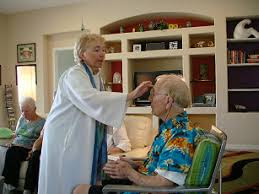
Living Gospel Inclusivity and Empowerment Now- https://bridgetmarys.blogspot.com/2025/10/rev-dr-bridget-mary-meehan-arcwp-chat.html
Friday, March 4, 2016
Vatican Newspaper Advocates Women Preaching by Sister Maureen Fiedler
http://ncronline.org/blogs/ncr-today/vatican-newspaper-allow-women-preach
..."Then, I had to laugh. As always at the Vatican, the argument for change was not a need to update the church or recognize the equality of women with men, but as some of the essayists note, a need to return to "tradition!" Women preached regularly in the first 1,000 years of Christianity, and often did so in front of priests, bishops and even the pope. Why not resurrect that practice?
And of course, Mary Magdalene was known as the "apostle to the apostles" because the she was the first to "preach" the news of his Resurrection -- the foundational Christian belief -- to the male followers of Jesus.
Now, the ball is in Francis' court. And a lot of people are wondering if this was a "practice shot" at the "basket." (I'm sure the conservatives in Rome are fuming at this suggestion! Francis might be testing the "temperature" before proceeding.) Is this the signal of a change Francis is about to make? If so, go for it, Francis! It is a step in the direction of the gospel.
Thursday, March 3, 2016
“The Parable of the Prodigal Daughter” Luke 15:1-3, 11b-32 March 3, 2016 Annie Watson, ARCWP
 |
| Annie Watson ARCWP This is a homily Annie shared with the Immanuel Fellowship today at noon at my congregation, Immanuel United Church of Christ, in Ferguson, Missouri. |
What if Jesus had told a parable
about a man with two daughters? How would that have changed the story? First of
all, there would have been no property to share or divide between them. So the
younger daughter would have left home without any resources whatsoever.
This means that we could not call
this “the Parable of the Prodigal Daughter”
because a prodigal person is someone who spends money in a recklessly extravagant way. In that place and time,
only males were able to be prodigal.
We hear a lot
these days about “privilege,” which means that some people or groups of people
are more privileged than others. There is no doubt this is a reality in our
world. Some people have more inherent rights, advantages, and even special
immunities that are granted to them simply because of such things as gender or
race.
The Parable of
the Prodigal Son is a story about a
privileged person. There is, or could not be, a parable about a prodigal
daughter told in the first century because daughters were not privileged enough
to be prodigal!
The story would
also be different if a daughter, rather than a son, became engaged in
“dissolute living,” which means a lax in morals. As we know, there is, and
always has been, a double standard about such things. When a male lives this way
society chalks it up to “boys will be boys.”
Historically,
when a female lives this way, she is either stoned to death or shamed without
mercy. Even today a girl who lives this way is called names that can’t be
repeated here, whereas a boy is just thought to be behaving as boys are
supposed to behave.
A third way the
parable would be different if this were about a daughter is that she would not
have been able to find work after she had spent all that money she didn’t have
in the first place. A woman’s place is in the home, not in the workplace! A
girl in need of money would have gladly taken a job feeding someone’s pigs, if
that’s what it took, but no “respectable” person would hire a girl to do that
job.
These are all
meaningful differences between a prodigal son and a daughter who just left home
without any money. The biggest difference, however, might be what happens on
the return home. The prodigal son is met by his father “while he was still far
off.” The father then took him home and threw a big party for him because, as
he says, “This son of mine was dead and is alive again; he was lost and is
found!”
This would not
have happened in ancient cultures if a daughter had returned home after
dissolute living. The father would have said, “This daughter of mine is dead to
me. Period.” In that place and time, and even today in many cultures around the
world, there is less forgiveness for
a girl who has disrespected and dishonored her family. Boys get more second,
third, and fourth chances.
I think it is appropriate
to celebrate the father’s love, compassion, and forgiveness in this parable.
That’s clearly the message Jesus intended. However, with over 2,000 years of
hindsight we know that women and girls are not always afforded the same grace.
It’s one thing
to celebrate grace given to a wealthy young man, a person of privilege in every
culture in every time and place. It’s rarer to celebrate grace given to women,
that half of the human race that has rarely enjoyed such things as grace,
forgiveness, compassion, and, of course, fairness and equality.
Personally, I
have experienced this inequality of grace in my involvement in the Roman
Catholic Women’s Priest movement. We all know how the men have been treated in
the Church’s hierarchy and priesthood.
The robe, ring,
sandals, and fatted calves are readily available in the church for any male who
hears the call of God to the priesthood. None of that is available for women
who receive the same call in their lives.
Furthermore, we
know that the men can fall into “dissolute living” in all sorts of ways—the
pedophile scandal being just one example—and the male bishops will meet them
while they are still far off with hugs and kisses. Women, on the other hand,
who aspire to be priests, are considered worse than pedophiles because we are
often excommunicated. The male pedophiles are not.
Again, it is appropriate to celebrate
the father’s love, compassion, and forgiveness in Jesus’ parable of the
prodigal son. And yet, when will we be able to tell the same stories about
women?
"Twice removed: Why our sacraments often don't connect with real life" By Joseph Martos, See Contemporary Rite Photo with Parents pouring water and anointing with chrism
 |
| Baptism Rite for 21st Century, Parents pour water, anoint child in Rite Jan. 24, 2016, Albany, NY, Co-Presiders, ARCWP Priests: Mary Theresa Streck and Kathleen Ryan |
In the first two centuries of Christianity, theology was based in experience.
Words that were later taken to refer to things that are outside the realm of
experience were originally attempts to talk about things that the followers of
Jesus were experiencing.
For example, when Paul wrote about justification by faith, he was not talking about getting right with God by believing in Christ, but getting your life straightened out by trusting that what Jesus taught is true. When the Book of Acts talks about being saved through baptism, it does not mean washing away sin by going through a ritual, but being rescued from selfishness by being immersed in a caring community.
Scholars who study other early documents like "The Teaching of the Twelve Apostles" (often called the Didache for short, from the Greek word for teaching) are finding that these writings were also attempts to spell out what the followers of Jesus were experiencing in their lives. But in the third century, things began to change.
Over time, the experience behind the early writings was forgotten. The writings were recognized as precious, called sacred Scriptures. Even the Didache appeared in some early lists of sacred Scriptures.
Christian intellectuals in the third century, sometimes called apologists, tried to explain their faith to people in the wider pagan world who suspected that the followers of Jesus were members of a dangerous cult. One apologist, Justin, compared the Christian community meal to a temple sacrifice, where pagans shared food in the presence of their god, to show that Christians were religious even though they did not worship in temples.
But other apologists began to talk about their faith as a set of beliefs rather than as a way of living. The words were becoming disconnected from the experiences.
In the fourth century, Constantine wanted to unify the Roman Empire with a single religion, so he legalized and promoted Christianity. When Christians began to travel freely throughout the empire, they discovered that people in different regions had different theologies. Instead of uniting Constantine's empire, Christians argued and divided it even further.
Constantine ordered all the bishops to his villa in Nicaea, and forced them to stay until they produced a document they could all agree on. They came up with the Nicene Creed, a statement of belief that said nothing about living like Jesus, but only about God and the church. The first removal of theology from the experience of Christian living was complete.
The Middle Ages
The attempt of the emperors to preserve the empire failed, and in the fifth century, the western half fell to barbarian invaders from the north. The so-called Dark Ages lasted until the 10th century. Theological thinking came to a halt while people struggled to survive.
Church life, on the contrary, evolved and flourished. The elaborate eucharistic liturgy got pared down to a Mass that could be said by missionaries who carried the faith to the tribes that were settling on the continent, and it was called a sacrifice even though no one remembered why.
Baptism became a short rite performed on babies in a church or adult converts in a river. Confirmation could be given by a bishop on horseback to children who were held up for him to touch. Private confession was introduced by monks for people who needed assurance of God's forgiveness.
Weddings became church ceremonies to be a public record of marriages. Ordination became a series of rites for apprentices who were learning how to be clerics as they ascended through a series of holy orders. Anointing of the sick began as a ministry to people who were ill, but in the absence of modern medicine, it became a last anointing called extreme unction.
By the 11th century, the chaos had subsided. The weather got warmer, farming flourished, commerce expanded, towns grew into cities, cathedrals were built, and schools were founded. Monks turned their attention from copying ancient manuscripts to studying them. Philosophy and theology were reborn.
Among other things, the schoolmen turned their attention to religious rituals, especially to sacraments. How did bread and wine turn into the body and blood of Christ? Why could baptism and confirmation be received only once? How did the sacraments of penance and extreme unction work? What were the different powers of priests and bishops? Why was the bond of marriage indissoluble?
The schoolmen did not realize, however, that much of their theological language was already somewhat removed from life. They thought that salvation meant going to heaven, that the gifts of the Holy Spirit were not experienced, that sins were remitted even if they were committed again, that the bond of marriage was indissoluble, that priestly powers were unrelated to priestly ministry, and that extreme unction could be received by someone who was unconscious.
They saw nothing amiss in a Mass that was performed by a priest using words that the people could not hear, much less understand, and who paid attention only when a bell was rung.
In many ways, sacramental ministry devolved into sacramental magic in the late Middle Ages, but the church's leadership rejected repeated calls for reform until the 16th century, by which time half of Europe had converted to Protestantism.
The Council of Trent reformed the sacramental system, eliminating the most superstitious practices, insisting that bishops be true shepherds of their flocks and that priests be trained in seminaries. From the 16th to the mid-20th centuries, Catholic sacramental practice and Catholic sacramental theology mirrored one another.
The baptismal and priestly characters explained why Catholics never left the church and why priests never left the ministry. The Eucharist was elevated at Mass and ensconced in a monstrance for exposition of the Blessed Sacrament, and was received only rarely, usually after a sincere confession of sins to a priest.
The indissoluble bond of marriage explained why Catholics never divorced. Confirmation and extreme unction did not have visible effects, but Catholics trusted that the former was good to receive in adolescence and the latter was good to receive before dying.
The Catholic church remained medieval in form and thought well into the 20th century.
Vatican II and after
At the Second Vatican Council, the world's Catholic bishops called for an updating of the church's sacramental practices. Historians and liturgists retrieved earlier forms of the Mass and other rites that had gotten lost during the Dark Ages — things like praying in the language of the people, receiving Communion in the forms of both bread and wine, rethinking the relation between sin and confession, and returning anointing to the context of ministry to the sick.
Unexpectedly, the unity of practice and theology began to dissolve. People stopped going to confession regularly. Priests began leaving the priesthood and the number of seminarians dwindled. Married Catholics started divorcing in greater numbers and even remarrying without waiting for an annulment.
The primary effect of confirmation seemed to be dropping out of church. Even baptism was no guarantee that people would remain Catholics or even Christians, as those who left the church sometimes became agnostics or atheists, Jews or Muslims.
Alarmed by this apparent defection, Popes John Paul II and Benedict XVI insisted on strict adherence to ecclesiastical rules, affirming traditional doctrines, stifling dissent, and denying any further developments in sacramental practice such as allowing deacons to anoint the sick or allowing priests to marry.
But the traditional doctrines no longer match Catholics' contemporary experience of church membership, marriage and ministry, not to mention their sense of sin and their experience of illness. Even Catholic worship feels different from the way it did in the days of the Latin Mass and Gregorian chant, and the previously strong sense of Christ's presence in the Eucharist is hard to recapture.
As happened in the third century, there is a growing gap between theology and experience, only this time the theology is twice removed from life. Official teachings about the Mass and sacraments are not only disconnected from people's everyday lives, but they are also often disconnected from people's experience of worship. For many people, the liturgy is not the main source of their spiritual nourishment, nor the high point of their week.
Around the time of Vatican II, Catholic thinkers like Edward Schillebeeckx, Karl Rahner, Bernard Cooke and Louis-Marie Chauvet tried to reinterpret the sacraments in more contemporary ways. Fifty years later, however, their work is not given much attention because it suffered from a fatal flaw.
Instead of reflecting on the experience of ritual worship, they reflected on the church's sacramental doctrines and tried to translate them into thought categories derived from existentialism and phenomenology, the psychology and sociology of religion, and even postmodern philosophy.
By being tied to medieval doctrines, however, these theologians had to explain why baptism is permanent, how confirmation gives spiritual strength, why confession is needed, how anointing benefits the sick, why marriage is indissoluble, and why the priesthood is forever.
But these ideas no longer correspond to the world inhabited by most Catholics, so contemporary theologies are just as removed from real life as the scholastic theology they had hoped to replace.
Is there a way out of the current confusion? There is, but it is neither a dogmatic reassertion of the past nor a freefall into cultural relativism. We need to rediscover what is essential to the Christian way of life, reinvent ways to ritualize that, and reformulate what those rituals mean in terms that are faithful both to the teachings of Jesus and to the experience of living in accordance with them.
[Joseph Martos is the author of many books and articles on the sacraments. This article is based on research published in Deconstructing Sacramental Theology and Reconstructing Catholic Ritual (Wipf and Stock, 2015).]
For example, when Paul wrote about justification by faith, he was not talking about getting right with God by believing in Christ, but getting your life straightened out by trusting that what Jesus taught is true. When the Book of Acts talks about being saved through baptism, it does not mean washing away sin by going through a ritual, but being rescued from selfishness by being immersed in a caring community.
Scholars who study other early documents like "The Teaching of the Twelve Apostles" (often called the Didache for short, from the Greek word for teaching) are finding that these writings were also attempts to spell out what the followers of Jesus were experiencing in their lives. But in the third century, things began to change.
Over time, the experience behind the early writings was forgotten. The writings were recognized as precious, called sacred Scriptures. Even the Didache appeared in some early lists of sacred Scriptures.
Christian intellectuals in the third century, sometimes called apologists, tried to explain their faith to people in the wider pagan world who suspected that the followers of Jesus were members of a dangerous cult. One apologist, Justin, compared the Christian community meal to a temple sacrifice, where pagans shared food in the presence of their god, to show that Christians were religious even though they did not worship in temples.
But other apologists began to talk about their faith as a set of beliefs rather than as a way of living. The words were becoming disconnected from the experiences.
In the fourth century, Constantine wanted to unify the Roman Empire with a single religion, so he legalized and promoted Christianity. When Christians began to travel freely throughout the empire, they discovered that people in different regions had different theologies. Instead of uniting Constantine's empire, Christians argued and divided it even further.
Constantine ordered all the bishops to his villa in Nicaea, and forced them to stay until they produced a document they could all agree on. They came up with the Nicene Creed, a statement of belief that said nothing about living like Jesus, but only about God and the church. The first removal of theology from the experience of Christian living was complete.
The Middle Ages
The attempt of the emperors to preserve the empire failed, and in the fifth century, the western half fell to barbarian invaders from the north. The so-called Dark Ages lasted until the 10th century. Theological thinking came to a halt while people struggled to survive.
Church life, on the contrary, evolved and flourished. The elaborate eucharistic liturgy got pared down to a Mass that could be said by missionaries who carried the faith to the tribes that were settling on the continent, and it was called a sacrifice even though no one remembered why.
Baptism became a short rite performed on babies in a church or adult converts in a river. Confirmation could be given by a bishop on horseback to children who were held up for him to touch. Private confession was introduced by monks for people who needed assurance of God's forgiveness.
Weddings became church ceremonies to be a public record of marriages. Ordination became a series of rites for apprentices who were learning how to be clerics as they ascended through a series of holy orders. Anointing of the sick began as a ministry to people who were ill, but in the absence of modern medicine, it became a last anointing called extreme unction.
By the 11th century, the chaos had subsided. The weather got warmer, farming flourished, commerce expanded, towns grew into cities, cathedrals were built, and schools were founded. Monks turned their attention from copying ancient manuscripts to studying them. Philosophy and theology were reborn.
Among other things, the schoolmen turned their attention to religious rituals, especially to sacraments. How did bread and wine turn into the body and blood of Christ? Why could baptism and confirmation be received only once? How did the sacraments of penance and extreme unction work? What were the different powers of priests and bishops? Why was the bond of marriage indissoluble?
The schoolmen did not realize, however, that much of their theological language was already somewhat removed from life. They thought that salvation meant going to heaven, that the gifts of the Holy Spirit were not experienced, that sins were remitted even if they were committed again, that the bond of marriage was indissoluble, that priestly powers were unrelated to priestly ministry, and that extreme unction could be received by someone who was unconscious.
They saw nothing amiss in a Mass that was performed by a priest using words that the people could not hear, much less understand, and who paid attention only when a bell was rung.
In many ways, sacramental ministry devolved into sacramental magic in the late Middle Ages, but the church's leadership rejected repeated calls for reform until the 16th century, by which time half of Europe had converted to Protestantism.
The Council of Trent reformed the sacramental system, eliminating the most superstitious practices, insisting that bishops be true shepherds of their flocks and that priests be trained in seminaries. From the 16th to the mid-20th centuries, Catholic sacramental practice and Catholic sacramental theology mirrored one another.
The baptismal and priestly characters explained why Catholics never left the church and why priests never left the ministry. The Eucharist was elevated at Mass and ensconced in a monstrance for exposition of the Blessed Sacrament, and was received only rarely, usually after a sincere confession of sins to a priest.
The indissoluble bond of marriage explained why Catholics never divorced. Confirmation and extreme unction did not have visible effects, but Catholics trusted that the former was good to receive in adolescence and the latter was good to receive before dying.
The Catholic church remained medieval in form and thought well into the 20th century.
Vatican II and after
At the Second Vatican Council, the world's Catholic bishops called for an updating of the church's sacramental practices. Historians and liturgists retrieved earlier forms of the Mass and other rites that had gotten lost during the Dark Ages — things like praying in the language of the people, receiving Communion in the forms of both bread and wine, rethinking the relation between sin and confession, and returning anointing to the context of ministry to the sick.
Unexpectedly, the unity of practice and theology began to dissolve. People stopped going to confession regularly. Priests began leaving the priesthood and the number of seminarians dwindled. Married Catholics started divorcing in greater numbers and even remarrying without waiting for an annulment.
The primary effect of confirmation seemed to be dropping out of church. Even baptism was no guarantee that people would remain Catholics or even Christians, as those who left the church sometimes became agnostics or atheists, Jews or Muslims.
Alarmed by this apparent defection, Popes John Paul II and Benedict XVI insisted on strict adherence to ecclesiastical rules, affirming traditional doctrines, stifling dissent, and denying any further developments in sacramental practice such as allowing deacons to anoint the sick or allowing priests to marry.
But the traditional doctrines no longer match Catholics' contemporary experience of church membership, marriage and ministry, not to mention their sense of sin and their experience of illness. Even Catholic worship feels different from the way it did in the days of the Latin Mass and Gregorian chant, and the previously strong sense of Christ's presence in the Eucharist is hard to recapture.
As happened in the third century, there is a growing gap between theology and experience, only this time the theology is twice removed from life. Official teachings about the Mass and sacraments are not only disconnected from people's everyday lives, but they are also often disconnected from people's experience of worship. For many people, the liturgy is not the main source of their spiritual nourishment, nor the high point of their week.
Around the time of Vatican II, Catholic thinkers like Edward Schillebeeckx, Karl Rahner, Bernard Cooke and Louis-Marie Chauvet tried to reinterpret the sacraments in more contemporary ways. Fifty years later, however, their work is not given much attention because it suffered from a fatal flaw.
Instead of reflecting on the experience of ritual worship, they reflected on the church's sacramental doctrines and tried to translate them into thought categories derived from existentialism and phenomenology, the psychology and sociology of religion, and even postmodern philosophy.
By being tied to medieval doctrines, however, these theologians had to explain why baptism is permanent, how confirmation gives spiritual strength, why confession is needed, how anointing benefits the sick, why marriage is indissoluble, and why the priesthood is forever.
But these ideas no longer correspond to the world inhabited by most Catholics, so contemporary theologies are just as removed from real life as the scholastic theology they had hoped to replace.
Is there a way out of the current confusion? There is, but it is neither a dogmatic reassertion of the past nor a freefall into cultural relativism. We need to rediscover what is essential to the Christian way of life, reinvent ways to ritualize that, and reformulate what those rituals mean in terms that are faithful both to the teachings of Jesus and to the experience of living in accordance with them.
[Joseph Martos is the author of many books and articles on the sacraments. This article is based on research published in Deconstructing Sacramental Theology and Reconstructing Catholic Ritual (Wipf and Stock, 2015).]
Homily for Holy Spirit Catholic Community, 4 Lent C, March 6th by Beverly Bingle RCWP
You may have noticed that today's Gospel reading
starts with three verses at the beginning of Chapter 15
and then skips a ways
to pick up at verse 11 with the parable of the prodigal son.
Luke frames the whole chapter
as Jesus' response to the Pharisees and scribes
who are complaining because he eats with sinners,
and today's passage
is one of three very familiar parables there.
In addition to the prodigal son story,
Luke has Jesus tell the story of the shepherd
leaving the flock of 99
and going in search of that one wandering sheep,
and then the story of the woman searching all over the house
until she finds that one coin of the ten that she had lost.
In each of these three stories what was lost is restored,
what was out of place is back where it belongs,
whether it's through a shepherd's care,
a woman's perseverance,
or a parent's love.
Even though Luke puts these parables together
in order to further his narrative,
scholars are fairly certain that all three go back to Jesus,
just as they have little doubt
that Jesus was criticized
for sharing meals with outcasts and the poor.
__________________________________________
When people get to be as old as I am,
we can look back over our lives and find ourselves
in every character in today's Gospel parable.
Been there, done that.
I've been the one who pointed a finger
at the kind of people someone chose as friends,
like those Pharisees and scribes did.
I've been the ungrateful child,
like the younger son.
I've been the despairing worker,
scrabbling to make a pittance at a job I hated,
wishing I could go back home again.
And I've been the one
who was hurt and angry
about the favorable treatment
of those who didn't work as hard as I did,
like the older son.
__________________________________________
On the other hand,
from time to time I've tried to be the one who forgives,
no matter what,
like the loving father in that parable.
But not very often.
And I've even tried to be the one who points out injustice,
like Jesus did.
But again, not very often, and not often enough.
__________________________________________
St. Paul reminds us, in that second reading,
that we who are in Christ
are called to be ambassadors of reconciliation.
I find the etymology of that word ambassador noteworthy.
It comes to us from Middle English through Old French,
based on two Latin usages meaning mission and servant.
Literally, we who are ambassadors of Christ
are servants sent on a mission
with a message of love and mercy.
We are called to welcome the wayward
just as the prodigal son is welcomed.
__________________________________________
Sometimes we are able to do that.
But, we know, sometimes it's just not possible,
as in trying to reconcile a relationship with an abusive partner
who will not admit the problem or seek help.
When we are able to reach out in mercy and love,
we become, as Paul puts it,
messengers of God's own righteousness,
of God's own justice.
That's when we carry the very holiness of God to the world.
__________________________________________
It's a big job,
but we aren't alone.
Just as the ancient Israelites
walked through the desert nourished by manna from God,
so do we walk through each week
surrounded by, uplifted by,
God's presence in our world.
Sometimes we travel through a desert,
subsisting on the promise that God is with us
even though we feel alone and abandoned.
Sometimes we find ourselves resting in that promise,
surrounded by all the gracious gifts of God.
And on the weekends
we gather to celebrate the very holiness of our lives.
Through it all—
whether we've been stumbling through in a desert
or renewing ourselves in an oasis—
we walk in communion with God and with each other.
Thanks be to God!
--
Holy Spirit Catholic Community
Saturdays at 4:30 p.m./Sundays at 5:30 p.m.
Holy Thursday, March 24, 5:30 p.m.
Holy Saturday, March 26, 5:30 p.m.
at 3925 West Central Avenue (Washington Church)
www.holyspirittoledo.org
Rev. Dr. Bev Bingle, Pastor
Mailing address: 3156 Doyle Street, Toledo, OH 43608-2006
starts with three verses at the beginning of Chapter 15
and then skips a ways
to pick up at verse 11 with the parable of the prodigal son.
Luke frames the whole chapter
as Jesus' response to the Pharisees and scribes
who are complaining because he eats with sinners,
and today's passage
is one of three very familiar parables there.
In addition to the prodigal son story,
Luke has Jesus tell the story of the shepherd
leaving the flock of 99
and going in search of that one wandering sheep,
and then the story of the woman searching all over the house
until she finds that one coin of the ten that she had lost.
In each of these three stories what was lost is restored,
what was out of place is back where it belongs,
whether it's through a shepherd's care,
a woman's perseverance,
or a parent's love.
Even though Luke puts these parables together
in order to further his narrative,
scholars are fairly certain that all three go back to Jesus,
just as they have little doubt
that Jesus was criticized
for sharing meals with outcasts and the poor.
__________________________________________
When people get to be as old as I am,
we can look back over our lives and find ourselves
in every character in today's Gospel parable.
Been there, done that.
I've been the one who pointed a finger
at the kind of people someone chose as friends,
like those Pharisees and scribes did.
I've been the ungrateful child,
like the younger son.
I've been the despairing worker,
scrabbling to make a pittance at a job I hated,
wishing I could go back home again.
And I've been the one
who was hurt and angry
about the favorable treatment
of those who didn't work as hard as I did,
like the older son.
__________________________________________
On the other hand,
from time to time I've tried to be the one who forgives,
no matter what,
like the loving father in that parable.
But not very often.
And I've even tried to be the one who points out injustice,
like Jesus did.
But again, not very often, and not often enough.
__________________________________________
St. Paul reminds us, in that second reading,
that we who are in Christ
are called to be ambassadors of reconciliation.
I find the etymology of that word ambassador noteworthy.
It comes to us from Middle English through Old French,
based on two Latin usages meaning mission and servant.
Literally, we who are ambassadors of Christ
are servants sent on a mission
with a message of love and mercy.
We are called to welcome the wayward
just as the prodigal son is welcomed.
__________________________________________
Sometimes we are able to do that.
But, we know, sometimes it's just not possible,
as in trying to reconcile a relationship with an abusive partner
who will not admit the problem or seek help.
When we are able to reach out in mercy and love,
we become, as Paul puts it,
messengers of God's own righteousness,
of God's own justice.
That's when we carry the very holiness of God to the world.
__________________________________________
It's a big job,
but we aren't alone.
Just as the ancient Israelites
walked through the desert nourished by manna from God,
so do we walk through each week
surrounded by, uplifted by,
God's presence in our world.
Sometimes we travel through a desert,
subsisting on the promise that God is with us
even though we feel alone and abandoned.
Sometimes we find ourselves resting in that promise,
surrounded by all the gracious gifts of God.
And on the weekends
we gather to celebrate the very holiness of our lives.
Through it all—
whether we've been stumbling through in a desert
or renewing ourselves in an oasis—
we walk in communion with God and with each other.
Thanks be to God!
--
Holy Spirit Catholic Community
Saturdays at 4:30 p.m./Sundays at 5:30 p.m.
Holy Thursday, March 24, 5:30 p.m.
Holy Saturday, March 26, 5:30 p.m.
at 3925 West Central Avenue (Washington Church)
www.holyspirittoledo.org
Rev. Dr. Bev Bingle, Pastor
Mailing address: 3156 Doyle Street, Toledo, OH 43608-2006
Wednesday, March 2, 2016
Vatican newspaper essays suggest women should preach at Mass
 |
| Mary Theresa Streck preaches at funeral liturgy of Ed Ryan in Albany, New York |
http://ncronline.org/news/vatican/vatican-newspaper-essays-suggest-women-should-preach-mass
This would be a welcome change for Catholics who would hear the Gospel interpreted from the faith experiences of women. Bridget Mary Meehan, ARCWP, www.arcwp.org
So what will Francis do?
The pontiff has repeatedly
called for women to have a greater role in the church,
but he has also reiterated the ban against ordaining women as priest
and he has warned against "clericalizing" women
by trying to make them cardinals or to focus on
promoting them to higher church officers.
called for women to have a greater role in the church,
but he has also reiterated the ban against ordaining women as priest
and he has warned against "clericalizing" women
by trying to make them cardinals or to focus on
promoting them to higher church officers.
Then again, that the Vatican's own newspaper would
dedicate so much space to the issue of women preachers
is intriguing, said Massimo Faggioli,
a church historian at the University of St. Thomas in Minnesota.
dedicate so much space to the issue of women preachers
is intriguing, said Massimo Faggioli,
a church historian at the University of St. Thomas in Minnesota.
"I think it is a big signal," he said.
In loving Memory: ARCWP Pays Tribute to Ed Ryan, Adele Jones and Rick Sapp, You Will Always Be In Our Hearts
In Loving Memory

Edward Francis Ryan
1947-2016
“From Withered Flowers to Seeds of Rebirth”
Ed Ryan, husband of Kathie Ryan, and a long-time friend of ARCWP passed away recently.
Ed believed in the ordination of women and encouraged Kathie on her journey to become a Roman Catholic Woman Priest.
As Kathie was studying and preparing for ordination, Ed was very excited about the study of progressive Christian theology.
Ed participated in the process with Kathie, as she often would read to Ed her preparation unit papers and theology books.
Ed encouraged Kathie to continue her education, going forward.
ARCWP has established a special memorial fund, supported by the donations given in honor of Ed Ryan; seed money, a place for those to begin their education in Progressive Christian and Feminist theology via “People’s Catholic Seminary.”
We will miss Ed.
Ed believed in the ordination of women and encouraged Kathie on her journey to become a Roman Catholic Woman Priest.
As Kathie was studying and preparing for ordination, Ed was very excited about the study of progressive Christian theology.
Ed participated in the process with Kathie, as she often would read to Ed her preparation unit papers and theology books.
Ed encouraged Kathie to continue her education, going forward.
ARCWP has established a special memorial fund, supported by the donations given in honor of Ed Ryan; seed money, a place for those to begin their education in Progressive Christian and Feminist theology via “People’s Catholic Seminary.”
We will miss Ed.
May the memory of his life provide new energies to one’s prophetic call;
nurturing new life, hope, and joy in the ongoing
renewal of the Catholic Church.
nurturing new life, hope, and joy in the ongoing
renewal of the Catholic Church.

Rev. Dr. Adele D. Jones
1927 – 2015
Rev. Dr. Adele Decker Jones died on April 22, 2015. She was instrumental in planning her own Memorial liturgy which was held on Saturday May 9th in Villa San Antonio Chapel, San Antonio, Texas. As a retirement home resident in San Antonio, Texas since 2009, Adele was friend, counselor and prayer companion to many even before she was ordained.
Her experience as wife, mother, grandmother, and great-grandmother prepared her in her journey to priesthood. This journey began formally in 2008 when she connected with Bridget Mary Meehan, the ARCWP Bishop. She was already a Third Order Franciscan and had developed a private counseling practice and taught workshops, seminars, and retreats.
Adele completed her AA and her BA then later earned a Masters in Theological Studies earned in 1988 at the Oblate School of Theology in Texas and in 1991 she was the fourth woman to graduate from the Oblate School of Theology in 90 years with a MDiv degree. In 1997 she graduated from Garret Theological School of Northwestern University with a Doctor of Ministry Degree.
In the words of fellow priest Dr. Judith Lee, “It is one who seeks joy where there is disappointment and grief that has the courage to choose to become a woman priest . . . [We] went to San Antonio to minister to Adele . . . Instead she ministered to us and we came away immeasurably enriched, knowing that we had been in the holy presence of a woman of great wisdom, and joy.”
Her Funeral Liturgy closed with this blessing:
May God bless us as we go forth.
May the angels lead you into paradise, Adele,
May the martyrs come to welcome you and take you to the holy city,
The new and eternal Jerusalem. May choirs of angels welcome you and lead you into
the heart of God.
Adele was ordained a Roman Catholic Woman Priest with the Association of Roman Catholic Women Priests on September 10, 2011 in Falls Church, Virginia.

Rick Sapp and Bridget Mary Meehan at First U.S. Bishops’ Ordination on April 19, 2009 in Santa Barbara, California
Rick Sapp, ARCWP Videographer and Supporter
1946-2015
Rick Sapp was the videographer for the first U.S. Bishop’s ordination in 2009. He also covered several major ordinations for ARCWP.
Rick passed away on 7/16/15. His funeral was held at St Thomas UMC in Manassas, VA. Our heartfelt prayers and condolences to his family especially Nancy, Katie, Robin and Talon.
Rick was the producer of GodTalk which aired on public access TV in Northern, Virginia for ten years. We are grateful for the gift of Rick’s dedication and time, in support of GodTalk; and shared vision of spiritual programming that built bridges of understanding between different faith traditions.
Rick’s enthusiasm for women’s equality and empowerment was evident in every production event and in every show aired.
“I will miss Rick but I also feel that his love and presence will be with me and with our movement forever.” Bridget Mary Meehan, 7/18/2015
Vatican Praises "Spotlight" as Courageous, Should Beg Forgiveness for Vatican Responsibility for Worldwide Coverup
http://www.ecumenicalnews.com/article/vaticans-losservatore-romano-praises-spotlight-as-courageous-and-not-anti-catholic/39179.htm

It is my view that the the Vatican should beg forgiveness in this year of mercy for their responsibility in the worldwide sex abuse cover-up!
Bridget Mary Meehan, ARCWP

It is my view that the the Vatican should beg forgiveness in this year of mercy for their responsibility in the worldwide sex abuse cover-up!
Bridget Mary Meehan, ARCWP
Tuesday, March 1, 2016
Liturgy to Celebrate Mirth and Spirituality, Presider Ann Harrington ARCWP

Prayers and Concerns
Opening Song
Gather Us In
Opening Prayer
An Invitation
All: The table of bread and wine is now to be made
ready.
It is the table of company of Jesus, and all who love him.
It is the table of sharing with the poor of the world,
with whom Jesus identified himself.
It is the table of communion with the earth,
in which Christ became incarnate.
So come to this table,
you who have much faith
and you who would like to have more;
you who have been here often
and you who have not been for a long time;
you who have tried to follow Jesus,
and you who have failed; Come.
It is Christ who invites us to meet him here.
It is the table of company of Jesus, and all who love him.
It is the table of sharing with the poor of the world,
with whom Jesus identified himself.
It is the table of communion with the earth,
in which Christ became incarnate.
So come to this table,
you who have much faith
and you who would like to have more;
you who have been here often
and you who have not been for a long time;
you who have tried to follow Jesus,
and you who have failed; Come.
It is Christ who invites us to meet him here.
Iona Abbey Worship Book, Wild Goose
Publications,
The Iona Community, www.ionabooks.com.
The Iona Community, www.ionabooks.com.
Liturgy of
the Word 1 Samuel 5: 6-12
Canticle of the Sun, verses 1-3, Laughter Came from Every Brick, Gospel John 1: 43-47
Now the hand of the LORD weighed
heavily on the people of Ashdod, ravaging them and afflicting the city and its
vicinity with hemorrhoids. On seeing how matters stood,
the people of Ashdod decided, “The ark of the God of Israel must not remain
with us, for his hand weighs heavily on us and Dagon our god.” So they summoned all the Philistine leaders and inquired of them,
“What shall we do with the ark of the God of Israel?” The people of Gath
replied, “Let them move the ark of the God of Israel to us.” So they moved the
ark of the God of Israel to Gath. But after it had been
brought there, the hand of the LORD was against the city, resulting in utter
turmoil: the LORD afflicted its inhabitants, young and old,
and hemorrhoids broke out on them. The ark of God was
next sent to Ekron; but as it entered that city, the people there cried out,
“Why have they brought the ark of the God of Israel here to kill us and our
kindred?” Then they, too, sent a summons to all the
Philistine leaders and pleaded: “Send away the ark of the God of Israel. Send
it back to its place so it does not kill us and our kindred.” A deadly panic
had seized the whole city, since the hand of God lay heavy upon it. Those who escaped death were afflicted with hemorrhoids. Thus the
outcry from the city went up to the heavens.
Laughter Came From Every Brick
Just these
two words He spoke to me And
laughter came from every brick
changed my
life, in
the street and from every pore in
"Enjoy
Me." the
sky.
What a
burden I thought I was to carry- After
a night of prayer,
a crucifix,
as did He. He
changed my life when He sang,
"Enjoy
Me."
Love once
said to me, "I know a song,
would you
like to hear it?"
by Daniel Ladinsky or Teresa of Avila
Canticle of the Sun, verses 1-3, Laughter Came from Every Brick, Gospel John 1: 43-47
Homily
In some recess of my mind I hear, how dare you be composing a liturgy
around mirth during lent! But I tossed
that thought and here goes. First a
couple of jokes to set the mood:
Mark's best friend, Dennis,
became a family member over the 36 years we knew him. He had struggles with clinical depression, so
when things looked very bleak for him in 1984 we invited him to live with us in
South Carolina. He was very involved
during the twins birth and early years.
He was their God Father.
Eventually we all moved to NC.
Dennis to Marion, us to Greenville.
After an 8 year absence Dennis shows up again and is in very bad shape
emotionally and we invite him to move to Greenville on the condition that he
work with a therapist and face some of his issues. He did this, found a job, a wife and visited
and had dinner with us frequently. And
oh, he was always a ready helper on home improvement projects. And we always
had plenty of those. Well, life took another of those downturns for Dennis and
on Feb. 29, 2012 he committed suicide.
The reason I am telling you this is that Dennis was a clown and loved to
make people laugh. We think he chose
Leap Day to die as a joke, remember nothing counts on leap day or so the legend
goes. So as I was reflecting on all this
I thought a liturgy to celebrate what is funny about life would be a good way
to remember Dennis.
The internet being the lovely thing it is, has a video of a Jesuit
priest, James Martin giving a lecture titled, "Between Heaven and
Mirth". He says, "some people
think being religious means being deeply serious all the time, when your deadly
serious, your probably seriously dead".
He goes on to say that people who are in touch with God smile and are
joyful. Teilhard de Chardin said,
"joy is the surest sign of the Holy Spirit". Why does Jesus not seem funnier in the
Gospels? It might be that we don't get
first century humor. It might be that
we've heard the parables so many times, we miss the joke. In today's Gospel we can get a glimpse of how
that story did contain humor. Father
Martin goes on to say that the saints were attractive people who other people
wanted to be around. We generally avoid
the "Debbie Downer" types.
Here are some quotes attributed to saints:
St. Lawrence while he is being burned at the stake, "Turn me over,
I'm done on this side." And before
he died, "It's cooked enough now".
St. Augustine: "Give me chastity, but not yet!"
St. Thomas More on his way to be hanged: "I pray you take care of me on the way
up, as for coming down, I will take care of myself". Meaning he didn't fear death. Isn't this the fear that trips us up?
John XXIII when asked, "How many people work in the Vatican,
responded, "Oh about half of them".
And what does a good laugh do for us?
It opens our minds, and an open mind is a very good thing. When we laugh the opposite of the fight or
flight syndrome happens, it releases endorphins, those feel good chemicals that
trigger a positive feeling in the body, similar to that of morphine. Humor is fun, a "foretaste of
heaven" says the good Father. I say
maybe it is the real reality, the heaven already present among us that we miss
most of the time.
After all, Abraham fell on his face and laughed when he heard God tell
him he and his wife Sarah they would conceive a child even though he was 100
and she was 90. Who wouldn't? That child was named Isaac, which means
"the laugh".
And to close I offer these two jokes:
A man was lying in bed
on a Saturday morning. His wife said to him, “Get out of bed and go to
“shul”. “I don’t want to go to shul”,
said he, “and there are three really good reasons for that. First, I am tired.
Second, I don’t like the service and I really dislike the sermons. Third, the
congregation doesn’t like me.” So his
wife said, “Those excuses are no good.
Get out of bed and go to shul for three reasons. First, a decent Jewish
family goes to shul together. Second,
God will never forgive you, if you don’t come to shul. And third, you
are the rabbi.”
A Jewish kid is sent to a Jewish
school by his parents. After two weeks he is kicked out for fighting and
laziness. So his parents raise the money and send him to a private school.
However, after two weeks he is kicked out for fighting and laziness. Having no
choice, the parents send the kid to a public school. However, after just one
week he is suspended for fighting, lateness and laziness. His parents feel
terrible. What to do, what to do! Finally they decide there is only one thing
more they can do. So they enroll him in a Catholic school. Weeks go by and the
boy is still in school. In fact, he has good grades and the nuns speak well of
him. His parents are amazed. They ask the kid, “How is it you got kicked out of
Jewish school, out of private school and out of public school but you don’t get
kicked out of Catholic school?” “You
should see,” says the kid, “what they have hanging on the wall.”
So now, I invite you to share a funny thing that happened to you on
your way to heaven, maybe made you laugh at yourself, helped you relax and not
take yourself too seriously.
Offertory "We Remember" by Josh Groban
Eucharistic
Prayer
Presider: When the hour had come, Jesus took a place at
the table and said to them, "I've longed to eat this Passover with you
before I suffer. Jesus took bread, gave
thanks for it, broke it and gave it to them saying:
All: "This is my body which will be given for
you. Do this in remembrance of me".
Presider:
Then taking the cup of wine Jesus gave thanks and said:
All: "Take this and share it among you. This cup is the New Covenant in my blood
which will be poured out for you". (Luke
21)
I give you a new
commandment: Love one another the way I
have loved you. This is how all will
know that you are my disciples, that you truly love one another. (John 13)
Litany for the Breaking
of the Bread
All:
Loving God, you call us to life, a new life, abundant life
Loving God, you call us to be
transformed by the Life of the Spirit
Loving God, you call us to join with
you in creating the world anew!
Presider: (lift bread and cup) Through the sharing of
this bread and wine may we awaken to the sacredness of our lives and the beauty
all around us. May we experience your
divine presence, O Creator God, so deeply, that our lives become reflections of
Jesus. Amen
All: This is the body of Christ for the Body of
Christ.
Communion Song Canticle of the Sun, verses 4-6
Blessing May the spirit of pardon and forgiveness reside with us
and be always ready to heal our divisions.
May the spirits of mirth and laughter, hope and faith,
playfulness and prayer, compassion and love
be perpetual guests
in our hearts.
adapted
from Edward Hays Prayers for the Domestic Church
Presider: May the Love that passes all understanding be
our guide. Take what you have received
and share it lovingly with all you meet.
All: Amen
Dismissal
Presider: Christ has no body now but yours. Go be the eyes, ears, arms and feet of Christ
Sophia. All: Thanks be to God!
Closing Song Spirit in the Sky Circle Dance and Free Style
PASTORAL WITHOUT BORDERS. Olga Lucia Álvarez Benjumea ARCWP , Colombia, South America

Despite The Difficulties we Have Been facing, we thank the Divine presence and support in our midst.
We can not use the chairs, Because They left them locked up and changed the lock ... so we Could not reopen learning workshops and production: "They grow and grow as we go Us Could get ..." That We are painful phrases Have to listen and endure.
We come from different districts of the city, we are not only the post-punished Those we meet, here we come mothers-fathers, sons-daughters or aunts, seeking support for the families of our Sisters Who are in jail. If we can not get work, our summarizes stigmatized, less can do something Those in prison, to meet the needs of parents and children, Most Often elderly people Who are in the care of young children, totally unprotected. We wonder What Makes the Family Welfare Institute? We Asked to care for nursery That Can These children, to protect them. WE HAVE HAD not any response.
Both the Company, the state and religion, the comment we hear is painful: "you are Protecting, caring and paying to the crime, vagamunderia, the drug and prostitution ..."
This will be true Both lapidary judgment? Come and see ... What will happen now, at present, not even days, months or years, before the announcement of the closure and removal of Several multinational country? Who will be Those That cause cultivate and pay crime and violence in our country? NAFTA, the sale of ISAGEN, exploitation of mining, can even imagined for a while, the country fully Privatized in the hands of foreign companies? It will Increase the displacement of indigenous, campesinos and afros, seeking survival, Because You Can not Talk About the future is expected.
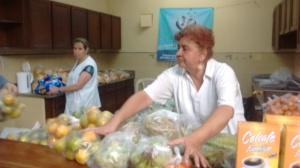
The Gloria and Maria Elena de Corposervimos ladies organizing voluntary markets.
Last Friday we met more than 40 people. Since the day before, our volunteers Ladies Maria Elena and Gloria, Had gone to the Greenmarket to receive, and Carefully pack each market, with products That Have Given them. Oranges, lemons, potatoes, green banana, carrot, breadcrumbs, bone. To complete the post-market each punishable, we need, what grain rice, beans, lentils, brown sugar, chocolate, oil, chickpeas ...
We're joined on This occasion, our brother Gerard Pelzer Pax Christi member of Erfstadt-Germany, WHO Identified with us and listened to us patiently in our post-condition are penalized.
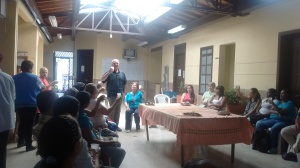
Gerard greets and Makes the toast with post-punished. Between them Expresses feel good. And I caught His energy and zest for life!
GRAPHIC REPORT OF PASTORAL Without Borders. FRIDAY 26 DEL 2016
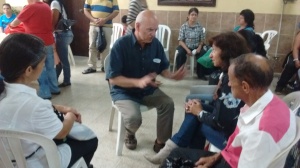
Our brother and friend, feel at home, and all Spends talking.
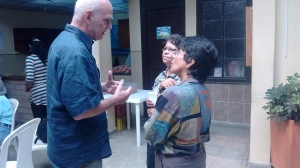
His Gerard enjoys sharing experiences. Nelly and company will not lose detail.
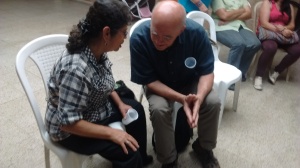
They have something to say and someone to listen to them. The Pastoral is without borders, there are our sisters Within Several denominations.
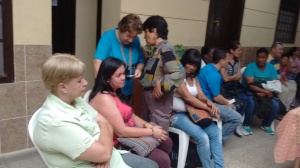
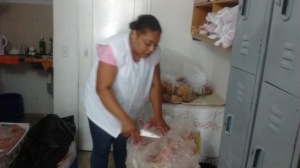
Amparo delicately packing every little package
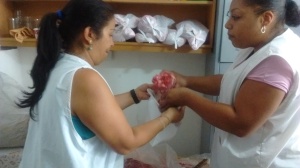
Amparo Maria Elena and meat packing.
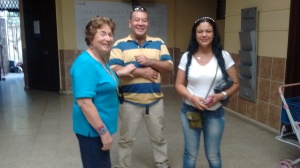
With Carlos and Liliana. There are so many things so beautiful in each person in the Presence of God, Which is a joy. Thank Divine Essence!
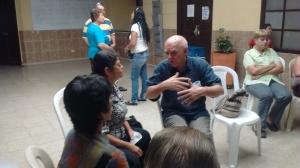
We continue to Accompany and listening ...

Here the volunteer team, Satisfied with Their Work Accomplished: Alberto, Marielena, Gloria and Maria Elena.
We want to highlight the Mercedes Palace volunteer work as a psychologist, Viviana, our teacher couture. All willing to work on the next venue, Where we will be, the Spring Corporation, Where We Have Their doors opened to Develop further our work.
Also We appreciate the testimony, courage and tenacity of the founder and director of our Hand Embroidery Foundation: Elena Cruz Palace.

* Roman Catholic presbyter.
Subscribe to:
Posts (Atom)