Translate

Saturday, September 16, 2017

Council of Cardinals Says More Youth and Women Needed in Roman Curia, Liturgical texts could be updated to reflect contemporary theology and inclusive language

http://www.catholicnewsagency.com/news/council-of-cardinals-says-more-youth-women-needed-in-roman-curia-11497/


In his speech to the Curia Dec. 22, 2016, which is among the texts reflected on by the C9, Pope Francis said that when it comes to curial officials, “in addition to priests and consecrated persons, the catholicity of the Church must be reflected in the hiring of personnel from throughout the world.”
This “catholicity” must also be reflected in the presence of “permanent deacons and lay faithful carefully selected on the basis of their unexceptionable spiritual and moral life and their professional competence,” he said.
In this view, “it is fitting to provide for the hiring of greater numbers of the lay faithful, especially in those dicasteries where they can be more competent than clerics or consecrated persons.”
He also stressed that “of great importance is an enhanced role for women and lay people in the life of the Church and their integration into roles of leadership in the dicasteries, with particular attention to multiculturalism.”
My comment: The Roman Curia should embrace gender equality as a goal in all offices that govern the church.
In addition to curial personnel, the cardinals also discussed Pope Francis' recent motu proprio Magnum principium, which gave more power to local bishops in the translation and approval of liturgical texts, and its implications for the Congregation of Divine Worship and the Discipline of the Sacraments.
My comment: The Liturgy needs to be updated to reflect contemporary theology.The present liturgical texts used in Eucharistic liturgies reflect medieval theology and exclusive language. We need to incorporate inclusive language and feminine images for the Holy One as well as to get rid of atonement theology. Our inclusive Catholic communities are incorporating updated liturgies and inclusive language. See link on blog for samples of inclusive liturgies.

Friday, September 15, 2017

"The Edge of the Inside" by Richard Rohr, Women Priests are prophets on the edge of the inside of the church!

Today, I celebrate 51 years of consecrated life. On September 15, 1966, I entered the convent as a postulant . It has been an blessed journey of loving service as a Sister Servant of the Immaculate Heart of Mary (1966-1980), a Sister for Christian Community, (1996-2017) and a priest in the Roman Catholic Priests Movement (2006-2017). 

Richard Rohr says that prophets are called to dismantle patriarchy from the inside out. Pope Francis says that the only world worth building includes everyone. I believe that the only church worth building is one that affirms women as  spiritual equals, which includes women as priests.  I also believe that each of us is a beautiful, beloved images of the divine and that we are all Persona Christi, reflections of the Christ Presence. Today, I rejoice in many years of service to the people of God who are living their their prophetic call to promote gender justice on the edge of the inside! Bridget Mary Meehan ARCWP, www.arcwp.org

Progressive Catholics from We Are Church Ireland Celebrate Liturgy with Mary Theresa Streck ARCWP and Bridget Mary Meehan ARCWP in Ireland in August. 


The Edge of the Inside
Tuesday, September 12, 2017
Prophets, by their very nature, cannot be at the center of any social structure. Rather, they are “on the edge of the inside.” They cannot be fully insiders, but they cannot throw rocks from outside either. They must be educated inside the system, knowing and living the rules, before they can critique what is non- essential or not so important. Jesus did this masterfully (see Matthew 5:17-48). This is what Martin Luther King, Jr. taught the United States, what Gandhi taught British-occupied India, and what Nelson Mandela taught South Africa. Only with great respect for and understanding of the rules can a prophet know how to properly break those very same rules—for the sake of a greater purpose and value. A prophet critiques a system by quoting its own documents, constitutions, heroes, and Scriptures against its present practice. This is their secret: systems are best unlocked from inside.
Holding the tension of opposites is the necessary education of the prophet, yet the Church has given little energy to what Paul says is the second most important charism for the building of the church (1 Corinthians 12:28, Ephesians 4:11).  Prophets must be skilled in nondual thinking, but the Church has primarily trained people in the simplistic choosing of one idealized alternative while denigrating the other. This has gotten us nowhere.

After Christianity became the established religion of the Western Empire in the fourth century, the priestly mentality pretty much took over in both East and West, and prophets almost disappeared. When the Church held so much power, prophets were too threatening to the status quo. The clergy were at the top of the hierarchy in the full company of their patrons—kings and princes—and even began to dress like them. Emperors convened and presided over the first seven Councils of the Church. What does this tell us?
For the next 1700 or so years, most of the preaching and interpretation of Scripture was from the perspective of power, from primarily European, educated, quite comfortable, and presumably celibate males. I am one myself, and we are not all bad. But we are not all—by a long shot! Where are the voices of women, minorities, LGBTQ, the poor, and differently abled? How would they read the Gospel? Without these voices included, sometimes even central, I see little future for Christianity.

My spiritual father, St. Francis of Assisi, saw this problem in the thirteenth century and called people to live on the edge—of the Church, of economy, of patriarchy, of the “system”—through universal solidarity and chosen simplicity. [1] Pope Francis is evoking the same Gospel spirit, and I pray for his success and protection. What a surprise that the ultimate establishment figure took the name of such a radical saint. It shocked the world because we do not expect prophecy from popes. There is hope!
References:
[1] See earlier Daily Meditations on Franciscan spirituality, https://cac.org/depth-and-breadth-2017-06-04/.

-->
Adapted from Richard Rohr, Way of the Prophet (Center for Action and Contemplation: 1994), audio, no longer available;
Prophets Then, Prophets Now (Center for Action and Contemplation: 2006), 
CDMP3 download; and
Scripture as Liberation (Center for Action and Contemplation: 2002), 
MP3 download
.

"Why are people fascinated with nuns doing normal things?" by Zac Davis, America

https://www.americamagazine.org/faith/2017/09/14/why-are-people-fascinated-nuns-doing-normal-things

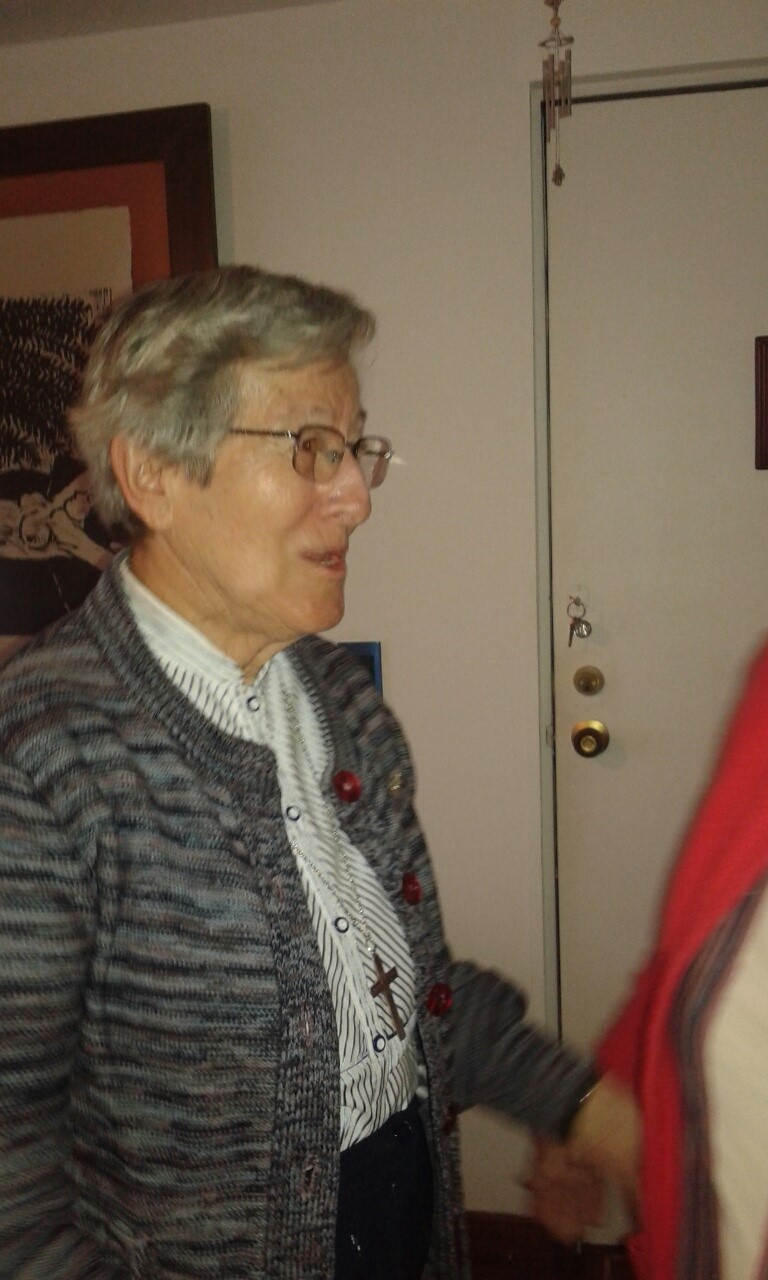
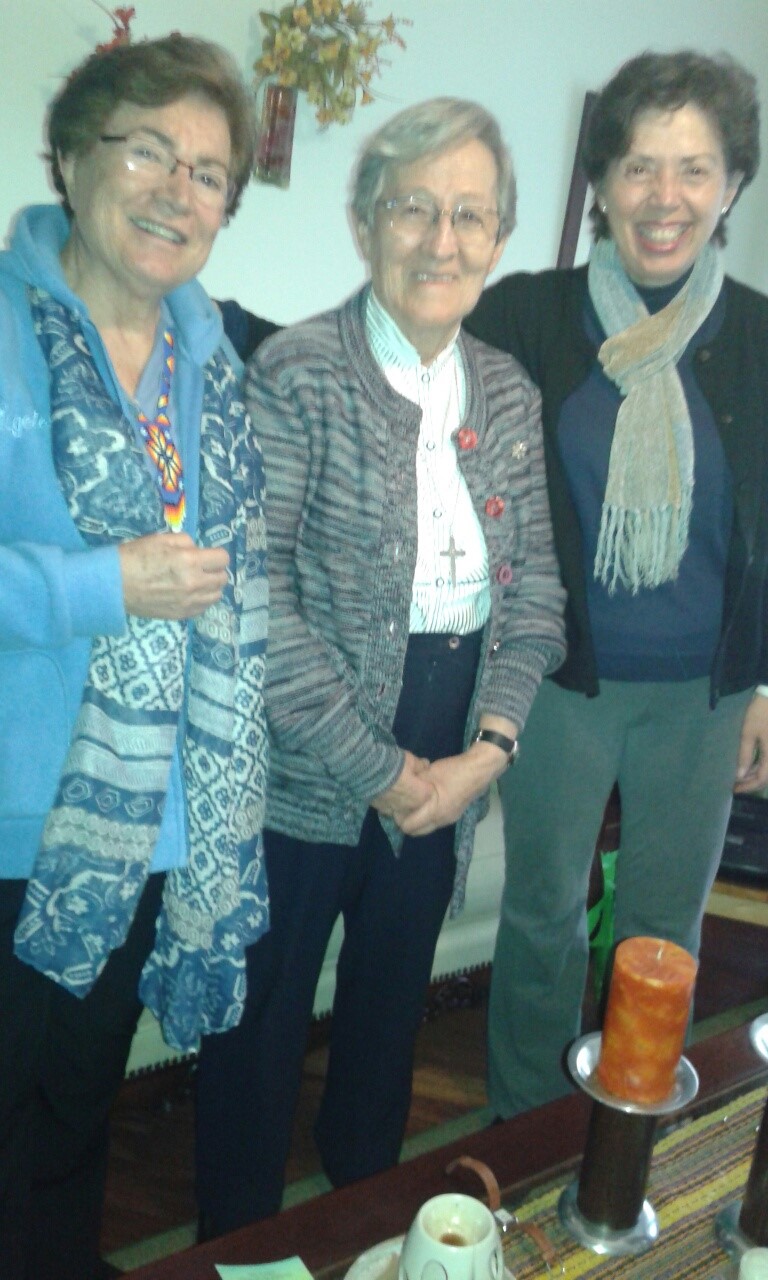
COLOMBIA.BOGOTÁ: CELEBRATING THE BIRTHDAY OF OUR SISTER CECILIA NARANJO BOTERO. rscj. Olga Lucia Álvarez Benjumea ARCWP *

https://evangelizadorasdelosapostoles.wordpress.com/2017/09/14/colombia-celebrando-el-cumpleanos-de-nuestra-hermana-cecilia-naranjo-rscj-olga-lucia-alvarez-benjumea-arcwp/


TO UNDERSTAND THE WHY OF THE UNION.
"The Greek words of the New Testament for" anointing "are  Greek , meaning" anointing or rubbing with oil "and, by implication," consecrating for a trade or religious service "; and  aleipho , which means "to anoint." In biblical times, people were anointed with oil to signify the blessing of God or the call of God to the life of that person ( Exodus 29: 7 ,  Exodus 40: 9 ,  2 Kings 9 : 6 ,  Ecclesiastes 9: 8 ,  James 5:14). A person was anointed for a special purpose - to be a king, a prophet, a builder, etc. There is nothing wrong with anointing a person with oil today. We just have to make sure that the purpose of the anointing is in accordance with the Scriptures. The anointing should not be seen as a "magic potion." The oil itself has no power. It is only God Who can anoint a person for a specific purpose. If we use oil, it's just a symbol of what God is doing. " (See https://www.gotquestions.org/Espanol/ungido-uncion.html)
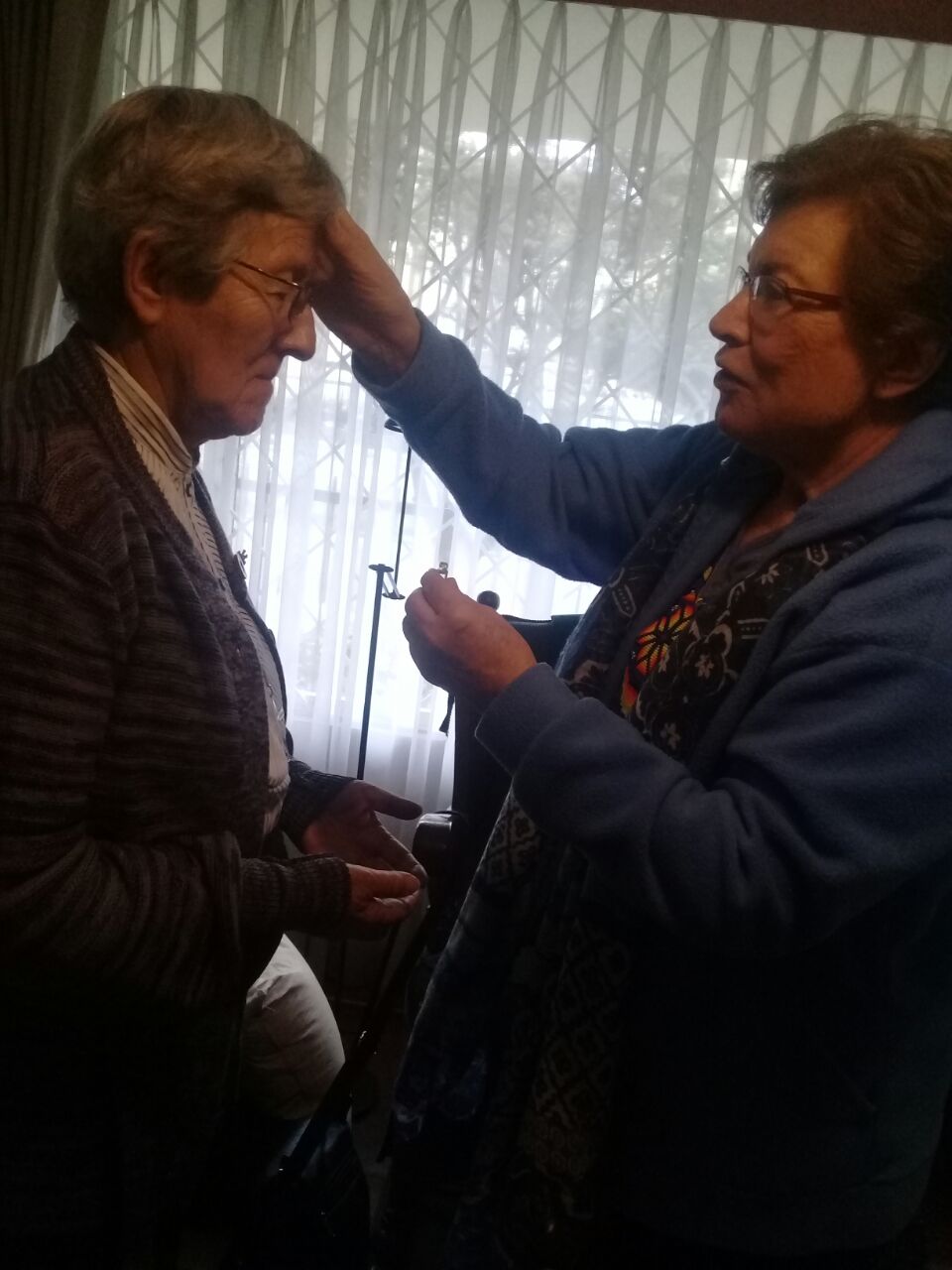
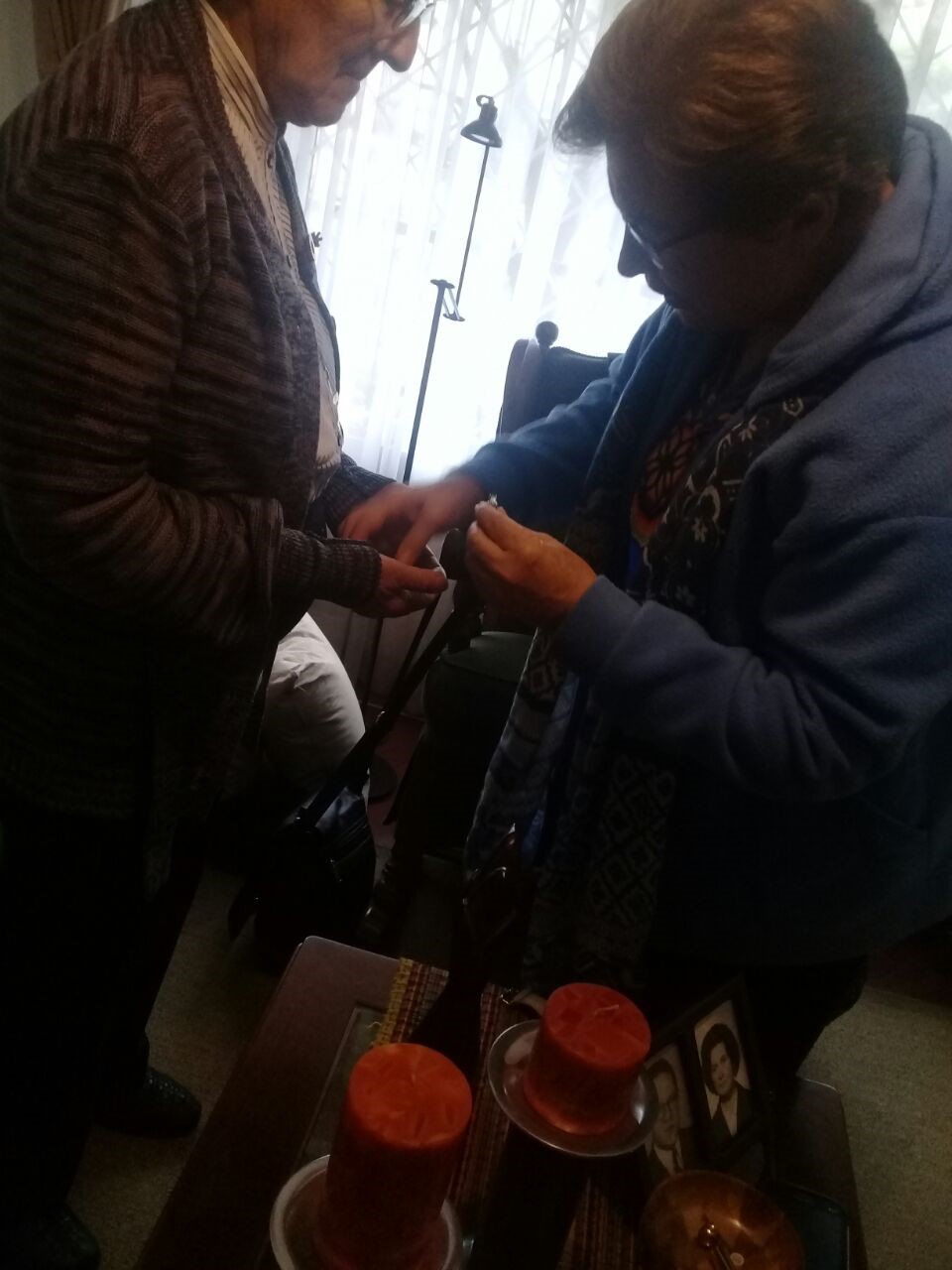
We wanted to anoint Cecilia, giving thanks to the Divine Essence for her life, shared in her family, in her Congregation and especially with those people who, because of their poverty, have been marginalized, ignored, persecuted, disappeared and killed in the climate lived for 50 years in our country.
In a small community, we have met with her, to do meditation. A meditation that turned all the way to Peace for Colombia, in order to remain committed and united in the process of Truth, Forgiveness and Reconciliation, in which we are implied by our Baptism.
At the moment of the anointing, the people present, all, we passed to do the anointing to our sister and companion. It was an act of community and fraternity.
SOME PHOTOS THAT COLLECT THE MOMENT OF THE UNION.
Accompanying Cecilia Naranjo in the celebration of his 80 years, making the anointing on the forehead.
"You anoint my head with oil; my cup is overflowing Surely goodness and mercy shall follow me all the days of my life, and in the house of the Lord I will dwell for long days. " Psalm 23.
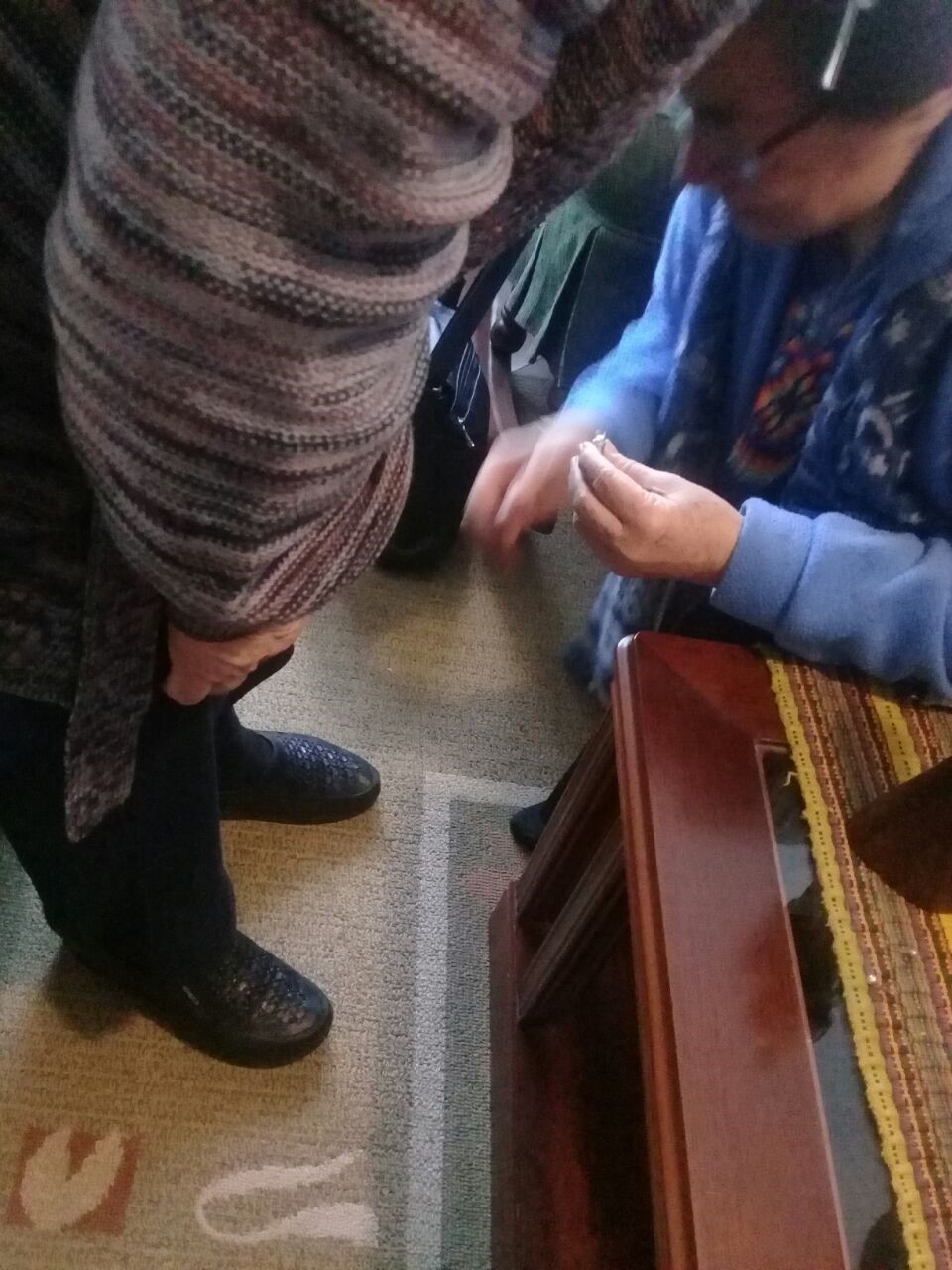
Anointing Cecilia's hands.
In the name of the Divine Essence of Life, we anoint your hands, so that you continue giving care, support and tenderness to every child of God, with the delicacy and love that has characterized you.
Anointing his feet.
We anoint your feet, freeing them from fatigue and fatigue, in your daily work, so that you continue to proclaim the Gospel.
How beautiful on the mountains are the feet of him who brings good tidings, who announces peace, who brings good tidings of joy, who announces deliverance,  and  says to Zion, Your God reigns! Isaiah 52: 7
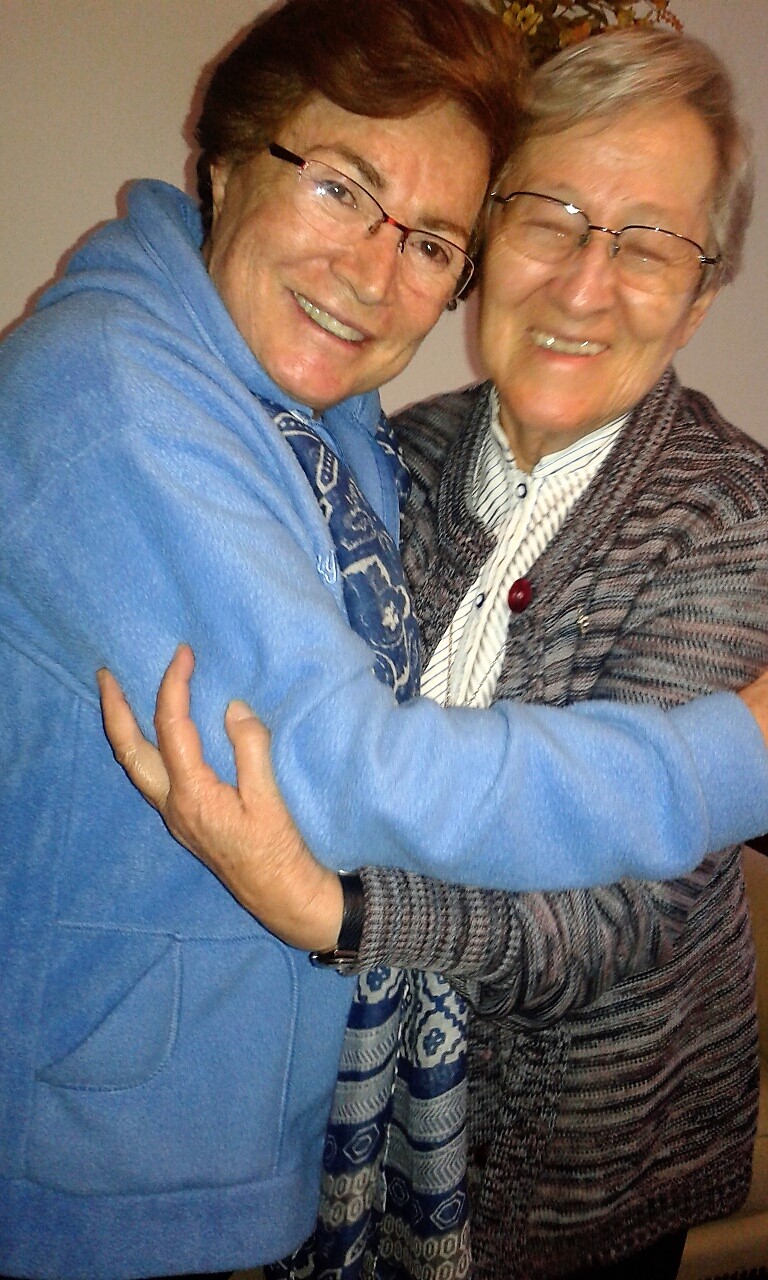
Accompanying Cecilia one more time in life.
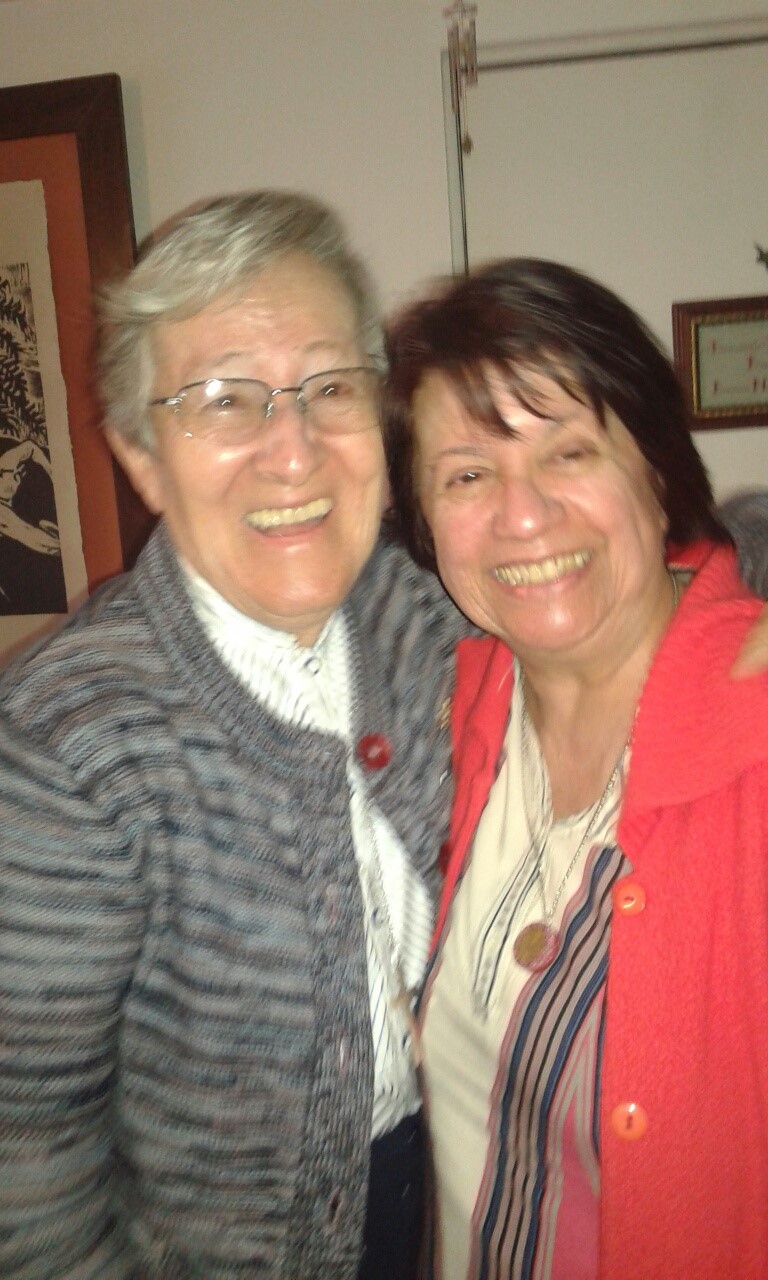
Celebrating life, with Maria Fernanda Barrera.

Olga Lucia (left) Cecilia (center) Gloria (right) 
Accompanying Cecilia on her birthday.
Bogota, September 12, 2017

"Unheard Voices of Catholic Women and Girls in the Pews" by Mary Sue Barnett ARCWP

Mary Sue Barnett ARCWP


I am the teenage girl in the pew sitting next to my father who has raped me dozens of times. He is a respected member of the community.
God has to be more than father. I thirst for safety and healthy love. Preach to me.

I am the woman in the pew who is contemplating escaping my husband who beats me. I am afraid he will kill me. I smile, but don't be fooled. I'm terrified. Preach to me.

I am the woman in the pew with a call to ordination and a gift for preaching. I have an MDIV.
I am underestimated. I am neglected. Invite me to preach and bring me into my life’s purpose.

I am the woman in the pew who is like the hemorrhagic woman who desperately but boldly touched the cloak of Jesus. She is in my soul. Someone preach about her.

I am the girl in the pew who was assaulted on my college campus by two fraternity brothers. I have nightmares. I am worthless.
Someone bring God to me.

I am the woman in the pew who is being stalked. I am hyper vigilant. I am exhausted. I am terrified. Preach to me.

I am the woman in the pew who is like the Samaritan Woman. I have profound dialogue in my soul with Jesus. I am a mystic. I am anonymous in my church. See the female face of Christ in me. Preach to me.

I am the woman in the pew who has a male boss that touches my body in a sexually inappropriate way. I cannot lose my job. I'm a single mother. I am humiliated. Preach to me.

I am the young woman in the pew who got pregnant as a teen. My family decided that I should get an abortion. Most people around me in the church, if they knew, would see me as a murderer. My world is dark. I am alone. Preach to me.

I am the woman in the pew who is like Shiphrah and Puah who defied the orders of the Pharaoh. Who are the other prophetic women in the pews? Someone preach to us and call forth our communal courage.

I am the woman in the pew who has had multiple miscarriages. I hear babies crying in the sanctuary and I see babies being baptized.
I feel lifeless and worthless in my church that exalts motherhood as the highest calling for a woman's life.
Am I made in the image of God? Preach to me.

I am the young woman in the pew who is weary from men's catcalling. Am I truly made in the image of God?
Preach wisdom to me about my body and identity.

I am the woman in the pew who is like the bent over woman made well by Jesus.
As a recovering alcoholic I neglected my children. In a church that exalts motherhood as the highest calling for women, I finally forgive myself. I am moving forward as a multi-dimensional human being with the future in front of me. Preach hope to my blessed self.

I am the woman in the pew who is pregnant and was shoved into a wall by her husband last night.
Will a pregnant woman wear a stole and preach self worth to me?

I am the woman in the pew like Mary Magdalene who has been to the cross and to the tomb, to that daring and mysterious meeting place with Christ. My spiritual wisdom is a gift to my church. How do I share? Invite me. Call me forth. Preach possibilities to me.

I am the woman in the pew who had a chemotherapy treatment for breast cancer last week.
For the first time in my life, I yearned for a woman priest to put oil on me and bless me. Preach to me about women and healing.

Divine Presence as Mother God, Holy Wisdom, and the Female Face of Christ, stand at the church doors, locked out.
The Holy Spirit, the Ruah of God, sweeps across the face of the locked church saying to the clerical gate keepers,
“Let Me In. My women and girls are suffering in silence! Let Me In, Let Me In, Let Me In, Let Me In . . .”

Mary Sue Barnett ARCWP
Catholic Woman Priest
Advocate for Women's and Girls’ Human Rights


-->