Translate

Wednesday, July 11, 2018

"Sandro Magister da por hecho que tras el Sínodo de la Amazonía se ordenarán las primeras diaconisas"


 | 
“A juzgar por el documento preparatorio del Sínodo de la Amazonia, en agenda en 2019, se prevé que precisamente en esa región se ordenarán las primeras mujeres diácono”, señala en la última entrada de su blog, Settimo Cielo, el prestigioso vaticanista Sandro Magister, que añade: “Y después, quién sabe”.

Subraya Magister en su texto el que se ha convertido quizá en el rasgo más característico del Papado de Francisco, ese avanzar para luego retroceder, decir una cosa para matizar la contraria, declarar algo y contradecirlo en una decisión, utilizar diferentes audiencias para lanzar mensajes distintos para una misma cuestión. Un modo, en fin, de plantear la tan cacareada ‘renovación’ de un modo tan confuso que uno no sabe muy bien a qué atenerse hasta que el asunto parece asentarse solo.
PUBLICIDAD
Naturalmente, el asunto de fondo no es el diaconado femenino, ni nadie duda por un segundo que los ‘renovadores’ a ultranza vayan a dejar de reivindicar lo que consideran el lógico fin de trayecto de estas reformas: el sacerdocio femenino, como exige el Mundo.
Francisco, siempre que se ha pronunciado sobre el particular, ha confirmado la práctica unánime y continuada de la Iglesia, proclamada solemnemente por San Juan Pablo II: las mujeres no pueden ser sacerdotes. A diferencia del celibato sacerdotal, una cuestión disciplinaria sobre la que la Iglesia tiene potestad para cambiar, el predecesor de Benedicto XVI aclaró que se trata de una cuestión ontológica y ‘de fide’, perteneciente a la naturaleza misma del Sacramento del Orden.
Pero, por otra parte, deja sin responder a quienes opinan en contrario desde la misma cúpula de la Iglesia y aun entre su círculo íntimo, como cuando el Arzobispo de Viena, el Cardenal Christoph Schönborn, dejó abierta la puerta a una futura reforma de la ‘visión’ de Wojtyla.
El debate llegó a tal punto que tuvo que intervenir el pasado mayo el propio prefecto para la Doctrina de la Fe, el Cardenal Luis Ladaria, que confirmó la decisión de San Juan Pablo, calificándola de “definitiva” e “infalible” en una nota publicada en L’Osservatore Romano.
Por supuesto, esto no ha acallado al ala progresista, maximalistas que si algo hay que admirar en ellos es la constancia, ahora animados por la comisión que ha encargado Su Santidad para estudiar la elevación de mujeres al diaconado.
Pero el diaconado es ya Sacramento del Orden, aunque no abarque las funciones sacerdotales plenas. Así se define en la encíclica Lumen Gentium proclamada como parte del Concilio Vaticano II: “En el grado inferior de la jerarquía están los diáconos, que reciben la imposición de las manos «no en orden al sacerdocio, sino en orden al ministerio». Así, confortados con la gracia sacramental, en comunión con el obispo y su presbítero, sirven al pueblo de Dios en el ministerio de la liturgia, de la palabra y de la caridad. Es oficio propio del diácono, según le fuere asignado por la autoridad competente, administrar solemnemente el bautismo, reservar y distribuir la Eucaristía, asistir al matrimonio y bendecirlo en nombre de la Iglesia, llevar el viático a los moribundos, leer la Sagrada Escritura a los fieles, instruir y exhortar al pueblo, presidir el culto y oración de los fieles, administrar los sacramentales, presidir el rito de los funerales y sepultura”.
Y, ahora, por lo que puede leerse en el documento preparatorio del Sínodo de la Amazonia, que habrá de celebrarse en 2019, se prevé que allí se ordenen las primeras diaconisas, junto con los ‘viri probati‘, los primeros casados ordenados sacerdotes del rito latino que, según las voces más alarmistas, anunciarán el fin del celibato sacerdotal obligatorio para la Iglesia universal.

Tuesday, July 10, 2018

A Simple Effective Meditation Practice: Brain Wave Vibration- Relaxing, Energizing, Healing and Transforming

Every achievement of humankind—from the first use of fire to rockets blasting into outer space—began with a thought. We communicate thoughts by means of vibration—through the words we speak, the ways we touch, and the actions we take. When our thoughts are in accord with those of others, amazing things happen and even entire planets can be transformed—sometimes for the better, sometimes for the worse.
There is one key player in this constant vibratory communication. It is what is responsible for receiving, producing, and interpreting the vibrations that shape the quality and content of our lives. It is what connects our mind to our body and to our physical reality.

It is our brain.

Naturally then, when the mind is cluttered with negative or fearful thoughts, the body also becomes unhealthy. All life forms have natural immune and homeostatic processes that maintain or return them to a normal state of equilibrium. This innate healing ability is moderated by our brain. We can either choose information that strengthens it or weakens it.
Ilchi Lee created Brain Wave Vibration to help you tap into your inner essence and transcend false beliefs and preconceptions so that new, healthy information can take root. Like other forms of meditation, it slows down your brain waves to help you reduce stress, calm your mind, and become receptive to new, more self-supporting beliefs. Brain Wave Vibration balances the frenzied mindset associated with most modern lifestyles.
Brain Wave Vibration is a powerful, easy-to-follow brain fitness and holistic healing method that helps you stimulate the flow of ki (chi, qi) to bring your body and mind back into balance. Most ancient cultures recognize a universal life force (energy) that exists in all things. Asian healing systems theorize that it is the balanced flow of ki through certain pathways in the body (meridians) that determines our health and well being.
At its core, the practice utilizes basic vibration exercises to stimulate the brain stem, calm higher frequency brain wave activity, and circulate the body’s ki. By tapping into your body’s inherent rhythm, you are able to release tension and reach states of deep relaxation similar to that achieved through traditional sitting meditation. It can be done anytime, anywhere by people of all abilities, with or without music.

Brain Wave Vibration has three distinct elements:

  1. Deliberately making vibrations in your body,
  2. Allowing your body to ride the rhythm, and
  3. Following the flow of energy
It its simplest form, Brain Wave Vibration merely involves moving your body freely to its own internal rhythm while focusing on a particular intention, or just your body’s sensations. Various forms of the practice include the head nod method, full-body vibration, abdominal vibration, chest vibration, and energy meditation. A session can be just a few minutes or a full-one hour practice combining meridian stretching, vibration exercises, ki-gong movements, energy dance, and sitting meditation. No special clothing or space is required, and you can do it alone or with a group. For a more detailed explanation, read Brain Wave Vibration: Getting Back into the Rhythm of a Happy, Healthy Life by Ilchi Lee.

"Group petitions for reinstatement of former Maryknoll priest Roy Bourgeois Jul 9, 2018" by James Dearie, National Catholic Reporter

https://www.ncronline.org/news/people/group-petitions-reinstatement-former-maryknoll-priest-roy-bourgeois


left to right: Roy Bourgeois, Ruth Stinert Foote, Sibyl Dana Reynolds RCWP, Janice Sevre Duszynska ARCWP


A new petition has been launched to reinstate a popular priest who was excommunicated for his support of female ordination.
CORPUS, an organization begun by resigned priests and their families that calls for a more inclusive church, released a petition June 28 to reinstate former Maryknoll priest Roy Bourgeois. Bourgeois was excommunicated after saying the homily at an August 2008 Mass of ordination for longtime friend Janice Sevre-Duszynska, who was ordained into the Association of Roman Catholic Women Priests.
Many other Catholic groups have also endorsed the petition, including School of the Americas Watch, Call to Action and Women's Ordination Conference.
In October 2008, the Congregation for the Doctrine of the Faith threatened Bourgeois with excommunication, citing a decree it had issued months before the ordination, on May 29, 2008, that stated "both the one who attempts to confer a sacred order on a woman, and the woman who attempts to receive a sacred order" are excommunicated.
Although the original wording only proscribed sanctions upon women who participate in an ordination ceremony and those who perform the rite, the "Decree was broadened to include Roy's action (and that of other like-minded 'offenders') because he was not, in fact, the ordaining bishop at the ceremony," the petition's prologue says.
Bourgeois is a longtime peace activist, who spent years serving as a Maryknoll priest in Latin America and Chicago, founded the School of the Americas Watch, and has spent more than four years combined in detention, usually in short stints for protests.
Bourgeois says his stance on the ordination of women, for which he fought for years after delivering the controversial homily, is a matter of conscience and that he will not back down from his belief that the church is currently plagued with sexism and clericalism.
"It's about power," Bourgeois told NCR. "These male priests see women in the church as a threat."
Having grown up in the U.S. South during segregation, Bourgeois said he remembers the practice was justified as "tradition" and that "separate but equal was our mantra."
"Years later, here I am a Catholic priest, and I notice something very similar," he said. "Our church leaders are saying the all-male priesthood is our tradition … and they're also saying men and women are equal, but have separate roles.
Bourgeois' fight within the institutional church ended in November 2012, when the Maryknoll order confirmed his "excommunication, dismissal and laicization" by the Congregation for the Doctrine of the Faith in a letter announcing his removal.
The petition asks that signees write their own cover letters, send it to their local bishops and the Congregation for the Doctrine of the Faith, and encourage others to sign it as well.
While the petition requests the reinstatement of Bourgeois by name, "it's much broader than Roy and excommunication," Jim Ewens, who was involved in writing the petition and serves as the editor of Corpus Reports, a bi-monthly publication by CORPUS, told NCR. The petition asks that that "all other Catholics who have been similarly banned by the Decree of May 29, 2008" be readmitted to communion.
It also calls for a more open church that seriously considers the lived experiences of its members. Such a church would "support — rather than deny — the right of couples to practice birth control," the petition says, as well as "the right of divorced and remarried Catholics to follow their consciences and receive the Eucharist. It would embrace the uniqueness of those in our midst who are lesbian, gay, bisexual, and transgender. "
Bourgeois says that these issues of conscience are at the heart of the petition, and he was glad that they were included along with the call for his reinstatement.
"That's why I'm supporting it," he said.
[James Dearie is an NCR Bertelsen intern. Contact him at jdearie@ncronline.org.]

... 2008 Mass of ordination for longtime friend Janice Sevre-Duszynska, who was ordained into the Association of Roman Catholic Women Priests

"The Secret of Mary Magdalene" Documentary

https://www.youtube.com/watch?v=gKlKYdL0ANk&feature=youtu.be

The Global Notebook from Global Ministries University

http://secure.campaigner.com/csb/Public/show/3tpn-qmlpg--haozh-8q71a23

Monday, July 9, 2018

"The Question of Women Priests and its Historical Implications"

Bishop Olga Lucia presides at Ordination Liturgy in Colombia, South America

My Response: St. Paul did not attend the Last Supper, yet, he is called an apostle.  Paul refers to Junia and Andronicus, a married couple, in Romans 14:7 as apostles and mentors.  According to the bible, there were more than twelve apostles. The  early Church Fathers called Mary of Magdala  "apostle to the apostles" and now the  contemporary Church does too, and celebrates her feast day each year. The author below states that Ladaria , prefect of the Sacred Congregation for the Doctrine of the Faith, is historically inaccurate in arguing that because Jesus ordained the 12 apostles at the Last Supper, he excluded women from Holy Orders forever. Thousands of women served as deacons for centuries and, ministered in priestly roles as well. If we followed Ladaria's argument, the RC Church would only be ordaining married Jewish men. Bridget Mary Meehan ARCWP , https:arcwp.org#womenpriestsnow 
..."Ladaria presents the argument that Christ conferred this sacrament to the 12 apostles during  the Last Supper. Ladaria’s argument tends to be sloppy from a historical point of view because there was another apostle, Paul, who was not with the 12 apostles during the last supper but still historically credited with being both a priest and a bishop.  This is the reading given in the past of the story in the Acts about St. Paul’s arrival in Malta. He is not only credited with the distribution of the Holy Eucharist but also of having consecrated Publius as Malta’s first bishop. The question here would be – how could Paul have distributed the Eucharist and consecrated Publius as a bishop and performed the Eucharist when he was not with the rest of the Apostles at the Last Supper? The historical argument would most probably be that Paul was consecrated by Ananias, who was one of the disciples of the apostles.  
I am stating these facts to show that when theology seeks to base its arguments on faith and not history to justify an argument, this can lead to erroneous conclusions. “The Church always has seen itself as bound to this decision of the Lord”, wrote Ladaria, “which excludes that the ministerial priesthood can be conferred validly on women.” I don’t know where this decision is written in the Bible. History confirms that until the time of Charlemagne, there were still women deacons. The historical records, or what has survived from this early period, are indicating that women played a more vital role in the spread of Christianity in the West than their males counterparts. Such an attitude of masculinity, which the Spanish Jesuit, Ladaria, is expressing, is a remnant of the Franks’ Salic vision of religion rather than a biblical tradition that goes back  to the early period of Christianity..."

"Meet the Regina Woman about to be Ordained as bishop of a church that defies Catholic doctrine" by Chelsea Laskowski · CBC News

https://www.cbc.ca/news/canada/saskatchewan/regina-woman-bishop-roman-catholic-womenpriests-1.4738677


Jane Kryzanowski of Regina will become the Canadian bishop for the Roman Catholic Womenpriests on July 21. (Screenshot/Leslie Robinson, YouTube)
The pain from a lifetime of being told a path to priesthood didn't exist for women is the driving force behind a Regina woman's journey to becoming the Canadian bishop of the Roman Catholic Womenpriests (RCWP).
Jane Kryzanowski is past retirement age, and has long been inspired by the RCWP's acceptance of women in roles that the traditional Roman Catholic church doctrine rejects, and which Pope Francis has upheld.
RCWP Canada is a grassroots women's ministry that ordains women priests on the basis that the Roman Catholic church currently discriminates against women. 
"The whole thing of oppression, suppression, repression of the call of God to women in the Roman Catholic church is very, very painful," Kryzanowski told CBC's Saskatchewan Weekend.
The first time she saw women priests get ordained into the RCWP was an ground-shaking moment for Kryzanowski. But up until 2012 she left it to the RCWP to lead the charge in changing women's roles in the Catholic church.
That year, Kryzanowski attended a speech by Marie Bouclin, the only Canadian bishop of the RCWP. Bouclin's story felt much the same as Kryzanowski's, and led her to weep when the two talked.


The National
Women priests


00:00 14:59
Go underground to a secret ceremony where women are ordained as Catholic priests14:59
"It was like this call I had known was there for so many years, was finally exposed again, finally broken open. But also the pain of this never having been a dream that could have been fulfilled," Kryzanowski said..
Kryzanowski will take over from Bouclin when she retires later this month. But her path to becoming the new Canadian bishop has been a long and emotional one because, for decades, she bottled up what she describes as a "calling by God" to become a priest.

'Who of you wants to be a priest?'

Kryzanowski was in elementary school the first time she discovered that the priesthood she coveted was unattainable to women within the traditional Roman Catholic church. A priest had come into her class and asked, "Who of you wants to be a priest?"
Kryzanowski's hand shot up, only for the priest to quickly say that only men become priests and that women instead become nuns.
So, instead she became a nun.
Kryzanowski ended up leaving the convent after eight years, then trying to reassess what her calling.
She stayed on working with the Catholic church despite struggling with how it restricts the role of women.
"That was my spiritual home. That was where I grew up; that was what I knew," she said.
In the early 2000s, Kryzanowski worked in a Regina Catholic church. She was doing almost all tasks that a priest would do — except for administering sacraments. It stung for her to not be able to do it all.
"The question was always, why is this?" she asked.
"That was very painful for me. There just was no solid theological argument that ever satisfied me when people tried to say this is why you can't be a priest."

Marie Bouclin will be known as "Bishop Emerita" when she retires this month. (Courtesy www.romancatholicwomenpriests.org)
But a pivotal moment came in 2002, when she saw seven women ordained as Roman Catholic Womenpriests in Germany along the Danube River.
"It felt that, 'wow, the time has come for this,'" Kryzanowski said.
It took another decade, and her emotional moment with Bouclin before Kryzanowski sought priesthood herself and was ordained as a priest within the RCWP.
She was priest at a home church in Regina that's one of nine Catholic churches in Canada presided over by RCWPs, according to the group's website.

From priest to bishop

Kryzanowski is now taking over the role of the woman who initially inspired her to take that leap of faith.
The RCWP community has chosen Kryzanowski has Bouclin's replacement.

Bouclin, centre, was among 16 women bishops worldwide. (Leonardo Palleja/CBC )
Kryzanowski said her new job is to "be the pastor to the pastors." She will be a point of contact for them and their communities and support the pastors in whatever way they need.
Further to that, Kryzanowski will be a voice to make the concerns of marginalized people known to a wider audience.
She is already passionate about justice for women in the church, addressing abuse of women and children by clergy, and wants to make connections with the LGBTQ and Indigenous communities.
"People on the margins are the people where we really do reach out," Kryzanowski said, noting one of the RCWP priests serves in Vancouver's downtown East Side.
Kryzanowski said she has strong women from the Bible to guide her in the pursuit of justice.
"This is where I am called. This is who I am and what I am to do even in my dying days," she said.
with files from CBC Radio One's Saskatchewan Morning

Abortion and the Supreme Court: how the debate has changed" by Michael Sean Winters, National Catholic Reporter


20180626T1118-0169-CNS-SCOTUS-FREE-SPEECH-ABORTION crop.jpg

Pro-life advocates gather near the U.S. Supreme Court during the annual March for Life in Washington Jan. 19. (CNS/Tyler Orsburn)
Last month, before Associate Justice Anthony Kennedy announced his retirement from the Supreme Court, I wrote, "It is not possible to articulate a real working-class agenda at the same time as you are fighting the culture wars on behalf of the special-interest left and portraying believing, albeit conservative, Christians as boobs." I voiced the hope that Democratic candidates would learn to place a closed parenthesis on discussions about pelvic issues and focus, instead, on wage stagnation. The second Kennedy announced his retirement, that hope flew out the window.
Later today, President Donald Trump will announce his nominee for the court. In the last fortnight, did anyone hear a detailed discussion of what a new justice's thoughts might be on anti-trust law? On labor rights? On anything except Roe v. Wade? And how should Catholics respond? What stance should the bishops take? How can liberal Catholics shape the debate?

Whether we like it or not, the debate over the forthcoming confirmation will be largely dominated by discussions of abortion. A good place to start in understanding the jurisprudence is this essay at Mirror of Justice by Kevin Walsh. He notes that the fight might not be over Roe but instead over attempts to reverse Planned Parenthood v. Casey, the 1992 decision that created the volatile "undue burden" standard. I suspect that, whoever is nominated, states that wish to enact more sweeping restrictions on abortion, especially late-term abortions, will find a friendlier court than the one that decided Casey.
Walsh is a little too sanguine about overturning Roe. I agree it was lousy law and that much of it has been superseded by Casey. But it introduced a line of legal reasoning about privacy that has affected other cases, such as Obergefell v. Hodges, the decision that legalized same-sex marriage in 2015. I may be suspicious, and more than suspicious, of that line of reasoning, but millions of Americans have grown up believing what Justice Harry Blackmun told them about their right to privacy, and once conferred, it is hard to roll back a whole slew of rights. It is why people still refer to Roe as the key decision and not CaseyRoe was seminal and remains iconic, even if it was wrongly decided and poorly reasoned.
If the Supreme Court takes steps to allow states more latitude in restricting abortion, what will happen politically? The Washington Post ran a map that highlights the four states with "trigger laws" — if Roe were overturned, abortion would be banned in Louisiana, Mississippi, and North and South Dakota. Eight states have laws that protect abortion rights: Those laws could be invalidated by the Supreme Court but only if the high court adopted some version of a personhood argument, bestowing constitutional rights on the unborn child, rather than embracing a jurisdictional argument that simply leaves it to the states to decide. Ten states still have pre-1973 laws restricting abortion on the books.
The problem with this analysis is that it assumes a static political environment. I raise the same concern about polling on the issue. It is a lot easier to say you support restrictions on abortion rights when you think such restrictions are hypothetical. If the Supreme Court leaves the issue up to the states, it will be decided by state legislators, many of whom won election on completely unrelated issues. They may have filled out the questionnaire for the National Right to Life Committee or for Emily's List, hoping for some campaign cash, but they will be a lot more cautious once there are real, not merely rhetorical, consequences to the stands they take.
At The Federalist, theologian Charles Camosy exposes some of the limits to the claim that "a majority of Americans support Roe." Camosy is right that polls indicate many Americans support the kinds of restrictions on abortion that Roe ruled unconstitutional. He is also right that the stories of illegal abortions pre-Roe being done with wire hangers are largely apocryphal. And, importantly, he notes that even many pro-lifers support exceptions in especially difficult cases.
I fear all this gets washed away if Roe or Casey is overturned. If even one woman dies in a botched illegal abortion, even in Louisiana or Mississippi or the Dakotas, I suspect the legislature would flip in a heartbeat

Nor, I fear, is it possible to simply return to the kind of discussion our political branches of government were entertaining before the court jumped in and short-circuited the debate. In Europe, parliaments wrestled with the issue and mostly reached the conclusion that elective abortion should be banned after 10 or 12 or 14 weeks. The women of Europe are not oppressed. But can Americans reach such a common-sense position? I don't see how.
Pro-choice groups focus on a woman's autonomous right to make decisions about her own body. Until the baby emerges from the birth canal, they do not believe it has any moral significance apart from what the mother chooses to impart to it.
Pro-life groups get outraged when anyone does not feel the same level of sympathy with a colony of cells in the very early stages of pregnancy that they feel with a vulnerable woman facing a crisis pregnancy. Abortion at any stage is murder.
Roe not only short-circuited the discussion, it turned it into this categorical debate in which both sides talk past each other and the discussion is dominated by the extremes on both sides.
I had hoped that two technological changes would ameliorate some of the difficulties of the debate. Young people now grow up and see the sonograms of themselves in the womb. I had hoped, over time, that would rob the pro-choice position of its continued ability to deny the moral significance of pre-born life. And now that most abortions in the very early stages will be accomplished by taking a morning-after pill or something like it, this technological change achieves in fact the privatization that Blackmun assigned in legal theory.
I suspect the vast majority of Americans will oppose efforts to ban the morning-after pill and, realistically, only with the eyes of faith can we make the case that an embryo is a human being enjoying full rights. Only after twinning is no longer possible, which is early, does the colony of cells possess that quality of self-sameness that is thoroughly unique that we intend when we speak the word "person." We Catholics believe it is a human life from the moment of conception, but I doubt that will ever be the law.
There is another way the debate has changed in recent years. The president is avowedly pro-life. He is also someone who flirts with white nationalist racism. My hopes for the pro-life movement appear without foundation if we think young people will ignore Trump's race-baiting, and not be drawn to the opposition no matter what they think about abortion.
After Reverend Mother sends her to the Von Trapps, Maria says: "When the Lord closes a door, somewhere he opens a window." Wednesday, we'll look for any open windows that might satisfy a progressive Catholic.
[Michael Sean Winters covers the nexus of religion and politics for NCR.]
Editor's note: Don't miss out on Michael Sean Winters' latest: Sign up to receive free newsletters and we'll notify you when he publishes new Distinctly Catholic columns.

Sunday, July 8, 2018

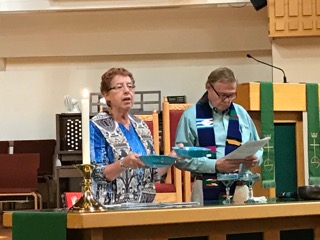
Mary Mother of Jesus Inclusive Catholic Community 14th Sunday in Extraordinary Time July 7, 2018 Presiders: Elena Garcia ARCWP, Kevin Connelly Music Ministry: Mindy Lou Simmons

Elena Garcia ARCWP and Kevin Connelly - Co-Presiders

Theme: The Call of the Prophet


Welcome and Centering Thoughts
Presider:
In Baptism we are all called to be priest and prophet. Prophets are those who speak for or on behalf of God in the community. In a world that did not clearly separate issues of religion and politics, the prophets appeared as lobbyists for the rule of God demanding that the courses of action in times of crisis, follow what God desired and not that which was most expedient according to human political wisdom. As we gather today to celebrate Eucharist, let us listen to the experiences of Ezekiel, Paul and Jesus.

Gathering Hymn: “We Are Called” #628 all verses, (using God for Lord)

 Opening Prayer

Presider:  We begin our liturgy in the name of God, the Source of all being, and of the Son eternal Word, and of the Holy Spirit, Sofia Wisdom.  ALL: Amen
Presider: My sisters and brothers, God is with you!   ALL: And also with you.

Presider:  Let us pray.
Gracious and Gifting God, You, who birthed the cosmos, every living thing and each and every one of us, help us each day to be conscious and aware of your magnanimous love for us. Let your life in us transform us that we may fully experience your love. Bring us to the wholeness and holiness to which you call us.  Amen 

Community Reconciliation

(Brief Pause for reflection.)
Presider:  Creator God, to you all hearts are open, no desires unknown, and no secrets are hidden. Cleanse our hearts by the inspiration of Holy Wisdom.
ALL: We take your Word into our minds and hearts. Open them to new understanding.
Presider: Loving Jesus, we ask for the grace to realize our continual need to grow in understanding, compassion and caring for ourselves, all of humanity and for our planet earth, and all the while to be You for others and to meet You in others.
ALL: We accept your love and understanding of the frailty of our human nature.
Presider: We ask for your forgiveness for our failure to extend compassion, understanding and caring to all your children, our brothers and sisters regardless of beliefs, nationalities, races and actions, for we are all worthy to be called your sacred people.
ALL: (with an outstretched arm):      
God, our Father and Mother of Compassion, through his life, Jesus revealed to us that nothing can separate us from your unconditional love. He sent Holy Spirit who gives us the understanding, willingness and courage to love one another. We ask you to grant us the grace of pardon and peace so that we may – in turn- forgive each other our failures to care for one another and for our earth. We ask this in the name of Jesus, our brother and of Holy Spirit Sofia, our healer and comforter.  Amen.

Glory to God

Presider: Let us give glory to our loving Creator in song….
Glory to God, glory, O praise God, alleluia. Glory to God, glory, O praise the name of our God.  (3x)

Liturgy of the Word

First Reading: Ezekiel 2:2-5                            ALL: Thanks be to God
Responsorial: Psalm 142               ALL: Stand by us, stand by us. Lift us up from the restless sea. Second Reading: 2 Corinthians 12:7-10      ALL: Thanks be to God
Gospel acclamation:                                       ALL: Alleluia (Celtic version)


Gospel: Mark 6:1-6                                         ALL: Glory and praise to our brother Jesus


Homily Starter/ Community Reflections
Homily Starter/ 14th Sunday in Extraordinary Time/2018/Elena Garcia ARCWP

We heard at the beginning of our liturgy today that prophets are those who speak for or on

behalf of God. They do not yearn and aspire to become prophets. Not like they wake up one

day and decide “I think I’ll be a prophet. That seems like a lofty ambition to pursue”   We

 just listened to the word of God in the readings for today. Ezekiel heard the word of God

 and recognized the power of Holy Spirit catapulting him onto his feet and then sending him out

among the wolves.  Paul was thrown off his horse and then instructed in the ways of God and

his mission while being assured that the grace of God would be sufficient to sustain him in his

 weakness while speaking for and on behalf of God.  And Jesus showed us how to stand up to

injustice and speak truth to power.  And was he not well received in his own “parish, town”?

Prophets are seldom welcomed with open arms and as Jesus pointed out, never in their native

 land. They are often met with opposition, persecution, and at the very least were ignored.

What did they have in common? They were called to speak for and on behalf of God. They

 carried out their mission in non-violence. They were persistent in the face of opposition and

rejection.  Then, as is the case now, prophets are constantly surrounded by the voices of blind

 complicity to the established order, as well as those who are somewhat aware of the injustices

 but have become numb and preoccupied with other matters.

 I think of times in my life when I have been compelled to action about something that is

 foreign to my knowledge base and totally out of my comfort zone.  From where did that

inspiration, energy and commitment emerge?  I venture to say that those times have been

planted by Holy Mother God, taught by the example of Jesus and nurtured and encouraged

by Holy Spirit Sophia.

I wonder then how does this message apply to us today? What is the challenge before us?

We are all welcomed by this community that gets us, and makes us feel the warm fuzzes! But

 we must beware as this community should be a charging station through which we can hear
 
God talk to us and Spirit bring us to our feet and strengthen us to confront the hard of face and

obstinate of heart.

Priest and prophet all are we. We are called to speak for and on behalf of God in whatever way  God wills.


Questions regarding our prophetic mission.
~have you ever considered yourself as a prophet
~Is the concept of Prophetic obedience a challenge?  How so?
~How can we as a community respond to that call?
-->
~Fear is a very real obstacle. How can we overcome it?

Profession of Faith

ALL:  We believe in you O God, Creator of the universe, whose divinity infuses all that exists, making everything sacred.  Jesus, we believe in You, messenger of the Divine Word, the bringer of healing and the heart of Compassion. We believe in you Holy Spirit, the breath of our innermost life, and the Sustainer who heals and energizes us when our spirits grow weary in our journeys.
We believe that You are here with us today in this gathering, calling us to be a loving and just people. We believe the poor have a priority in your plans and we are called to do our best to serve them in your name. We believe you are offering us freedom and grace to become our true selves, so that we can turn from false, worldly securities and look to you for our true identity as your children. We believe that as You were anointed by God to do God’s Will, through our baptism, we too are called to be a sign of God’s Kingdom on earth where we are all sisters and brothers. Amen


Prayers of the Community

Presider:  We are a people of faith. We believe in the power of prayer. We are mindful of God’s unconditional love and care for each one of us. And so, we bring the needs of the people to our merciful and gracious Creator. 
After each intercession please respond:   R-Compassionate God, hear our prayers.
O God, you grieve for all that afflicts us.
~give those who struggle with addictions the courage and perseverance they need. R-Com….

You are father and mother to us, and we bask in your love.
~inspire persons of integrity and compassion to care for children who are separated from their parents.   R- Com…..

You taught your followers to travel lightly through life.
~call our consumer culture to a change of heart and to values that lead to life.     R-Com
           
For what else shall we pray?

Presider: Healing God, you faithfully listen to our prayers. We ask You to strengthen us in our concern for one another- here and throughout the world. We ask You to support us in our endeavors for justice and equality so that, with our sisters and brothers, we may promote cultures of peace without violence in our world. We ask this in the name of Jesus and Holy Spirit Wisdom. All: Amen

Offertory Procession/Song
“Blest Are They” # 631 – all verses

Preparation of the Gifts

Presider: Blessed are You, God of all creation. Through your goodness we have this bread to offer, this grain of the earth that human hands have prepared for our use. It will become for us the bread of life.
ALL: Blessed be God forever

Presider: Blessed are you God of all creation. Through your goodness we have this wine to offer, this fruit of the vine that human hands have prepared for our use.  It will become for us our spiritual drink.
ALL: Blessed be God forever.

Gathering of the Gifts

Presider: Our brother Jesus, who has often sat at our tables, now invites all of us to join Him at his family table. Everyone is welcome to share in this meal.
(The whole community is invited to gather around God’s family table)

ALL: Loving and caring God, we, your people are united in this sacrament by our common love of Jesus. We are one with all beings in the community of creation and with all those who share your gift of compassion, especially toward those who are marginalized and oppressed. May we love tenderly, do justice and walk humbly with you in solidarity with our sisters and brothers. May we strive to live as prophetic witnesses to the Gospel of our brother Jesus, supported by the wisdom that directed him and by the Wisdom of the Spirit who supports us. Amen.

Presider: Let us give thanks to the Creator and Sustainer of all that exists.
ALL: With hearts full of love, we give God thanks and praise.

Presider: Holy Spirit, we realize your presence among us as we gather at the family table.
ALL: Fill us with reverence for you, for one another, and for all of creation.

Presider: Let us lift up our hearts.
ALL: We lift them up to the Holy One who lives in us and loves others through us.

Presider: God dwells in each one of us.           ALL: Namaste!


Eucharistic Prayer
                                   
Presider: Ever present and always caring God, we do well always and everywhere to give you thanks.  In you we live and move and have our being.  Your Spirit dwelling in us gives us the assurance of unending peace and joy with you. That Spirit, who raised Jesus from the dead, is the foretaste and promise of the paschal feast of heaven.  And so, we sing in thankful praise:

All (sing): We are Holy, Holy, Holy…(3x)   You are Holy, I am Holy, We are Holy…

Voice: We thank you, God, for the gift of Jesus in history – and the gift of Jesus in faith. Through him, you breathe life into us.  He was moved by his vision of your constant presence in everyone, everywhere he went.  He revealed you in everything he did in his life well lived.  And he showed us, through his example, not only how we should live, but also for what we may die.

Voice: When his time on earth had come, Jesus – aware of and accepting his destiny – gave up his life for the values that he deeply believed, lived and taught…his conviction that love is stronger than death.  And then, providing an example of this insight for the understanding of ages to come, he opened wide his arms and died.  Then the Spirit of God, who raised Jesus from the dead, showed us that life is eternal and love is immortal.  Jesus is with us today as he will be through the end of time.

All: O God, let your Spirit of life, healing and wholeness come upon these gifts that we brought from your fields and placed on our table – this simple wheat and wine.  May she make them holy so that they will become for us the Body and Blood of Jesus, our brother.

(With an outstretched arm, we pray the consecration together.)   We remember the gift that Jesus gave us on the night before he died.  He gathered with his friends to share a final Passover meal.  And it was at that supper that Jesus took the bread, said the blessing and shared it with them saying: take this, all of you and eat it. This bread is you; this bread is me.  We are one body, the presence of God in the world.  Do this in memory of me. [Pause]

In the same way, Jesus took a cup of wine, said the blessing and gave it to his friends saying: take this, all of you, and drink it.  This wine is you; this wine is me.  We are one blood, the presence of God in the world.  Do this in memory of me.

Presider: Jesus, who was with God “in the beginning of the creation of the heavens and the earth,” is with us now in this bread.  The Spirit, of whom the prophets spoke in history, is with us now in this cup.  Let us proclaim the mystery of faith.

All:  Christ has died. Christ is risen. Christ lives in us and through us in the world today.

Voice: In memory of Jesus’ life, death and resurrection, we offer you, God, this living-giving bread and this saving cup.  May all who will share in this sacred meal be brought together in unity by the Holy Spirit.  And may that Spirit, that Wisdom, that moved in Jesus move as freely in our lives as She did in that of Jesus’.

Voice:  God of blessing and peace, we remember your church throughout the world; help us grow in love, together with Francis, our Pope, Bridget Mary, our Bishop, and your whole family everywhere – especially those who live on the margins of church and society.  We remember the victims of recent floods and earthquakes, and those struggling to reconstruct their homes and lives from these devastating events. We remember the refugee families who have come to our country fleeing from persecution and in need of acceptance and love. We remember the communion of saints both living and dead, who touched our lives and left footprints on our hearts.  We remember especially… (pause to mention names).

All:  Through Christ, with Christ, and in Christ, in the unity of the Holy Spirit, all glory and honor is yours, Creator God, forever and ever… and let everyone sing… Great Amen (3X)
                                                 
All (holding hands): Our Father and Mother, who are in heaven, blessed is your name...

All:  God, we have just prayed that your kingdom may come among us.  Grant that we can open our ears to hear it, our hands to serve it, and our hearts to make it real.  Amen.


The Sign of Peace

Presider:  Jesus, you said to your disciples, “My peace I leave you; my peace I give you.”  Look on the faith of those gathered here today and …

All:  …grant us that peace.  O Loving God, following the example of Jesus and with the strength of the Spirit, help us spread that peace to everyone, everywhere, with no exceptions.  Amen.

Presider: May the peace of our gracious and loving God be always with you.
ALL: And also with you.
Presider: Let us offer each other a sign of peace.


Litany for the Breaking of the Bread

Presider: Loving God…All: you call us to Spirit-filled service and to live the Gospel of non-violence for peace and justice.  We will live justly.

Presider: Loving God…All: you call us to be your presence in the world and to be bearers of understanding and compassion, forgiveness and healing everywhere in your name.  We will love tenderly.

Presider: Loving God…All: you call us to speak truth to power.  We will walk humbly with you.

Presider:  This is Jesus, who liberates, heals, and transforms us and our world.  All are invited to partake of the sacred banquet of love.  All:  We are the Body of Christ.

Pre-Communion Prayer
Presider:  This is Jesus, who called women and men to be partners and equals, and who liberates, heals and transforms us and our world.  All are invited to partake of this sacred banquet of love.

Presider:  Jesus, you invite us to receive you and become you for others.  We are the Body of Christ.  May the Source of Life whose power now at work in us can do immeasurably more than we can ask or imagine, be given glory through all generations. Amen.
                                                           
Distribution of Bread and Wine
“You are the Body of Christ.”   “You are the blood of Christ.”

Communion Song:  Instrumental and moment of silence

After Communion Song
“We Are Many Parts” # 585 - All verses


Prayer After Communion

Presider: May our hearts be filled with wonder, gratitude, thanksgiving and compassion. May we each know that we are loved and may we continue to be your face to each other. Amen


Prayers of Gratitude, Introductions, Announcements

Final Blessing
(Everyone please extend your hands in mutual blessing.)
Presider:  As we go forth from this sacred space, let us purposefully look with new eyes and hearts to recognize our call to prophetic obedience to the Gospel of Jesus and to count on God’s grace for courage to speak truth to power.  Let our service continue!
All: Thanks be to God. Let it be so!

Closing Hymn

“Sing a New Church” # 413 –