Fifty years later, scientist's finding on birth control still challenges Catholic teaching
Frank Maurovich, Association for the Rights of Catholics in the Church
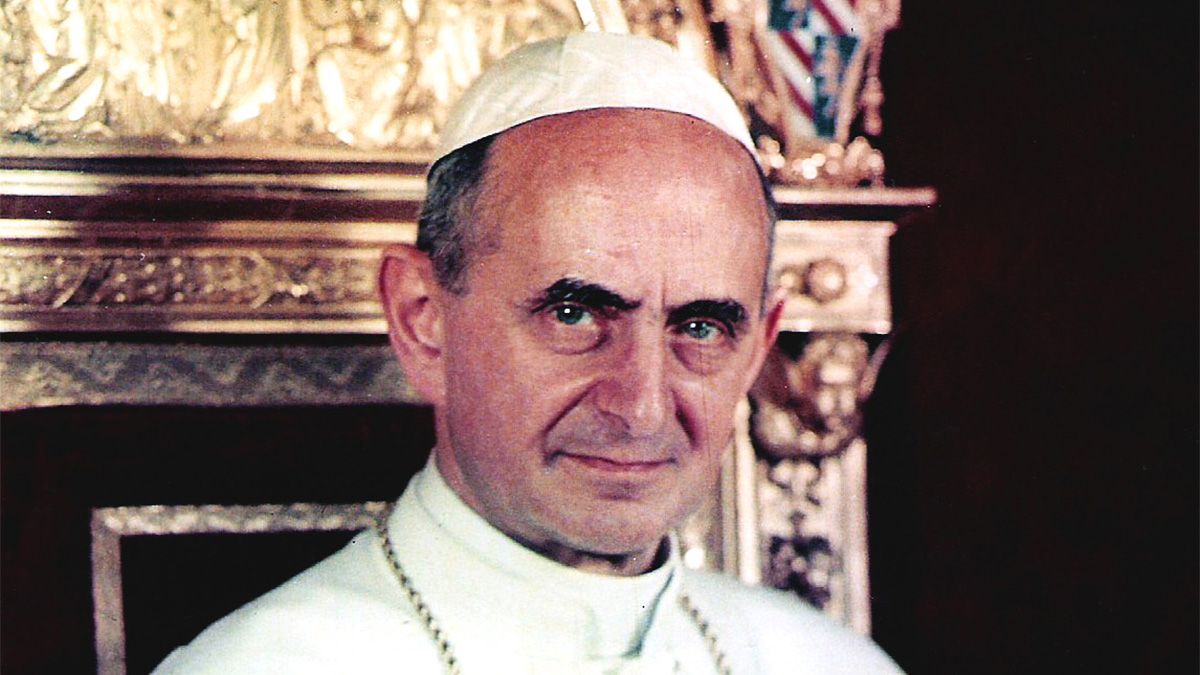
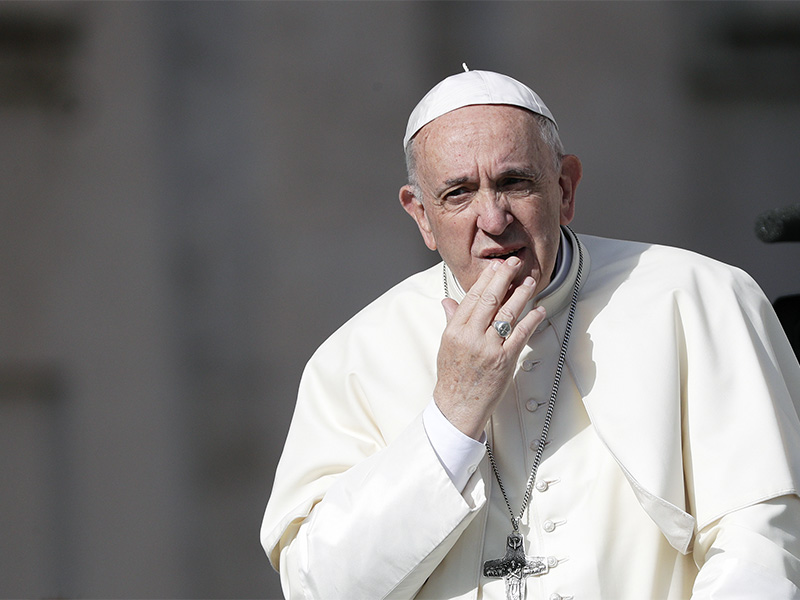
How will Pope Francis handle the 50th anniversary of "Humanae Vitae," Pope Paul VI's encyclical continuing the Roman Catholic Church's ban on artificial birth control? Will the occasion be cause for joyous celebration or quiet commemoration? Why does it matter?
The answer is twofold. First, Pope Paul's decree, titled "Human Life in Our Day" and promulgated on July 25, 1968, remains controversial. Debate and dissent have always been part of the Catholic Church, but history recalls an unprecedented tsunami of protest when Paul published "Humanae Vitae" (HV) 50 years ago. The dissent persists.
Second, Paul's decree banning artificial contraception as intrinsically evil remains part of Catholic moral doctrine, and the pope is the only one with authority to modify defined doctrine, either by his own hand or in consultation with others.
Nonetheless, HV remains both controversial and vulnerable, based as it is on a version of natural law that many scientists consider outdated and incomplete. The late Catholic scientist Thomas Hayes, for example, contended that HV's definition of the reproductive act ignores the female role and warrants reconsideration. And many theologians warn that preserving an outdated, unscientific stance on birth control will weaken the Catholic Church's credibility on all sexual issues, not just birth control.
HV's teaching, however, has survived for five decades mainly because it has been unequivocally supported by all of Paul's papal successors, including Pope Francis. "(Paul's) genius proved prophetic," Francis said. "He had the courage to stand against the majority."
With that history, a change to the church's teaching on birth control would be a long shot, writes John L. Allen in "The Francis Miracle," his 2015 book on Francis' papacy. The veteran Vatican reporter and editor of Crux writes that Jorge Mario Bergoglio, the former Archbishop of Buenos Aires, "is hardly Che Guevara in a cassock - a pope who intends to make sweeping changes in church teachings." Allen reports that when asked about contraception and other controversial sexual issues, the 81-year-old pontiff insists he will uphold church doctrine because "I am a son of the church."
Many "sons and daughters of the church," however, insist that the doctrine banning contraceptives should be changed. They reason that no interpretation can escape Paul's exact words in his encyclical that "it is not permissible even for the gravest reasons to do evil so that good may follow therefrom." In HV, Pope Paul VI wrote that the Catholic Church "teaches that each and every marriage act must remain open to the transmission of life" (emphasis mine). Again, as we shall see, scientist Thomas Hayes held that such a provision is biologically impossible.
From the beginning of his pontificate, the outspoken and extroverted Francis has shown nothing but respect and even admiration for Giovanni Battista Montini, the intellectual and reserved Italian pontiff who led the church as Pope Paul VI from 1963 to 1978. When speaking to a group of pilgrims from Brescia, Italy, Paul's home region, Francis spoke compassionately of the pontiff "who experienced to the full the church's travail after the Second Vatican Council: the lights, the hopes, the tensions. He loved the church and expended himself for her, holding nothing back." Francis announced that he would canonize Paul this October.
Yet controversy around HV has been persistent. According to Joseph Eagan's book "Restoration and Renewal," in 1980, Archbishop John R. Quinn of San Francisco cited studies for bishops at a synod showing that "nearly 80 percent of U.S. married Catholic women use contraceptives, and 29 percent of U.S. priests do not regard the practice as serious sin." Quinn saw the divide as "a profound theological and pastoral problem for the church." Nonetheless, the moderate archbishop was ordered to publicly declare that he was not questioning Catholic doctrine.
The question had arisen during discussion of marriage at a session of the Second Vatican Council in 1964, but Paul took the discussion of birth control off the council's agenda and reserved the final decision for himself. Meanwhile, Paul did solicit the advice of a talented and inclusive Pontifical Commission for the Study of Population, Family and Births.
About the same time, an article written by Hayes, titled "The Biology of the Reproductive Act: Its Application to Various Methods of Birth Control," appeared in CrossCurrents magazine in 1965. Hayes, with a doctorate in biophysics from the University of California-Berkeley, was a staff senior scientist at UCLA's Donner Laboratory.
In the article, Hayes started with the obvious: An accurate definition of human reproduction must contain all essential parts, including the crucial woman's role. He defined the human reproductive act as a one-month process in which there are random acts of intercourse. Conception, he wrote, "is due to the random spacing of the individual acts of intercourse rather than any probability within each act of sexual intercourse itself. This supports the conclusion that not every act of sexual intercourse naturally tends toward procreation." His conclusion refuted HV's major premise.
Hayes also noted that married couples who use the church-approved "rhythm system," also called Natural Family Planning (NFP), are making a "conscious decision" to avoid pregnancy without resorting to artificial contraception. In other words, NFP is deliberative, not natural, said Hayes. The decision-making is the same as that of a couple who, for serious reasons to limit their family, choose to use a contraceptive.
If the church approves NFP on biological naturalness, Hayes said, it could on the same basis "extend its approval to all contraceptive methods of birth control." He added a crucial fact: The approval results "not by any change in moral principles, but in the application of a more accurate picture of human reproduction as revealed by current biological concepts."
Hayes' thesis surfaced during the commission's fifth and last session in 1966, but to no avail. Pope Paul VI rejected the commission's final report, even though an overwhelming majority of the 72 clergy and laity argued for the pope to regard the fruitfulness of an entire marriage rather than each individual act. Paul, however, would not let numbers trump papal decisions.
No one can predict what Pope Francis will say on the anniversary of "Humanae Vitae," especially since the unpredictable pontiff has authorized a "historical-critical investigation" of all documents involved in the writing of the encyclical. As another synod of bishops scheduled in Rome this October will focus on youth, Francis may use the July event to call on prelates to say much more to the rising generation, much of whom engages in casual sex and is deprived of an appreciation of the sacramental understanding of married love.
Along the way, the bishops might suggest a simple but important course correction for the Bark of Peter by underlining Hayes' teaching that the ban on contraception can be lifted in married life "not by any change in moral principles, but by the application of a more accurate (biological) picture of human reproduction."
URL
Frank Maurovich is a retired journalist who covered Catholic issues for various outlets, including RNS, from 1963 to 2009.


