Translate

Friday, May 10, 2019

Women’s Ordination Conference Response to Pope Francis On Women Deacons


Earlier today, Pope Francis handed a copy of the report from the study commission on women deacons to the 850 religious of the UISG with the comment: "I cannot make a sacramental decree [on women deacons] without a theological, historical foundation."

The "theological, historical foundation" exists in abundance, thanks to the work of scholars like Dr. Phyllis Zagano, Dr. Gary Macy, Dr. Dorothy Irvin, Dr. Hans Wijngaards, Sr. Christine Schenk, and others. Holding women deacons to an impossible standard of historical consistency that is not used for other elements of our tradition is out of line with the essentially Catholic belief in development of doctrine.

Women have been protagonists in the history of our faith since the time of the Gospels. We do not need to prove our sacramentality. The ability of our bodies to manifest revelation is not up for debate.

And while we welcome study that leads to conversation and openness to where the Spirit is calling the Church, we will not wait for further evidence for what we already know: Women are called by God and their communities to be deacons and priests.

This Sunday (May 12) marks Vocations Sunday, the day that the institutional Church, above all, prays for men to hear and respond to their call to the diaconate, priesthood, or religious life.

We invite you to mark this day with WOC by making your voice and vocation heard at one of the many witnesses planned across the U.S., U.K., and Austria. Write letters to the editors. Post on social media. Stand outside your Church (or in it - and claim your space!). We know our herstory and we don't need their misogynistic fiction.

Together, we represent the living truth and the hope of the Church.


Please help us keep speaking that truth loudly with a donation to WOC. Your support and activism are critical to our uncompromising movement for women's ordination and equality.  

Thursday, May 9, 2019

Catholic Theologian Affirms Women Deacons - Evidence in Vatican Library - Time for Pope Francis to check it out!

Wijngaards Institute for Catholic Research responds to Pope Francis

Two days ago now, on May 7 Pope Francis revealed that, after almost three years of study, his own experts could not agree on whether women were ordained as deacons in the same way that men were in the early church. That lack of unanimity is likely to be used by Pope Francis to continue the current practice of excluding women from the diaconate.
Yet the findings of that papal commission fly in the face of well-known historical evidence. Not only was the rite for ordaining women to the diaconate identical to that used for men: it also included all the markers exclusive to what was later termed the “sacrament of Holy Orders”.

And if it was done in the past, why not now?
Ironically, one of the manuscripts preserving two such ordination rites to the diaconate, identical for men and women respectively, is held in the Vatican library itself. Perhaps the Pope could examine these for himself?
This evidence has long been known. In August 2015 the Wijngaards Institute summarised decades of academic research into women deacons and sent it to Pope Francis for his considerations.
As we wrote back then: ‘The rationale which subverted female deacons in the Middle Ages was the phobia concerning menstruation and the conceit that women are innately inferior to men.’ There should be no tolerance in our church for the upholding of a ban based on ancient prejudice and misogyny. It does not reflect the truth of our tradition, history or theology.
We renew our call on Pope Francis to re-establish the ordained diaconate for women as a matter of justice, Christian ecumenism, as well as faithfulness to the wisdom of our ancestors in the Christian faith.
We also call for the immediate release of the latest commission’s report, so that its conclusions, as well as the evidence they are based on, can be publicly evaluated.

Wednesday, May 8, 2019

"Pope Says More Study Needed on Role of Women Deacons in Early Church" by Philip Pullela, My Response The Full Equality of Women Is the Voice of God in All Times


http://news.trust.org/item/20190507201519-lp409/

Scholars have done the research and concluded that women deacons were validly ordained and served God's people for 1200 years. 

See scholarly books such as "Women Deacons in the Early Church: Historical Texts and Contemporary Debates" by John WijngaardsThe real problem has been and is still sexism in the institutional Church.  Pope Francis' decision that more study on women deacons is needed is disappointing. It is obviously a stalling tactic to block women from taking their rightful place as spiritual equals in ministry. I believe that the full equality of women is the voice of God in our times. The wind of the Spirit propels our Roman Catholic Women Priests Movement to follow Jesus' teaching that all are the beloved of God and welcome at the Table. Bridget Mary Meehan ARCWP, https://arcwp.org, sofiabmm@aol.com, 703-505-0004


THE PAPAL PLANE, May 7 (Reuters) -
Pope Francis said on Tuesday more study was needed on the role of women deacons in the early Christian Church, which eventually could affect decisions on the role of women today.


Speaking to reporters on the plane returning from a trip to Bulgaria and North Macedonia, Francis was asked about the results of a commission he set up nearly three years ago on the topic.


Deacons, like priests, are ordained ministers, and as in the priesthood, must be men in today's Church. They may not celebrate Mass, but they may preach, teach in the name of the Church, baptise and conduct wake and funeral services.


Scholars have debated the precise role of women deacons in the early Church.


Some say they ministered only to other women, such as at immersion rites at baptism and to inspect the bodies of women in cases where Christian men were accused of domestic violence and brought before Church tribunals.


Others scholars believe women deacons in the early Church were fully ordained and on a par with the male deacons at the time.


"All the conclusions were different. They (the commission members) worked together but were in agreement only up to a certain point. Each has their own vision and it is not in accord with that of others," Francis said.


"So they stopped working as a commission and they are studying how to move forward (individually)," he said.


The commission was made up of six women and six men under a president who is a bishop. Nearly all of the members are theologians and university professors. Of the six women, two are nuns and four are lay women.


The Church did have women deacons in the early part of its history but the pope said it still was not clear if they had been sacramentally ordained, as male deacons were.


"That's still not clear," he said. "Some say there are doubts, and more study should be done. So far there is nothing (definitive)."


The Church did away with female deacons altogether in later centuries.


Francis and his predecessors have ruled out allowing women to become priests.


But advocates of women priests say a ruling that women in the early Church were ordained ministers might eventually make it easier for a future pope to study the possibility of women priests. (Reporting by Philip Pullella Editing by Tom Brown )


Our Standards: The Thomson Reuters Trust Principles.

Pope Francis Says Commission on Women Deacons Did Not Reach Agreement, My Response- The Spirit is Moving in inclusive Catholic Communities Living Jesus' Example of Equality and Empowerment of Women Now

https://www.americamagazine.org/faith/2019/05/07/pope-francis-says-commission-women-deacons-did-not-reach-agreement


But, the pope said, “there is no certainty that theirs was an ordination with the same formula and the same finality of the male ordination.”

What concerns me most about Pope Francis' rejection of women deacons is the spiritual arrogance that the ordination of women deacons somehow could not be as valid as that of male deacons.   In spite of the historical studies to the contrary, the male dominated, clerical institutional church cannot imagine that women are spiritual equals in Christ and that their ministries are equally blessed and fruitful. Catholics, who value Jesus' teaching and example of Gospel equality and empowerment of women, have been and will continue to serve the people of God in inclusive communities of faith where all are welcome to celebrate sacraments. Our Roman Catholic Women Priests Movement is offering fresh hope for a renewed church by ordaining women to serve God's people in communities of equals. Our call is to live as prophets of the future by leading the way to a more open, loving, justice-seeking and equal, inclusive Church now. Bridget Mary Meehan ARCWP, https://arcwp.org , sofiabmm@aol.com, 703-505-0004


..."Pope Francis said, “There were deaconesses at the beginning [of the church], but [the question is] was theirs a sacramental ordination or not? They helped, for example, in the liturgy of baptism, which was by immersion, and so when a woman was baptized the deaconesses assisted…. Also for the anointing of the body.” found,” he said, “which shows that deaconesses were called by the bishop when there was a marriage dispute for the dissolution of the marriage. The deaconesses were sent to look at the bruises on the body of the woman beaten by her husband. And they gave testimony before the judge.” But, the pope said, “there is no certainty that theirs was an ordination with the same formula and the same finality of the male ordination.”
“Some say there is a doubt,” he said. “Let us go forward to study [the women’s diaconate]. I am not afraid of the study. But up to this moment it has not happened.”
Moreover, Pope Francis said, “it is curious that where there were women deacons it was always in a geographical zone, above all in Syria.”
Francis said, “I received all these things from the commission. It did a good job and this can serve to go forward and to give a definitive response, yes or no” on whether their ordination is the same as that for men deacons.
At a May 2016 meeting with the women's International Union of Superiors General, leaders of women's religious orders, one of them had asked the pope, "What prevents the church from including women among permanent deacons, as was the case in the primitive church? Why not constitute an official commission to study the matter?"
The pope had told the sisters that his understanding was that the women described as deaconesses in the New Testament were not ordained like permanent deacons are, however, the pope fulfilled a promise to set up the commission on the issue. Two of the scholars on that commission reported in January that they had completed their work.
Those commission members spoke with America in JanuaryPhyllis Zagano, an author and professor of religion at Hofstra University, and Bernard Pottier, S.J., a faculty member at the Institut D’Études Théologiques in Brussels, said then that they could not comment on the commission’s findings. But they reported that, according to their research, women served as deacons in Europe for about a millennium in a variety of ministerial and sacramental roles. “They anointed ill women; they brought communion to ill women,” said Ms. Zagano.
They also participated in baptism, served as treasurers and, in at least one case, participated in an annulment.
“Some say there is a doubt” about women deacons, Pope Francis said. “Let us go forward to study [the women’s diaconate]. I am not afraid of the study. But up to this moment it has not happened.”

Ms. Zagano said, “There was ordination…. The most interesting evidence is the fact that the ordination ceremonies [we discovered] for women deacons were identical to the ordination ceremonies for men.”
Father Pottier said then that he was able to find strong evidence of women deacons in church records and histories, but “not everywhere and not always because it was also a choice of the [local] bishop.”
The pope did not tell reporters what steps, if any, would come next on the subject of a women’s diaconate.
He told reporters, “Today, no one says so, but 30 years ago some theologians were saying that there were no deaconesses because women were in second rank in the church and not only in the church.” But, Francis said, “this is curious because in that epoch there were many pagan priestesses; the female priesthood in pagan cults was something usual.”
The pope concluded, “We are at this point, and each of the members is studying his/her own thesis.” There is a “varietas delectas (joyful variety).”

Women's Ordination Response:
While this is not a definitive "no," it is painfully absurd that the Vatican needs "further study" on women's full equality in the Church. 

We must not allow our attempts to study the past prevent us from moving where the Spirit calls us today: to be a Church with doors open to the fullness of women's gifts and vocations.

An abundance of evidence shows that for centuries, women have served in the tradition of Phoebe the deacon (Rm 16:1), and our parishes and communities are blessed by their gifts. Women are called to serve their communities as deacons and priests. Recognizing the ministerial gifts and vocations of women is not optional.

Monday, May 6, 2019

"Gay Priest’s Death May Be a Cause of Book on Homosexuality and the Vatican" by Robert Shine, New Ways Ministry


https://www.newwaysministry.org/2019/05/05/gay-priests-death-may-be-a-cause-of-new-book-on-homosexuality-and-the-vatican/


Frederic Martel
Discussions of Frederic Martel’s controversial book, In the Closet of the Vatican, have continued well past its release on the day the Vatican’s summit on clergy sexual abuse opened in February.  LGBTQ advocates have worried about the book’s impact since before its release. Other reviews have questioned what the lasting impact of this book may be for the Church. This post provides excerpts from some of the latest commentaries with links provided for further reading.
More voices have been added to Syndicate’s online symposiumabout the book, which has featured such voices as Fr. James Alison and Dr. Brian Flanagan. Travis LaCouter, a doctoral candidate in theology, provided interesting background to why he believes Martel, an atheist, wrote a book about Catholicism:
“But then what is Martel trying to accomplish with this book? I wasn’t sure of the answer to this question until I reached the illuminating, even tender Epilogue, where Martel lays his cards on the table. He’s quick to declare that he’s ‘not Catholic [and] not even a believer’—Molière’s Dom Juan means more to him, he says, than the Gospel of John (544, 546). But then he tells the story of a brilliant young parish priest he knew as a boy growing up in traditionally Catholic Avignon. This dynamic curate, who so excited the bright young Martel’s imagination, who sparked his intellectual curiosity and broadened his cultural and artistic horizons—this same priest later died of AIDS ‘abandoned by almost everyone [and] in terrible pain.’ This priest’s homosexuality caused him to be ‘rejected by the Church – his only family – denied by his diocese and kept at arm’s length by his bishop’ (549). If intellectual doubts hadn’t chased Martel away from the Church, witnessing this betrayal would have. It’s a story that I daresay countless cradle Catholics will recognize: A good priest reduced to ash (in this case literally—AIDS victims at the time were required to be cremated) for the simple reason that he is gay.”
LaCouter claims that Martel’s book is written not against gay priests, but on their behalf. Describing the book as “far less sensationalist than its press would have you believe,” the reviewer still believes it will be fruitful in this “parrhesiastic moment” for the Church–a moment in which long silenced truths are given voice.
Fr. Gilles Mongeau, SJ, a theologian who has worked with the LGBTQ community, also shared his thoughts via Syndicatewhich were more what occurred in his thinking than a review of the book. One thought relates to the locus for changing Church teaching on homosexuality, which Martel says is a necessity for reform. Mongeau writes:
“[T]o the extent that Martel has correctly identified distorted Vatican politics as partly responsible for the Church’s contemporary stance on homosexuality, to that extent he has shown this teaching is not of the Spirit and will need to change. But there are better examples in the Church of healthy LGBTQ persons — single, coupled, and celibate — choosing to respond in authentic ways to the call of the gospel. There are also a number of communities such as the Archdiocesan Gay and Lesbian Outreach of Chicago and All Inclusive Ministries in Toronto whose experience would be instructive. Listening to these experiences, and retrieving the wider tradition. . .will prove far more helpful.”
Another Jesuit, Fr. Anthony Egan, explored the possibilities that In the Closet of the Vatican creates for the Church. Writing in Spotlight.Africa, Egan described the book as the most difficult one to review in his thirty years of writing such pieces. He explained:
“What has held me back is a desire to see its impact on the current and ongoing crises rocking the Catholic Church. . .Martel’s book presents us with a crisis in the Church. It is possible that some will react against the book —and the broader crisis — with denial, denunciation and a refusal to change; with an assertion of power from the top and continuing obstruction of all efforts to reform the Church. Even if this might lead to separation (schism). . .
“We need a Church that is rooted in honest, scientific, systematic and open re-examination of sexuality, celibacy, gender and power. Not, one might add, to destroy but — if I may shamelessly plagiarise St Paul — to build up the Body of Christ.”
The conversation about Frederic Martel’s book–and about homosexuality in the clergy more broadly–will certainly continue in the coming weeks. In the meantime, here are a few additional resources.
Other reviews and commentaries you may wish to read include:
Previous posts on Bondings 2.0 about In the Closet of the Vatican:
For the latest Catholic LGBTQ news, opinion, and spirituality, consider subscribing to Bondings 2.0 by entering your email in the ‘Subscribe’ box in the upper right hand corner of this page.
Robert Shine, New Ways Ministry, May 5, 2019

Sunday, May 5, 2019

"The funeral as we know it is becoming a relic — just in time for a death boom" by Karen Heller


"Dayna West knows how to throw a fabulous memorial shindig. She hired Los Angeles celebration-of-life planner Alison Bossert — yes, those now exist — to create what West dubbed “Memorialpalooza” for her father, Howard, in 2016 a few months after his death.


“None of us is going to get out of this alive,” says Bossert, who helms Final Bow Productions. “We can’t control how or when we die, but we can say how we want to be remembered.”


And how Howard was remembered! There was a crowd of more than 300 on the Sony Pictures Studios. A hot-dog cart from the famed L.A. stand Pink’s. Gift bags, the hit being a baseball cap inscribed with “Life’s not fair, get over it” (a beloved Howardism). A constellation of speakers, with Jerry Seinfeld as the closer (Howard was his personal manager). And babka (a tribute to a favorite “Seinfeld” episode).

“My dad never followed rules,” says West, 56, a Bay Area clinical psychologist. So why would his memorial service?

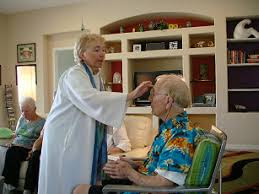
Death is a given, but not the time-honored rituals. An increasingly secular, nomadic and casual America is shredding the rules about how to commemorate death, and it’s not just among the wealthy and famous. Somber, embalmed-body funerals, with their $9,000 industry average price tag, are, for many families, a relic. Instead, end-of-life ceremonies are being personalized: golf-course cocktail send-offs, backyard potluck memorials, more Sinatra and Clapton, less “Ave Maria,” more Hawaiian shirts, fewer dark suits. Families want to put the “fun” in funerals.

The movement will only accelerate as the nation approaches a historic spike in deaths. Baby boomers, despite strenuous efforts to stall the aging process, are not getting any younger. In 2030, people over 65 will outnumber children, and by 2037, 3.6 million people are projected to die in the United States, according to the Census Bureau, 1 million more than in 2015, which is projected to outpace the growth of the overall population.

Just as nuptials have been transformed — who held destination weddings in the ’90s? — and gender-reveal celebrations have become theatrical productions, the death industry has experienced seismic changes over the past couple of decades. Practices began to shift during the AIDS epidemic of the 1980s, when many funeral homes were unable to meet the needs of so many young men dying, and friends often hosted events that resembled parties.

Now, many families are replacing funerals (where the body is present) with memorial services (where the body is not). Religious burial requirements are less a consideration in a country where only 36 percent of Americans say they regularly attend religious services, nearly a third never or rarely attend, and almost a quarter identify as agnostic or atheist, according to the Pew Research Center.

Funeral homes adapt

More than half of all American deaths lead to cremations, compared to 28 percent in 2002, due to expense (they can cost a third the price of a burial), the environment, and family members living far apart with less ability to visit cemetery plots, according to the National Funeral Directors Association. By 2035, the cremation rate is projected to be a staggering 80 percent, the association says. And cremation frees loved ones to stage a memorial anywhere, at any time, and to store or scatter ashes as they please. (Maintenance of cemeteries, if families stop using them, may become a preservation and financial problem.)

Past funeral association president Mark Musgrove, who runs a network of funeral homes and chapels in Eugene, Ore., says his industry, already marked by consolidation, is adapting to changing demands.

“Services are more life-centered, around the person’s personality, likes and dislikes. They’re unique and not standardized,” he says. “The only way we can survive is to provide the services that families find meaningful.”


A hot-dog cart from the famed L.A. stand Pink’s and gift bags were among the standouts at the memorial service of talent agent Howard West. (Spike Mafford)


The memorial Dayna West threw for her father included a film shown to attendees that included photos of Howard West with his parents as a kid in the Bronx. (Spike Mafford)


Funeral homes have hired event planners, remodeled drab parlors to include dance floors and lounge areas, acquired liquor licenses to replace the traditional vat of industrial-strength coffee. In Oregon, where cremation rates are near 80 percent, Musgrove has organized memorial celebrations at golf courses and Autzen Stadium, home of the Ducks. He sells urns that resemble giant golf balls and styles adorned with the University of Oregon logo. In a cemetery, his firm installed a “Peace Columbarium,” a retrofitted 1970s VW van, brightly painted with “Peace” and “Love,” to house urns.

Change has sparked nascent death-related industries in a culture long besotted with youth. There are death doulas (caring for the terminally ill), death cafes (to discuss life’s last chapter over cake and tea), death celebrants (officiants who lead end-of-life events), living funerals (attended by the honored while still breathing), and end-of-life workshops (for the healthy who think ahead). The Internet allows lives to continue indefinitely in memorial Facebook pages, tribute vlogs on YouTube and instamemorials on Instagram.

Memorials are no longer strictly local events. As with weddings and birthdays, families are choosing favorite vacation idylls as final resting spots. Captain Ken Middleton’s Hawaii Ash Scatterings performs 600 cremains dispersals a year for as many as 80 passengers on cruises that may feature a ukulele player, a conch-shell blower and releases of white doves or monarch butterflies.

“It makes it a celebration of life and not such a morbid affair,” says Middleton. His service is experiencing annual growth of 15 to 20 percent.

From coffins to compost

With increased concern for the environment, people are opting for green funerals, where the body is placed in a biodegradable coffin or shroud.

The industry is literally thinking outside the box.

“My work is letting people connect with the natural cycle as they die,” says Katrina Spade of Recompose in Seattle, who considers herself part of the “alternative death-care movement.” If its legislature grants approval this month, Washington will become the first state in the nation to approve legalized human composting. Her company plans to use wood chips, alfalfa and straw to turn bodies into a cubic yard of top soil in 30 days. That soil could be used to fertilize a garden, or a grove of trees, the body literally returned to the earth.

[‘Green burials’ are on the rise as baby boomers plan for their future, and funerals.]

Spade questions why death should be a one-event moment, rather than an opportunity to create an enduring tradition, a deathday, to honor the deceased: “I want to force my family to choose a ritual that they do every year.”

Death has inspired Etsy-like enterprises that transform a loved one’s ashes into vinyl, “diamonds,” jewelry and tattoos. Ashes to ashes, dust to art.

After Seattle artist Briar Bates died in 2017 at age 42, four dozen friends performed her joyous water balletin a public wading pool, “a fantastic incarnation of Briar’s spirit,” says friend Carey Christie. “Anything other than denial that you’re going to die is a healthy step in our culture.”


Howard West, right, with his granddaughter Olivia West-Lewis in 2011. (Family photo)


A crowd of more than 300 were given baseball caps that said “Life’s not fair, get over it,” one of Howard West’s favorite sayings. (Spike Mafford)

Funeral consultant Elizabeth Meyer wrote the memoir “Good Mourning” and named her website Funeral Guru Liz. Her motto: “Bringing Death to Life.” She notes, “Most people do not plan. What’s changing is more people are talking about it, and the openness of the conversation. Our world will be a better place when people let their wishes be known.”

[She lost her husband, her father and a pregnancy at 31. Now she’s helping others explore grief]

In 2012, Amy Pickard’s mother “died out of the blue.” She was unprepared but also transformed. Now, she’s “the death girl,” an advocate for the “death-positive movement,” sporting a “Life is a near-death experience” T-shirt, teaching people how to plan by hosting monthly Good to Go parties in Los Angeles and offering a $60 “Departure File,” 50 pages to address almost every need. 


“We’re still in the really early days of super-creative funerals. There’s this censorship of death and grief,” Pickard says. “You have the rest of your life to be sad over the person who died. The hope is to celebrate their time on Earth and who they were.”

Overshadowing grief?

Some practitioners worry that death has taken a holiday, and grief is too frequently banished in end-of-life celebrations that seem like birthday blowouts.

“Do you think we’re getting too happy with this?” asks Amy Cunningham, director of the Inspired Funeralin Brooklyn. “You can’t pay tribute to someone who has died without acknowledging the death and sadness around it. You still have to dip into reality and not ignore the fact that they’re absent now.”

But even sadness is being treated differently. In some services, instead of offering hollow platitudes that barely relate to the deceased, “we are getting a new radical honesty where people are openly talking about alcoholism, drug use and the tough times the person experienced,” Cunningham says. Suicide, long hidden, appears more in obituaries; opioid addiction, especially, is addressed in services.

West, who hosted such a memorable send-off for her father, has some plans for her own: “Great food and live music, preferably Latin-inspired,” and “my personal possessions are auctioned off,” the proceeds benefiting a children’s charity. Why can’t a memorial serve as a fundraiser?

An avid traveler, West plans to designate friends to disperse her cremains in multiple locations “that have significance in my life” and leave funds to subsidize those trips — a global, destination ash-scattering."

Upper Room Inclusive Catholic Community - Liturgy for the Third Sunday in Easter Season - Presiders: Donna Rougeux, ARCWP, and Deven Horne


Donna Rougeux, ARCWP, and Deven Horne led the Upper Room Liturgy for the Third Sunday in Easter Season. They focused on the call to encounter new life as we become co-creators of the kin-dom. Deven’s and Donna’s homily starters are printed below the readings.
Peace Prayer      
Let us center ourselves and call upon peace for ourselves and each other.
Relax, close your eyes and open place your hands on your lap palms up.
Take a deep breath allowing the air to fill your lungs, hold a second and exhale slowly all the air from your lungs and allowing your shoulders to relax.
Again, in the name of the Mother, the Daughter and the Holy Spirit.
Breathe and relax your face muscles and smile welcoming in the love of the Beloved Creator.
Now pray – May peace be with me and with each of us as we co-create this sacred space in which to open our hearts, minds and bodies to Divine Grace.

First Reading by Jan Phillips

Anyone who has been shaped in any way by religious tradition has been exposed to a tremendous amount of contradictions. Sacred texts have been mistranslated, misinterpreted, and misunderstood for millennia. Depending on our programming, we can find in them anything we need to support our bad behaviors – sexism, racism, homophobia, slavery, violence.

That is why we need to inquire within, dip down into our own well of wisdom and come up with a faith that is true to who we are and what we know. If something you’ve been taught doesn’t ring true, alter it. If it’s too small to contain your magnitude, expand it. If it polarizes people, excludes people, leads to anything other than understanding and openness, broaden it or abandon it. It is up to us to create new canons of compassion and morality. We cannot wait for leaders to rise up from the masses and save us from ourselves – we are the leader and this is our time.

Great Being of light and darkness,
I stand with you and in you
A citizen of earth
A co-creator of culture.

I am the bulb to your Light
And your radiance illumines the paths I take.
Only praises ring out from my lips,
Tears of joy flow like rivers down my cheeks.

These are the inspired words of Jan Phillips from her book “No Ordinary Time. The Rise of Spiritual Intelligence and Evolutionary Creativity” and we affirm them by saying, Amen.

Gospel Reading:
John 21:1-14

Later Jesus again was manifested to the disciples at Lake Tiberias. This is how the appearance took place. 
Assembled were Simon Peter, Thomas “the Twin,” Nathanael of Cana in Galilee, Zebedee’s children, and two other disciples. Simon Peter said to them, “I’m goin out to fish.”
“We’ll join you,” they replied, and went off to get into their boat.
All through the night they caught nothing. Just after daybreak, Jesus was standing on the shore, though none of the disciples knew it was Jesus. He said to them, “Have you caught anything, friends?”
“Not a thing,” they answered.
Cast your net off to the starboard side,” Jesus suggested, “and you’ll find something.”
So they made a cast and caught so many fish that they couldn’t haul the net in. Then the disciple whom Jesus loved cried out to Peter, “It’s the Teacher!”
Upon hearing this, Simon Peter threw on his cloak-he was naked-and jumped into the water.
Meanwhile the other disciples brought the boat to shore, towing the net full of fish. They were not far from land-no more than a hundred yards. When they landed, they saw that a charcoal fire had been prepared, with fish and some bread already being grilled. “Bring some of the fish you just caught,” Jesus told them. Simon Peter went aboard and hauled ashore the net, which was loaded with huge fish-one hundred fifty-three of them. In spite of the great number, the net was not torn.
“Come and eat your meal,” Jesus told them.
None of the disciples dared to ask, “Who are you?” -they knew it was the savior.
Jesus came over, took the bread and gave it to them, and did the same with the fish. This marked the third time that Jesus had appeared to the disciples after being raised from the dead.

These are the inspired words from the Gospel of John and community affirms them by saying: Amen.

Deven’s homily starter:
As I was reading the first text by Jan Phillips in her book ”No Ordinary Time”, a light bulb went off in my head and physically my body reacted with sparks of emotion within me. I know you must have had these moments too when something resonates very deeply with you and you think, “Ahh yes!  Of course!”.  It went from my mind to my heart in seconds and it just clicked. What struck me clearly was that this was telling me I could give myself permission to believe what made sense to me, to accept all those experiential moments in my life that sounded the bells of truth inside me and to co-create my faith. “If something doesn’t ring true, alter it”. Oh! I can believe something else?? Yes, using my heart and what I have come to know through experience, I can expand my thinking. I can also “reject” or “abandon” what doesn’t fit my ever-evolving canons. Using the moral compass that Jan Phillips outlines here of “compassion and morality” will lead the way. Not only is it okay to do but it is meant to be done, in order to illumine the path of co-creation with the Divine in our time.
Does this make sense to you? What would Jesus say to me about my Ah Ha moment?

Donna’s homily starter:
Today’s gospel reading is filled with ah-ha moments for the disciples. This is another story about an appearance of the resurrected Jesus. Most of the appearance stories picture the people to whom Jesus appears as not recognizing him at first. For example when Mary goes to the tomb and finds it empty she begins to cry and talk to the gardener who really is the resurrected Jesus. Her ah-ha moment comes when Jesus says her name because she then recognizes Jesus. In today’s story the disciple Jesus loved had the ah-ha moment of recognizing Jesus when the empty fishing net became full of fish.  This was followed by Jesus inviting Peter and the other disciples to breakfast on the beach. When they bring the net to shore filled with 153 fish, we the readers of the story as well as the disciples may have an ah—ha moment of remembering when Jesus multiplied the loaves and the fishes to feed a crowd of 5000 people. As Jesus broke bread and fish with the disciples the next ah-ha takes us to the last supper and connects us today with the story when we break bread together. If you happened to read beyond our first reading you would see that Peter was being asked three times by Jesus, “Do you love me.” The ah-ha in this part of the story is a beautiful reconciliation scene when Jesus is transforming Peter’s three denials into three affirmations of love. Not only is Peter reconciled, Jesus invites Peter to continue his ministry as a fisher of humans.

Why do we need to pay attention to ah-ha moments in scripture and in our lives? Because these moments are unexplainable encounters with mystery, encounters with something bigger than us,  encounters with the Divine. These moments change, empower us and give us new life to be co-creators of the kin-dom. These ah-ha moments take Peter and us out of fishing boats where it feels safe and normal and into the risky but life giving work of the kin-dom building. Living into ah-ha moments gives us the courage to let go of the misinterpretations and misunderstandings that Jan Phillips talks about. She is giving us a litmus test for our faith. She is telling us to abandon boats, settings or misunderstandings that keep us locked into judging and excluding people and move toward listening to the God voice within us, our conscience, the wisdom written in our hearts, that helps us create canons of compassion and morality. 

What did you hear? What will you do? How will it change you?