Translate

Thursday, July 25, 2019

A CROSS OF HUMAN BODIES- How 71 Catholics Were Arrested for Protesting Immigrant Child Detention BY ROSE MARIE BERGER


I spent five hours as a guest of the U.S. Capitol Police last week. It was hot, really hot. And those plastic handcuffs leave bruises.
I was one of 71 Catholics arrested by the U.S. Capitol Police in the rotunda of the Russell Senate building in Washington, D.C., for “crowding, obstructing, or incommoding” while praying the rosary. My prayer was — and is — to end the warehousing of immigrant children in cages — 63,624 of whom have been apprehended by border patrol at the southwestern border between October 2018 and June 2019 and seven of whom have died after being in federal custody since September. More than a dozen Catholic orders and organizations sponsored the event. Seven Catholic bishops sent letters of support.
I’ve been arrested more than 30 times for nonviolent civil disobedience, beginning when I was in high school. It is one way to say “no” to inhuman laws, to show how to build a “‘moral frontier’ in one’s own identity, by openly and publicly challenging authorities who [are] practicing inhuman orders,” as Mexican Gandhian strategist and Catholic Pietro Ameglio puts it.
When laws become so egregious that life and creation are at risk, then the moral imperative is clear: Disobedience in the face of what is inhuman is a personal, religious, and social virtue to increase the good.
We were in the Russell Senate building to pierce the veil of morally isolated political leaders who are caging immigrant children.
We were there because we actually believe in the power of prayer. “The public prayer of Christians,” as activist-theologian Bill Wylie-Kellermann reminds us in Principalities in Particular, “are forever to God not to cameras.” While savvy political organizing and diligent press work is necessary, the purpose of liturgical direct action, like praying the rosary in defiance of a police order, is primarily spiritual.
For Catholics, the rosary has long been a weapon of choice in wrestling with, correcting, and pushing toward the redemption of the powers and principalities. Even the Desert Fathers and Mothers in the 3rd and 4th century used a knotted rope as a prayer aid to recall significant moments in Christ’s life and to beat back the devil.
While a few hundred people encircled the Russell rotunda, our “Hail Marys” and “Our Fathers” echoed down the long corridors of Senate offices. We replaced the traditional scripture of the five Sorrowful Mysteries with stories collected by a group of attorneys who interviewed more than 60 minors at U.S. Border Patrol facilities in El Paso and the Rio Grande Valley in June.
Certain lines from those prayers took on new meanings, such as “blessed is the fruit of thy womb” and “pray for us sinners” and “deliver us from evil.” I held the photo of Jakelin Caal Maquin, a 7-year-old Maya Q’eqchi’ girl from Guatemala who died of a bacterial infection after U.S. Customs and Border Protection took her into custody.
No time in detention is safe for children. Place children instead with members of their families in this country, or with available sponsors, or with community-based case management programs where they can stay until they are able to appear in immigration court.
When the U.S. Capitol Police issued three warnings for us to disperse, most of those gathered stepped back behind the police line, but five stepped forward and laid down in the shape of a cross in the center of the rotunda. A cross of human bodies. Dozens more formed a eucharistic circle around this cross.
Our law-breaking band of Catholic lay people, sisters, and priests was not alone in our liturgical direct action. Earlier in the week, Rabbi Arthur Waskow, 85, and nine others were arrested blocking the entrance to Immigration and Customs Enforcement headquarters in Washington, D.C., as part of a national movement in the Jewish community to shut down immigrant detention camps, particularly those holding minors.
“Pharaoh's attack on children points toward a repeated tactic of tyrants who have planned genocide: Attack the children first,” said Rabbi Waskow. Jewish communities are taking action at ICE offices around the country, declaring “Never again means now.”
On the same day, the Trump administration issued a new policy banning people from seeking asylum at the U.S.-Mexico border. According to the text of this irregular rule, individuals entering the United States across the southern border will be regarded as ineligible for asylum if they passed through another country first and did not attempt to seek asylum there. The United Nations’ committee on refugees says this rule “significantly raises the burden of proof on asylum seekers” beyond international standards and “sharply curtails the basic rights and freedoms of those who manage to meet it.” A few days later, the Department of Homeland Security issued another irregular rule with no option for public comment before going into force, that persons in the United States “who have not affirmatively shown, to the satisfaction of an immigration officer, that they have been physically present in the United States continuously for the two-year period …” are eligible for expedited removal and deportation.
Simultaneous with the arrests in the Russell building on Thursday, U.S. Senator Tim Kaine (D-VA) gave a moving testimony from the floor of the Senate reflecting on the prophet Amos, the Good Samaritan in the context of the continuous threat of massive ICE raids across the country.
To promote the Stop Cruelty to Migrant Children Act, Kaine said, “[The bill] puts us in a position where as we are being directed to be good neighbors, including to people who are hurting, including to people who are suffering, we would be able to look ourselves in the mirror and look the world in the eye and say the United States believes that we are good neighbors and we are behaving in a neighborly way toward people.”
Police vans and holding areas are never comfortable. They are often humiliating and sometimes dangerous. But for Christians, studying the Bible in lock-up is a tradition formed in the early church. For the Catholic Day of Action, I chose a scripture verse from Lamentations to meditate on: “Arise, cry out in the night, at the beginning of the watches; Pour out your heart like water before the face of the Lord: Lift up your hands toward him for the life of your young children, that faint for hunger at the head of every street” (2:19).
We sat for five hours, handcuffed, on metal folding chairs in the noisy Capitol Police’s open garage bay. With us was a 90-year-old Mercy sister and an 85-year-old Franciscan priest, and the sweat rolled off us like “water before the face of the Lord.” We were processed. We were fingerprinted. Most of us resolved our arrest for a misdemeanor criminal offense by paying and forfeiting the $50 fine (“post and forfeit”). No criminal case will be filed against us in court, but we will have an arrest record. And I have a wristband with the name of my arresting officer tucked into my Bible.
These Catholic public actions are part of larger nonviolent movement to increase the visibility of Catholics willing to take more risks to stop the inhuman treatment of migrant children and to end child detention. The direct action last week in the Senate building was part of the first phase. The second phase will include direct action at the border in August. A third phase will include direct action both in D.C. and at the border in September.
Nonviolence strategist Gene Sharp wrote, a closer “examination of the sources of the rulers’ power indicates that they depend intimately upon the obedience and cooperation of the governed.” When we increase the visibility of Christians taking risks, it encourages others to take risks, significantly increasing the pressure on the government who is not delivering positive outcomes for society. Increasing visible risks uses the intangible power of traditional religious values and morality to undermine key sources of power for authority. In the case of challenging family separation and child detention, taking increased risks to say “no” to these policies creates a fertile ground for the conditions to change.
Fr. Joe Nangle, OFM, spoke at the press conference before our public liturgy and arrest calling on millions of Catholics — bishops in particular — to “join this struggle for the soul of America.” After pleading with the gathered media to carry his message to the border, Fr. Nangle then spoke in Spanish: “First, a plea for pardon of you our sisters and brothers. We love you and welcome you to the United States. You have a right to be here. We will continue to struggle toward that day when you will hear the words of God through the Prophet Isaiah: ‘Comfort, comfort my people, your trial is at an end ... I have heard the cry of my people.’”
Last week, I spent five hours as a guest of the Capitol Police. Detained migrant children are spending five weeks or five months in Border Patrol camps. What increased risk will you take to say “no”?

125+ Catholic Leaders Sign Letter to End Trump Administration’s “Natural Law” Commission by Robert Shine, Associate Editor, NBC News Story Link Included

Mary Ann Glendon, right, with Secretary of State Mike Pompeo

More than 125 Catholic leaders have signed a letter expressing objections to the Trump administration’s new Commission on Unalienable Rights, one of several such protests from LGBTQ groups and other concerned activists.
The signers of the letter, identified as Catholic theologians, community leaders, and human rights advocates, wrote to Secretary of State Mike Pompeo about their objections to both “the goals and composition” of the Commission, which is being led by the highly LGBTQ-negative Catholic Mary Ann Glendon. The signers explained:
“Our faith and our commitment to the principles of democracy require us to view every person on earth as a full human being. We staunchly support the fundamental human rights of all people and proudly carry on the long tradition in our country of advocating for expanding human rights around the world. It is our belief that this Commission will undermine these goals by promoting a vision of humanity that is conditional, limiting, and based on a very narrow religious perspective that is inconsistent with the beliefs and practices of billions in this country and around the world.
“Of most urgent concern is that the composition of the Commission indicates that it will lead our State Department to adopt policies that will harm people who are already vulnerable, especially poor women, children, LGBTI people, immigrants, refugees, and those in need of reproductive health services. These policies will be embedded in everything from visa and immigration laws to international aid programs and will further undermine true human rights in the name of a very partial version of Christianity that is being promoted by the current Administration. We cannot allow this to happen in our names, and pledge our ongoing efforts to prevent this from being how our nation’s human rights stance is communicated to the rest of the world.”
The letter is the work of former U.S. ambassador to the Holy See Miguel Diaz, theologian Mary Hunt, DignityUSA executive director Marianne Duddy-Burke, and theologian Fr. Bryan Massingale who had met during a forum on the state of the global LGBTQI Catholic movement earlier this month in Chicago. Massingale commented:
“‘It should be unthinkable that a U.S. Cabinet member would question a landmark principle in our nation’s founding document, the “Declaration of Independence.”  To undermine the conviction that all human beings, created in the image of God, possess inherent rights to life and liberty, is both disturbing as an American and offensive as a Christian.'”
Duddy-Burke explained that during the forum, there were chairs set apart for African delegates who could not procure visas in time. Such discrimination, she said, would only increase under the Commission. Diaz, who is now a professor at Loyola University Chicago, added:
“‘We have an ethical obligation to love our neighbors and protect their unalienable rights, regardless of their particular ways of being human with respect to gender identity, sexual orientation, race, religious perspectives, ethnicity, physical ability, immigration status, and any other particularity used to discriminate. . .All human beings have been created in God’s image and all have been endowed by their Creator with the fundamental right to Life, Liberty, and the pursuit of Happiness. No person speaking in the name of government or in the name of God can do so to undermine or deny this right.'”
Theologians who signed include M. Shawn Copeland, Charles E. Curran, Sr. Margaret Farley, Elizabeth Johnson, Orlando Espin, Maria Teresa Davila, Bradford Hinze, and Cristinia L.H. Traina. Many church reform advocates signed, including Sr. Jeannine Gramick, SL, and Francis DeBernardo of New Ways Ministry.
Catholics are not the only voices expressing concern about how the Commission. Nearly 180 civil and human rights groups joined 200-plus high profile diplomats, scholars, and public officials in sending their own letter calling for the Commission to be terminated based on the members’ “extreme positions opposing LGBTQI and reproductive rights,” reported the Washington Blade.
Elsewhere, Professor Drew Christiansen, S.J. wrote for America about the problems with the Commission on Unalienable Rights. If, as the State Department’s spokesperson said, the Commission’s purview is not to look at policies, and in particular not those related to gender, sexuality, and reproductive rights, then what is it doing? Christiansen commented:
“Secretary Pompeo’s review of unalienable rights represents a threat to two key dimensions of the modern human rights law: First, it threatens our acknowledgement of the historic development of rights over the centuries. We have come a long way since Magna Carta. Second, it puts the universality of rights, proclaimed by the Declaration of Independence and the French Declaration of the Rights of Man, at risk.
“One possibility is to re-make international human rights in the American mode, narrowing their scope to reflect an exceptionalist American view of human rights. This seems to be Mr. Pompeo’s intention.”
The Trump administration has been aggressively pushing the issue of religious liberty internationally, according to the National Catholic Reporter. Last week, the second U.S.-sponsored Ministerial to Advance Religious Freedom gathered government officials and religious leaders from 106 nations. There it was announced that the U.S. would be launching the International Religious Freedom Alliance and sanctioning some nations for alleged religious liberty abuses. Especially relevant to Catholics, it was announced further that the United States and the Holy See would co-host a religious liberty summit on October 2nd, reported Crux.
If the Trump administration’s domestic agenda is any indication, the concerns behind these letters and statements are entirely justified. Its misuse of religious liberty and natural law could do great harm to LGBTQ equality worldwide given the U.S. government’s outsized influence. The Holy See should reconsider its joint summit in October, and all Catholics must keep speaking out against the threat that Mary Ann Glendon and her Commission on Unalienable Rights poses.
Robert Shine, New Ways Ministry, July 25, 2019
Related story:
NBC News: “Human rights groups lead chorus of alarm over new Trump administration commission 

Wednesday, July 24, 2019

"I’m a Catholic woman who was allowed to preach at Mass—until it was banned" by Jean Molesky-Poz, America

iStock
“Mary,” Jesus said to her. When she heard him call her name, she responded, “Rabbouni!” Teacher.
“Go to my brothers,” he said, delivering a direct commission to announce the “good news.”
“I have seen the Lord,” she told the disciples.
In our parish in Northern California, lay women began to preach the good news during the Sunday liturgy in 1996. The practice emerged from within the faith community. Several women had approached our pastor and spoke of the devastating lack of women’s spiritual wisdom and leadership in the church for 2,000 years. We asked: Couldn’t women, who feel called and are prepared, give a homily—a teaching that expands on the message of the Scripture readings and invites listeners to a change of mind and heart?
“I wondered if anyone would ever ask,” he said.
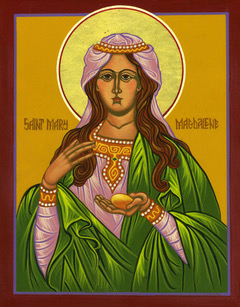
Mary of Magdala (Icon by Bonnie Hardwick, a secular Franciscan living in Santa Fe, New Mexico.)
Like Mary of Magdala, women who gave homilies had experienced a deep call and felt commissioned to share the good news. We had discerned both with our spiritual directors and pastor. All of us who were lay preachers had studied theology at the university level—some had earned a masters of divinity degree. Some were or had been members of a religious order or had special knowledge of a particular pastoral issue within our parish community. We had demonstrated an expertise or experience of the lay faithful, as required by Canon Law (No. 766).
Members of the congregation told us they were eager to hear our words. One parishioner said to me: “Hearing a Catholic woman reflect on the Word during Sunday’s liturgy is a breakthrough experience for women and for men. It strengthens us as the body of Christ.” We felt that the church, local and universal, recognized in us the gifts bestowed on us by the Spirit—the fresh perspectives we contributed to the community—just as the early Christian church had recognized women’s leadership.
Each time one of us preached, the pastor who had first invited us wrote a two-page, single-spaced letter to whomever had spoken, warmly commenting on the delivered homily. Once a year, the parish priests invited us lay preachers to dinner at the rectory, where together we discussed what went well and what we might do better. We women felt enmeshed in the prophetic leadership of the parish.
Parishioners might say, as the townspeople of Samaria did 2,000 years ago, “We believed in Him on the strength of the woman’s testimony” (Jn 4:3).
In 2001, the United States Conference of Catholic Bishops, in accordance with No. 766 of the 1983 Code of Canon Law, declared that “preaching by the lay faithful may not take place within the Celebration of the Eucharist at the moment reserved for the homily.” Nevertheless, the conference recognized the right of each bishop to permit the practice of lay preaching in his own diocese, though not during the time traditionally set aside for the homily.
Like Mary of Magdala, women who gave homilies had experienced a deep call and felt commissioned to share the good news.
Our bishop and our parish priests, years earlier, had recognized the gift of lay preaching. Nobody expected that the clock might be turned back. But in 2009, restrictions began to be put in place. A new bishop in our diocese mandated that the priest celebrant must read the Gospel at Mass and he alone give a short homily. Lay people could then offer a “reflection,” sharing our thoughts. But we could not give a homily.
The congregation was stunned. Yet this was an order, and we lay preachers had no choice but to obey. In 2013, another new bishop arrived, and we lay people were told we could no longer give even a “reflection.” The crushing ban has spread to many U.S. dioceses.
A friend of mine in Wisconsin who had preached monthly at her parish for over 20 years wrote to me in “great sadness and disappointment.” She shared with me the letter she was sending to Bishop Rembert Weakland, a former archbishop of Milwaukee (1977-2002). She began by thanking the bishop for “opening the door” years ago by allowing lay ministers to be trained and formed to preach through the diocese’s preaching institute. She knew she had brought the Gospel to life in the hearts and minds of many who heard her. We who preached had a particular gift to offer to the church, which our faith community affirmed. An institutional decision rejected the giving of gifts.

The clerical decision to ban lay people from preaching affects women in a particular way. Women are not allowed to be deacons, deemed unworthy of holy orders. Only in the last century have we been admitted to study theology at Catholic universities. In the movements begun by the Second Vatican Council calling for a greater place for the laity at every level of church life, women have seen new opportunities to share our gifts in the church, and lay preaching was one important way to do that. Of the 13 lay preachers in our parish, 12 were women.
In the past months, I have asked others in our parish whether they believed the ban on lay women delivering a homily affected their feelings about their place in the Catholic Church. Most said that they carry within themselves a sense of loss, of dislocation. Some women said they felt anger, others disappointment and discouragement.
I found myself in grief, as though a loved one had died. As mourners are often counseled to do, I realized I had to name and claim the loss to heal and go forward. We who preached had a particular gift to offer to the church, which our faith community recognized and affirmed. An institutional decision rejected the giving of gifts.
Catholic women are seeking community, are worshipping and sharing their faith in new ways.
Catholic women are seeking community, are worshipping and sharing their faith in new ways. While remaining Catholic, one woman I know now also participates in an Episcopal parish where she says she finds more inclusive language in worship. Another, who is lesbian, joined a Methodist church where she said she felt more welcomed in her sexual orientation. Some visit Protestant parishes where women preach. I have met Catholic women who have left the church to serve as ministers in Methodist and Unitarian congregations or as Episcopalian and Presbyterian priests.
Some Catholic women cannot find a home.
What kind of church are American women looking forward to in this 21st century? My friend Kristi, a lay associate of the Religious of the Sacred Heart, answers for many of us: “a beloved community.”
Kristi supports low-wage workers and immigrants who are fighting for justice and dignity in the workplace by helping them to organize for unions, health care and a living wage. “I am doing what I am doing in the world because of my Catholic faith,” she said
In each of the four Gospels, Jesus commissions Mary of Magdala to go to the brothers and herald the good news.
Yet Kristi feels she no longer has a place in the church. “I had just been invited into lay preaching when the bishop stopped it in our parish,” she told me. “Days later, I dreamt I was being gagged, a black cloth covering my mouth, silenced, powerless.”
“At this point,” she said, “this church is not a healthy place for my soul.”
At a recent lecture at Santa Clara University, theologian Elizabeth Johnson, C.S.J., pointed out that for centuries the church excluded women’s voices and spiritual wisdom “because of our so-called feminine nature.” But she advocated for “courage and hope.”
Today women “do not have the authority of the church office, but they have the authority of their baptism,” Sister Johnson said. We were given new birth by water and the Holy Spirit. Girls and boys. We have to be deeply prayerful despite the conflict, she said. “You cannot do this alone.” Sister Johnson suggested we form support groups.
In our parish, we have formed a bi-monthly lecture, reflection and discussion series, just for women. Feminist biblical scholars examine overlooked stories of women in the Bible and provide skills to reconstruct biblical history in which women were central and active agents. Muslim women dialogue with us on their faith, and undocumented mothers share their stories, as do women ministering to girls who have been sex trafficked. We inform one another of needed social actions that reflect Catholic social teaching. We make retreats together; we visit monasteries where we search for wisdom for our everyday lives. Wanting to seek and share contemplative intimacy with God, we are forming prayer and spirituality study groups in our homes and apartments. Some women have joined religious communities as lay associates; others are forming new base Christian communities.
Women’s experiences and ways of relating to the mystery of God can be a vital source of spiritual wisdom, can help build up a vibrant and inclusive community and offer collaborative forms of leadership. After all, in each of the four Gospels, Jesus commissions Mary of Magdala—or Mary with other women—to go to the brothers and herald the good news.

Jean Molesky-Poz is a lecturer in the graduate program in pastoral ministry at Santa Clara University and the author of Contemporary Maya Spirituality and numerous articles, including “At the Ambo: The Unique Experience of Women Preachers.” She is completing a novel, The Interpreters.

"The Priesthood of Women" by Leonardo Boff, Supportive Article from A Prominent Roman Catholic Theologian


My Response: Roman Catholic Theologian Leonardo Boff's endorsement of  women priests  is timely as Pope Francis prepares for the Amazon Synod and floats the idea of married priests. I agree with Boff that the role of priest is to be a coordinator of  service in the community.  Roman Catholic Women Priests in our international movement  are redefining priestly ministry as we  celebrate the holy in sacramental rites and meet the challenges of living the vision of Jesus in our world today. Bridget Mary Meehan ARCWP, https://arcwp.org


Leornard Boff
"The feminine dimension is not exclusive to women, because both men and women are carriers, in their own ways, of the masculine and of the feminine. In first question in Summa Theologica, dealing with the object of theology, Thomas Aquinas made it clear that theology can address any subject, so long as it is done in the light of God. Otherwise, it would lose its pertinence. Therefore, is good to ask, from this perspective, about priesthood, that the Roman Catholic Church has denied to women. And to consider the sound theological reasons that guarantee its usefulness.

The so called “deposit of faith”, this is, Christian positivism, is not a cistern of dead waters. It is revived when it confronts the unrestrained changes of history, as in the case elicited by the Amazon Synod.

In effect, all over the world, we see the affirmation of the equality of women and men in dignity and rights. Understandably, it is not easy to undo centuries of patriarchy, that involved diminishing and marginalizing women. Yet, slowly but surely, discrimination is being overcome and in some cases even punished. In practice, all public spaces and very diverse activities are open to women. Should this also be true for the priesthood of women in the Roman Catholic Church? In Evangelical Churches, the Anglican Church and also the Rabbinate, women have been allowed to perform functions previously reserved to men.

Until recently, in the highest hierarchy of the Roman Catholic Church, it was forbidden even to suggest the possibility, especially under Pope John Paul II. The idea of the Priesthood of Women was hostage to the secular patriarchal culture. But it cannot be turned into a bastion of conservatism and anti-feminism in a world moving forward towards the richness of the relationships of men and women. Pope Francis has the merit of raising questions that are pertinent to the present world, such as the question of conjugal morality or the treatment of homosexuals and other minorities.

As a feminist of the last century, A. van Eyde, used to affirm: «The well being of men and women is interdependent. Both will be hurt if, in a community, both can not contribute with the full measure of their possibilities. The Church herself will be wounded in her organic body if she does not make room for women within her ecclesiastic institutions» (Die Frau im Kirchenamt, 1967: 360).

The meticulous research of men and women theologians at the highest level has proved that there is neither a doctrinal nor dogmatic barrier that impedes the access of women to the Priesthood.

In the first place, let's remember that there is only one Priesthood in the Church of Christ. Those who come under the name of “priest” are only figures and representatives of the unique priesthood of Christ. Their function can not be reduced, as the official argument maintains, to the power to consecrate. It can be said that the whole life of Jesus Christ is priestly: Jesus presented Himself as a being-for-others, defending the most vulnerable, also defending women, preaching fraternity, reconciliation, unconditional love and forgiveness. Jesus does not appear as a Priest only in the Las Supper, but in His whole life. That is, Jesus was a creator of bridges and of reconciliation.

The function of the ministerial priest is not to be keeper of all the services, but to coordinate them, so that they all serve the community. By presiding over the community, the priest also presides over the Eucharist. This service (that Saint Paul calls “charisma”, and there are many) can also be exercised by women, as is shown in the non Roman Catholic Churches and in the Ecclesial Base Communities.

And there are more fundamental reasons that call for that ministry to be exercised by women.

In the first place, the first Divine Being who came to the world was the Holy Spirit, who accessed Mary's womb to beget the second Person, the incarnated Son, Jesus Christ. The Son only came after the “fiat” (the yes) of Mary.

Jesus was followed not only by apostles and disciples, but also by many women who guaranteed Him the infrastructure. The women never betrayed Jesus, something that cannot be said about the Apostles, especially the most important of them, Peter. After the prison and crucifixion, the men all ran away. The women did not run. They stayed at the foot of the Cross.

It was the women who, in a genuinely feminine posture, first went to the tomb to anoint the body of the Crucified. The main event of the Christian faith, the resurrection of Jesus, was witnessed for the first time by a woman, Mary Magdalene, to the point that Saint Bernard would say that she was "Apostle" to the Apostles.

If a woman, Mary, could give birth to Jesus, her Son, how can she not represent Him sacramentally in the community? This is a flagrant contradiction, that only can be understood in the framework of a Church that is patriarchal, machista and comprised of celibate men in the body of the organization and guidance of the faith.

Logically, the feminine priesthood cannot be a reproduction of the masculine priesthood. It would be an aberration if it were. Women's priesthood must be unique, according to the way of being of the woman, with all that femininity implies in the ontological, psychological, sociological and biological spheres. She must not be the substitute for the male priest. The woman will realize the priesthood as only she will know how.

The time will come when the Roman Catholic Church will align her path with the feminist movement of the world, and the world itself, towards an integration of the “animus” and the“anima” for the enrichment of humanity and of the Church herself.

We are, then, in favor of the priesthood of women within the Roman Catholic Church, women chosen and prepared beginning with the faith communities. It behooves them to give their priesthood a specific configuration, different from that of the priesthood of men.


Leonardo Boff
07-06-2019

Eco-Theologian-Philosopher
Earthcharter Commission
Translation done in tribute to Margot LeBreton Merz

"Scribes tried to blot her out. Now a scholar is trying to recover the real Mary Magdalene", Another Theory on Mary Magdalene by Yonat Shimron, RNS

Artist Alexander Ivanov’s 1835 painting "Christ's Appearance to Mary Magdalene after the Resurrection”. Image courtesy of Creative Commons


https://religionnews.com/2019/07/19/scribes-tried-to-blot-her-out-now-a-scholar-is-trying-to-recover-the-real-mary-magdalen

RNS) — On Monday (July 22), the feast day of Mary Magdalene, Elizabeth Schrader will hike up a mountain in the south of France to the cave where, legend has it, the saint lived out her remaining days after the crucifixion of Jesus.

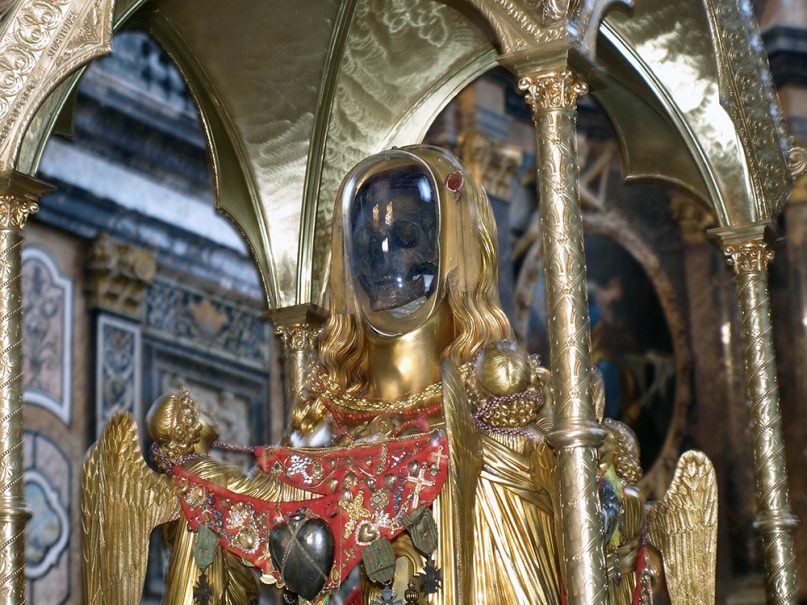
It will be Schrader’s fourth trek to the cave, in the town of Saint-Maximin-la-Sainte-Baume, an hour’s drive from Marseille, but her first on the actual feast day. decreed by Pope Francis in 2016. Even before the decree, the day had long drawn pilgrims who process through the streets of Saint-Maximin with the purported skull of Mary Magdalene in a golden reliquary.

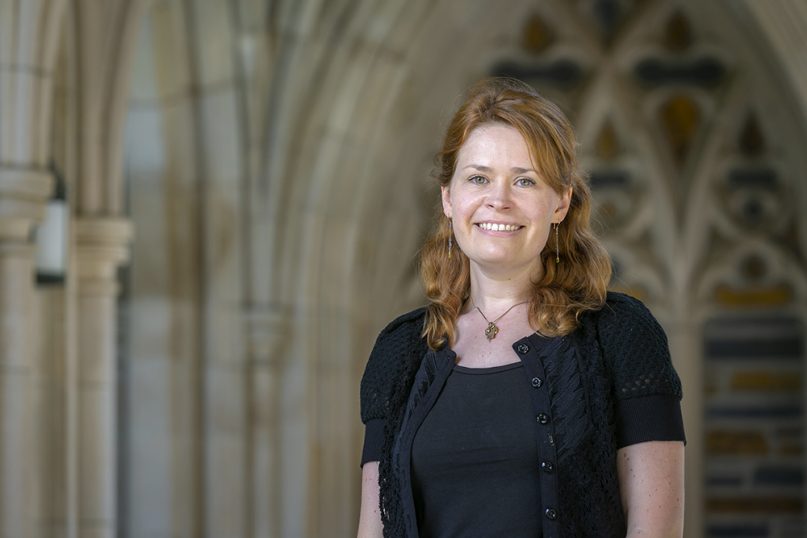
Schrader, a doctoral student at Duke University, has her own way of honoring the woman who witnessed Jesus’ death and resurrection. Schrader’s academic work, like that of others, attempts to liberate Magdalene from the patriarchal overlays of ancient Christian scribes who recorded the New Testament’s four Gospels.

For Schrader, the impulse to recover the scope and stature of Mary Magdalene came nine years ago, when she was Libbie Schrader, a singer-songwriter in the the New York pop scene. A cradle Episcopalian, she had wandered into a church garden in Brooklyn to pray to the Virgin Mary and heard a voice telling her to seek out Mary Magdalene.


Elizabeth Schrader is a Duke University doctoral student in religion.


Photo by Megan Mendenhall, Duke University

Three days later, Schrader wrote a song, “Magdalene,” that later become the title of her 2011 album. That, in turn, sent her to the Brooklyn Public Library in search of scholarly articles about the Jesus follower, sometimes portrayed as a prostitute though the Gospels never say so.

“It’s not my choice to be working on this,” said Schrader, 39, who left her music career to pursue scholarship. “It happened to me.”

Schrader’s central discovery, which she wrote about in a paper published by the Harvard Theological Review two years ago, is that Mary Magdalene’s role was deliberately downplayed by biblical scribes to minimize her importance.

Specifically, Schrader looks at the story of the raising of Lazarus told in the Gospel of John. In today’s Bibles, Lazarus has two sisters, Mary and Martha. But poring over hundreds of hand-copied early Greek and Latin manuscripts of the Gospel, Schrader found the name Martha had been altered. The scribes scratched out one Greek letter and replaced it with another, thereby changing the original name “Mary” to read “Martha.” They then split one woman into two.

Schrader argues that the Mary of the original text is Mary Magdalene, not Martha or Martha’s sister, Mary. The two sisters belong to another story, in the Gospel of Luke, that is not repeated in John’s Gospel.

The reason for the change, Schrader said, was that later scribes did not want to give Mary Magdalene too big a role in the events of Jesus’ life. Already Mary Magdalene is at the crucifixion and the empty tomb, and in the Gospel of Luke she is exorcized of seven demons and then travels with Jesus and supplies him the funds needed for his ministry.

In particular, the scribes may have wanted to avoid giving Mary Magdalene the confession of faith that follows the story of Lazarus. That confession — “I believe that you are the Messiah, the Son of God, who is to come into the world” — in today’s Bibles is uttered by Martha. Schrader argues it was meant to be said by Mary Magdalene.

“Martha is added as a way of diminishing Mary Magdalene and confusing her presentation,” said Schrader in a Skype interview from Germany. “It’s a later editor’s interference with the intention of (John) the evangelist.”

Schrader posited that Mary Magdalene caused tension with Jesus’ male disciples, especially his handpicked deputy, Peter, that is evident in several noncanonical gospels — accounts of Jesus’ works not included in the New Testament. Later scribes, Schrader said, may have been acutely aware of that.

Stephen C. Carlson, a scholar at Australian Catholic University who studies early Christianity, said Schrader does a very good job demonstrating what he called “textual instability” surrounding Martha that many scholars may not be aware of.

“The tendency would be to think that the variants she’s discovered and is calling attention to can be dismissed as some kind of scribal incompetence,” Carlson said. But he added that he would be interested in seeing a fuller treatment of her study in a doctoral dissertation.


The Saint Mary Magdalene Basilica in Saint-Maximin-la-Sainte-Baume, France, has the purported skull of Mary Magdalene and other relics of the Catholic saint. Photo by Itto Ogami/Creative Commons

Other scholars have suggested that Mary Magdalene could not have been Lazarus’ sister because the Gospel indicates that Lazarus and his sister lived in Bethany, near Jerusalem, whereas Mary Magdalene was from the Galilee region — possibly Migdal or Magdala — where most of Jesus’ ministry took place. Schrader, however, argues that Magdala comes from the Hebrew word for “tower,” an honorific title, and doesn’t refer to the town where Mary was from.

Last week, Schrader traveled to Münster, Germany, to meet with the editors of the Nestle-Aland New Testament, the edition of the Greek text used by most scholars, students and translators today. She discussed her findings about the changes made in the text of John’s Gospel and said the editors may consider adding a footnote to that effect in upcoming editions.

Schrader’s paper comes at a time when many scholars are trying to recover women’s roles in early Christianity — roles the early church fathers tried to suppress.

Just this month, another scholar posited that three of the earliest surviving images of Christians worshipping at church altars show women in official liturgical roles. Speaking at the International Society of Biblical Literature in Rome, Ally Kateusz said the images are significant because they show women and men in parallel roles, suggesting they may have served as deacons, priests, maybe even bishops.

Mark Goodacre, a New Testament scholar at Duke, said he was encouraged by all the new scholarship around women in early Christianity.

“There have been many men who have imagined the Christian movement as a thoroughly male-dominated, exclusively male setup,” Goodacre said. “We’re in the process of trying to reimagine Christian origins and put women back into where they originally were, having been written out by male interpreters over the years.”

For Schrader, who grew up in the Episcopal Church where women serve as priests, bishops, even presiding bishops, it makes sense that a younger generation of women would see things others have not.

“A woman has to know her worth,” she said, “to dig and find this.”

ABOUT THE AUTHOR

Yonat Shimron

Yonat Shimron is an RNS National Reporter and Senior Editor.

Tuesday, July 23, 2019

Witness for Justice- Stop Caging Children- We Stand in Solidarity with Children in Cages. Let us follow Jesus and Welcome Children


My Response:
Jesus said, "let the children come to me." So today, we are called by the Spirit to  do all in our power to change our nation's policies that treat children like criminals. Every child, every person is an image of God and should be treated with the utmost respect and compassion.  Thank you Katy Zatsick ARCWP for your prophetic witness.  Bridget Mary Meehan ARCWP, https://arcwp.org

Bishop Mary Eileen Collingwood ARCWP and Dr. Shanon Sterringer ARCWP Respond to Letter from Rev. Nelson J. Perez D.D., Bishop of Cleveland


-->
Bishop Mary Eileen Collingwood ARCWP ordains Dr. Shanon Sterringer ARCWP a deacon in Cleveland on July 10, 2019, Kathleen Ryan ARCWP, Circle leader on right


Most Rev. Nelson J. Perez, D.D.
Bishop of Cleveland
1404 East Ninth Street, Sixth Floor
Cleveland, Ohio 44114-1722

Dear Bishop Perez,

It has recently come to my attention that our newly ordained deacon and soon-to-be-priest,
Dr. Shanon Sterringer, has been the subject of a recent letter from you.  I am disappointed in your disparaging remarks concerning her ordination in the Roman Catholic tradition.

I find it necessary to correct your misstatements and slandering comments with regard to the Roman Catholic Women Priest Movement, and the women and men who have been ordained in prophetic obedience to the Spirit.  Our prophetic calling sets us apart from the current structures of our time—similar to the prophets of old.  With all the scandals caused by the Roman Catholic Church and its male clerical structure, I dare say that our faithful witness to Jesus’ life and mission is hardly something that should demand your concern.

Our ordinations are valid.*  Our first bishops were ordained by a male bishop in apostolic succession with Rome.  Therefore, our priests and deacons are validly ordained by our bishops. We recognize that the current Roman Catholic Church considers these ordinations illicit, as they do not follow the norms in present Canon Law composed by men.  As we all know, any man-made law can be changed for the common good of God’s People.  It would behoove the Church to include enlightened women in the formation of these laws if it is interested in guidelines that are inclusive and effective. 

Contrary to your statements, and carrying the validity of our ordinations, ordained members of our movement celebrate the sacraments and liturgy in the Catholic tradition.

Our presence in the Diocese of Cleveland, while public via the locations of our services, is not a protesting presence.  We are Spirit-filled, living prophetic witnesses to Jesus’ life and ministry.  We embrace an inclusive Table where all are welcome.  We serve member-led communities where all are equal and where all have a voice.  People who find themselves disenfranchised with the traditional Church find our faith communities through which they can grow and pray in the loving arms of an all-inclusive God.
Page 2 of 2


My prayer continues that you open your heart and mind to the promptings of the Spirit who is living and moving, if not in the institutional Church, in the hearts of those who will listen and follow.


Sincerely Yours in Christ,


+ Mary Eileen Collingwood
Bishop serving the Association of Roman Catholic Women Priests

Presider, Community of St. Bridget
23 Public Square
Brecksville, OH  44141


*See Commentary for Canon Law 1013: If a bishop were consecrated without the required mandate, the ordination would be valid but unlawful.

See Dr. Shanon Sterringer's Response on her blog: