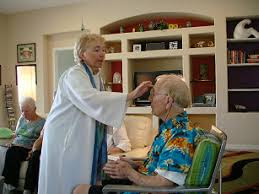
Association of Roman Catholic Women Priests Ordination of Diane Dougherty ,Atlanta, Georgia
Below is a link to Women's Ordination Conference's petition concerning the new Code of Canon law which includes a revision that codified the "grave crime" of ordaining a woman, with a punishment of automatic excommunication (Canon 1379). Please consider signing.
Your recent codification of the “crime” of ordaining a woman is nothing less than an attempt to criminalize God’s call. This effort is theologically unsound and incompatible with our common understanding of God’s boundless creativity, power, and mercy.
The new canon 1379, which excommunicates women who are ordained and the people who ordain them, woefully attempts to suffocate the Holy Spirit. It punishes faithful women who dare to answer God’s call to the diaconate or priesthood with greater severity than those who sexually abuse children or vulnerable people.
Francis, many of us have been inspired by your pastoral leadership and found hope in your openness to bold dialogue and parrhesia. By your invitation, we as a church are at the very beginning of a global synodal process, eager for the sensus fidei to find its way to the synod in Rome in 2023.
Yet, you say one thing as a pastor, and do another as Supreme Pontiff.
As a pastor, you champion breaking down walls and opening doors, you encourage encounter and accompaniment with the most marginalized in society, and you call each of us to follow our “dream of vocation.”
As pontiff, you have repeatedly and painfully rejected the equality and dignity of more than half of the church. You have reinforced the “closed door” on women’s ordination to the priesthood, and have questioned the very sacramentality of the church’s long history of ordained women deacons. You have also joked about women theologians as “strawberries on the cake,” and women as simple gossipers. Ecumencially, you will embrace the woman archbishop of the Church of Sweden with a hug, but then say in another forum that the ordination of women “leads to ruin.”
Your Holiness, please consider expanding your vision of encounter and accompaniment to include walking with women who are called to ordained ministry, as well as those who long for their sacramental leadership. You will hear the stories and witness the pastoral care of people who have authentically discerned God’s vocation for their lives. Rather than seeing it lead to ruin, you would learn of the great richness women have to offer our church.
Penal codes policing vocational callings are not the path to a synodal church.
We, the undersigned, urge you to heed the wisdom of your people, who know the limitlessness of God’s call, and yearn for the ministries and leadership of women. Their exclusion is one of the deepest wounds that the “field hospital” of the church must heal before being able to move forward. We call upon you to begin this healing in a spirit of urgency and repentance, and open all ordained ministries in the church to all who are called by God.
Because of my formation, a virtual Eucharistic celebration did not fit in my head, because of all the gaps that it presents. There is no sharing with the community, and if you will excuse me for saying so, it is what I saw in the Masses in the media. In addition, the emptiness of the temples is impressive, due to the pandemic. This situation makes me rethink about creating and formulating other means to announce the Gospel.
It has been many months of observing, reading, praying and thinking about the "dead end" that was looming over the proclamation and practice of the Gospel.It was not up to me to solve the problem, "the tent is not mine" says the popular adage. However, I could not remain calm. People called me and asked me to celebrate, and I confess that more than once I refused.
The laity has not remained still, the laity moves, they have the word, it is the Church People of God, that when you listen to them, they teach you, challenge you and ask for service, because they have understood how to do and to be Church.
I had done a virtual reflection with a group of teachers, maybe 1 month before. The topic they asked for a Eucharist to place there all their precariousness, they had many sick and deceased relatives, by the COVID 19, whom I contacted, I had said no, that we should make a reflection and prayer on the situation, instead of the Eucharist.
That is what I did on that occasion. There were 23 of them present, mostly women.
On the webinar screen, I was struck by the face of a very sad woman. I called the contact and asked who this person was and if I could talk to her. The contact told me about the situation she was going through and that he would ask her if she wanted to talk to me. She did indeed give me her phone number, we talked and she was devastated by the passing of her mommy.
In one of her bereavement calls, she told me that the mother of one of her coworkers, neighbor and family friend had passed away. This is when she asked me if I could celebrate a Eucharist for both mothers. It was impossible to refuse, my arguments lost weight and I accepted. We set a date and time for June 3/21. She made the invitation and circulated it among her family and friends of the two families.
When the day arrived, we met 32 people through the ZOOM platform, Luz.Adriana, one of the daughters, as they were connecting, was greeting, introducing and telling the affinities and relationships of one with the other. This was great! I was getting to know all of them, there my prejudices were disappearing and I saw that this celebration was going to have a sense of Eucharist. When Luz Adriana introduced me, I took the opportunity to present our ARCWP Movement and some of our history. They asked questions, those who did not know me, no one spoke against it, nor objected to it.
I took this part, like the celebrations that the first communities must have done, as we see in the Acts of the Apostles. Relatives and friends who were in different places were reunited, now they met again through the dimension of Cyberspace. They greeted each other, they all said very human and deep words coming from their souls, sharing their feelings of pain and sadness for the absence of these two little mothers.
Impossible to ring "the bell" and say: let's begin. The Eucharist had already begun, here we could not spare the time of the meeting. These people longed to talk, to share, to remember the presence-absence of the mothers, to thank the accompaniment and solidarity of those present.
We did not do the "Have mercy", but we sang with joy the Gloria, because we should not be afraid of God. He is our loving Father-Mother, who watches over and cares for everyone. With whom we can converse face to face as Jesus wanted us to refer and approach Him, without intermediaries.
To continue with the celebration, I explained that we were not going to do the usual first readings according to the ritual, because that first part was to share what we had been doing at the beginning as the first Christian communities did.
I asked one of the daughters to read the Gospel John 10:10. I gave her the blessing saying: "Our God-Father-Mother I purified your lips and your heart so that you may announce His Gospel worthily and honestly".
As a Catholic presbyter, in "holy disobedience" in the homily we do not do monologues, but a shared homily.
I only opened the dialogue, inviting participation, since the text presented us with two visions 1) the reality, in the face of corruption and violence in the country, 2) to have life and life in abundance.
Men and women accustomed to being in silence in the temple, this for them was a mouth opener and without any shyness, they began to take advantage of the message of the Word, no more and no less in the middle of the celebration of the Word of God.
I encouraged them to use the Divine Energy that was in us, the Ruah, which allows us to move our limbs, speak and give free rein to live life to the fullest.
It was a joy to listen to how they were internalizing what they had experienced. It was a feeling and experience that "God is in me and I am in Him".
César Augusto, Orlando, Jorge, Roberto, Armengol, said: "this is new for me", "I am speechless" "today I rethink my spiritual life in a very different way". "Rosa Ana, Ingrid, Lía and others were grateful and their contributions were about the daily life, "from our mothers, the first catechists, we learned what it is to give life and life in abundance", "mother never sat at the table without knowing what it was to share and help someone in need". Everyone was unanimous in saying, "I felt like I was participating.
Cesar asked: "How much do you charge for a mass?" I answered: "Cesar, nothing, we celebrate all the sacraments and we do not charge or give papers, because what interests us is the relationship with the Divinity, moreover when in the community the participants give offerings, wrongly called "alms" that money should stay in the community, because it is the community that knows who are in need and can serve there".
I would like to share with you what Ingrid shared with us:
"A few words in these two weeks of disembodiment of the body of my mother Elba Merys Caldera Angarita, popularly known as "La Costeña."
I have not had the time to sit down to think and feel the absence as such, as I find myself coming back to life after these two weeks of deep darkness of nothingness in which the COVID has taken me, however, the 23 days of my mom's hospitalization, from April 28 to May 20, were a profound surrender to the will of God, to the mystery of life, to the mystery of death, but above all to the mystery of maternal love, that love that beyond unconditional, full of tenderness and hatred, is the love that sustains us in existence and that without knowing it in full awareness, is the universe that allows us to be and to continue creating.
In the days of my mother's hospitalization I would close my eyes and see her breastfeeding me, nursing me, lulling me in her arms, taking care of my illness in the hospital when I was little, crying by my side... going to my school, hugging me when I was a teenager, sleeping together, attending my symphony concerts... I could not think of her in other ways, until today, when I see her coming home saying "Where is Kirrikiki? As she used to call my son... I see her arrive with a bundle of eggs or a papaya for us, I see her sitting in her rocking chair surrounded by the most beautiful flower garden created by her hands and saying: "there God, that's enough of life"... I am an infinite part of her and I am a part of her.
I am an infinite part of her and I know that her journey is beautiful, that she is wrapped in the light of God, walking among lilac flowers to meet the Lord, and that before she will go around the sun in the peace of having been a mother devoted to her children until the end.
Thank you mom, thank you.
We continue walking together, you from the heaven of only God and love and me from this other heaven.
I love you until eternity
Kisses from your daughter".
I dared to tell you, what you have been doing today, this is doing family theology, a domestic theology, a theology that is not of letters but of life.
Then we moved on to the Creed. I shared with you the history of the Nicene Creed. Now, let us ask ourselves what my creed is, what I want to say to the God I love. There was a deep silence. Silence that spoke. I commented: let the silence continue to speak to us and let us leave this part as homework.
For the moment of the offerings, the participants through their cameras presented bread, wine or grape juice and a light. I explained that I had asked them to bring their offerings, to give meaning to our life and sharing. The words of consecration we are all going to repeat together because they are the words of Christ, not mine, not yours. They are Christ's words. The Eucharist is sharing, therefore it is not the private property of anyone, much less of any institution. His command has been very clear: "Do this in memory of me". His command is in the plural, it is not individual. It is for everyone.
Extending our hands over the Gifts of God for the People of God: bread and wine. Food of life and life in abundance, knowing how to share, there can be no injustice. The Eucharist invites us to a social, fraternal and human commitment and change, a commitment that we reaffirm today in our community gathered here. We all said the words of consecration.
They were moments of profound silence, which made us predisposed to pray the prayer that Jesus left us to refer to our Father-Mother: the Our Father.
Each one of us ate the bread and drank the wine. Sealing our collective and prophetic commitment.
The final prayer was all of thanksgiving to the Divine Being for the lives of those who, in their transformation towards the Divine Light, had called us together to celebrate in community as family, sisters and friends, our commitment and covenant for life and life in abundance for all.
"LET US GO OUT WITH JOY INTO THE WORLD TO PROCLAIM THE GOSPEL."
By Eileen McCafferty DiFranco Emergence Education Press, 2017 $14.95 157 pp. (Excerpt from Chapter Seven, “Tectonics”)
For those who wonder if small church communities are a viable way of worshipping God, it must be remembered that small faith communities have an historical precedent. The early Christians continued to observe the Sabbath on Saturdays in the temple after the death and resurrection of Jesus, per the Acts of the Apostles. They also met in house churches, shared a common meal to remember Jesus, and read from whatever holy book they might have had since the New Testament would not exist for another three hundred years or so. Contrary to Scripture, which often lists “thousands” of converts at its beginning, Christianity was a very small affair that did not separate completely from Judaism until the late first century. Like the people of today, it took time and prayer for people to leave the comfort of their respective faiths and become Christians, a move which often placed them in conflict with their families, their friends, and the religious authorities. Christianity did not become large enough to have buildings regarded as churches until it became the state religion of the Roman Empire. Until then, the early Christians worshipped in house churches presided over by the owners of the house, who were both women and men.
We hear of these early house churches in Paul’s letter to the Romans, which was written twenty or more years before any of the gospels. In Romans, chapter 16, Paul addresses greetings to the movers and shakers of the early church in Rome, recommending Phoebe, the leader of the church at Cenchreae, and Prisca and Aquila, whose house church had been the church in Rome in the early 50s CE before being expelled, along with the Jews they resembled, from Rome by the Emperor Claudius. Paul lists men and many women and describes them as “working hard for the Lord”; that is, they were leaders in their church community. Interestingly enough, the name of Peter, the later symbol of church power in Rome, is not among them. Other members of the “twelve” are also conspicuously absent from Paul’s list.
Paul’s other letters indicate that many of the early church leaders were women. Aside from Prisca, Paul mentions Mary, Junia (the prominent apostle), Tryphosa, the “beloved” Persis, and Julia. Paul apparently worked closely with these women, and they were important enough for him to mention them by name, some with titles of authority. Leaders in the early church rose organically from the assembly of the people. Their gender didn’t matter since all had been made one in Jesus Christ.
Ordination in the modern sense did not exist, and the only priest Jesus, Paul, and the early converts in Palestine would have known would have been the high priest in Jerusalem. Jesus never used the words priest and ordination, and neither did Paul. Instead, Paul used the word diakonos or deacon. He uses that same word to refer to Phoebe, the female leader of the church at Cenchreae. The Greek word diakonos means servant or waiter and is hardly an honorific term indicating any kind of prestige.
The egalitarian nature of the nascent church unfortunately only lasted until the end of the first century, as Christianity adapted to the cultural mores of the time, which did not encourage or respect the equality of the sexes. As Sister Carol Zinn has noted, religious life makes the shift along with culture and society, even when it takes steps away from the good news of the gospel and fails to produce the fruits of the Spirit. None of the people mentioned above, including both Paul and Peter, could have imagined what the Way of Jesus would become in a couple of centuries.
When Christians did begin to build churches after aligning with the Roman Empire, churches did not immediately become sacred edifices, holy in themselves. In his book The Early Liturgy to the Time of Gregory the Great, Josef Jungmann wrote that early Christian churches were built as an honored place for the assembled community to meet once they grew too large to meet in people’s homes. However, the actual walls, the icons, and even the clergy were secondary to the sense of the community that met to worship God in spirit and in truth. In fact, the earliest name of the church was “house of the assembly.” Only later did the building where the community came to meet become known as church, eventually acquiring other connotations. In the beginning, it was the people of God that held pride of place.
Travelers to Europe have seen the very ancient, very tiny, very primitive churches that are scattered across the countryside. Throughout history, churches located in the small villages and towns throughout Europe were this small with the big cathedrals reserved for major cities like Paris, Cologne, and Rome. Small church communities were the rule in the early days of America as well, until the major cities grew due to the large influx of Catholic immigrants in the late nineteenth and early twentieth centuries. This huge growth in the Catholic population necessitated the building of the large urban parishes—the very ones that are now in decline.
Thus, Catholics in America have become accustomed to worshipping in large fancy churches with stained-glass windows, marble columns, statues, and ornate, gold-trimmed ceilings, all of which were paid for by the original members of the parish, who gave what was in many cases their meager dollars to build their parish church. Many people still prefer to worship in these big fancy churches because church doesn’t seem like church without a sizeable building and a clergy attired in expensive ceremonial dress, in spite of Christianity’s humble beginnings.
However, meaningful worship occurs just as well in small churches, in chapels, and in the home, as those who once attended home Masses know so well. Consequently, there is no need for church to be a big, fancy affair with a big overhead. Church is, and always has been, the People of God gathered together in the holy name of Jesus. Consequently, what we call church functions as well in a rented space or in a family living room as it does in a grand cathedral with incense and a bishop’s throne, just as it did in a village church designed for twenty people so many years ago.
Theologian John Dick expresses the worth of small faith communities in his blog, Another Voice:
Yes! We need to put on our thinking caps, because we need to shift from large congregations to intimate small size communities. Large parishes can be divided into smaller neighborhood prayer groups and study groups. Mega churches have the energy of a football game; but small communities have the energy of the human heart. This is not downsizing but reconfiguring.
Just as church buildings have changed over the centuries, so has the church, in spite of protestations to the contrary. Catholics might have forgotten or not know how much church teaching and practice, which did not emerge fully formed from the acts and ideas of the apostles in the first century CE, have changed over the course of the last two millennia.
In the beginning, for example, the Jesus movement was a literal hodgepodge of different Christianities splashed across southeastern Europe, North Africa, and the Middle East. The tenets of these groups—the Nestorians, the Ebionites, the Apollinarians, the Pelagians, the Sabellians, and the Arians, just to name a few—developed at the beginning of Christianity as followers of Jesus tried to figure out how to be Christian. Each worshipped in a different manner, read from their particular sacred books, and developed their own theologies, which contained their own nugget of truth that led them to God.
It took a couple of church councils called by Roman emperors and almost five hundred years to determine that Jesus was consubstantial with the Father and had both a human and divine nature. It took about the same amount of time for the twenty-seven books of the Christian Bible to be canonized into what Christians call the New Testament from among the scores of sacred books that had been written in the course of those four hundred years. What became the prayers and liturgical practices of the Mass were determined by political as well as religious powers. It was not until the eleventh century that the pope had the power to demand the standardization of the liturgy.
This variation in teaching and practice continued in the Middle Ages. In the early days of Christian worship, the people were active participants in the Mass who responded aloud to prayers said by the bishop or the presiding priest. By the eleventh century, the custom changed as the liturgy became the sole province of the ordained priest rather than “the work of the people.” The priest now whispered the liturgical prayers at an altar placed against the back wall of the church, away from the eyes and ears of the assembly. In some churches huge rood screens divided the priest and the Eucharist from the people of God. No longer able to see or hear what was transpiring on the altar, the people began to engage in private devotional practices during Mass that had nothing to do with the liturgy.
It was not until the Council of Trent (1545–1563) that the church systematized liturgical practices, reduced the number of sacraments to seven, defined transubstantiation, and reformed the many abuses that led to the Reformation. It wasn’t until Vatican II that the people regained their voice during the liturgy.
As this little snippet of church history demonstrates, change is always assured. Nature itself teaches us that the only thing that is certain about life is that things will change. Glaciers grow and make their way to the sea and then melt. Great mountain chains form huge peaks and then wear down through erosion. Volcanoes erupt, burying once vibrant towns. Ice ages come and go. Great groups of people migrate from one place to another due to changes in weather patterns, natural disaster, famine, or war. New religions grow and overpower the old. Great civilizations fade away. Nothing is guaranteed forever, and eternity is a long time for things to remain the status quo.
As Stephen Cox suggests in his 2014 book American Christianity, nothing and nobody can really prevent change from happening. The New Testament, with its perennial call to conversion and transformation, serves as a “provocation for change.” Even the most hierarchical denominations are not, Cox writes, immune to change from both within and without and from both the bottom and the top.
It is impossible to find an American religious group that turns the same face to the world today that it did one hundred or even fifty years ago. Instead of staying in one place, American churches have wandered across the landscape, abandoning old sources of support and discovering new ones, in a continual process of self-conversion.
The proliferation of huge Pentecostal and non-denominational churches both in the United States and in once solidly Catholic South America, coupled with the diminishment of once-prominent mainstream Protestant denominations, prove Cox’s point.
In addition, all Christian denominations, including Catholicism, are exposed to what Cox calls “the DNA of the New Testament,” which leads followers of Jesus to discover new meanings in ancient words, actions, and rites.
An example of this is the development and evolution of Catholic sacramental theology. Catholics have been taught that Jesus instituted the seven sacraments during his short life and that these sacraments have remained unchanged for two thousand years. Joseph Martos is one of many theologians who has written that this understanding of the sacraments is simply untrue. In his book Deconstructing Sacramental Theology and Reconstructing Catholic Ritual, Martos asserts that the church arrived at this fairly recent understanding of the sacraments by uncritically interpreting ancient texts from the earliest days of Christianity and then passing mistaken ideas onto succeeding generations of people. Instead, Martos argues, the nature of the sacraments evolved, along with doctrine and practice, as the church was exposed to different cultures and ideas throughout the ages.
In addition, the Roman Catholic Church is, of course, as much a social and political entity as it is a religious one. Knee deep in whatever culture in which it has existed, the church as always adapted to the prevailing social and political environment. The faith of a poor man dedicated to the care of the poor morphed into an imperial cult with a supreme ruler and a court of princes once it moved out of people’s homes and into the emperor’s palace. Consequently, what appears to be a current radical shift of moving towards small Eucharistic communities guided by members of the community rather than by an organized hierarchy might not seem to be so radical at all in light of the many changes that have occurred across two millennia. ♦
Can. 1379 § 3. Both a person who attempts to confer a sacred order on a woman, and the woman who attempts to receive the sacred order, incur a latae sententiae excommunication reserved to the Apostolic See; a cleric, moreover, may be punished by dismissal from the clerical state."
"The best news in all this came at a press conference when Bishop Juan Ignacio Arrieta, secretary of the Pontifical Council for Legislative Texts, answered an interesting question. Catholic News Service asked why the revised canon does not specify priestly ordination, thereby leaving open the question of women deacons. After all, there is now a second study commission on women deacons."
Arrieta said that law reflects current church teaching, and "If we come to a different theological conclusion, we will modify the norm."
Code of Canon Law books for the Latin and Eastern Catholic churches are pictured in Rome at the Pontifical Oriental Institute in this Sept. 15, 2016, file photo. (CNS/Paul Haring) My Response: Millions of Catholics have already come to a different theological conclusion including contemporary theologians, inclusive Catholic ecclesial communities and even some bishops who support the ordination of women.
The real scandal or "crime" is the not women's ordination, but the centuries-old misogyny of the hierarchy.
Zoom link for video- 4:00 PM Eastern Daylight Time
ID 851- 0809-5506
Passcode 1066
Welcome! (Andrea) We warmly welcome you to the inclusive Catholic community of Mary Mother of Jesus in Sarasota, Florida. All are welcome here. We invite you to pray the liturgy where it says, “” And please sing your heart out! Everyone will be muted during the service. Many of you will unmute yourself to read one of the parts marked , then mute yourself again. Also during the shared homily and prayers of the community, we invite you to unmute yourself to contribute, then mute yourself again. Please have bread and wine or juice with you as we pray the Eucharistic Prayer.
Theme (Michael): The body of Christ on the table, the body of Christ at the table, the Body of Christ around the table.
(Andrea & All): We celebrate together ✝️ in the name of God our creator, Jesus the Christ, and the Holy Spirit our wisdom within. Amen.
Please welcome each other with a sign of Christ’s peace!
☮️ Namaste! The peace of Christ be with us all! ☮️
Reconciliation Rite. Voice1 & All: We pause now to remember times when messages of our unworthiness have clouded our vision of the infinite love within us. Let us imagine our imperfections, the chaos and messes of our lives all brightly lit by a love that heals and transforms us as we evolve and grow in awareness of our divinity and our humanity. (Pause for several moments. Then extend arm over your heart.)
All:I love you. Thank you. I’m sorry. I forgive you. Thank you. I love you.
Opening Prayer. Voice2 & All: Spirit of the Holy One, we gratefully acknowledge your presence among us and within us. You have transformed us into the one Body of Christ, making us the face of Christ’s love in the world. Guide us to be present to those who continue to suffer from the two pandemics afflicting our country and our world—the covid pandemic and the pandemic of racism. We pray this in Christ’s name. Amen
First Reading. (Joan) (Please pause in a moment of silence.)
A reading from Bridget Mary’s Blog.
During this time of pandemic, women priests and inclusive Catholic communities are walking toward the future as we celebrate Eucharistic liturgies on Zoom. Our ordained presiders at Mary Mother of Jesus Inclusive Catholic Community, my faith community, invite those who gather each week with us on Zoom to have bread and wine/juice in front of them. We invite everyone to pray the words of consecration and to receive Communion.
After participants have received Communion at their own tables, they share their experiences of thanksgiving. I often hear the Christ Presence speaking through them, offering words of comfort, strength and blessing.
In his book The Future Of Eucharist, Bernard Cooke observes that a new understanding of the resurrection in the Vatican II church has broadened the church's understanding of "real presence" and helped people to appreciate Christ's loving presence in the believing community. According to Cooke, while individuals may have specific functions within the gathered assembly, the entire community performs the eucharistic action (p. 32).
If this is so, then the gathered assembly isthe celebrant of Eucharist. It is the community that "does" the Eucharist, not the presider alone. A community encamps, wherever it happens to rest for this moment in time, around the Christ Presence that infuses our communion, vivifying our One Body. Some apply a “both/and” theology and say that the Body of Christ is on the table, at the table and around the table.
Historical scholarship supports this conclusion and goes even farther. Gary Macy, chairperson of the Theology and Religious Studies Department at the University of San Diego, concludes from his research in Middle Ages manuscripts that, in the understanding of the medieval mind, regardless of who spoke the words of consecration—man or woman, ordained or community—the Christ Presence became reality in the midst of the assembly. (Adapted from Walking the Prophetic Journey, Introduction, by Bridget Mary Meehan & Mary Beben.)
These are the Spirit’s inspired words to us through Bridget Mary, and we respond, Reader & All: Thanks be to God.
Second Reading. (Jan) Continuation of a reading from Bridget Mary’s Blog.
As groups like women priests' inclusive communities gather during this time of pandemic for the sacred meal, they celebrate a vision of faith, share joys and tears, acknowledge a cosmic citizenship as people of God, and model the equal ministry of women and men. They believe, as Paul did, that in the body of Christ there is no Jew, Greek, slave, citizen, male or female. (Gal.3:20). All are welcome at the eucharistic celebrations, not only families, but single parents and children, the divorced and remarried, gays, lesbians, bisexuals, transgendered people. Roman Catholic Women Priests and all those who find themselves on the fringes of the institutional church for whatever reason are walking toward a future of embracing the Christ Presence everywhere in all people, beyond all limitations and imagination.
We are, like a pillar of fire guiding the people of the covenant, the Way of love and justice, and we know that our lives are holy; our lives are blessed and broken in the mystery of God's transforming love in service of others, especially to the poor and marginalized and to all those in need. As a community of believers embraced in love and filled with love, we are walking toward the future that brings us across thousands of miles into one community in a digital age.
(Adapted from Walking the Prophetic Journey, Introduction, Bridget Mary Meehan and Mary Beben)
These are the Spirit’s inspired words to us through Bridget Mary, and we respond: Reader & All: Thanks be to God!
Shared homily. (Michael) As the Spirit moves you, now is your opportunity to share your thoughts about the readings, the liturgy, or something else. Please turn your microphone on to share, then off when you’re finished.
Profession of Faith. Voice3 & All:
We believe in the creator of all whose divinity infuses life with the sacred.
We believe in Jesus the Christ who leads us to the fullness of humanity.
We believe in the Spirit of wisdom, the divine breath in the cosmos,
who enlightens those living in darkness.
Amen to courage, to hope, to the spirit of truth, to wholeness,
to the partnership of all women and men in the divine plan.
We believe in justice and peace for all. We surely believe in all this!
Prayers of the Community (Andrea): We bring to the table prayers for our community and the world. (Response: Christ, you graciously hear us!)
We bring to the table the 600,000 Americans who have died from covid, as well as their family and friends who bear an enormous burden of grief. We pray.
We bring to the table those who continue to suffer from “long haul covid” with a variety of symptoms that disrupt their lives. We pray. R
We bring to the table Sally and Janet, Mary Kay, Diane Burroughs, and all of our community members who need healing, comfort, and strength in their illness. We pray. R
We bring to the table the intercessions in our Community Prayer Book, as presented to us by Joan Meehan. R
Who and what else shall we bring to the table today?
(Please turn your microphone on to offer a prayer, then mic off.)
(Andrea): Christ, we will be your presence in the world today and every day of our lives. All: Amen
We offer our gifts.
🎶 All Sing: Seed Scattered and Sown,
https://youtu.be/r7CWT7q5ybQ
(Let us pause for a moment of silence before we begin the Eucharistic Prayer.)
Eucharistic Prayer. (Adapted from communion services in A Wee Worship Bookby Wild Goose Worship Group. The wild goose is a Celtic symbol of the Spirit.)
(Michael & All): Among friends, gathered around the table,
Jesus took bread, broke it and said,
‘This is my body,
It is broken for you.’
(Taking the cup of wine)
(Andrea & All): Later, after they had eaten,
Jesus took a cup of wine and said,
‘This is the new relationship with God,
made possible because of my life and death.
Drink this, all of you, to remember me.’
Prayer of Jesus
Voice9 & All: Let us pray as Jesus taught his companions to pray:
O Holy One, you are within, around, and among us.
We celebrate your many names.
Your wisdom come, your will be done, unfolding from the depths within us.
Each day you give us all we need.
You remind us of our limits, and we let go.
You support us in your power, and we act with courage.
For you are the dwelling place within us, the empowerment around us,
And the celebration among us, now and forever. Amen
(Adapted from Miriam Therese Winter, MMS)
Communion. Voice10 & All:
Look: here is Christ coming to us
in bread and wine.
These are the gifts of God
for the people of God.
We are the Body of Christ.
(All receive Communion)
🎶We Are Called:
https://youtu.be/8eqC-ESoNWw
(Pleasesing along!)
V1. Come! Live in the light!
Shine your joy and the love of our God
We are called to be light for the kindom,
To live in the freedom of the city of God!
Refrain. We are called to act with justice,
We are called to love tenderly,
We are called to serve one another;
To walk humbly with God.
V3. Sing, Sing a new song!
Sing of that great day when all will be one!
God will reign, and we’ll walk with each other
As sisters and brothers united in love! Refrain
Final prayer. (Andrea) Full of Christ’s peace, may we go out to love and serve one another in our community and in our wider world. Remember: We are the face of Christ to the world! All: Amen
Mutual blessing (Michael) Please raise your hand in blessing and sing with me: All sing: Rejoice and be glad! Blessed are we, holy are we! Rejoice and be glad! Ours is the kindom of God! x2
(Andrea & All): Let us go in peace. May we be the face of Christ to those we meet. Alleluia!