https://religiondispatches.org/marking-a-new-low-in-catholic-theology-church-still-considers-women-inferior-to-men/
 |
| Association of Roman Catholic Women Priests, www.arcwp.org |
Pope Leo XIV ordered the release of the Summary of the Study Commission on the Female Diaconate last week, marking a new low point in Catholic theology. The second commission that convened on the ordination question, whose work has been opaque, decided that women cannot be deacons, either as the lowest of three orders (deacon, priest and bishop) or even apart from this model. And just for good measure, the commission dredged up the previous ban on women priests—as if anyone had forgotten it.
The report is a sketchy piece of work that leaves many questions unanswered. Who voted for what? Why does a tie vote on a topic mean the status quo rules? And who, if anyone, is tasked with moving things forward? The study’s method as outlined does not inspire confidence that this group had any particular insights into the issues at hand.
While the commission’s suggestion that it’s actually the nature of the diaconate in need of further study—not just the role of women—could be promising. But given the deep misogyny and widespread fear of change in evidence here, any such project seems doomed from the outset.
According to the report:
The status quaestionis of historical research and theological investigation, as well as their mutual implications, rules out the possibility of moving in the direction of admitting women to the diaconate understood as a degree of the sacrament of Holy Orders. In light of Sacred Scripture, Tradition, and the Church’s Magisterium, this assessment is strongly maintained, although it does not at present allow for a definitive judgment to be formulated, as is the case with priestly ordination.
As deacon proponent Phyllis Zagano wrote, “The long report does not present evidence or a theological argument, only the opinion that more study is needed. In short, they cannot say ‘no,’ they simply do not want to say ‘yes’.”
The commission frames its decision as an either/or between diaconal ordination as the first of three orders—deacon, priest, bishop—or diaconal ordination as a separate line of service, reinstituting the way some historians have found that women in the early church served. But according to this commission’s vote, neither way provides a path forward to women deacons.
I’m appalled by what they said, as well as by their inability to say that the reason women cannot be ordained deacons is because they’re not men. Women are not biologically male. In 2025, Catholic theology still requires a penis for full personhood. Let that sink in.
Keep your new lay ministries
Before he was Leo XIV, Robert Prevost studied at Chicago Theological Union. Upon his election, the New York Times asked some of his CTU classmates about Robert’s participation in efforts to highlight women’s ordination. “‘There were guys that were willing to participate and there were guys that were very quiet,’ recalled the Rev. Fred Licciardi, who was ordained as a deacon at the 1981 ceremony. ‘He was one of the more quiet ones.’”
I fear that he’s still one of the quiet ones. And the commission’s decision tells us that the Church still considers women theologically and practically inferior to men.
I have long favored not ordaining anyone because ordination (as presently understood) creates a hierarchy of power and authority rather than a network of ministers. But if the Church insists on continuing ordination as such, ordaining women to the diaconate could be a small step toward acknowledging the enormous role women play in Catholic ministry.
More than that, it would be a global statement about human equality. Ordination to the diaconate, even if it isn’t a step toward priesthood, could be a step toward women being employed as ministers (though a lot of male deacons are also unpaid), having access to church-funded theological education as men do, being eligible for pensions, and being seen as fully human.
Even this possibility would continue to privilege men at every turn, as men may choose their forms of ministry from a smorgasbord while women would be consigned to a single choice. Women would be expected to be grateful for these crumbs from the tables at which they should be presiding because, at base, they are not equal to men. But this Commission could not even permit this option—a sure sign that women’s subordination to men is a deeply held patriarchal Catholic belief.
Despite the rhetoric of synodality and the many and varied discussions of women’s ministry that emerged in the Synod sessions, the Magisterium of the Church—the Pope and the bishops—remains solely responsible for decisions of this sort. The rest, as the recent Synod once again demonstrates, is window dressing. The institution fears that a female nose under the tent would upend the patriarchal house of cards that is the contemporary Roman Catholic Church. And well it might.
A look at the fine print and hints of what wasn’t said in the study’s decision might be worse than what was said. The commission’s president, Cardinal Giuseppe Petrocchi of Aquila, Italy, offered disturbingly vague comments to Pope Leo.
It should also be emphasized that the various commissions were unanimous in pointing out the need to expand ‘communal spaces’ so that women can participate adequately and share responsibility in the church’s decision-making bodies, including through the creation of new lay ministries.
The phrase “new lay ministries” is ecclesial-speak for other ways to continue women’s mostly unpaid labor in the church. This theological sleight of hand could create a sort of women’s auxiliary. They might be called deaconesses—but they would be unordained women who would do the daily work of pastoral ministry like visiting the sick and feeding the hungry, leaving priests to preside at the Eucharist, preach, forgive sins, and make most of the meaningful decisions.
The reality is that women in the U.S. and many other countries already do this without ordination. It is precisely the problem, not the solution. Thank you, no, gentlemen.
This sort of consolation prize for women is a thoroughly unacceptable extension of the status quo. It would be a cheap way of trying to placate women and supportive men by concocting some pseudo-clerical role for women and changing sweet-nothing about who actually makes decisions in and for the Church.
A reasonable person might ask why anyone still cares, why women would want to minister in a church which clearly does not want them. Answers vary from the glaringly obvious fact that many women are moved to ministry by the urgent needs of an unjust and often uncaring world. Some report a desire to fulfill what they name a “calling” to ministry, be it sacramental, pastoral care, and/or social justice. Still others want to follow in the footsteps of their ancestors in naming what they do as Catholic and using the resources of that tradition to serve others. Ministry is not a get-rich-quick scheme.
Regardless of motivation, there’s something blatantly wrong with the thinking that cements women’s secondary status in the Catholic Church. These are matters that theologians debated 50 years ago. Today, the prejudices have been so thoroughly debunked that there’s nothing left to argue. Imagine someone in law or medicine trying to argue in 2025 that fully qualified women, often the best and brightest students, cannot practice their chosen professions because of their gender.
Sub rosa sexism is still rampant in every profession. But setting up committees, and pronouncing for all the world that women are subordinate and therefore cannot serve is simply ludicrous. Have they no shame?
Admission that women are equal to men (and non-binary people are equal to both) is a step too far for Leo’s Vatican. Granted, the Commission functioned under Pope Francis, who made it clear that he was not going to budge on the question of ordained women. But by publishing this report, Leo takes responsibility for this debacle. I have every confidence that women worldwide will remind him and his colleagues of that fact early and often.
More strawberries on the cake
I have studiously refrained from commenting during the first six months of Leo XIV’s pontificate because I think he deserved time and space to get acclimated. After all, the move from being an expat missionary bishop in a developing country to being the CEO of a global religious corporation requires more than a new driver’s license and a few new frocks and shoes.
But Leo tipped his hand on October 25, 2025 in a speech to “Participants on the Jubilee of the Synod Teams and Participation Bodies” when asked about the ordination of women. He made quite clear that he was not going to rock the boat. He referred to the 1970s, when he said that there was “much talk in the US…about equality between men and women…”
He started with a joke about his mother, saying she didn’t want equality because she felt that women were “already better.” He reminded me of Pope Francis who often began his comments on women with bad jokes and/or references to his Abuelita Rosita, Grandmother Rosie. He considered women theologians to be “the strawberries on the cake.” To trivialize things with these folksy anecdotes is an inauspicious start.
Pope Leo went on to say “we can’t simply assume that by appointing a woman here or there to this or that position, she will be respected, because there are strong cultural differences that create problems.” Indeed. But it’s the Vatican, and not some distant developing country, that bears the lion’s share of the responsibility for shaping misogynist culture. As the new statement against women deacons makes clear, human equality is not a Catholic value in any culture.
I can confirm that there was indeed a lot of talk about women’s equality in the 1970s, and it continues. The historic gathering in 1975 that became the Women’s Ordination Conference garnered worldwide attention, though the then-Robert apparently missed it. But the now-Leo seems to think that the discussion was a one-off, a passing theological fad. He studied theology at the same time I did. The conversation has not gone away. It has intensified and diversified into a global conversation in most religious traditions, many of which now include women (and increasingly also non-binary people) in their leadership. While women who look like me—white, cis, North American—may have started the ball rolling, today women in religious leadership, ordained and unordained, come from virtually every racial, ethnic, and geographic group.
With reports like the recent one, Roman leaders continue to dither. They breadcrumb their community members into thinking that one distant day things might change if they only give them more time to study the matter. I respectfully report to Pope Leo and colleagues that that ship sailed.
In 2025, women deacons aren’t new under the sun. Notwithstanding recent Vatican efforts at rapprochement with Orthodox leaders in Turkey, the Greek Orthodox Patriarchate of Alexandria in Harare, Zimbabwe, ordained Deaconess Angelic Molen in May of 2024. The Anglican Church just named the first woman Archbishop of Canterbury, Bishop Sarah Mullally. So now Rome goes it alone in a ridiculous, embarrassing, unconscionable, and cowardly display of patriarchal hubris in the face of a growing ecumenical consensus about human equality, including in ministry.
Fifty years ago, on Thanksgiving weekend in November of 1975, over 1200 people—overwhelmingly women—gathered in Detroit for a conference to discuss women’s ordination. Additional space had to be created in the hotel to accommodate the overflow crowd in an upper room, reminiscent of biblical stories of Jesus’ followers.
Episcopalian women had just been ordained, albeit irregularly, in July of 1974, prompting Roman Catholic women to imagine, if not assume, that our women would be next, and soon. That conference spawned an eponymous organization that has engaged creatively in study, practice, parody, and protest to make women’s ordination happen.
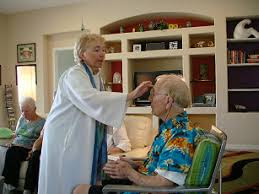
Women’s Ordination Conference collaborates with a number of groups, including Roman Catholic Womenpriests and the Association of Roman Catholic Women Priests, whose members are validly (if illicitly) ordained. Catholic women ordinands incur the penalty of excommunication from the Roman crowd, though no one seems to notice when it comes to benefitting from their many and fruitful ministries. Women’s Ordination Worldwide, Discerning Deacons, and many national groups carry this same agenda.
Fifty years later, WOC will be back in Detroit in May of 2026 to assess the meaning of its half-century struggle and to strategize about next steps. One thing for sure is that the failure to include women in ordained ministry of any sort—diaconate, presbyterate, episcopacy, or its own thing—is a major reason why participation in the U.S. Roman Catholic Church has plummeted.
Today, barely a quarter of U.S. Catholics attend mass on a regular basis. Many have long since taken their leave for greener spiritual pastures. Given this latest decision by the Study Commission (and the long standing data linking decisions like this one to disaffiliation), I predict that many more Catholics will look for wisdom and spiritual care well beyond the confines of the Magisterium until the Pope and bishops are left talking to themselves while the work of ministry goes on without them.