Translate

Saturday, April 20, 2013

Books by Bridget Mary Meehan/Kindle/Amazon
http://www.amazon.com/s/ref=nb_sb_noss?url=search-alias%3Dstripbooks&field-keywords=by%20Bridget%20Mary%20Meehan

"We Have a Pope: An Ex-Priest Speaks"

http://www.jamaicaobserver.com/columns/We-have-a-pope----An-ex-priest-speaks_14109565
..."So with this strong prayer of gratitude for my life as a Jesuit, why did I leave?
The irony of my vocation is that with the very vision the Jesuits gave me and the motivation behind it, I could no longer limit my God, nor my 'self'. The Jesuits made me the fullest being I could have been, until my point of departure. I was approved by Father General Peter Hans Kolvenback in 1998 to profess solemn vows, but it was time to move on. Being a Jesuit meant being a Roman Catholic, and the limitations of a doctrinal, dogmatic church reached its threshold in my personal life.
My discovery of reality brought me to the fact that all aspects of the universe is dialectical, and therefore is masculine and feminine, having animus and anima. Living with merely a masculine understanding of priesthood and having "authority" only from a male perspective limited my God, my Self and, for me, my church. As a Roman Catholic priest, John Paul II forbade priests to even discuss women priesthood. In my vision and in my theology, God cannot be selective in the call to priesthood. We are all called to this vocation. I find it a travesty of justice that in my church women cannot be priests. As much as Catholic philosophy and theology speak of the equality of all humans, women are still second-class citizens. I could no longer actively minister in an institution which expected blind obedience to such a travesty. The world has seen what happens when those in authority passively sit back and do nothing.
Historically, Jesuits have regularly had their hands slapped by Rome for their theological and social positions. What happens when one speaks out with a new vision? The Jesuit, Roger Haight, SJ, who was my primary mentor in writing my new philosophy and theology has been silenced by Rome; he is not to teach at a Roman Catholic institution and has also been forbidden to teach at any protestant school of theology. It has been deemed that his Christology does not conform with formal Roman Catholic theology in light of the divinity of Jesus the Christ. Oh, how we limit God!
So my gratitude for my life as a Jesuit passes over to my love for the church. If a Jesuit vision could awaken me from my dogmatic slumber, my hope and prayer is that this same Jesuit vision of Pope Francis can awaken the Roman Catholic Church from its dogmatic slumber.
Blessings to Pope Francis, may you truly follow the ways of Ignatius of Loyola, the founder of the Jesuits, and Francis of Assisi, the founder of the Franciscans, and be a true channel of peace, love, faith, hope, light, and joy in the world."
Martin J Schade is a lecturer in the Faculty of Liberal Studies at the University of Technology, Jamaica, and is a former Jesuit, Roman Catholic priest.


Read more: http://www.jamaicaobserver.com/columns/We-have-a-pope----An-ex-priest-speaks_14109565#ixzz2R1JJglHh

Friday, April 19, 2013

Editorial: Vatican, LCWR Approaching Critical Crossroads /National Catholic Reporter Editorial Staff


“A church that does not go out of itself, sooner or later, sickens from the stale air of closed rooms,” Pope Francis has written in a letter released Thursday to his fellow Argentine bishops. This is a similar message to the one he delivered to his fellow cardinals before the conclave, impressing them enough to elect him bishop of Rome
In his new note he went on to say in the process of “going out” the church always risks running into “accidents,” adding, “I prefer a thousand times over a church of accidents than a sick church.”
A church of accidents … a church willing to take risks on the edges … a church dedicated to service of the most needy … a church working on behalf of mercy, peace and justice…
This sounds a lot like the church U.S. Catholic sisters have been building in recent decades. Not only U.S. women religious, but also women religious around the world have been at this work. It is the women who have lived closest to the marginalized; it is the women who have worked on the “peripheries;” it is the women who have gone precisely where Francis is encouraging others to go.
And what has been their reward?
Have they been lifted up by others?
Have they been acclaimed by their church leadership?
No. Despite occasional laudatory words to the contrary, these faith-filled women have been too often demeaned and too often tarnished with accusations of alleged infidelity. The most ironic element in this sad story has been that these accusations have arisen out of the ranks of the very men who have inflicted great damage to the church by repeated patterns of sex abuse cover-up.
Christians have learned to expect persecution. Being voices for the poor, the marginalized, gays and lesbians, the uninsured or pregnant young mothers are rare undertakings. But the women religious have toiled endlessly to assist and represent these largely voiceless people.
While persecution comes with the territory of living and working in the “accidental” church, we don’t expect such attacks to come from our own clergy. Yet, too often they have.
Hiding behind highly exaggerated accusations of infidelity, certain bishops have revealed stunning ignorance. In the process they have abused their authority. It’s been the easier course.
The takeover of the Leadership Conference of Women Religious (LCWR) by the Vatican’s Congregation for the Doctrine of the Faith, the result of an extended “doctrinal assessment,” knowledgeable Catholics understand has much less to do with core beliefs than with episcopal obedience.
Our women religious are among those who understand this firsthand. We have all come to see too many of our prelates feel uncomfortable around women. The result is they stay away from them. This results, over time, in more fear and almost certain misunderstandings. Only open, sustained discussions -- on equal footing -- can set a new course toward church health.
We need conversations in which Catholic women and men -- religious, clergy and laity -- can talk freely in a spirit of mutual support about their faith and church lives.
It would be a healing experience and needs to take place in dioceses across the country. This would be a step.
Our women are the most theologically educated in the history of the church. The differences between their thinking and our bishops’ thinking has less to do with faith and doctrine than church structure, and more to do with applications of church teachings and mission. There is plenty of core common ground.
The first step, however, is to recognize that women carry vital insights necessary to restoring health to the “sick” church of which Francis speaks. Without women participating as equals in engaged discussions there is little hope such health can be found.
Even more fundamentally, then, the Vatican/LCWR issue is really about whether the current male clerical decision-making system can sustain church life in the 21st century. Huge numbers have concluded it cannot. 
The Vatican’s current path, which excludes women religious from any semblance of self-determination, ostensibly in a spirit of mutual episcopal cooperation, threatens the continue life of the church. Moreover, it is an assault on all women. In turn, it is an assault on all Catholics.
We are fast approaching a perilous moment. This highly visible rift between the Vatican and Catholic sisters begs a question: Can our church sustain theologically literate women in its ranks? More widely, can it attract dedicated women of any stripe? We are losing these women faster than one can imagine. Ask almost any parent of a grown daughter.
The Vatican congregation’s doctrinal assessment of LCWR, apparently for now upheld by Francis, is, then, a blow to all who want to restore community and health to the church.
If the Vatican insists on carrying out its LCWR takeover, the group will have no choice but to end its canonical relationship with the institutional church. This is because the entire LCWR body almost unanimously voted last August to continue a dialogue with the bishops as long as the effort does not compromise LCWR integrity.
At issue is not obedience. It is rather the dignity of every person and the rights of every person in the church, stemming from his or her baptism.
We are coming perilously close to a point of rupture. Some, of course, would relish such a break. However, their satisfaction would be short lived. For such a break would send out a loud signal, one that would echo through history, that the most significant U.S. women religious body had concluded fidelity to conscience and fidelity to the values of the Gospels required separation. It would be a stunning blow to all Catholics.
LCWR, canonically or not, in reality or in spirit, will continue to serve our communities of women religious and, through them, the neediest of human beings.
Our women religious will remain Catholic to the core despite efforts by some to paint them otherwise. Indeed, they will have concluded church dedication to missionrequired separation.
Charges and counter-charges will ensue. But an honest evaluation would find that the women took action only following the deepest of soul searching in a spirit of community, dedication and love.
It would also find the final straw was not doctrinal. Instead, it was finally about faithfulness to the very Gospel ideals which Francis preaches each day. "


Thursday, April 18, 2013

Listen "To Believe", A Song by Jackie Evancho/ as Prayer of Comfort for all those who suffer

http://www.staged.com/video?v=NtK

Pope Francis Reaffirms Censure of LCWR/ Women's Ordination Conference and Call to Action Respond

Erin Saiz Hanna:  202.675.1006

Nicole Sotelo: 773.404.0004 x285 
 

WASHINGTON D.C. - One year ago today, the Leadership Conference of Women Religious (LCWR), an umbrella group representing 80% of the 57,000 nuns in the

 United States, came under fire from the Vatican's Congregation for the Doctrine of the Faith for their social justice ministries and not supporting the U.S. bishops' agenda of attacking expanded healthcare, women's ordination, and same-sex marriage.


LCWR described the assessment as "based on unsubstantiated accusations and the result of a flawed process that lacked transparency," causing "pain and scandal in our church." 


On Monday, Pope Francis reaffirmed the censure.


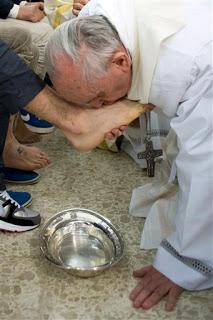
"While Pope Francis presents a fresh face in Vatican City, breaking from papal tradition by washing the feet of two women on Holy Thursday, for example, without dismissing the mandate against the nuns such symbolism appears meaningless at best and hypocritical at worst," stated Erin Saiz Hanna, spokesperson for the Nun Justice Project and Executive Director of the Women's Ordination Conference.


"Catholics around the country have been inspired by the faith and work of the sisters and will continue to support them; we urge Pope Francis to recognize their commitment and contributions and dismiss the mandate," said Jim FitzGerald, spokesperson for the Nun Justice Coalition and Executive Director of Call To Action. 


Last summer, nearly 70,000 Catholics signed a Change.org petition and hundreds organized vigils to rally around the sisters.


 "The pope intentionally chose St. Francis as his namesake," continued Hanna.  "St. Francis of Assisi's sacred friendship with St. Clare is well documented.  He wrote a promise of mutual respect for her and for the women who joined her community.  St. Francis worked collaboratively alongside his sisters rather than against them. We expect Pope Francis to do the same."

Wednesday, April 17, 2013

Mary Hunt on Francis and American Nuns: Atoning for Centuries of Discrimination Will Take More Than Four Clean Female Feet/ Gender Equality and Women Priests


Mary Hunt on Francis and American Nuns: Atoning for Centuries of Discrimination Will Take More Than Four Clean Female Feet
Theologian Mary Hunt thinks the jury is still out on Pope Francis, though early impressions of his pontificate are positive on several fronts. She notes that she expects, however, more than friendly cosmetic changes:
Rather than washing feet, I suggest looking Catholic women in the eye and saying, “You are my sister, equal in every way to me,” and then changing structures accordingly. To atone for centuries of discrimination against women will take more than four clean female feet. I despair of those who say, “It is a start,” to which I respond, “Obviously, but how pitifully inadequate.”

And her conclusion:
I urge that if women are not welcomed into all forms of ministry, decision making, and administration of the Roman Catholic Church in the very near future—I mean a year, max two, not a lifetime—then the jury find this pope as guilty as the rest in the ‘disappearance’ of half of the Catholic community. Maybe we will be surprised, and I will be the first one to rejoice that my skepticism was unwarranted. 

Bridget Mary's Response:
I agree with Mary Hunt. I also believe that he should apologize to our Roman Catholic Women Priests International Movement for the Vatican's oppressive tactics and many punishments. And Pope Francis should affirm our movement as prophetic and life-giving to the church. Bridget Mary Meehan, arcwp, www.arcwp.org
 

Tuesday, April 16, 2013

Did Pope Francis get enough information on the LCWR mandate? by Maureen Fiedler/NCR Today/April 16, 2013

"The Leadership Conference of Women Religious has posted a statement from the Congregation for the Doctrine of the Faith in which Archbishop Gerhard Müller of the doctrinal congregation said he talked to Pope Francis about the LCWR mandate and claims the pope affirmed it. I am frankly very skeptical of that information. First, I doubt this issue is on the top of the new pope's agenda or that he had much knowledge of this when he was an archbishop in Argentina.

And what does "affirm" mean? Affirm what? Some general, vague report? Did Müller give him a full explanation, talk about the opposition to it among U.S. Catholics or give him an outline of the actions proposed? Did he talk about the accusation that says U.S. women religious spend too much time on social justice and not enough on other issues? I frankly doubt the new pope would "affirm" that.
Introducing NCR's first eBook: Best Catholic Spirituality Writing 2012
Did he even mention the questions raised by LCWR at the meeting several months ago? I doubt he gave both sides.
It could be a case of the "good 'ole boys" in the Curia wanting everything to remain the same and trying to make the new pope go along on an issue about which he knows little.
Two things: First, this is a wait-and-see situation. Second, LCWR would be well-advised to seek a private audience with Pope Francis to explain the full story."
Bridget Mary Meehan's Response
Amen, Sister Maureen Fiedler! Let's hope the Pope checks out the Curia report on LCWR. Let's hope that Pope Francis appoints a LCWR member to a major position in the Vatican as a sign of reconciliation and hope for the world's nuns!

Let us give thanks for God's boundless love


Monday, April 15, 2013

Boston Marathon Bombing Kills 2, Injures Over 130

http://news.yahoo.com/boston-marathon-bombing-kills-2-injures-over-130-001628616--spt.html
My prayers are with the families of the dead and the injured in this tragedy. May God comfort and strengthen all who have suffered harm and their families. Bridget Mary Meehan, arcwp, www.arcwp.org

Vatican Reaffirms CDF's Doctrinal Assessment of LCWR/A Major Disappointment/Take Action to Support the Sisters

LCWR Statement on Meeting with CDF

On April 15, 2013 Sister Florence Deacon, OSF, LCWR president; Sister Carol Zinn, SSJ, LCWR president-elect; and Sister Janet Mock, CSJ, LCWR executive director; met with Archbishop Gerhard Ludwig Müller, prefect of the Congregation for the Doctrine of the Faith (CDF); Archbishop Luis Ladaria, secretary of CDF; and other members of the CDF dicastery. Archbishop J. Peter Sartain was also present.
The LCWR officers reviewed the activities of this past year since receiving the report of CDF’s doctrinal assessment of LCWR in April 2012.
In his opening remarks, Archbishop Müller informed the group that he had met with Pope Francis who "reaffirmed the findings of the assessment and the program of reform for this Conference of Major Superiors".
The conversation was open and frank. We pray that these conversations may bear fruit for the good of the Church.
Contact:
Sister Annmarie Sanders, IHM
Associate Director for Communications
asanders@lcwr.org
301-588-4955


Bridget Mary's Response
This is a big disappointment and a setback for the Leadership Conference of Women Religious.
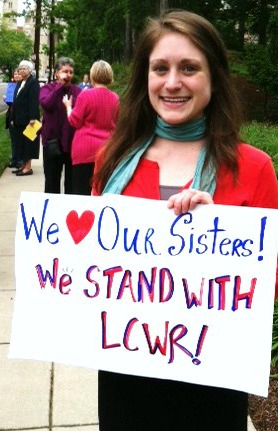
It is time for the nuns to move ahead and declare independence from Vatican control. Below is a letter from the Women's Ordination Conference suggesting a letter writing campaign to proclaim our solidarity with the Sisters. It is a call to action for justice. 
Bridget Mary Meehan, arcwp
www.arcwp.org

Dear Bridget,   

As you may have heard, almost exactly one year after the Vatican released its unjust mandate attacking the Leadership Conference of Women Religious (LCWR), Pope Francis has reaffirmed the critique, which found LCWR had "serious doctrinal problems," exposed "radical feminist themes," and needed to be reformed.

LCWR released a statement on Monday's meeting between their leadership and Archbishop Gerhard Ludwig Müller, the head of the Vatican's Congregation for the Doctrine of the Faith: "We pray that these conversations may bear fruit for the good of the Church." 

We too pray for the good of the Church and ask that you make your support of the sisters heard. Consider writing a letter to the editor of your local newspapers, and writing to the U.S. bishops who are involved in carrying out the mandate against the sisters. Download sample letters and talking points here. 
 
During this time of renewal in our Church, let us remind Pope Francis and the bishops that we stand with the sisters. Let us pray for constructive dialogue and respect.  


 Faithfully, 

kateheadshot  


Kate Conmy

Membership Director


You Tube Associates Pope Francis' Easter Vigil and MMOJ Easter Vigil


                                         2:28:57 Easter Mass by vatican 26 views
  •  0:19 Mary Mother of Jesus Inclusive Catholic Community/Easter Vigil/Woman Priest Katy Zatsick Leadsby Bridget Mary Meehan 14 views 
  •    
  • http://www.youtube.com/watch?v=75bwumFGcxA
  • Mary Mother of Jesus Inclusive Catholic Community Easter Vigil is on same youtube page with Vatican Easter Vigil! See video bar on side of page.
    http://www.youtube.com/watch?v=MCq-0DDEc9A

    Sunday, April 14, 2013

    Acts of the Apostles 5:27-32,40b-41 "We Must Obey God Rather Than Men"/Modern Version/Women Priests and Married Priests


    "When the head cardinal and the entire assembly of the Vatican Curia had brought together the women and married priests and made them stand before the Vatican assembly, the head cardinal questioned them saying: “We gave you strict orders, did we not , to stop raising the consciousness of the laity.  Yet you have filled the entire church with your teaching.  You claim the yeast of the Holy Spirit is acting like leaven among the People of God—calling all the baptized to be prophets, leaders in our communities and ministers in the universal priesthood.”  Bishop Bridget Mary Meehan and her apostles said in reply. “We must obey God and the Holy Spirit rather than men.

    Then the Vatican Curia ordered the women and married priests to stop speaking in the name of Sophia and then dismissed them.  So the women and married priests left the presence of the Vatican Curia, rejoicing that they had been found worthy to suffer dishonor for the sake of justice."
    (Anonymous Member of Mary Mother of Jesus Inclusive Catholic Community)
     

    Saturday, April 13, 2013

    Pope Francis Beings Reform of Vatican Curia

    http://ncronline.org/node/49661

    "In a signal that major reform may be on the horizon, the Vatican announced today that Pope Francis has formed a group of eight cardinals from around the world to “advise him on the government of the universal church” and “to study a project of revision” of a document from John Paul II on the Roman Curia.

    At first blush, all these cardinals seem like strong personalities. Several have voiced criticisms over the years about various aspects of Vatican operations, while two, Cardinal Sean O'Malley of Boston and Cardinal Reinhard Marx of Munich, Germany, have played key roles in the church's response to the child sexual abuse crisis.

    The group’s first meeting is set for Oct. 1-3, and meanwhile, according to the Vatican statement, the pope will be in regular contact with the cardinals individually.

    The brief item in the Vatican’s daily press bulletin did not explain how these cardinals were chosen, or how long they will serve in these roles.

    Strikingly, there was only one member of the Roman Curia among the eight cardinals tapped to assist the pope. The rest come from various parts of the world, with at least one representing each continent..."

    Stay up to date throughout your day:
    Sign up for NCR email alerts to receive the latest news and your

    Friday, April 12, 2013

    Pope Plans to Canonize Three Argentine Priests with Irish Connections

    http://www.irishcentral.com/news/Pope-Francis-launches-sainthood-case-for-three-Argentine-priests-with-Irish-connections-202677761.html

    "Father Alfie Kelly was born in Buenos Aires to Juan Kelly and Elisa Casey, the youngest of seven children. He joined the Pallottines at a young age and studied in Buenos Aires and Rome before his ordination in 1957. At the time of his murder he was the pastor at St. Patrick’s, responsible for student formation and rector to one of the diocesan catechetical seminaries.
    Notably, Kelly was the spiritual director to the young man who was to become the Cardinal Archbishop of Buenos Aires, Jorge Bergoglio, now Pope Francis I.
    Kevin O’Neill SAC, described his life and work “He specialized in spiritual direction, retreats, Catechetics and in youth work which was his principal apostolate. The best word to describe his character is ‘solid’."
    Father Alfie Leaden was born in Buenos Aires but his parents, Patricio Leaden and Brigida Ussher were of Irish descent. One of eight brothers and sisters, he was educated educated by the Irish Mercy Sisters and later by the Pallottine Fathers. He went on to study philosophy at the Pallottine seminary in Thurles, County Tipperary, and continued his studies in Rome, according to Pallottines.ie. Ordained into the priesthood in 1942 he worked in many Pallottine communities in Argentina.
    Father Kevin O’Neill SAC described Leaden as “amiable. In the true sense of the word it means more than being worthy of love." A student of Leaden’s, Father Rodolfo Capalozza, wrote, “Alfredo seemed to have supernatural peace, an uncommon peace. He transmitted the peace of God. To go into his room was like the psychological experience of entering a sanctuary, it was orderly, and he radiated amiability and innocence.”

    Thursday, April 11, 2013

    John Cooney/Irish Journalist Writes about Coverage of Conclave/ Meeting with Janice Sevre-Duszynska, ARCWP in Rome and Activists from WOC-Witness for Justice

    Doctrine and Life
     Vol 63 No. 4 April 2013

     A Veteran Journalist’s
     First Conclave
     JOHN COONEY

    " IN ALL my 43 years as a journalist, I never had the occasion to report
    a papal conclave. Thankfully, this omission has been rectified with
    the arrival of the 266th papacy. In spite of a harsh wet Roman evening
    on Wednesday March 13, it was an unforgettable moment to witness
    the election of the Cardinal Archbishop of Buenos Aires, Jorge Mario
    Bergoglio, and to hear him take the name of Pope Francis. Although a
    bit uncomfortable with the unbridled ultramontane enthusiasm of the
    vast crowd in St Peter’s Square, I too came under Francis’s trinitarian
    spell of humility, simplicity and spontaneity.
     On his awaited appearance on the loggia, my first impression was
    that he looked like Pope Paul VI, then I felt he looked like Pius XI.
    Certainly not a Pius XII, and not a showman like John Paul II or in the
    diffident manner of Benedict XVI. The more permanent resemblance
    was that of John Paul I, the smiling Pope.
     Growing up in the west of Scotland back in the 1950s as part of
     the Catholic Irish diaspora in which the Pope was our unquestioned
     spiritual leader, I remember watching the election on our recently
     acquired television set of Pope John XXIII in 1958, and that of Paul
     VI in 1963 with my late aunt Mary who was on holiday in her native
     Blantyre, having gone to Philadelphia in the depressed 1920s to earn
    her way in life across the Atlantic as there was no prospect of employ
     ment in Scotland.
    When John Paul I was elected in 1978, the year of the three popes,
    I was in America on a travelling scholarship, and later that year when
    Pope John Paul II took the Vatican by storm, I watched his bravura
    balcony speech on a television set in the press room of the EU Council
    of Ministers in Luxembourg.
     In 2005 when the white smoke ascended for Joseph Ratzinger, I
    was involved journalistically; but my reporting was from Dublin for
     The Evening Herald and as a studio commentator with presenter Claire
     Byrne on TV3. At least I was getting closer to being a Vaticanologist, so
    much so that last October I represented Doctrine & Life at the fiftieth
    anniversary of the Second Vatican Council, which coincided with the
    Synod of Bishops on New Evangelisation and the launch of the Year
    of Faith.  1.

    THE NAME FRANCIS

    On my return to Dublin last autumn I was speaking to the art critic,
    Kevin Ruttledge, and told him of my feeling that Pope Benedict XVI
    had aged and would resign rather than die slowly and publicly as did
    John Paul II. Little did I imagine, however, that five months later I
    would return to St Peter’s Square following Benedict’s freely offered
    resignation on February 11 to see the welcome given to the first Jesuit
    Pope, the first Pope from Latin America – and, hopefully, potentially
    the first truly collegial Bishop of Rome, instead of the Supreme Pontiff
     on the authoritarian model of my boyhood.
     Francis is a big name in the Cooney family. My late father was Francis
    and my elder son was baptized Francis by the late Fr Austin Flannery,
    O.P., and Monsignor John Greehy, the late parish priest of Terenure.
    My aunt Mary was the housekeeper of the pastor of St Francis of Assisi
    Church in Springfield, Pennsylvania.

     A ROOM WITH A VIEW

    On a tight budget which was Franciscan in its economy I booked to
    fly to Rome with Aer Lingus on Sunday March 10, returning Saturday
    March 16. By Friday March 8, I was in a panic about accommodation
    as hotels I knew were full.
     Then a touch of inspiration produced the solution. Bridget Mary
    Meehan, who had spoken at the Humbert Summer School in County
    1. John Cooney, ‘A Pilgrimage, a Council and a Synod’, Doctrine & Life, November  2012.
     Mayo in 2010,
    emailed with the address in Rome of Janice Sevré-Duszynska, a minister of the
    Association of Roman Catholic Women Priests, which counts approximately 150
     women priests in Europe, the U.S., Canada and Latin America. Indeed, thanks to the
    Italian police, I was able to identify Janice from the publicity she got on RTÉ television
    and major world networks on Thursday March 7 when she was filmed being temporarily
    detained by the Italian constabulary for demonstrating in St Peter’s Square vested
    in her alb and green stole. For her trouble, Janice was released but the
    police confiscated her banner proclaiming ‘Women Priests are here’.
    I ascertained that Janice was staying at a Carmelite convent guest-
     house on the Via Paolo III, half an hour’s walk from the Vatican. My
    email seeking accommodation for six nights was dispatched to Sister
    Angela that Friday evening and to my relief by Saturday lunchtime I
    had secured a room en-suite with a shower and breakfast for the bar
     gain price of 55 euro a night plus a 2 euro City of Rome tax. The downside
    was that all guests had to be in the convent by 11 p.m. This convent
    curfew would mean no late-night bar-stooling with other journalists
    in the Piazza Navona.
    Thus, on my arrival in Rome at mid-day on Sunday March 10, I was
    taken straight by taxi to my humble quarters. I paid the frivolous fee
    for six nights accommodation and was given the key to apartment 229.
    Spartan it might be, but from my balcony when I opened the shutter,
    I had a splendid view of the basilica dome, the magnificent, silver cupola
    of St Peter’s. Suddenly, I was close to the action in the Apostolic
    Palace, where history would unfold.
     
    THE PRESS CORPS

    As the sun was shining, I walked to the Vatican without my coat
    and umbrella, forgetting that rain was forecast from late afternoon. I
    headed to the Borgo Pio, where I was ushered to an outdoor table for
    those wishing to eat al fresco. This was the same restaurant, Marcello,
    where in 1971 during the Synod of Bishops which I was covering for
    The Glasgow Herald, I was initiated into Vatican reportage by the Irish
    press corps. I toasted my glass to the memories of Seán MacRéamoinn,
    Joe Power, Kevin O’Kelly and Gary MacEoin, ecstatically in communion
    with their eternal spirits in the kingdom of the saints, national union
    of journalists branch.
    By now, the temperature had fallen dramatically and rain was brood
     ing in the air. So I scampered to the nearby Piazza Risorgimento in
    pulsating rain to meet Patsy McGarry of The Irish Times. Patsy had wisely
    kept his coat on and was carrying an umbrella as his shield from the
    torrential downfall. An easing of the rain led us to bolt to our separate
     destinations. To my dismay, it proved impossible to flag-down a taxi.
    So I stated walking up the steep winding road bordering the walls of
     the Vatican in a merciless thunderstorm, taking a wrong turn and
     doubling the time it took to get to my casa.
    After changing into dry clothing I wandered into a common room
    to watch television which was already switched on by an absorbed
    woman whom I recognized as Janice Sevré-Duszynska. We talked for
    several hours and I took note of her planned activities. Next morning
    at breakfast, I joined Janice who was in company with fellow guests
    who included women canon lawyers, nuns and Catholic activists. A
    yardstick for measuring the conclave proceedings was that the Church’s
    foremost need was to elect a pope who was an administrator to clean
    up the Curia; otherwise it was dead in the water.
     PREDICTIONS

    > Monday March 11 was the last day of the pre-conclave discussions.
    > Scholars and scribes flooded the Tiber with their prescriptions. I
    > joined in the punditry on an RTÉ radio interview with Fergal Keane
    > for Mary Wilson’s Drivetime. We did it on a street beside a restaurant
    > on the Piazza Risorgimento. Asked what I wished from the conclave, I called
    > for the next pope to confer an intellectual amnesty which would end the clamp
    > -down on theologians and would invite all the cardinals to express their true
    > thoughts rather than mouth the curial line on issues deemed to be
    > closed including contraception, married male priests, women priests,
    > gay marriage and same sex unions. This should be a prelude to a
    > reopening of these issues in tandem with a curial reform that would
    > send the old guard to Coventry. All cardinal electors should take as
    > their bedtime reading Mary McAleese’s book, Quo Vadis? Collegiality in the
    > Code of Canon Law.
    > On the morning of Tuesday, March 12, after an early rise I was
    > interviewed for the BBC World Ser vice by Nuala McGovern, an
    > Irishwoman, at the Beeb’s stand on the Piazza Pio XII. Initially, I was
    > booked to do one slot on the reaction of public opinion in Ireland to
    > Pope Benedict’s resignation, my answer being that he had reduced
    > the papacy to a job and that Ireland was on the left of the Vatican and
    > wanted real change towards democratic decision-making. My stint
    > expanded into three slots, the second of which was to identify three
    > papal front-runners.
    > I picked Cardinal Angelo Scola of Milan, whom I had met at a con
    > ference of Christian Democrats in September 2010 in Cracow, Poland,
    > where he spoke on ‘The Christians’ Contribution to the European
    > Integration Process’. While he was affable and approachable, I said
    > his speech was too philosophical and I predicted he would bore for
    > the papacy.
    > Cardinal Marc Ouellet of Quebec was well placed as Prefect of the
    > Congregation of Bishops, with an impressive presence at ceremonies
    > as he demonstrated last June when he was papal legate at the World
    > Eucharistic Congress in Dublin. I also contended that he took clerical
    > paedophilia seriously, having held meetings in Ireland with victims
    > of clerical sexual abuse which included spending an hour with Mark
    > Vincent Healy, a victim of a Spiritan cleric and now a victims’ crusader.
    > Thirdly, I named Cardinal Louis Antonio Taglé of Manila who impressed
    > Fr Seán McDonagh recently in Dublin. But I felt he might be considered
    > too young at 53. I ruled out an American pope.
    > The third slot was to say when we would see white smoke. ‘On
    > Wednesday or Thursday’, I forecast. That lunchtime the first ballot
    > elicited black smoke and as I headed with the disappointed crowd
    > towards the Borgo Santa Anna, I bumped into Mary McAleese and her
    > husband Martin. This was fortuitous, as for some time I had been trying
    > to track Mary down in Rome to arrange an interview for a biography
    > of Cardinal Desmond Connell.
    >
    > AN ALTERNATIVE GATHERING
    >
    > That afternoon ahead of the cardinal electors entering the conclave, I taxied
    > to the mountain ridge of the Piazza Garabaldi, close to the statue of the leader
    > who in 1870 captured Rome and effectively ended centuries of the papacy’s
    > temporal power. There Janice and women activists from the U.S., Canada, Australia
    > and Europe raised pink smoke flares to promote their case for the ordination of women
    > to the priesthood. This event highlighted the lack of women’s voices
    > among the pope-makers and decision-makers in the Church. ‘We must
    > as a matter of justice claim for women our equal rights to be ordained,’
    > said Janice Sevré-Duszynska. ‘We do this by contra legem [against the
    > law]. We are breaking an unjust law. Yet we remain within the Roman
    > Catholic Church. The sacrament of Orders comes from our Baptism,
    > not from our gender.’
    > In pelting rain interspersed with thunder and lightning, Erin Salz
    > Hanna, executive director of Women’s Ordination Conference, called
    > for an official reopening of the discussion on women’s ordination. The
    > people of the Church, she said, are desperate for a leader who will be
    > open to dialogue and embrace the gifts of women’s wisdom in every
    > level off church governance.
    > Miriam Duignan, communications coordinator of Women Can Be
    > Priests, said that the election of a new pope was a rare opportunity
    > for the Church to reconsider its systems of governance, to introduce a
    > more democratic system of electing leaders and to reassess the leaders’
    > accountability to the faithful.
    > Just five hours before Cardinal Bergolio was elected pontiff in the
    > Sistine Chapel on Wednesday March 13, I was present in a downtown
    > schoolroom for immigrants in the Via Ostiense where Janice Sevré-
    > Duszynska intoned: ‘The Vatican gives flowers to women, but what
    > women really want is full equality. Women priests are here!’ Janice’s
    > ordination in 2008 was attended by Fr Roy Bourgeois who gave her a
    > blessing, which led to his excommunication by the Congregation for
    > the Doctrine of the Faith and his removal from the Mayknoll Order. 2
    > In a statement of support for Fr Bourgeois issued in December
    > 2012, the Association of Catholic Priests (Ireland) condemned this
    > type of action as ‘unjust, and ultimately counter-productive’ and it
    > 2. Roy Bourgeois, M.M., My Journey from Silence to Solidarity, Edited by Margaret
    > Knape, fxBear, Yellow Springs, Ohio, 2012.
    > called on the Congregation for the Doctrine of the Faith ‘to restore
    > Fr Bourgeois to the full exercise of his ministry and to allow for open
    > and honest discussion on issues that are of crucial importance for the
    > future of the Church.’
    >
    > A POPE FOR THE POOR
    >
    > It was on Tuesday evening that Cardinal Bergoglio emerged as Pope
    > Francis. Among his many homely gestures and bons mots my favourite
    > is: ‘The Church is not just another human organisation. We can walk
    > as much as we want, we can build many things, but if we do not profess
    > Jesus Christ, things go wrong. We may become a charitable NGO, but
    > not the Church, the Bride of the Lord’.
    > On a sunny Thursday morning I participated at Cardinal Seán
    > Brady’s press conference at the Pontifical Irish College, where it
    > emerged that the Primate of All Ireland had made a prophetic intervention
    > during the pre-conclave meetings by suggesting that the new pope should be
    > marked by a love of the poor. Speaking, too, about his conversation with Pope
    > Francis after his election, he said he will be inviting him to Ireland when an
    > appropriate occasion arises.
    > At his first press conference, the Pope said he was inspired to take
    > the name because Francis was ‘a man of the poor’, a ‘man of peace’
    > and a man who ‘loved and cared for creation.’
    > Afterwards I went to lunch with Cardinal Brady’s spokesman, Martin Long, and
    > Michael Kelly, the editor of the Irish Catholic, at which we discussed what kind of pope
    > Francis would be, with me stressing he be collegial and bring an end to the People of God’s
    > trek in the wilderness. While we shared a mood of optimism, Martin quipped that
    > he had heard my interview with Fergal Keane but did not agree with
    > one word I had said!
    >
    > WILL WE HAVE A VATICAN III ?
    >
    > On a sunny Saturday March 16 at the end of my six days amongst
    > women, to borrow from the title of a John McGahern novel, as the Aer
    > Lingus plane crossed the Alps, I thought of Lord Acton’s dictum that
    > ‘absolute power corrupts absolutely’ and hoped that under Francis that
    > kind of absolutism will be corrected. It was clear to me from Cardinal
    > Brady’s enthusiasm that Bergoglio’s election gave him a landslide
    > mandate to reform the Curia. It remains to be seen if he will translate
    > his charisma into effective action and pick a team who will implement
    > changes, a team which might find places for the respective talents of
    > Cardinal Brady and the Archbishop of Dublin, Diarmuid Martin.
    > However, on account of the Argentine Pope’s theological conservatism, I expect
    > that there will be many disappointments for advocates of sweeping change. To avoid
    > this, I would hope that Pope Francis summons a Third Vatican Council whose composition
    > would extend to representatives of the clergy and laity as well as the world’s bishops. Its
    > aim would be to complete the unfinished business of Vatican II. Indeed,
    > perhaps the next time I travel to Rome those awesome ultramontane
    > peaks will look less imperial and more collegial."
    >
    > (John Cooney, a historian, is also a journalist specialising in religious
    > affairs.)

    The Resurrection Community in Cincinnati Celebrates Easter Liturgy on April 10, 2013

    Donna Rougeux, Janice Sevre-Duszynska, Rosemarie Smead,
     Roman Catholic Women Priests/ARCWP,
    www.arcwp.org
     
    On Wed. April 10, 2013, Resurrection Community in Cincinnati ( approximately 75-100} Catholics meet monthly)celebrated an Easter Liturgy.
    Above are 2 Roman Catholic Women Priests, Donna Rougeux and Janice Sevre-Duszynska
    and Deacon Rosemarie Smead who will be ordained a priest in Louisville on April 27, 2013.
    This community will celebrate their 3rd year anniversary next month.

    Wednesday, April 10, 2013

    Historic First Ordination in Louisville as Dr. Rosemarie Smead will be ordained a Roman Catholic Woman Priest

     
     Release date: April 9, 2013


    Contact:  Janice Sevre-Duszynska, D.Min. (media) 859-684-4247, rhythmsofthedance@gmail.com


    Bishop Bridget Mary Meehan, 703-505-0004, sofiabmm@aol.com


    Dr. Rosemarie Smead, 502-663-1237, shanti.rosemarie@gmail.com


    On Saturday, April 27, 2013 at 1p.m. Dr. Rosemarie Smead of Bedford, Kentucky will be ordained a priest in the Association of Roman Catholic Women Priests. The presiding bishop will be Bridget Mary Meehan of Falls Church, Virginia and Sarasota, Florida. The ceremony will take place at St. Andrew’s Church of Christ, 2608 Browns Lane, Louisville, Kentucky 40220.


    All are welcome.


    Media are invited to a pre-ordination conference on Saturday, April 27, at 11:30 a.m. at the church with the candidate and Bridget Mary Meehan. Call Janice (859-684-4247) to schedule an interview.  Respectful filming/photo-taking during the ceremony is acceptable.


    The ordinand is theologically prepared and has many years of experience in ministry.


    Dr. Rosemarie Smead  began her spiritual journey as a Discalced Carmelite nun. She later earned a BA in Theology from Marquette University, a Masters in Psychometrics, and a Doctorate in Counseling Psychology.  She worked for many years with delinquent teens and others in need of counseling. Presently, she leads a local worship community and also works as a couples and family therapist. The author of six books and videos on working with youth, Dr. Smead is retired from a teaching career of 26 years at Indiana University where she was honored for her “Distinguished Teaching and Service”.


    “I want to bring inclusive communities to the Louisville area where all are welcome with a special outreach to young people to develop their full potential,” she said.


    The church is at a crossroads with a new pope and women priests. This paradigm represents a holy shakeup and is pregnant with potential for renewal and change. Pope Francis’s simplicity and solidarity with the poor and marginalized is the Good News that Catholics have been waiting for. Now is the time to embrace women.


    Since two-thirds of the world’s poor are women, justice and equality must be top priorities for our church. Our world and church can no longer function without the voices of women’s lived experience. Women priests are visible reminders that all women are images of God.


    The Association of Roman Catholic Women Priests calls on Francis to embrace the full equality of women, including women priests. Women priests are now on the ground, living and serving in inclusive communities and welcoming all to receive the sacraments. On March 13, five hours before the new pope was elected, a woman priest celebrated Mass in Rome.


    Women priests are answering the call and our movement is growing.  According to a recent CBS Gallup Poll, over 70% of Catholics in the U.S. support women priests. There is no shortage of vocations as women are now saying “Yes” to this call and are being ordained. Now we have the first historic ordination in Louisville as Dr. Rosemarie Smead is ordained. In May our first woman priest will be ordained in Cincinnati.

    Tuesday, April 9, 2013

    "Roman Adventures" The Inside Story of Janice Sevre-Duszynska, Woman Priest's Arrival at St. Peter's/Vatican-Close Encounter with Police!

    Janice Sevre-Duszynska, ARCWP, AP Photo
     

    Day 1: (March 7) Upon Arrival

    I moved quickly after getting through customs. A new pope would soonbe elected in an unjust and patriarchal manner, not by the people of God. Now was the time for women’s voices to be heard and our banner for women priests displayed. Now was the time for a woman priest to lead a Eucharist celebration with the people of God.  Our women priest community and supporters sent me to Rome.


    I headed toward the baggage area with my computer bag and carry-on. As per Bridget Mary’s cautionary suggestion, which I heeded, they were filled with my old, “witnessing-to-the-bishops” alb, red cincture, pottery paten and chalice, purificator. stole and 70 copies of our “Liturgy to Celebrate Justice, Partnership and Equality for Women in Church and Society.”  If my luggage didn’t show up, I was still prepared to celebrate Mass.


    To save time and effort, Donna had suggested that I take a taxi and not the train into the city. There were media waiting for a woman priest. I yanked my luggage from the conveyor belt and asked a police officer where I could catch a taxi. Seconds later, Giuseppe introduced himself and led the way to his car. I gave him the address of the convent guesthouse: S. Emilia de Vialar. Along the way, I noticed the cloud coverage yet also here and there a peek-a-boo sun. “Rain and cold for the next week,” he said, as he negotiated our way through the tight and boisterous Italian streets.


    He dropped me off outside the enclosure and I arranged for him to pick me up when I would depart. When I rang the bell, the door opened into a realm as picturesque as a fairy tale, filled with huge ancient trees, chirping birds, flower gardens, a stately guesthouse and to the left, a spectacular view of the Eternal City, including the silver dome of St. Peter’s. After two trips up two flights of stairs, an English-speaking sister took my rent and explained the rules. I nodded as we made our way to the elevator and second floor. As we walked toward the room I basked in the spaciousness of the cathedral-like ceilings and the antique

    cabinets and sculptures which lined the hall.


    Once inside my room, I knew I had to hurry. I opened my carry-ons and piece of luggage and removed their contents. Then I grabbed shampoo, soap, washcloth to shower and wash my hair. Outside the bathroom, I set my hair in old-fashioned rollers and dressed in the undergarments to wear my homemade alb. In a plastic bag I would carry my stole, umbrella and our new banner: WOMEN PRIESTS ARE HERE. After I dried my hair, combed it out, prepared myself to leave, I put on the green rain and shine coat from my sister which she suggested I wear as it covered most of my alb. Before doing so, I used the red cincture from my old “bishops” alb to hold up this one, which was my ordination alb. I called the media to let them know I was on my way. Inside the office, I dropped off my key and the sisters told me that I should leave my passport in the room or it could be stolen.  Although I had a belt around my waist under my alb, I returned my passport to the room…as I tried to honor their wisdom.


    It was raining outside as I made a right turn and followed the wall of St.  Peter’s,i-phone in hand, communicating with the press who I needed to find. I did not go in direct proximity of St. Peter’s where Roy and Erin and Miriam had been arrested in October 2011. I saw the Italian police gathered there. Instead I skirted around here and there, attempting to avoid them. Finally, I reached my destination and the AP folks were there to greet me. They whisked me up to a media loft, asked me many questions, and took photos. I must admit I felt dizzy on this soap box they had me stand on with the Vatican in the background.  I had eaten very little and had very little rest. Nevertheless, it all worked out. After the photo shoot, we walked toward the columns of St. Peter’s with my banner:  WOMEN PRIESTS ARE HERE.  I told them it was not my intention to be arrested and I would not go into St. Peter’s Square (I would be prevented from doing so as I had been dressed as a priest in November 2011 with Roy and Erin. The Vatican did not want to touch me representing women priests. Furthermore, a main focus of my Roman witness was to celebrate an inclusive Eucharist).


    I walked with the AP folks down to the left column in my priestly garb.

    Folks saw me, including a group being led by a male priest who looked at me with disdain. The press snapped pictures. In front of St. Peter’s Square I saw a woman talking to the Italian police. Perhaps she had seen my alb from beneath my sister’s rain’n’shine coat, I thought.

     
    Soon an older Italian policeman walked toward me.


    “Prove that you are a woman priest,” he demanded. “What gives  you the right to wear these vestments?”


    I answered him. “I have been celebrating Eucharist for almost five years with inclusive communities in Cincinnati, and Lexington, with Eucharists inNew Orleans . Ft. Benning and other places. Our women priests community is growing.”

     
    He was a man around my age (early 60s), dressed in his police uniform.

    He immediately got on the phone with his superior. Meanwhile, as I had brought along our documentary, “Pink Smoke Over the Vatican,” people were gathering around. A Spanish radio journalist asked if he could interview me. I was happy to agree. Later, I gave him the DVD and a copy of Roy’s booklet and our ARCWP brochure

     
    Other folks snapped photos and I talked with them about our movement for Gospel equality for women in our Church. They were on board. A Spanish radio reporter asked if he could interview me . I said, “yes.” Right there he happily asked me questions about our movement. After, I gave him a copy of the “Pink Smoke” dvd  which was in Spanish, too, Roy’s booklet and our ARCWP brochure as well as my card. Weeks later I saw that his interview had played on Spanish radio.


    Then the Roman policeman returned with his plainclothes policeman who knew more English than he did. I was to produce my passport.

    Did I have one?


    “Of course, I do. The sisters insisted that I keep it at the convent.”


    “Where are you staying?” the policeman asked. I reached into by bag and gave him the address of our S. Emilia de Vialar convent guesthouse.


    Now, I must stay that as an activist in the peace movement as well as for women priests, I thought quickly of my options. What is best here? Should I do a sit-in as I’ve done before? Maybe I could go limp and refuse to go into the police squad.

    All of these questions presented themselves to me. However, I thought, let them take me and reveal the shallowness of their faith, behavior and trust in the Spirit. So, I got into the squad car not knowing where they would take me.


    As it turned out, they drove to the convent, S. Emilia Vialar. In front of the steps, I told the older Italian officer, “I want you to stay here. I’ll go inside and get my passport. I don’t want you upsetting the sisters. This is where I’m staying. I’ll go inside and bring back my passport. I don’t want to be walking through the streets of Rome looking for another place to stay.”


    He acquiesced and I went inside.


    Of course, there were guests at the convent-guesthouse who were peaking outside at the ruckus. Inside my room, I grabbed my passport,

    carefully moved down the steps and gave the document to the Italian police officer. Then he demanded, “Prove you’re a priest!”

    I looked into his eyes which had softness at their base but were following orders.


    “Here’s my card,” I answered, as I handed him the simple white and black card with the angel and her trumpet announcing my long-awaited priesthood. Then I gave him our ARCWP brochure. He skimmed over it quickly and reported back to his source on the phone.


    “Are you going to be here for a month?” he asked. “How many other women priests will be joining you?” 


    I answered him. “I’m the only woman priest here and I’ll be staying a week.” It appeared a great relief to his soul as he communicated my message to the Captain by phone.


    When I produced my passport, he was on the phone again with a Captain, going over my passport, etc.


    I saw that his helper, who was dressed in plain clothes and who could speak English, was smoking a cigarette. We shot the breeze and he told me he had no objections to women priests. It was just two people of God trying to communicate and find common ground. I liked him. Finally, when the older officer got the “okay” from his superior, I thanked him for being kind to me, shook his hand, and gently kissed him on the cheek. He dropped all pretenses and was his natural and God-given kind and gentle self. We shook hands. I thanked the younger officer who spoke English and they drove away.


    I returned to the convent and was not thrown out even though there were plenty of windows open while the squad car was outside. I spent my time organizing the contents of my luggage, calling Bridget Mary and quietly, reflectively praying.