
Christina Moreira, the first Spanish female bishop and Review of Victorino Pérez Prieto’s writings on mysticism.
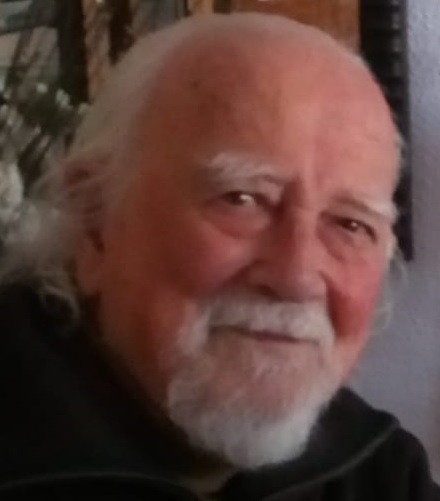 I felt great joy reading in Religión Digital the excellent interview José Manuel Vidal conducted with Christina Moreira, who will be ordained bishop tomorrow, fulfilling all the requirements of apostolic succession and within the Association of Roman Catholic Women Priests (ARCWP) . The RD has given it wide coverage, with splendid photographs, and I highly recommend reading it, congratulating Christina and supporting her cause, and, if anyone can, joining her in the place that—out of prudence—has not been made public. Although I personally have maintained more deference to the ecclesiastical institution, I increasingly share the conviction of Cristina and so many others that without accomplished deeds and profound freedom, there will be no real change. And if I am not copying the entire interview here, it is because I want to free myself from the debt I owe to Victorino, her husband, to whom I promised long ago to review his excellent book. Here is Victorino, an old friend, a profound theologian and a spiritual man who understood our always remembered Raimon Pannikar better than anyone else. AD.
Mysticism as a universal experience:
a reading by Victorino Pérez Prieto
Victorino Pérez Prieto: Mysticism in Non-Christian Religions: The Challenge of Non-duality (PPC Editorial, 2024)
I've known Victorino for years. He's a profound theologian, a rigorous thinker, and a friend. His previous contributions to Iglesia Viva (if anyone wants to read any of the articles and gets an error, copy the address that appears in the command line and paste it there. AD) and Atrio.org already reveal his radical ecumenical vocation, always influenced by the Trinitarian spirit and the thought of Raimon Pannikar.
But this new book takes a step further. And it does so with boldness and solidity.
This is a work that deserves a privileged place as a permanent reference book for anyone interested in spirituality, mysticism, and interreligious dialogue. If previous generations looked to Mircea Eliade as a reference for understanding humanity's religious background, this work by Victorino can fulfill a similar function today, with a more contemporary sensibility: less focused on myths and more on the living and founding experiences that have given rise to spiritual traditions.
Here, religion is not analyzed as a set of doctrines, but as a radical experience of reality. We are invited to view mysticism not as a marginal phenomenon, but as the spiritual core of all religions, including non-theistic ones. This shift in focus—from belief to experience, from dogma to experience—connects with a contemporary thirst for authenticity that transcends religious labels.
Among his most valuable contributions, I would like to highlight:
– The seriousness with which he treats shamanic experiences. Far from superficial exoticism, Victorino shows how certain experiences, even when expressed in magical or archaic languages, can be embraced by a mature spirituality. The canonization of figures such as the American Indigenous blessed, Black Elk [i] , is a living example of this integration.
–The depth with which it presents Eastern traditions, especially Vedic Hinduism. At a time when everything is often reduced to a light-hearted fad of “mindfulness” or “Zen,” this book restores the theological and existential weight to these traditions, showcasing their spiritual architecture and wisdom.
– The unfolding of what he calls “non-duality,” that experience that overcomes the oppositions between body and soul, God and world, subject and object. Rather than opting for a simplistic monism or a sterile dualism, Victorino—following Advaita intuition and Panikkar's Trinitarian path—proposes an a-dual experience that embraces complexity and unity.
The book is also a pedagogy of the "three eyes of knowledge": the sensitive and empirical, the rational, and the contemplative. In a world that has hypertrophied the latter, replacing the first with ultra-technical "sensors," and has almost forgotten the third, dismissing it as illusory fantasies, this work is a call to awaken the inner eye, to cultivate interiority as a path to wisdom and fulfillment.
Beyond the religious horizon, this book has a philosophical and humanistic force. It shows that mysticism is not a privilege of a select few nor a spiritualist escape. It is an essential human possibility, a way of living life with full awareness, with loving presence, in communion with the All.
Victorino does not propose a cheap syncretism, nor a relativism that blurs differences. His is a commitment to a mature interreligiosity, capable of recognizing "homeomorphic equivalences" (as Panikkar said), those deep echoes and affinities between different traditions. And, above all, he invites us to recognize mysticism as the deepest dimension of humanity.
In a world wounded by noise, fragmentation, and superficiality, this book is an open door to Silence. A Silence that is not emptiness, but Presence. A Silence that unites, that heals, that transforms.
Brief overview of the book's contents:
The book is structured in several parts which, beyond the scholarly analysis (there is a wealth of authors and titles by and about mysticism), invite the reader on an inner journey:
– The initial chapters present the general framework of spirituality and mysticism, with special attention to the metaphor of the three eyes of knowledge (sensory, rational and contemplative), and to the notion of spirituality as access to Life with a capital L.
– The central idea of the book is presented below: nonduality (advaita) as the challenge and heart of all authentic mystical experience. This intuition is explored in its ontological and experiential depth, as well as in its interreligious translation.
– The various forms of non-Christian mysticism are then presented, beginning with Hinduism, Zen and Tibetan Buddhism, Taoism, Islamic Sufism, and Jewish Kabbalah, with special attention to their practices, concepts, and exemplary figures.
– Finally, the book concludes with a reflection on secular mysticism, contemporary spiritualities, and the challenge of a transtheistic mysticism in the context of intercultural dialogue and theological renewal.
NOTE
[i] The truth is that I discovered Black Elk through this book by Victorino. I had read in Castañeda things about states of consciousness achieved through the ingestion of drug and shamanic ritual practices. But it had nothing to do with this wisdom buried in his land and inherited from his ancestors that came to the Indian Nicholas Black Elk,whose story and message, baptized in the 1930s and currently on the way to canonization. I recommend at least a first approach with the writer Emma Rodríguez in this review: https://lecturassumergidas.com/2018/08/30/el-legado-de-alce-negro/ ) Good route of integral wisdom for your fellow citizens of the 21st century!
Comments are closed.
No comments:
Post a Comment