Translate

Thursday, April 6, 2023

Good Friday Stations of the Cross - Ukraine - Prepared by the Upper Room Inclusive Catholic Community, Albany, NY- April 7, 2023

Adapted from a publication in America Magazine 
https://www.americamagazine.org/faith/2022/03/18/station-cross-ukraine-prayer-242627

Zoom link: https://us02web.zoom.us/j/82512159155 
phone-in for (audio only) Phone Number: (646) 558-8656
Meeting ID: 825 1215 9155

Good Friday: 5:30PM EDT

The Stations of the Cross from the Suffering of Ukraine

For hundreds of years Christians have walked the Stations of the Cross, a sequence of 14 works of art or prayer spaces in which the steps of Jesus’ journey from judgment to the tomb are remembered.  Particularly during the season of Lent, believers look to the stations as a way of seeing the world more and more through the eyes of Jesus and those who walked with him.  This Lent, we are also confronted by the ongoing invasion of Ukraine.  

Since the invasion began, Ukrainian-American artist and photojournalist Tatyana Borodina, a former art director of America, has been gathering and publishing texts, emails and photos from people suffering from the violence at her Ukrainian-oriented magazine Elegant New York. Their stories capture the shock and horror currently being experienced in Ukraine.  As a form of solidarity with all living in Ukraine and a prayer for their rescue, here is a form of the Stations of the Cross built from those stories.

Prayer for Peace

From your heart, Holy One,

to the suffering heart of Ukraine,

to a world both beautiful and broken

pour out, we pray,

your solace to hearts choked with grief;

your strength, to those shattered by trauma;

to all now in flight, rest in safe shelter;

to all left behind, your tender presence.

Turn those who seek to dominate and destroy

towards the way of peace, the work of justice.

In trust, we pledge our lives to no more war,

war never again.

May this be so for all your people on this day

and on every day

held in your unconditional love. Amen    (By Chris Koelhoffer, IHM)


Narrator: In the first set of stations we ask God to help us share in the

 shock and horror felt by the people of Ukraine today.


Station One: Jesus is Condemned to Death. (by Kateryna, from Lugansk)


The current Russian invasion of Ukraine began for us like in a Soviet movie: Early in the morning, at 5:15, I was woken up abruptly by the sound of a flying fighter jet. My husband looked at the phone and said that it had begun. After another 15 minutes, we heard a terrible explosion and the house shook.


I ran to the nursery. The picture that I saw there will remain for me the main

illustration of this war. My 10-year-old son—thin, in his underpants, still sleepy, was lying by the bed on the rug, curled up, covering his head with his hands, and at the same time, he was calm.  He did just as I taught him. Two days before I was indignant that he still did not know how to tie his shoelaces. (Pause 8 to 10 seconds)


Response:  Holy One, grant us a feeling of shock.


Station Two: Jesus Takes up His Cross.  (by Natalia, from Kyiv)


On the morning of Feb. 25, I did not plan to go anywhere. I wanted to be at home, bake bread in my favorite oven, grow flowers in the backyard. There was no talk of evacuation. On the contrary, my parents and eldest daughter and their friends came to our house in the suburbs of Kyiv.


By lunchtime, [everything had changed]: I had thrown some things in the car,

the children, our dog. Our eldest daughter refused to leave; my parents also

stayed at home. I will never forgive the occupiers for my mother’s words:

“We have already lived our lives. You save the children.”  Yes, we understood for eight years that the attack on us was a matter of time; yes, we were taught the Jewish wisdom of the Holocaust: “Believe those who say they want to kill you.” And still, it is impossible to be ready for this. When it happens, the brain denies it. (Pause 8 to 10 seconds)


Response:  Holy One, grant us a feeling of dislocation.


Station Three: Jesus Falls for the First Time. By Anna, from Kyiv: 


On that day, around our house, literally in front of the gate and on the side of the road, there was a bunch of [Russian] military equipment.  For a long time, they just stood there. Then they began to move. Along the way, they fired at residential buildings. They didn’t move fast, they shot thoroughly.

The children and I hid in some corner under the stairs, away from the

windows, crouched on the floor, trying to contain our panic. (Pause 8 to 10

seconds)


Response:  Holy One, grant us a feeling of horror.


Narrator: In the second set of stations, we pray to grow in the generosity that Ukrainians have witnessed amidst their own suffering.


Station Four: Jesus Meets his Mother.  By Kateryna, from Lugansk:


When food shortages arose in our area, people appeared who distributed milk and sour-milk products, bread and pastries for free. Sometimes they are volunteers, sometimes they are the owners of small shops in our area.

Once, near our entrance as the shelling began, a frail young woman with a

tiny baby in a pouch ran down the path from the other end of the residential

complex [to where the milk was being distributed]. She was immediately

given two packets and offered more. She hesitated and said that she still had

an older child at home and that would be handy, but others might not have

enough. She took the third carton of milk only after she was convinced that

there would be enough for everyone.


At a time when Russian soldiers are deliberately shooting at children’s

hospitals, kindergartens, cars with people, crushing civilians with tanks, a

tiny mother of two children, under the roar of shots, is worried that someone

else nearby will have enough food. It was the first time in all my days that

I cried. (Pause 8 to 10 seconds)


Response: Holy One, teach us to be generous


Station Five: Simon of Cyrene Helps Jesus Carry the Cross.  By Natalia, from Kyiv:


I could not sleep. I was shivering as soon as I closed my eyes.  I saw my parents saying goodbye to me and my grandchildren. Every sound seemed suspicious.

In the morning I had to take a quick walk with the dog, but the sirens sounded. We just sat on the floor in the bathroom. My eldest son climbed into the cast-iron bath, lay in it and sang. The youngest, sitting on the dog mat, asked curiously why we were sitting in the dark on the floor.


Anna, from Kyiv: They are shelling the houses. A terrible horror. Two things flew into the yard with a whistle and explosions. Then in a respite, [my son] Kirill raises his head and says, “This is just fireworks in my honor!” I am amazed by his optimism. Happy birthday, son! (Pause 8 to 10 seconds)

Response:  Holy One, teach us to be generous.


Station Six: Veronica Wipes the Face of Jesus.  By Natalia, from Kyiv:

At the border there is a queue of several kilometers. They say we were lucky to have to stay only a day. Others stayed for two or three days. You can’t sleep; you need to be ready to move the car every few minutes. If you miss the queue, others will pass you by. The situation is tense, but volunteers are coming and going, literally persuading you to take hot food, sweets and fruit for the children.

The Poles are incredible people. They carry food, clothing, children’s things,

household chemicals, medicines. They hand out free SIM cards, accommodations and transfers. Both municipal transport and railway tickets are now free for Ukrainians.


The day after we arrived, we went to the station to help Polish volunteers

meet our refugees. When you’re at the train station feeding someone, calming

them down with the mantra “Yes, I only arrived yesterday,” it’s a little easier.

It’s therapy, as [Ukrainian poet] Lina Kostenko once brilliantly formulated it:

“Someone in the world is worse off than you.” (Pause 8 to 10 seconds)


Response:  Holy One, teach us to be generous.


Station Seven: Jesus Falls for the Second Time.  By Lyudmila, from Mariupol:


Here is hell. Constant shelling. We sit in the basement, sometimes we manage to cook food on a fire. A hole was dug near the entrance to go to the toilet. Very cold. We are still alive, but there is very little food left. As for the rest of our relatives, I don’t know. There is no connection.

(Pause 8 to 10 seconds)


Response:  Holy One, teach us to be generous.


Narrator:In the third set of stations, we pray for the strength to not look away from what is happening in Ukraine.


Station Eight: Jesus Meets the Women of Jerusalem.  By Kateryna, from Lugansk:


These days, I have a feel for what the concept of “sick horror” means. It is an almost tangible something that lives in the area of the solar plexus. Periodically it spreads its tentacles throughout the body from the inside, compresses every organ, every artery, vein, capillary. It was physically impossible to eat or drink, too. It was impossible to sleep; it was constantly very cold and no blankets and socks could save us. And I couldn’t cry.


On the second day, fear turned into hellish hatred. It grows stronger every

day and becomes almost tangible. (Pause 8 to 10 seconds)


Response:  Holy One, give us the faithfulness to not look away


Station Nine: Jesus Falls for the Third Time.  By Darla, from Mariupol:


We have been without water, electricity, gas, heating for eight days. Neighbors lit a fire under the house to cook food on it. We stood in line for six hours. There was no bread. Shops have been looted. All the roads around are mined by the Russian military. There are no corridors. It’s not safe to drive because you can get blown up.


Mom said that there was enough food for everyone for a maximum of a week.

After that, there will be no more. They collect snow and boil it.

(Pause 8 to 10 seconds)


Response:  Holy One, give us the faithfulness to not look away


Station Ten: Jesus is Stripped of His Garments, by Natasha, from Mariupol: 


Half a million Mariupol residents are cut off from life.  There are no streets left with undestroyed houses. The bodies of the dead are buried in the courtyards of residential sectors. There is no light, heat, water, food, communications in the city. Children are dying of dehydration. The enemy cynically breaks the promised “green corridors,” blocking any attempts to deliver food and medicines. (Pause 8 to 10 seconds)


Response:  Holy One, give us the faithfulness to not look away.


Station Eleven: Jesus is Nailed to the Cross.  By Yaroslava, from Borodianka: 


A shell hit my apartment in a four-story building.  It is no more. Hiding with my mother in the basements of private houses. In Borodianka, Kadyrovites [Chechnyan paramilitary soldiers who are working with the Russian army] are shooting at locals, shelling is constantly being carried out. We are exhausted both physically and mentally. We are constantly crying... (Pause 8 to 10 seconds)


Response:  Holy One, give us the faithfulness to not look away.


Station Twelve: Jesus Dies on the Cross.  By Elena, from Kharkiv: 


On Feb. 28, my friend and her family decided to leave.

A rocket hit one of the cars. The whole family burned to death.

(Pause 8 to 10 seconds)


Response:  Holy One, give us the faithfulness to not look away.


Narrator: In the final stations, we pray once more for the Holy One to intervene in Ukraine.


Station Thirteen: Jesus is Taken Down from the Cross.   By Anna, from Kyiv:


A column of Russian occupying equipment was standing right outside our gates, driving back and forth. But no one looked at them anymore; we just lay on the floor all the time. It was scary to raise our heads.  For a week, we lived with the children and the cat in some nook under the stairs.


The worst thing is that at some point you realize that if the explosions are a

little further, then you react more calmly, and you even manage to sleep

fitfully. The horror is that a person gets used to everything.

(Pause 8 to 10 seconds)


Response:  Holy One, grant us peace.

Station Fourteen: Jesus is Laid in the Tomb.  By Kateryna, from Lugansk: 


My parents and I left our homes for the second time in seven years. I can’t express these feelings. People ask me: Are four walls dearer to you than the lives of your loved ones? Of course not. But I perceive my home as a close friend, a living being. And now I again have the feeling, as in 2014, that I betrayed him, abandoned him and did not protect him.


Now our family is safe. But I keep thinking that it would be better if I stayed

at home. Even under shelling it would be easier for me than wandering

around other people’s apartments, without my things and in complete

uncertainty about how long all this will last and whether my house will

survive. (Pause 8 to 10 seconds)

Response:  Holy One, grant us peace.

Closing Prayer


The name Mariupol is an honoring of the Divine Mother.

And so, we turn to invoking ancient prayers. Ave Maria for these new wounds:


Ave Maria, courage for the embattled

 Ave Maria, safe passage for refugees

 Ave Maria, resilience for the aid workers

 Ave Maria, consolation for the separated

 Ave Maria, hope for the abandoned

 Ave Maria, solace for the grieving

 Ave Maria, care for the orphans

 Ave Maria, wisdom for the peacemakers

 Ave Maria, conversion of the hard-hearted.

 Ave Maria, your embrace for those who have died.


Holy One, grant the suffering people of Ukraine salvation from bombardment, salvation from torment, salvation from terror and loss.  May the promise of the coming of your Kin-dom bring us all closer to the peace that comes from you alone.  Amen.


St. Stanislaus Pastor and Board Honor Seven Years of Service of Rev. Annie Watson ARCWP

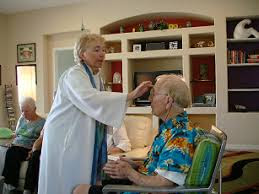
Rev. Annie Watson  ARCWP received this beautiful picture in gratitude for seven years of pastoral ministry to the people in the community of St. Stanislaus in Missouri.

I am grateful to Fr. Przemek and the Board of Directors, for recognizing
Rev. Annie Cass Watson’s contributions and for supporting women in the church and more importantly the movement worldwide. 

Our movement has grown because of communities like St Stanislaus. Deep gratitude to Fr. Przemek and the Board along with Fr. Marek Bozek for their insight to what the future church should look like, a church lead by women! 


Wednesday, April 5, 2023

NEW PCS FORUM: WOMEN’S PRIESTLY ORDINATION IN THE CATHOLIC TRADITION WITH THE FOCUS ON THE SUBVERSIVE PRAXIS OF THE ROMAN CATHOLIC WOMEN PRIESTS, APRIL 20, 2023, 1:00-2:30PM EDT – FREE

PCS Forum: Women’s priestly ordination in the Catholic Tradition with the focus on the subversive praxis of the Roman Catholic Women Priests

Presented by Rev. Dianne Willman and Dr. Jakub Urbaniak
April 20, 2023
1:00pm-2:30pm Eastern Time  FREEZoom Link: https://us02web.zoom.us/j/84965259983?pwd=VFl1cWhjV2UvMGl1cWFyR05mU2xKQT09
Meeting ID: 849 6525 9983
Passcode: 868236

This forum aims at engaging with a recently published article on the Roman Catholic Women Priests (RCWP) movement. The article focuses on the “alternative ecclesiological model” that is embodied by RCWP in response to the ban on women’s ordination in the Roman Catholic Church.  It reveals the “unique form of dissent” that is pursued by the movement, namely that it is one that offers a different model without seeking rupture from the Church. The forum is intended to unpack the praxis of the movement that offers a way through the “doctrinal impasse” on the issue of women’s ordination, even if it only holds a “transitionary space within the larger land- scape of the new forms of priesthood emerging across Christian churches.”

Presenters

Dianne Willman, RCWP

Dianne Willman, RCWP, is a Roman Catholic woman priest ministering to an international community largely based in Johannesburg, South Africa. She was ordained in 2019. She is also a trained spiritual director and retreat facilitator in the Ignatian tradition. By profession, Dianne is a lawyer who has served in the South African prosecution organisation for 20 years. Dianne holds two Master’s degrees – one in theology and the other in law. Dianne is passionate about justice and transformation, and is motivated by liberation theology: to see, judge, act.
Jakub Urbaniak (PhD – UBO Brest; DTh/MTh – UAM Poznan) 


As a teacher, researcher and community activist, Jakub believes that the pursuit of a more just and sustainable world requires diverse collaborations and a true spirit of togetherness (ubuntu). Between 2010-2022, he lived in Johannesburg, South Africa, where he was originally sent as a Fidesco volunteer. For over a decade, he worked as an academic in the fields of Theology, Philosophy, and Ethics, and published extensively on topics spanning decolonisation, Black Theology, African spiritualities, and the role of religion in the public sphere. He has also been involved in youth training and community development projects as a volunteer and in campaigns against racism and the discrimination of women and LGBTIQ+ people. Currently, he is teaching at the Innovation Academy, University College Dublin, focusing on social sustainability, climate justice, and refugee rights.

NEW FROM PEOPLE'S CATHOLIC SEMINARY: PCS 508 – THE GOSPEL OF THOMAS GOES PUBLIC – BEGINS APRIL 18, 2023 AT 7PM EDT

PCS 508 –  The Gospel of Thomas Goes Public

Presented by Dr. Shirley Paulson

Begins April 18, 2023
7:00pm  to 8:80pm EST
(meets every Tuesday for seven weeks)

Click here to Enroll

WHAT AND WHEN?

This thought-provoking course unlocks religious and historical mysteries about the ancient text, the Gospel of Thomas, and its relationship to the Bible. Discovered near the caves of Nag Hammadi, Egypt in 1945, this gospel continues to inspire and surprise, provoking its readers with many questions for us to discuss.

The course consists of seven sections which can be taken independently or in group discussions. The cohort for this course begins Wednesday, March 1. We meet weekly from 7:30 – 8:30 pm Eastern for seven weeks.

Monday, April 3, 2023

"Including women in the ordained priesthood may not be the answer to all Catholic problems, but it would be a start", says theologian Mary E. Hunt. Pope Francis could begin by removing excommunication penalty against women priests , Bridget Mary Meehan

 https://www.ncronline.org/opinion/guest-voices/be-not-ordained-move-beyond-same-old-song-and-dance-womens-ordination


My Response: I agree. For 20 years, Roman Catholic Women Priests have been  leading inclusive communities and ministries that have provided pastoral care of Catholics.  We are serving inclusive Catholic communities who want to stay connected to sacramental rituals, the spiritual legacy and social justice witness of our cherished faith tradition. 

In this insightful article, Mary Hunt debunks the flimsy arguments of the hierarchy against the ordination of women and clearly names the main problem as clerical domination and failure to accept human equality.

While I agree that women in the ordained priesthood may not be the answer to all Catholic problems, Pope Francis could take a courageous step forward by removing the penalty of excommunication against women priests who are creating new models of ministry in people-empowered faith communities of equals now. 

Bridget Mary Meehan ARCWP, www.arcwp.org


Forty-five years ago, I wrote a parody of a then-popular Catholic hymn. The same parody works today:

Be not ordained
Priesthood is for men only
Don't follow me, for they will give you grief.

We laughed then, but decades later, it is not very funny. In fact, it is rather tragic.

What is tragic is that women and some supportive men, non-binary people too, have had to put enormous energy into something about which the institutional Roman Catholic Church is so recalcitrant. Imagine if those energies were unleashed to attend to the everyday needs of people who look to ministers for support and guidance, or if the resources, both human and financial, were trained on climate change, anti-racism, reproductive justice and LGBTQI+ rights.

I am not suggesting that the work to make ordination inclusive is unimportant. To the contrary, it is crucial and appreciated. But that it must be done, and redone, and done some more for almost 50 years, is something to lament.

Anecdotal evidence and several studies show that the institutional Roman Catholic Church's continued refusal to ordain women is a major reason why American Catholics (among others) have left it in droves.

Let's be clear, the bald ask is to allow women to be part of the clerical system and the decision-making apparatus of the institution, and even that is rejected. Proposals for new models of ministry in a renewed church are not even entertained.

In a sense, I am delighted by the exodus. Why participate in and support something in which the majority of people are second-class citizens by design? Women are the majority of Catholics. The contradiction is so blatant as to be beyond discussion.

Airy-fairy notions that a Petrine principle and a Marian principle determine such matters is hocus pocus, not theology. Ditto for the newly minted notion of an "administrative way" that Pope Francis thinks women are more gifted in, for example, being a secretary or manager. Talk about a Hail Mary pass.

Nuptial imagery of Jesus as the "bridegroom" and the church as the "bride" is theo-babble that no serious theologian would attempt to argue today. Decades ago, the great theologian Rosemary Radford Ruether listened to some poor clerical chap try to explain that women could not be ordained because women do not bear a natural resemblance to Jesus in the Eucharist. She is reported to have asked the priest to show his natural resemblance. Audience laugher ensued and that should have been the end of that. Alas, it was not.

Most people have no idea what these allegedly theological things mean. But they do know that women and nonbinary persons are as much "fit matter" for ordination as people with male genitalia. The skills, commitment and training necessary to minister have absolutely nothing to do with anatomy, symbolically or otherwise. Period. Biblical and theological scholars settled these questions a generation ago. Still, some people trot them out as if for the first time. Be not deceived.

The whole current synodal structure needs to be reconfigured into what the Vatican dreads, namely, a democratic assembly, in order to have any claim on the Catholic community's time and attention.

TWEET THIS

What needs to be discussed is whether anyone should be ordained into a clerical system that has long outlived any usefulness it might have had. It has been the cause of serious harm to many people, including priests.

Also under reasonable consideration is the false link between ordination and jurisdiction, whether ordained persons have any more right to make decisions in an egalitarian church than anyone else.

Assuming, as I do, that the answer is no, then the whole current synodal structure needs to be reconfigured into what the Vatican dreads, namely, a democratic assembly, in order to have any claim on the Catholic community's time and attention. Otherwise, the synod, whose final document is voted on by clerics, and implemented, or not, by the pope, is simply a charade with a predetermined ending, all of the earnest protestations about the Spirit notwithstanding.

The Brazilians found that out the hard way in the Synod of Bishops for the Amazon. There is no reason to think this international process will be any different with regard to women. Just because there is a call for grassroots input does not mean, unless the grassroots decide, that such input will be reflected in the outcome.

These are not easy questions, but at least they are worth discussing, even disagreeing about, as we get clear about what kind of a church we want or want to leave. But discussing ordination in terms of gender and sexuality is needlessly repetitive and a waste of time.

Women and nonbinary people join men in many forms of priestly ministry. Roman Catholic women priests, whether through the eponymous organizations or in other denominations where they have chosen to minister, are engaged in multivalent ministries. That is now a fact, whether the Vatican acknowledges it or not, whether people like it or not.

The men who hold the votes in the Roman Catholic Church are afraid of one day having to face the fact that the opposition to women's ordination is based on patriarchal privilege and the failure to accept human equality, full stop.

TWEET THIS

Lately, I have heard some Catholic women say that their male pastors are afraid of them, that they scare the men when they preach. Despite their rejection unto excommunication in some cases, women ministers continue to put the needs of people and the planet ahead of their own safety and security. They don their work clothes and offer a word of hope. They tend to the crying needs that the hierarchical Roman Catholic Church would prefer to ignore rather than affirm women's diaconal and presbyteral work as valid and licit.

Just as regrets are for dinner parties, fear is for therapy. The men who hold the votes in the Roman Catholic Church are not afraid of women as if women were about to rob them in an elevator or maim them in a street fight. They are afraid of one day having to face the fact that the opposition to women's ordination is based on patriarchal privilege and the failure to accept human equality, full stop.

Clerics' refusal to change the customs, structures, attitudes and practices that keep them in power, not their fear of women, is what needs attention. And that attention is to power-sharing without apology.

The consequences of not taking this reality on board are unfolding for all to see. People are lied to when they are told that the church cannot ordain women because of some God-given reason. Common-sense theological reflection says otherwise. Hiding behind God-language is an old theological sleight of hand to obscure power. That era is over. The exits to the church are well marked and increasingly well used.

My heart is with the people who do not have a house church or a base community to exit to as they leave the institution. It is their pastoral needs and sacramental wants that are ignored so that an outdated power structure can endure. They are often subject to inferior quality preaching, liturgy and pastoral care when better is available but not allowed in the continued non-ordination of women.

Inclusive ordination is not the answer to all Catholic problems. It is not even one I like very much, as I question whether anyone needs to be ordained. But without it, and without participatory structures of decision-making, there is only grief."