“Although science has undergone three major paradigm shifts since the Middle Ages, the church still relies on medieval theology to explain the mysteries of Christian faith.” (Ilia Delio)
Life in the 21st century is bursting with opportunities to explore the exponential growth in human understanding of the nature of reality. The wonders of the Cosmos, the intricacies of the human body, the miracles of life on Earth, and the complexities of consciousness can be explored digitally. Science, technology, and vast reservoirs of accessible wisdom render much of Christian theology useless when it comes to supporting life here and now. The disconnect between the church’s carefully constructed belief systems and the unprecedented information we have available at our fingertips, has given birth to questions which compel the faithful rethink our theology, NOW! Progressive Christianity is a response to the mismatch between the medieval consciousness of the church and the ever-expanding, evolutionary consciousness of those who seek to follow the teachings of Jesus here and NOW. This rethinking seeks ways to move beyond the three-tiered universe of our ancestors so that we might begin to embody Wisdom born of the ongoing revelations of DIVINITY through the evolutionary life of the Cosmos.
In this course we will briefly examine the history and development of the emerging christian movement which has loosely adopted the moniker of “progressive christianity.” The course will provide an introduction to questions progressive christians continue to rethink, questions about theism, christology, panentheism, and the opportunities which the life and teachings of Jesus of Nazareth offer to the evolution and well-being of humanity.
While theology will play a role in this course, our primary emphasis will be practical, as we look at the urgent need to rethink christianity, as well as the implications of rethinking for the church, the Earth, our culture, our communities, and the evolution of Creation. All lectures and seminars will address the challenges and opportunities of rethinking christianity in community. This course will be of particular interest to those followers of Jesus’ Way of Being who are seeking to create, nurture, and support communities of faith which are about the crucial work of LOVE in the world.
Questioning and rethinking are characteristics of progressive christianity, so in addition to readings and lectures, this course will include seminar sessions where participants can question and rethink together.
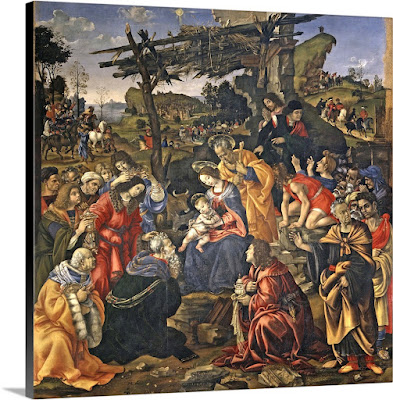
Adoration of the Magi (Adorazione dei Magi), by Filippino Lippi, 1496, 15th Century
As this year’s Christmas season comes to an end and we enter the celebration of the Epiphany we are reminded that Wise Magi from the east brought precious gifts to honour the coming of Jesus. They were able to recognize that a new era and way of life was unfolding for Jews and foreigners alike.In faith, hope and celebration they represent an historic movement toward peaceful transformation so the world could truly become ‘all one people.’
Today, I am thinking about theologian, Anglican Archbishop Desmond Tutu, who passed away on Sunday, December 26th, 2021.His funeral was on New Years’ Day in Cape Town, where his eulogy has become a beacon of hope in the years to come.We were reminded of his many gifts to humanity for he courageously forged new pathways for peace and justice.
Extreme political and cultural forces met at a crossroads during his lifetime.Tutu’s joyful countenance and hope filled perspective in the face of adversity, became a light in the darkness.Demonstrating Christ consciousness, Tutu was a life-long activist leading non-violent opposition for the oppressed who were struggling for freedom and equality.He openly declared, “I am a man of peace, but not a pacifist.” These words seemed antithetical but took on a deeper meaning when I was fortunate to hear a prisoner, who spent years on Robben Island, share what it was like to live through the atrocities of the dark times of apartheid, willing to risk his life to create change in an unjust world.
I was teaching in Windsor Ontario, and regrettably no longer remember the messenger’s name. But I still remember his passion that as a survivor he was on a mission to declare that we are never alone when faced with severe hardship.He told us what it was like to be a black political prisoner being housed at Robben Island with thousands of others including Nelson Mandela.He also spoke of Tutu’s ministry and his ability to deeply listen to the pain revealed in their stories. He said many prisoners were able to recognize their own internal wisdom and turn to deepening their relationship with God.This guidance helped give them strength to endure the hardships of intense mental and physical torture that was condoned at this notorious prison.
Tutu’s diminutive physical stature belied his powerful voice of conscience, eventually becoming a moral compass in the fight for justice.The movement gained momentum and in 1994, after Nelson Mandela was elected the first President of South Africa, he appointed Tutu as lead chair of the Truth and Reconciliation Commission.After being governed for 50 years under South Africa’s oppressive laws of apartheid, Desmond Tutu echoed the Gospels to help usher in a new era of discernment and healing saying, “Without forgiveness, there is no future.”Deep understanding of the teachings of Jesus was embodied as Tutu sat at the head of the table, influencing dramatic cultural and political change.
As Mandela and Tutu were both men of deep faith and vision, we are reminded that their influence went beyond the boundaries of South Africa. Both earned Nobel Peace Prizes by promoting ideals of interconnectedness, racial reconciliation, and equality.Their leadership helped to slay apartheid and turn the tide of deeply entrenched cultural bias.However, it was not going to be an easy transition.As the country worked through the trials and tribulations of becoming a democratic state Tutu continuously drew attention to any newly elected leader’s shortcomings that relied on traditional forms of aggression
Throughout his life, Tutu worked passionately in many other campaigns for justice and human rights.He acted upon his values of inclusivity and began ordaining women priests.Despite controversy, he was also vocal in causes for the LGBT community such as same sex marriage and the rights of gay priests. As the first Black Archbishop of Cape Town, his courage put him at odds with many across the world including opponents in the Anglican Church. In 2013 he said, I am as passionate about this campaign [LGBT rights] as I ever was about apartheid.For me, it is at the same level.” Tutu is also quoted as saying, “If you are neutral in situations of injustice you have chosen the side of the oppressor.”
We are continuously reminded that democratic principles based on legal equality continue to evolve with threats from all directions.Renewed ways of thinking and peacefully interacting with one another must be adopted for our survival. There is hope for Tutu’s voice was not lost in the wilderness.He steadfastly helped to lead a national movement that was recognized and respected world-wide in the non-violent struggle for justice and peace.
As I reflect on the gifts of the Magi who were foreigners to the Jewish people, Archbishop Desmond Tutu’s legacy is a modern-day treasure.He lived on the other side of the world from me, demonstrating how to live in a universe of possibilities.In these times that continuously echo chaotic divisiveness, all of humanity has been reminded that there is a pathway that lies beyond the violent illusion for earthly power over others.As Jesus did 2000 years before, Tutu taught us how to live our lives by peacefully and steadfastly walking in accompaniment as companions on a journey.We have truly been blessed and hopefully we will live long enough to witness a new age of transformation.
(RNS) — I wonder what Pope Leo X would’ve tweeted about the Reformation, had Twitter existed in the 16th century. Would he accuse John Calvin of being on a desperate search for street cred? Would he reduce Luther’s 95 critiques of the papacy to “church hurt”?
Such are the epithets Christian leaders today are using against the bogeyman known as “deconstruction.” A buzzword in Christian circles, the term serves as a catchall for the many ways Christians are interrogating, reevaluating and often shedding Christian doctrines, values and practices they find outdated, problematic or just plain harmful.
Those who dismiss deconstruction as “a fancy word for doubt” or demonize it as heresy or apostasy are making a crucial error: Deconstruction has always been part of Christian practice and has been seen through history as a healthy expression of Christian faithfulness
Parroting the Reformation era slogan sola scriptura (“Scripture alone”), deconstruction’s critics suggest that the Bible is sufficient to provide guidance, not just in matters of faith, but even to remedy social evils that our readings of those very Scriptures have been essential in creating, such as systemic racism.
But the Christian Bible itself contains some of the earliest cases we have of deconstruction. One potent example comes from the Book of Acts, in which the apostle Peter breaks a religious taboo to visit a Roman centurion named Cornelius. “It is against our law for a Jew to associate with or visit a Gentile. But God has shown me that I should not call anyone impure or unclean,” Peter confessed to Cornelius upon his arrival.
The apostle is referring to a vision from God he experienced the previous day, in which he saw a cloth laden with all kinds of animals deemed unclean in the Hebrew Bible. When a heavenly voice told him to eat from the spread of forbidden animals, Peter refused, until the voice admonished Peter, “Do not call anything impure that God has made clean.”
Peter was following Scripture and keeping tradition to the best of his knowledge, but God gave him new information that demanded he reevaluate what those texts and traditions mean, and what faithfulness to God looked liked in his new context. The scene demonstrates that Scripture and tradition are at times insufficient resources to determine what faithfulness to God looks like.
Before the Reformation, Christians relied on church councils, and eventually the authority of bishops and popes, to clarify matters of doctrine and practice. Even after the schism, some Protestants recognized the need for more tools to define orthodoxy. Methodism uses a theological concept called the “Wesleyan quadrilateral,” in which Scripture is the basis for authentic Christian practice, but only in concert with tradition, reason and personal experience.
Photo by CongerDesign/Pixabay/Creative Commons
Indeed, the notion of sola scriptura arises from the greatest deconstruction movements in church history: The reformers called out the church of their day, interrogated and rejected papal authority, wrestled with the nature of the sacraments and reevaluated the place of Scripture in the life of the Christian.
Luther’s case in particular illustrates where the motivation to deconstruct often comes from. A devout biblical translator, he felt that the ecclesial practices of his time were deeply incongruent with the faith he discerned in the pages of Scripture. He called for reform because he took the text and the faith seriously. Had the religious authorities listened to him, Luther might have died a Catholic. Instead, they pressured him to recant and excommunicated him when he wouldn’t.
The Protestant reformers aren’t my heroes, but I relate to this part of their stories. I, too, was once a devout student of theology, poring over the Scriptures in the privacy of my bedroom as a boy, my dorm room as a college student and my apartment as a New York City minister.
So while deconstruction opponents rail against critical race theory, CRT scholar Kimberle Crenshaw didn’t teach me that God cares about social justice; the Book of Exodus did. God heard the cries of a stigmatized and subjugated people in the brickyards of ancient Egypt and rescued them.
The psalms reiterated that lesson when they envision God admonishing Israelite leaders to “defend the weak and the fatherless; uphold the cause of the poor and the oppressed. Rescue the weak and the needy; deliver them from the hand of the wicked.”
The prophets taught me the same lesson when Amos announces on God’s behalf, “Away with the noise of your songs! I will not listen to the music of your harps. But let justice roll on like a river, righteousness like a never-failing stream!”
Jesus taught me that God cares about social justice when he told stories like the one about the good Samaritan or when he told religious leaders that giving to the poor is like giving to Jesus himself. The apostle John taught me this when he presented a vision of God smashing the Roman empire to bits as angels shout “Hallelujah.”
So when recent anti-racist movements made it clear that the violence of chattel slavery has found an afterlife in America’s criminal legal system, I joined the protests and raised my voice against it — not just as an act of self-preservation, but as an act of Christian faithfulness.
I was surprised and disillusioned to see the level of Christian apathy and antipathy in response to the movement for Black lives: to be told that social justice isn’t part of the gospel. Worse, I was demoralized to witness the overwhelming evangelical support for Donald Trump, a candidate praised by the nation’s most overt white nationalists. I tried to reason with my evangelical siblings, until it became clear that the institutions were not likely to change. Had they listened, I might still be an evangelical Christian today.
While I’m thankful for Jemar Tisby’s work, I didn’t need to read his book “The Color of Compromise” to come to the conclusion that Christianity, as understood and articulated by many white Americans, could never be the cure for systemic racism. Those who stole Indigenous land and for centuries killed to oppose Black freedom often did so with the Bible in hand.
Deconstruction is the only logical way for victims of Christian violence to work out liberative Christian traditions of their own. Otherwise, it’s impossible to reconcile the blood-soaked history of Christianity with a healthy and liberating spirituality.
Despite its urge to demonize deconstruction, the church is to be blamed for losing so many of the faithful. Christian leaders who claim to take Scripture too seriously to abide deconstruction should heed the apostle Paul’s words: “God’s name is blasphemed among the Gentiles because of you.” Christian churches have long participated directly in systems that have harmed and continue to harm millions of marginalized people. They continue to refuse to confess or repent of these sins or to champion the oppressed.
This is why the faith is losing legitimacy. The Christianity preached by the likes of John MacArthur, Josh Buice, Albert Mohler, Mark Driscoll, Matt Chandler and other prominent white pastors has been weighed and found wanting.
Their attempts to get us to stop thinking critically about the sins and shortcomings of their institutions only confirm that something is deeply wrong. As a theology professor of mine once said, “A faith that can’t be tested can’t be trusted.”
It has been clear for quite a while, but it really crystallized for me when the Archdiocese of Cincinnati announced that in this big archdiocese, reaching way up into northern Ohio, the church is consolidating down from parishes to families of parishes, called Beacons of Light. There have been several big Enquirer stories about this.
And, of course, they did it the way the church has always done everything – by fiat, by announcement, telling folks about how wonderful it will be. "They" even exclaimed piously that it is the shortage of priests bringing about this shrinkage.
What is really bringing about this drastic change is quite simple – it is the Catholic Church’s misogyny; its hatred and fear of women – that has created this need. (The other side of that story is that fewer and fewer men want to be priests, even with all the perks that come with the "job.")
Historically, Christ was not afraid of women. He had women friends, women supporters, women he consoled and woman who consoled him. There were women among the Apostles, especially Mary Magdalene. There were women bishops in the early centuries of the church. Lots of this information is available, but not widely known.
Christ did not cut off half of those working to grow the church in the early days and neither did the early church leaders, many of whom were women. Celibacy was not mandated by the church until the 12th century – and that was because the sons of priests wanted their inheritances, and threatened the growing financial and political power of the European church in the middle ages. And the popes needed their money to build those enormous edifices across that continent, and to support their often decadent lifestyles. Many were as wealthy and as powerful as kings. (The Knights Templar were destroyed because their wealth was coveted by those kings and popes.)..."
Jeni Marcus ARCWP: Response
"It begs the question: do we really need an institutional church with its sexism, hypocrisy, clericalism, oppressive and discriminatory rules? Throughout the ages it certainly proved not to be the foundation of morality, justice and ethics. I submit, there are enough educated people to teach and carry out the work of scripture and the gospel message of Christ. Fundamentally, it's always been the "Faithful": the "People of God... the Body of Christ" who are the church, not the the structural edifice and institution.
In any case, and at the minimum, this calls for the destruction of the institution in its present form with it finally being rebuilt by the People of God harkening back to its early root beginnings. It goes without saying that process should take place without the involvement of the Vatican or its clerical minions who will undoubtedly for their self serving and self preservation reasons be an impediment to this objective.
The Roman Catholic Women Priests Movement, which began in 2002 with the ordination of seven women on the Danube, ordains women in a renewed model of inclusive ministry in people empowered grassroots Catholic communities where all are equals and partners in living the gospel, celebrating sacraments and are called to live the values and mission of Jesus in the 21st century.
Today we celebrate the Epiphany for 2022. The official date of the Epiphany is January 6th, which is Thursday. Perhaps you can remember that this is the 12th Day of Christmas, and in some traditions, it is called Little Christmas and is celebrated with the same intensity of December 25th. For us today, let us bring our attention to this morning, this time in our lives. With awareness and reflection, please place your feet on the ground, close your eyes and listen to the sounds around you. Take a deep breath and become grounded to this Liturgy and our time together. And welcome to 2022…
Dennis - Opening Prayer:
O Christ-Light from the beginning of time you have graced the universe with your brilliance and your love. As we gather to celebrate travelers who followed a star to discover the birth of a child, and the Divine light within him and within them, may we remember our own birth into the light and love of Holy Mystery. May we, in this time of giving, reach out, now and throughout the year, to those in need of your loving touch and healing graces. In your holy name we pray, Amen.
Opening Song: Light a Light. By Bridget Ball and Chris Shaw
Rise up in splendor, Jerusalem! Your light has come, the glory of the Lord shines upon you. See, darkness covers the earth, and thick clouds cover the peoples; but upon you the LORD shines, and over you appears his glory. Nations shall walk by your light, and kings by your shining radiance. Raise your eyes and look about; they all gather and come to you: your sons come from afar, and your daughters in the arms of their nurses.
Then you shall be radiant at what you see, your heart shall throb and overflow, for the riches of the sea shall be emptied out before you, the wealth of nations shall be brought to you. Caravans of camels shall fill you, dromedaries from Midian and Ephah; all from Sheba shall come bearing gold and frankincense, and proclaiming the praises of the LORD.
These are the inspired words of the prophet Isaiah, and the community affirms them by saying, Amen.
Alleluia
Gospel
A reading from the Gospel of Matthew
After Jesus’ birth—which happened in Bethlehem of Judea, during the reign of Herod—astrologers from the East arrived in Jerusalem and asked, “Where is the newborn ruler of the Jews? We observed his star at its rising and have come to pay homage.” At this news Herod became greatly disturbed, as did all of Jerusalem. Summoning all the chief priests and religious scholars of the people, he asked them where the Messiah was to be born.
“In Bethlehem of Judea,” they informed him. “Here is what the prophet has written: ‘And you, Bethlehem, land of Judah, are by no means least among the leaders of Judah, since from you will come a ruler who is to shepherd my people Israel.’” Herod called the astrologers aside and found out from them the exact time of the star’s appearance. Then he sent them to Bethlehem, after having instructed them, “Go and get detailed information about the child. When you have found him, report back to me—so that I may go and offer homage, too.
After their audience with the ruler, they set out. The star which they had observed at its rising went ahead of them until it came to a standstill over the place where the child lay. They were overjoyed at seeing the star and, upon entering the house, found the child with Mary, his mother. They prostrated themselves and paid homage. Then they opened their coffers and presented the child with gifts of gold, frankincense and myrrh.
They were warned in a dream not to return to Herod, so they went back to their own country by another route.
These are the inspired words from Gospel writer known as Matthew and the community affirms them by saying, Amen.
Debbie: Homily Starter & Shared Homily
Our readings today are familiar and can almost lead to a sense of complacency as we think of the theatre-like quality of the story of the Star and the Three Kings. A place we have come from if we are cradle Catholics. An easy lesson in giving if we have young children learning the faith.
Sr. Mary McGlone, CSJ in her reflection on this year’s Epiphany for NCR brings forth a few other ideas. We might ask, what was Matthew getting at with the story of the Magi and following the Light. She notes that Matthew was paralleling Isiah’s vision, of a people who shine the light inside of them for others to see and experience the presence of God. Part of Matthew’s message is to call the People of his day to be a part of Jesus’s message of Heaven on earth; God is already here with each of us.
Sr. Mary also comments on the Courage of those travelers in this story. We might see ourselves in this light, bringing forth the message to others of the real presence of God in our daily lives. As we shine forth in the truth of what we know and believe, we may impact the world around us. Without being aware of whom we touch, our very attitude of faith, love and mercy has an effect. We become a part of the Way with our individual gifts, given in gratitude and love.
As we keep these thoughts in our hearts, let us think of Jesus, Mary and Joseph, witnessing and accepting the gifts of each person and spirit crossing their paths. Happy and Holy Christmas to each of us. Please feel free to share your thoughts on these readings today.
Statement of Faith
We believe in the Holy One, a divine mystery beyond all definition and rational understanding, the heart of all that has ever existed, that exists now, or that ever will exist.
We believe in Jesus, messenger of the Divine Word, bringer of healing, heart of Divine compassion, bright star in the firmament of the Holy One's prophets, mystics, and saints.
We believe that We are called to follow Jesus as a vehicle of divine love, a source of wisdom and truth, and an instrument of peace in the world.
We believe in the Spirit of the Holy One, the life that is our innermost life, the breath moving in our being, the depth living in each of us.
We believe that the Divine kin-dom is here and now, stretched out all around us for those with eyes to see it, hearts to receive it, and hands to make it happen.
Liturgy of the Eucharist
Dennis: As we prepare for this sacred meal, we are aware of our call to serve, and just as Jesus is anointed, so is each of us. We bring to this table our blessings, cares and concerns.
Intentions shared
We bring these and all deeply held blessings, cares, and concerns to the table of friendship and peace.
Debbie: Please join in praying the Eucharistic prayer together:
All: O Holy One, you have birthed us in goodness, gifted us with life and cherished us in love. In the heart of our being, your Spirit dwells; a Spirit of courage and vision, a Spirit of wisdom and truth.
In the power of that same Spirit, we lift our hearts in prayer, invoking anew the gift of wisdom and enlightenment, that we may continue to praise and thank you, in union with all who sing the ancient hymn of praise:
Here in this Place – Holy Holy Holy by Christopher Grundy
Dennis: Holy One, we see around us the work of your hands, the fruit of your wisdom and love. The unfolding story of creation witnesses unceasingly to your creative power. We, your creatures, often deviate from that wisdom, thus hindering your creative presence in our midst.
Sending among us Jesus, our brother, you birth afresh in our world the power of Sophia-Wisdom, and in the gift of Your Spirit, your creative goodness blooms anew, amid the variety and wonder of life.
Please extend your hands in blessing.
All: We invoke Your Spirit upon the gifts of this Eucharistic table, bread of the grain and wine of the grape, that they may become gifts of wisdom, light and truth which remind us of our call to be the body of Christ to the world.
On the night before he faced his own death and for the sake of living fully, Jesus sat at the Seder supper with his companions and friends.He reminded them of all that he taught them, and to fix that memory clearly within them, he bent down and washed their feet.
All lift their plate and pray the following:
Debbie: When he returned to his place at the table, he lifted the Passover bread, spoke the blessing, broke the bread and offered it to them saying:
Take and eat; this is my very self.
All lift their cup and pray the following:
He then raised high the cup of the covenant, spoke the grace, and offered it to them saying:
Take and drink.
Whenever you remember me like this, I am among you.
What we have heard with our ears, we will live with our lives,
As we share communion, we will become communion
Both Love’s nourishment and Love’s challenge.
Please consume the bread and drink the cup with the words:
Communion Meditation: Who lights the Stars by Michael Singer & Kathy Zavada
Debbie: In faith and hope we are sustained; in grace and dignity reclaimed. In praise, we thank you.
In union with all peoples living and dead, we unite our thoughts and prayers, asking wisdom and courage: - to discern more wisely your call to us in the circumstances of our daily lives; - to act justly and courageously in confronting the pain and suffering that desecrates the Earth and its peoples; - to take risks in being creative and proactive on behalf of the poor and marginalized; - and to love all people with generosity of heart, beyond the labels of race, creed and color.
Dennis: May we ever be aware and alert to the new things Your Spirit makes possible in us, as our world unfolds amid pain and beauty, into the fullness of life to which all are called, participating in the wise and wonderful work of co-creation.
Like Jesus, we will open up wide all that has been closed about us, and we will live compassionate lives, for it is through living as Jesus lived, that we awaken to your Spirit within, moving us to glorify you, O Holy One, at this time and all ways.
Amen.
Reader: Let us pray the prayer Jesus:
O Holy One, who is within, around and among us,
We celebrate your many names.
Your Wisdom come.
Your will be done, unfolding from the depths within us,
Each day you give us all we need;
You remind us of our limits, and we let go.
You support us in our power, and we act with courage.
For you are the dwelling place within us,
the empowerment around us,
and the celebration among us, now and forever.Amen
(Miriam Therese Winter)
BLESSING
Debbie: Let us pray together our blessing:
May we bring to our lives the knowledge that “God loves things by becoming them. God loves things by uniting with them, not excluding them. Through the act of creation, God manifested the eternally flowing Divine Presence into the physical and material world. (The Universal Christ, Richard Rohr). May we shine our light with courage and spread Jesus’s Good News of the Way by our lives. Amen.
(Note -- if you have a problem with the above link, open your ZOOM app and insert the Meeting ID number and Passcode)
1
Welcome (Mary Kay) Welcome to our community gathering on this Saturday afternoon. We rejoice that we can celebrate together during these difficult times. We extend to one another words of welcome, peace, and thanksgiving assuring one another that all are welcome to this holy place.
We invite you to pray with us. You will be muted during the liturgy. When speaking a part please unmute and remute yourself. During the shared homily we ask you to unmute yourself to contribute your thoughts and when you are finished, remember to remute yourself. Have bread and wine/juice in front of you for communion.
Theme (Michael) Our theme today is “We commit to nonviolence.”
Last January we took a vow of nonviolence at the beginning and end of the month. And we celebrated the life and teachings of Martin Luther King in mid-January. We will mark on January 6th our democracy’s survival against a violent insurrection. Time for us to recommit to nonviolence on this World Day of Peace!
Sign of Peace (Michael) Let us offer each other a sign of peace.
All: (Namaste pose 🙏🏿 toward camera) Namaste. The peace of Christ be with you! Namaste.
Transformation Prayer (Andrea) We commit ourselves to respond to the needs of others in whatever ways we can and to share our faith that goodness and love will prevail.
All: Transform us, O Holy One!
Gloria (Mary Kay) Glory to the Spirit of Life, to the Holy One who surrounds us, who lives within us and shares the Sacred Word with us.
Glory to the Spirit of Life, who offers us peace—peace in our hearts, peace in our thoughts, peace with one another.
Glory to the Spirit of Life, who cares for health workers, postal workers, store clerks, garbage collectors and all those who serve our special needs in numerous ways.
Glory to the Spirit of Life, who sent Jesus, Jesus who taught us how to live the Gospel, Jesus who brings hope and healing to all those in need.
O Holy One, you are one with us. We will live a life of peace and faithfulness to you, committed to the Gospel message.
We depend upon the ever-present Spirit, Wisdom Sophia, to walk with us as we journey in the present and rejoice in the life before us.
All: Glory to the Spirit of Life!
Liturgy of the Word (Please pause for a moment of silence.)
(Russ) The first reading is from The Nonviolent Life by John Dear.
How can we become people of nonviolence and
help the world become more nonviolent?
What does it mean to be a people of active nonviolence?
How can we help build a global grassroots movement of nonviolence
to disarm the world,
relieve unjust human suffering,
make a more just society and
protect creation and all creatures?
What is a nonviolent life?”
[In my book] I propose a simple vision of nonviolence that
every one of us can aspire to.
I commend three dimensions of nonviolence:
practicing nonviolence toward ourselves,
practicing nonviolence toward all others, all creatures and creation,
and practicing active nonviolence
by joining the global grassroots movement of nonviolence—
and suggest that to be a person of nonviolence,
we each need to practice each dimension simultaneously
if we are to become authentic practitioners of nonviolence.
Many of us do practice one, or maybe two, of these dimensions.
We might be nonviolent toward ourselves and most others,
but we are not part of the global movement of nonviolence.
Or we might be committed activists involved in
the movements for justice and peace,
but filled with self hatred
or mean toward those around us.
The nonviolent life in all its fullness demands
that we practice all three dimensions at the same time!
It is life straddling a tightrope, or juggling three bowling pins,
or for that matter, walking on water.
We are called to a new kind of centered mindfulness
where we practice nonviolence in our private lives
as well as work publicly and actively in the movements
for disarmament, justice and peace through creative nonviolence.
It means becoming in our own ordinariness
new Gandhis, Kings and Dorothy Days.These are the inspired words of John Dear, and the community affirms our assent by saying, All: So be it!
(Jim) A reading from the Good News attributed to Matthew. Contemporary translation of the beatitudes by Eugene H Peterson.
When Jesus saw his ministry drawing huge crowds, he climbed a hillside. Those who were apprenticed to him, the committed, climbed with him. Arriving at a quiet place, he sat down and taught his climbing companions. This is what he said:
You're blessed when you're at the end of your rope.
With less of you there is more of God and his rule.
You're blessed when you feel you've lost what is most dear to you.
Only then can you be embraced by the One most dear to you.
You're blessed when you're content with just who you are—no more, no less. That's the moment you find yourselves proud owners of everything that can't be bought.
You're blessed when you've worked up a good appetite for God.
He's food and drink in the best meal you'll ever eat.
You're blessed when you care.
At the moment of being 'care-full,' you find yourselves cared for.
You're blessed when you get your inside world—your mind and heart—put right. Then you can see God in the outside world.
You're blessed when you can show people how to cooperate instead of compete or fight.
That's when you discover who you really are, and your place in God's family
You're blessed when your commitment to God provokes persecution. The persecution drives you even deeper into God's kingdom.
Not only that—count yourselves blessed every time people put you down or throw you out or speak lies about you to discredit me. What it means is that the truth is too close for comfort and they are uncomfortable. You can be glad when that happens—give a cheer, even!—for though they don't like it, I do! And all heaven applauds. And know that you are in good company. My prophets and witnesses have always gotten into this kind of trouble.This is our Good News for today, and the community responds: All: Alleluia!
Shared Homily (Michael & Community) Let us begin with moment of silence.I highlighted John Dear’s reflection on three dimensions of nonviolence. Joining together to renew our vow of nonviolence, just as we proclaimed last January—This takes us into the third dimension, past nonviolence toward self, and nonviolence toward others and creation. We publicly join together with the grassroots movement of nonviolence worldwide. I think Dear believes this dimension is so critical because we start to receive support in our commitment to peace and provide that support and education to others.
Vow of Nonviolence (All recite together)
(Russ) Recognizing the violence in my own heart,
yet trusting in the goodness and mercy of God,
I vow for one year to practice the nonviolence of Jesus
who taught us in the Sermon on the Mount:
“Blessed are the peacemakers,
for they shall be called the daughters and sons of God...
You have learned how it was said, ‘You must love your neighbor and hate your enemy,’ but I say to you, Love your enemies, and pray for those who persecute you. In this way, you will be daughters and sons of your Creator in heaven.”
(Andrea) Before God the Creator and the Sanctifying Spirit,
I vow to carry out in my life the love and example of Jesus,
by striving for peace within myself
and seeking to be a peacemaker in my daily life;
by accepting suffering rather than inflicting it;
by refusing to retaliate in the face of provocation and violence;
by persevering in nonviolence of tongue and heart;
by living conscientiously and simply
so that I do not deprive others of the means to live;
by actively resisting evil
and working nonviolently to abolish war and the causes of war
from my own heart and from the face of the earth.
(Mary Kay) God, I trust in your sustaining love
and believe that just as you gave me the grace and desire to offer this,
so you will also bestow abundant grace to fulfill it.
Prayers of the Community
(Mary Kay) As we prepare for this sacred meal, we are aware that the needs of our country and our world are many. As a community and as individuals we do our part to be the healing power of Christ for the world as we bring our prayers to the Eucharistic Table.
We bring to the table those who exercise leadership roles in all faith traditions.
We bring to the table those who are injecting the vaccines to protect everyone from covid and its new strains.
We bring to the table all those who are unemployed and underemployed, all migrants and refugees.
We bring to the table all those who work to promote justice by eradicating sexism, racism, and discrimination of every kind.
We bring to the table our desire to bring an end to the arms race and peaceful ways to resolve conflicts among nations.
We bring to the table our desire to be faithful to our pledge of nonviolence in every aspect of our lives.
We bring to the table our community members and friends who have current health concerns.
And for what else shall we pray? (Unmute to be heard, then mute again)
O Holy One, you know our needs even before we speak. Yet we must speak, if only to remind ourselves of our responsibility to care for the least among us. With your grace may we act justly and love tenderly in addressing the needs of our world. And may we walk peacefully on the earth all the days of our lives.
All:Hear the voices of your people, Spirit of Compassion, that our commitment to nonviolent action will steer us forward to live that for which we pray.
(Andrea & All) We committed again today to be a community of nonviolence and peace! To support us, we count on each other and on the Spirit of Christ present among us, especially as we gather now for Eucharist.
We commit ourselves to live the ministry of the Gospel as we speak clearly with respect and love, as we challenge the contradictions within our society, especially during these times of division and fear. We remind ourselves daily to remain faithful in our words and actions to our commitment to nonviolence. We
are called to the inner life, our spiritual life, to be open to the new beginnings in our lives. We walk with Jesus seeking wisdom and peace.
(Hold your hand over bread and wine)
(Russ & All) Jesus, we celebrate the last meal you had with your followers. We call upon Sacred Spirit, ever and always with us, to bring blessing on this bread and wine as they are made sacred through our faith in the presence of Christ with us.
During Jesus’s life on earth, he lived and died loving the poor, healing the sick and challenging the injustices within society. Because of his ministry, Jesus was feared by the authorities of his day, and they sought out ways to bring him to his death.
(Mary Kay & All) On the night before he faced his own death, Jesus sat at the Seder supper with his companions and friends. He reminded them of all that he taught them, and to fix that memory clearly with them, he bent down and washed their feet. All lift 🥖 and pray the following:
When he returned to his place at the table, he lifted the bread, spoke the blessing, broke the bread and offered it to them saying:
Take and eat, this is my very self.
Pause, then lift the 🍷 and pray the following:
(Jim & All) He took the cup, spoke the grace, and offered it to them saying:
Take and drink. This is the new covenant. Whenever you remember me like this,
I am among you.(pause)
What we have heard with our ears,
we will live with our lives.
As we share communion,
we will become communion
both love's nourishment and love's challenge.
(Michael & All) Let us share this bread and cup to proclaim and live the gospel of justice, nonviolence and peace, remembering that we are bearers of light and hope. We are the Christ alive today.
(Russ) Sacred Spirit, we rejoice that the Universal Christ remains always and ever present within and around us. We remember all those who have transitioned from life on earth to complete union with your Sacred Presence— Mary of Nazareth and all great saints, prophets and martyrs. We also remember family members, friends, and MMOJ members. We remember all those whose lives have been lost to covid, to war, to racism and other forms of exclusion and violence that exist in our world. And we remember those you wish to be remembered (we pause to remember our loved ones) All are beloved souls who have blessed our lives and who continue to inspire us. And we respond together: All: So be it!
(Cheryl & All) Let us pray together as Jesus taught us:
O Holy One, who is within, around and among us,
We celebrate your many names.
Your Wisdom come,
Your will be done, unfolding from the depths within us.
Each day you give us all we need.
You remind us of our limits, and we let go.
You support us in our power, and we act with courage,
For you are the dwelling place within us,
the empowerment around us,
and the celebration among us, now and forever. Amen
(Michael) Please share the gratitude you hold in your hearts.
Announcements
Final Blessing (Mary Kay)
Black Elk, Holy Man of the Oglala Sioux 1863-1950
You have noticed that everything an Indian does is in a circle,
and that is because the Power of the World always works in circles,
and everything and everything tries to be round.
In the old days all our power came to us from the sacred hoop of the nation and so long as the hoop was unbroken the people flourished.
The flowering tree was the living center of the hoop,
and the circle of the four quarters nourished it.
The east gave peace and light,
the south gave warmth,
the west gave rain and
the north with its cold and mighty wind gave strength and endurance.
This knowledge came to us from the outer world with our religion.
Everything the power of the world does is done in a circle.
The sky is round and I have heard that the earth is round like a ball and so are all the stars.
The wind, in its greatest power, whirls.
Birds make their nests in circles, for theirs is the same religion as ours.
The sun comes forth and goes down again in a circle.
The moon does the same and both are round.
Even the seasons form a great circle in their changing and
always come back again to where they were.
The life of a man is a circle from childhood to childhood,
and so it is in everything where power moves.
Our teepees were round like the nests of birds, and
these were always set in a circle, the nation's hoop,
a nest of many nests, where the Great Spirit meant for us to hatch our children.