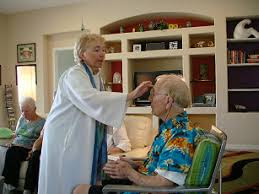

The Roman Catholic Women Priests movement is renewing the Church by reclaiming an ancient understanding of Eucharist as the sacred action of the whole community, not the performance of one ordained person standing above the people. In our inclusive Catholic communities, liturgy is not something done to the faithful; it is something created with and by the gathered community as the People of God.
This renewal flows directly from the vision of the early Christian communities and from the promise of the Second Vatican Council, which called for the “full, conscious, and active participation” of all the baptized in the liturgy. Yet, in many parish settings, participation often remains limited to responses and ritual gestures while the priest remains the central actor. In contrast, Roman Catholic Women Priests communities are living a renewed ecclesiology in which all are invited to share their gifts, voices, wisdom, and leadership in the celebration of Eucharist.
In our communities, people do not merely “attend Mass.” Together, we create liturgy through shared preaching, dialogue homilies, communal Eucharistic prayer, creative ritual, music, silence, storytelling, and participatory leadership. The Spirit speaks through the entire assembly. This reflects our belief that the Church is a community of baptized equals in which every person bears the image of the Holy One and carries the Spirit within them.
The Eucharist becomes a living experience of Gospel equality. During the Eucharistic Prayer, the gathered community often joins in praying the words of consecration and remembrance together. This shared prayer reflects the theological conviction that Eucharist is the prayer of the People of God. The presider serves within the community, not above it. In this model of priestly ministry, the priest is a sacramental presence of servant leadership and communal love rather than an isolated sacred authority.
This renewed participation transforms consciousness. Many people who come to our liturgies describe profound healing after years of exclusion, silence, or spiritual marginalization within the institutional Church. Women, LGBTQ+ persons, divorced Catholics, seekers, and those wounded by clericalism often discover, sometimes for the first time, that they are truly welcome at Christ’s table.
Inclusive language also plays an important role in renewing the Church’s liturgical life. Language shapes spirituality and theology. For centuries, almost exclusively masculine imagery for God reinforced patriarchal understandings of authority and holiness. In our liturgies, we pray to the Holy One, Sophia, Shekinah, Creator, Loving God, and Spirit of Life. These images expand our awareness of the Divine Mystery beyond male domination and affirm that women, too, reflect the fullness of the image of God.
As feminist theologian Elizabeth A. Johnson reminds us, if women are fully created in the image of God, then female imagery for God is necessary for spiritual balance and theological wholeness. Inclusive language is not simply about changing words; it is about transforming consciousness and healing distorted images of God that have harmed countless people.
Women priests’ led liturgies also reflect a shift from atonement theology toward a theology of blessing, healing, liberation, and radical compassion. Jesus is not presented as a sacrifice demanded by an angry God, but as the embodiment of divine love who reveals our sacred worth and calls us into compassionate relationships with one another and with all creation.
This renewed theology shapes our preaching and liturgical life. Dialogue homilies invite everyone to reflect on Scripture and share how the Gospel speaks to their lived experience. Feminist biblical scholarship helps communities recover the voices of women in the early Church such as Mary Magdalene, Phoebe, Junia, Lydia, and the Samaritan woman. These women were leaders, apostles, teachers, evangelizers, and proclaimers of resurrection faith. Their stories challenge centuries of patriarchal interpretation and remind us that women have always exercised spiritual leadership in the Jesus movement.
The very presence of women presiding at Eucharist is itself a sacramental sign of renewal. When communities witness women preaching, consecrating Eucharist, baptizing, anointing, and leading worship, many experience a profound transformation in their understanding of priesthood and Church. Women priests embody a renewed image of ordained ministry rooted not in power or clerical privilege, but in service, compassion, collaboration, and Gospel equality.
Of course, inclusive communities continue to discern the balance between creativity and faithfulness to the Gospel tradition. Liturgical renewal must remain grounded in communal discernment, pastoral wisdom, and the liberating message of Jesus. Yet authentic renewal has always required courage. Throughout Church history, the Spirit has continually called communities beyond rigid structures toward deeper inclusion, justice, and compassion.
The inclusive communities began by ordained members of the Association of Roman Catholic Women Priests and Roman Catholic Womenpriests may be small mustard seeds today, but they are offering the wider Church a living model of renewed priestly ministry and participatory Eucharistic community.
In our liturgies, we glimpse what the Church can become:
a community of equals gathered around an open table,
where all are welcome,
all are valued,
all are heard,
and all are invited to help break open the Bread of Life together.
No comments:
Post a Comment