Translate

Saturday, November 8, 2025

“The Works I Do, You Shall Do Greater”: Living the Healing Promise of Jesus by Bridget Mary Meehan ARCWP


Unsplash: Credit Shelby Murphy Figueroa

Jesus promised: “These works you will do, and greater.”
He did not say this to a chosen few, but to all who welcome the Spirit. In other words, healing is the heartbeat of God and the birthright of Jesus' followers in all ages.

Marcus Borg—one of the most insightful voices within emerging Christianity—describes Jesus as a *“spirit person, subversive sage, social prophet, and movement founder who invited his followers and hearers into a transforming relationship with the same Spirit that he himself knew.”*¹


To understand Jesus this way is to see him not as a miracle-worker set apart from humanity, but as one deeply connected to the Divine Presence—so deeply that healing flowed from him as naturally as breathing.


Scholar Shirley Paulson reaches the heart of Borg’s vision of Jesus' healing ministry. Salvation in the Hebrew Bible, she argues, is not about appeasing God’s anger or substitutionary sacrifice. Rather, it is about God’s steadfast love, God’s rescue, and God’s desire for human wholeness.² 


Borg reframes redemption as a real, transforming experience, not an abstract theory—and crucially, one available to anyone *striving to follow the way.*³ 


Healing Was Never Meant for a Few

Healing is not a mystical privilege reserved for saints, clergy, or the religious elite. It is the birthright of every person touched by God’s Spirit. 


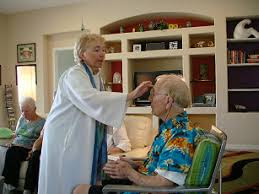
Members of my charismatic community in 1976 in Decatur, Georgia described an energy-like flow - a warmth- flowing through us as we prayed with people in need of healing of body, mind and spirit. We experienced a felt sense God’s presence  moving through us to mend what was broken and to set free those who came to us for prayer- heavily burdened and in need of listening ears and caring hearts.


The Gospels show Jesus touching the outcast, lifting up women, restoring dignity to the shamed, and returning the wounded to community. His healing was not magic; it was justice, compassion, and solidarity made flesh. This means healing takes many forms: physical relief; emotional liberation; reconciliation of relationships; release from shame; empowerment of the marginalized; and courage where fear once dominated. 


This too was the experience of our prayer group as we prayed for liberation, healing and transformation. It taught me to embrace the chaos, imperfections and holy messes of my life and our world because Spirit-Power - Infinite Love- flows through us as we pray for healing with our sisters and brothers. 


As Richard Rohr reminds us:“ God loves us ...and that love is healing.”


Healing as Liberation

Jesus’ healings were always acts of liberation. He did not simply cure illness; he overturned the systems that told people they were unclean, unworthy, or invisible. Healing restored belonging. Healing proclaimed dignity. Healing dismantled fear.


Healing is a form of social transformation. When we claim the truth that all are created in God’s image, oppressive structures lose their power.


To heal in the spirit of Jesus means:challenging injustice;speaking blessing where religion has spoken condemnation; practicing warm hospitality; and civil non-violent disobedience.


This is why early Christians saw healing as a sign of God’s reign breaking into the present—not someday, but now.


Healing as Transformation

Healing does not always mean cure, but it always means transformation. Even when bodies do not change, spirits deepen. Peace returns. Strength awakens. Love rises. Richard Rohr calls this “falling upward”—the journey in which wounds become gateways:“The wound is the place where the Light enters you. God transforms our brokenness into compassion for the world.”


The Invitation to be Healers

Followers of Jesus are not meant to idolize him from afar—we are called to continue to do what He did. Healing moves through our  to be prayer, touch, justice-making, forgiveness, advocacy, listening, and love.


When we open ourselves to the Spirit, we encounter the same divine power that breathed through Jesus.


Every act of tenderness is healing.
Every step toward justice is healing.
Every word of blessing is healing.


We all can be healers because we all can be channels of divine love plugged into Spirit power. When we allow the Spirit to work through us, miracles—large and small—happen every day.


Footnotes

1. Marcus Borg, Meeting Jesus Again for the First Time (San Francisco: HarperOne, 1994), 119.
2. Shirley Paulson, “A Transforming View of Christianity with Healing at Its Heart,” (Journal reference, pp. 6–7).
3. Borg, Meeting Jesus Again, 118–120.
4. Bridget Mary Meehan, The Healing Power of Prayer, (Liguori, MO: Liguori Publications, 2002), 17.
5. Richard Rohr, Falling Upward: A Spirituality for the Two Halves of Life (San Francisco: Jossey-Bass, 2011), 29.
6. Bridget Mary Meehan, Praying with Visionary Women, (Twenty-Third Publications, 2006), 52.
7. Rohr, Falling Upward, 33.
8. Meehan, The Healing Power of Prayer, 88.


Friday, November 7, 2025

Celebrating the Sacred Feminine in Your Life By Rev. Dr. Bridget Mary Meehan, ARCWP


 People’s Catholic Seminary Course: PCS 310
Course Link: https://pcseminary.teachable.com/p/pcs-310-celebratingthesacredfeminineinyourlife


Welcome to the Journey

In People’s Catholic Seminary’s PCS 310—Celebrating the Sacred Feminine in Your Life—I invite you to embark on a journey into the beauty, power, and transformative strength of the Sacred Feminine: God’s Inclusive, All-Embracing Love alive in our world.
This course is an invitation to contemplate divine mystery and holy wisdom through Scripture, mystics, contemporary writings, and most importantly, through your own spiritual experience. You are created in the divine image, and that image is not limited to masculine symbolism—it embraces the fullness of feminine wisdom, creative power, and compassion.

Discovering the Sacred Feminine in Scripture

The Bible offers a wide tapestry of images to describe the experiences of God’s people with the Holy One in their midst. We are familiar with the masculine metaphors:

  • A loving father

  • A courageous warrior

  • A good shepherd

  • A mighty king

  • A passionate lover

Yet Scripture also speaks of God using boldly feminine symbols:

  • A mother eagle sheltering her young

  • A woman in labor, breathing life into new creation

  • A midwife, guiding birth with wisdom and care

  • A nurturing mother, feeding her infant at her breast

These images remind us that the Holy One cannot be contained by a single gender or limited metaphor. God is larger, deeper, and more loving than any single human category.

Sophia: The Feminine Face of Divine Wisdom

In both Hebrew and Greek, the word for Wisdom—Sophia—is feminine. Scripture portrays her not as an abstract concept but as a living, breathing presence:

  • A companion of God at creation

  • A voice of justice

  • A guide for those who walk in the way of love

  • A source of delight, creativity, and joy

Modern feminist theologians remind us that “wisdom” in English often sounds intellectual or abstract, but Sophia is personal, relational, and embodied. She dances through creation, calls forth justice, and births new possibilities.

For many women today, Sophia is a powerful spiritual symbol—strong, assertive, compassionate, and deeply engaged with the work of building a world rooted in peace and mutuality.
Her voice rings out:

“I love those who love me… I walk in the way of virtue, in the paths of justice… enriching those who love me, filling their treasuries.”
Proverbs 8:17, 20–21

Sophia reveals that God’s wisdom is loving, playful, creative, and deeply invested in the flourishing of every part of creation.

A Course of Imagination, Reflection, and Experience

PCS 310 offers more than information—it is an experiential spiritual journey. You will “pray with” and “reflect on” images of the Sacred Feminine found in:

  • Scripture

  • The mystics

  • Poetry and art

  • Contemporary feminist theology

  • Your own lived experience

Rather than learning about the Sacred Feminine, you will engage her with heart, body, imagination, and spirit.

You are invited to trust your experience as a contemporary mystic—
to speak, write, dance, paint, sing, or pray from your own sacred depths.

Wisdom: The Playful Craftswoman

Scriptural Image — Sophia at Creation

“When God set the heavens in place, I was there…
I was by God’s side, a master craftswoman,
delighting God day by day,
ever at play in God’s presence,
rejoicing throughout the whole world,
delighting in the children of humanity.”

— Proverbs 8:27–31
(Translated from Greek by Hal Taussig in Sophia: The Future of Feminist Spirituality*)*

This is not a stern or distant Creator.
Sophia dances the universe into being!
She spins galaxies with joy.
She laughs among the stars.
She delights in oceans, mountains, trees, flowers—and in every human life.

Creation is not a cold engineering project.
It is a cosmic dance of playfulness and delight.

Prayer Reflection: Encountering the Playful Craftswoman

  1. Find stillness.
    Take a few slow, deep breaths. Let your mind and body soften.

  2. Remember the gift of play.
    Laughter, joy, and humor are healers. Studies show that play reduces stress, opens creativity, and strengthens mind and spirit.

  3. Notice the playfulness within you.
    It has never disappeared—it may simply be waiting to be invited back.

  4. When and where do you feel playful?
    With friends? Children? Art? Music? Nature? Humor?

  5. Imagine Sophia—the Playful Craftswoman—dancing through creation.
    See her spinning planets, splashing in oceans, giggling among stars, shaping life with delight.

  6. Use all your senses.

    • The sound of wind and water

    • The colors of sky and flower

    • The warmth of sunlight

    • The movement of breath in your body

  7. Marvel at the connectedness of life.
    Every creature, every person, every spark of creation intertwined in a divine web of love.

  8. Notice what arises.
    What images come?
    What feelings awaken?
    What memories or insights surface?

  9. Express your experience.
    Journal, draw, sing, dance, write a poem, or pray in silence.

This reflection is not about doing it “right.”
It is about opening to joy, the playful creativity of God at work in you.

The Sacred Feminine Lives in You

The same wisdom that danced through creation delights in you today.
Sophia rejoices in your creativity, your compassion, your resilience.
She calls you to recognize:

  • Your body as sacred

  • Your voice as powerful

  • Your imagination as holy

  • Your life as a dwelling place of Divine Love

In this course, you will have opportunities to honor and express the Sacred Feminine not as an idea, but as a lived spirituality—within your relationships, your prayer, your creativity, and your call to justice and peace.

A Closing Blessing

May Sophia, Holy Wisdom,
dance in your imagination,
delight in your spirit,
and awaken joy in your heart.

May you discover the beauty of your sacred body,
the strength of your holy voice,
and the creativity of the Divine Feminine living within you.

May you know that you are treasured,
created in love,
and called to bring healing and joy into our world.

And may the Playful Craftswoman
continue to shape, bless, and delight in you—
today and always.


Tuesday, November 4, 2025

Women Priests, Forbidden Vocations - New Award Winning Documentary Film

Women priests, forbidden vocations

 https://www.laicite.be/evenement/femmes-pretres-vocation-interdite/

Radio Interview in French with Christina Moreira ARCWP 

https://youtu.be/P96zCAU2SWI?si=2jUaWOQi-tLzgHMX


Women priests, forbidden vocations

In a world where equality between women and men is a guiding principle for international bodies and democratic regimes, the Vatican's refusal to recognize women's access to the priesthood is once again under debate, particularly with the arrival of the new pope.

Historically, although clerical positions gradually became exclusively male, Pope John Paul II definitively closed the door to the possibility of ordaining women in 1994.

Since 2002, nearly 250 women have broken the ban and succeeded in getting ordained.

What do they have to say about the institution that rejects them? Are the faithful ready to hear their demands? Does this exclusion contribute to a form of unacknowledged sexism or does it have rational foundations?

As part of its campaign on secularization, the Centre d'Action Laïque invites you to the screening of Marie Mandy's documentary: "Women priests, forbidden vocations" (2024), the result of more than 10 years of work.

The screening will be followed by a discussion with:

  • Marie Mandy , director

  • Justine Manuel , professor at UCLouvain, lecturer in the Faculty of Theology and Religious Studies, specialist in gender studies and feminism

  • Christina Moreira , Roman Catholic bishop (ARCWP – Association of Catholic Women Priests), French-Spanish

  • Sylvie Lausberg , moderator

In practice

  • Thursday, September 18
  • Free
  • At the Centre d'Action Laïque (Campus de la Plaine – ULB CP. 236 (access 2) – 1050 Brussels)
  • Registration requested

Monday, November 3, 2025

Living as Spirit-Filled Followers of Jesus Today by Bridget Mary Meehan ARCWP


(Inspired by Marcus Borg’s vision of the pre-Easter Jesus)

Marcus Borg describes the pre-Easter Jesus as “a spirit-filled person, a charismatic healer, sage, prophet, and renewal-movement founder.” This image reminds us that before creeds and doctrines defined him, Jesus lived as one who was deeply alive in God—a person through whom Spirit flowed freely, touching the world with compassion and awakening others to the sacred that pulses in all things.

For spiritual seekers today, Borg’s portrait invites us to rediscover the world as Jesus did: charged with divine presence. The “world of Spirit” is not confined to moments of retreat or ritual. It breathes through the ordinary—through a conversation that opens our hearts, through beauty that stops us in our tracks, through tears that heal, through acts of justice that bring life.

To say that Jesus was “spirit-filled” is to recognize that he lived from a consciousness of union with the Divine. He saw creation as radiant with God. He reached beyond boundaries of purity, gender, class, and religion because he saw the same Spirit moving in everyone. His healings were not demonstrations of power but expressions of wholeness—reminders that the life of God is within and among us. When Jesus touched the outcast, healed the sick, blessed bread, and welcomed the forgotten, he embodied the flowing love of God present in all creation.

For us, to walk in the way of the Spirit is to cultivate that same awareness as  Jesus and his early followers : to see the mystical in our everyday lives; to allow Spirit to heal what is broken within and around us;and to join in the renewal movement of love- that Jesus taught in the Beatitudes- that is still unfolding wherever people act with compassion and courage.

Each day becomes an opportunity to live “spirit-filled,” to awaken to the sacred heartbeat within our bodies and within all creation. When we breathe consciously, bless our food, tend to the earth, or speak truth with love, we participate in the same Spirit that animated Jesus. Every sunrise, every act of kindness, every breath of gratitude reveals the sacred pulse of life.

For spiritual seekers today, this is our invitation:
to awaken to the world of Spirit that shimmers in the depths of our hearts and beneath the surface of our daily lives; to discover that the mystical is not separate from the material but woven into it; to trust that healing and wholeness are possible here and now in our every touch and action.


When we allow the Spirit to move through us, as through Jesus,
our ordinary lives become sacred ground,
our conversations become prayer,
our compassion becomes healing,
our communities become renewal movements of loving service to those in need.


In this sense, the mystical life is not an escape from the world but a deeper immersion in it. It is life-giving, practical, embodied—a daily communion with the Spirit who, as Jesus showed, is always near, always embracing us, always renewing the world from the inside out in acts of kindness and witness to justice.


Prayer:


Spirit of the Living God,
You breathe in us as you breathed in Jesus.
Awaken our hearts to your presence in the ordinary.
Heal what is wounded in us and in our world.
Let there be new birthings of your Spirit in our hearts and world today

that our lives may reveal your tenderness, our actions your justice, and our hearts your peace. Amen.


Source: Pieter Craffert, "Marcus Borg's Jesus as Spirit-Filled Person " (The Fourth R, Westar Institute- Nov.-
Dec. 2025, pp. 9-14)