Translate

Sunday, May 26, 2019

"Holy Spirit Back-up Plans" -Homily Starter by Michele Birch-Conery, Bishop ARCWP Heart of Compassion Faith Community, Windsor, ON, Canada May 26, 2019


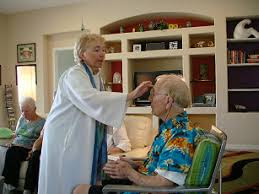
Michele Birch-Conery prays over Rhea Lalonde in Heart of Compassion Ceremony- Commissioning for Ministry
Barbara Billey ARCWP co-presides with Rhea Lalonde 


Ever since the encounter with the Risen Christ on Easter Sunday, the Risen Christ has been telling his disciples not to be afraid, not to doubt. He was not leaving them abandoned and he was encouraging them to continue doing what he's been asking them to do all along, which is to teach and to spread his Word, to build his kin-dom. The disciples wonder how they'll ever be able to do this without him.
In their fear the Risen Christ keeps coming back to reassure them, first of all to have peace and to not be afraid, that he will be with them throughout all time. Now he's getting more explicit, telling them there will be an Advocate that will be the Holy Spirit who will come upon them and they will be taken care of forever by this Spirit.
There will be all sorts of back-up plans; never ending plans that God has in reserve for them through the Holy Spirit to be given as gifts of fire, love and the capacity to do what is needed. They will not be able to believe until the marvelous morning of Pentecost, which is coming very soon, when the Spirit of the Risen One will descend upon them and us.


INTERFAITH WORSHIP AND COMMUNION AT CASTLE OTTTIS


For additional information call Miriam Picconi, 386-569-7311 or e-mail at miriampicconi@gmail.com.
For information about the castle and directions, go to www.castleotttis.com.  


PRAYER AND COMMUNION

WEDNESDAYS, JUNE 5 AND 19 at 7:15 PM 2 Westmill Ln, Palm Coast 32164

MASS 
Saturday, JUNE at 4:00 PM at 2 Westmill Ln., Palm Coast, FL 32164
Hospitality follows.  Bring your favorite appetizer or dessert if you like.

INTERFAITH WORSHIP AND COMMUNION AT CASTLE OTTTIS 


Sunday, JUNE 30 at 10:00 AM there will be INCLUSIVE Interfaith Worship and Communion Services at Castle Otttis.  See location information, etc  above.

Upper Room Inclusive Catholic Community - Sixth Sunday of Easter 2019 - Presiders: Dennis McDonald, ARCWP, and Margaret and Ed Dilgen


Dennis McDonald and Margaret and Ed Dilgen led the Upper Room Liturgy for the Sixth Sunday of Easter. The theme focused on Peace, the Peace that Jesus promised to the men and women gathered together following his resurrection. When we use or hear the word peace, what do we actually have in mind? How does that meld with the Peace of which Jesus spoke and promised?  How do we live out peace in our world today?

Community prayer for Peace and Holy Unity

(We will take turns reciting each line by passing the mike.)

I will need around me a birch tree, a maple, a redwood a white pine, a sequoia, a cedar, a palm tree.

I want soil from Nigeria, Palestine, the Himalayas, Mississippi, Auschwitz, Oklahoma City, Maui, Alcatraz.

I want water from the Mediterranean Sea, The Baltic, the Ganges River, Glacier Bay, the Sea of Galilee, the Tigris and Euphrates, the Pacific and the Atlantic, the River Jordan, the Dead Sea, Lake Bonaparte, Niagara Falls.

I want air from Kathmandu, Calcutta,Cairo, Nazareth, Athens, the Arctic circle, Mexico City, Port-au-Prince, Bagdad, Kabul.

I want near me a bison, a wolf, an eagle, a silverback gorilla, a giraffe, a kitten, a fawn, a black bear, a polar bear, a golden retriever.

From the waters, I want a humpback whale, a porpoise, a sea turtle, a manta ray, a flounder, a harp seal.

From the heavens I want a comet, a rainbow, a lightning bolt, a blue moon, a summer storm, a snowy night, a mauve and golden sunrise.

I want fire from my morning candle, the farthest star in the Milky Way, a camp-fire in the Adirondacks, the funeral pyres in Varanasi, the Buddhist temples in Kyoto.

I want an altar made of rock from Rajasthan Alexandria, the Acropolis, Canyon de Chelly, the Grand Canyon, Vermont, Italy, Sedona, Syracuse and Sendai.

I want co-celebrants from an Ethiopian village, a Harlem tenement, a preschool in Pokhara, a nursing home in Selma, a prisoner Guantanamo, a Harvard Law class, the Smokey Mountain garbage dump in Manila, the Mormon Tabernacle Choir.

I want bread kneaded and pressed by the hands of millionaires, chambermaids, sherpas, Bolivian tin workers, emigrants and immigrants from a hundred countries, three Fortune 500 CEO's. Nine Exxon boar member, 14 Chicago gang members, and seven out of work shrimpers from the Gulf of Mexico.

I want a pair of Chinese peasants, Israeli kindergartners, Japanese Bonsai masters, Navajo weavers, Zuni potters, Tlingit pole makers, and African diamond miners.

Once assembled, we will celebrate the liturgy that contains them all.
We will sing till the earth wobbles in her orbit, give praise and thanks till wine runs from the sugar maple.

We will bow in holiness we see in each other forgiving the past, blessing the present, committing to a future that is good for everyone.

And this will be our prayer for peace and holy Unity
a welcome to the dawning of an Uncommon Era.

By Jan Phillips

First Reading: A reading from Pacem in Terris, Encyclical from John XXIII

"Yet peace is but an empty word, if it does not rest upon... an order that is founded on truth, built upon justice, nurtured and animated by charity, and brought into effect under the auspices of freedom.

So magnificent, so exalted is this aim that human resources alone, even though inspired by the most praiseworthy good will, cannot hope to achieve it. God Herself must come to our aid with Her heavenly assistance, if human society is to bear the closest possible resemblance to the kingdom of God.

The liturgy of these days reechoes the same message: “Jesus, after His resurrection stood in the midst of His disciples and said: Peace be with you. The disciples rejoiced when they saw him".  It is Christ, therefore, who brought us peace; Christ who gave it to us: "Peace I leave with you: my peace I give to you: not as the world gives, do I give it to you."

May Christ inflame the desires of all to break through the barriers which divide them, to strengthen the bonds of mutual love, to learn to understand one another, and to pardon those who have done them wrong. Through Her power and inspiration may all peoples welcome each other to their hearts as sisters and brothers, and may the peace they long for ever flower and ever reign among them." (Pacem in Terris, John XXIII 1963: 167-168,171)

These are the inspired words of John XXIII, and the community affirms them by saying, Amen.
                                                             
Gospel: A Reading from the Gospel attributed to John.

On the night before Jesus died, he said to his disciples:  Whoever has my commandments and observes them is the one who loves me. And whoever loves me will be loved by my God. I will love that disciple and reveal myself to that one...

All who love me will follow my teaching. My Loving God will love them, and we will come to them and make our home with them. The words I have spoken are not my own. They belong to the One who sent me.

I have spoken them while still with you; but the Advocate, the Holy Spirit, whom our Loving God will send in my name, will teach you all things and will remind you of everything I have said to you. “Peace I leave with you. My peace I give you. I do not give to you as the world gives. 

Do not let your hearts be troubled and do not be afraid. “You heard me say, ‘I am going away and I am coming back to you.  If you loved me, you would be glad that I am going to God, for God is greater than I. I have told you now before it happens, so that when it does happen you will believe.

These are the inspired words from the Gospel attributed to John, and the community affirms them be saying, Amen.
Homily Reflection by Dennis McDonald

We started our liturgy today with a prayer provided by Margaret, a prayer for peace and holy unity.  As individuals, who read the lines, we stated “I want”, and it is wants that have been desired over the centuries, wants longed for since before the time of Jesus.  It is a yearning, as the prayer indicates, for all to be united in love, care, and respect for one another and all of creation  It is human nature to desire peace, to long for a world of non-violence, to hope that all people are treated with dignity and respect, and that the earth is treasured and cared for. 

And yet, we live in a world where violence persists, as it has since the beginning of time, whether it be the violence of creation such as volcanoes, hurricanes, wild fires, or human disregard for the lives of others, and the desire to control the rights and destinies of others.  We all know that currently, many rights are under attack, many people are under duress, due to those in power in many countries, striking out in anger, in resentment, in fear.  The earth is in peril due to those who fail to, or decide not to, recognize the overwhelming evidence of global warming.  Those abused and maligned are crying out in anguish, searching for safe harbor, for compassion, for new life.

In the midst of this stands Jesus, with a message of love and compassion, with a greeting of “Peace I leave with you, my peace I give to you, not as the world gives, but as I give it to you”.  As John XXIII says in his encyclical, Pacem in Terris, this peace that Jesus promised, is not possible without divine assistance. It is imperative that we reflect on this peace we are invited to live.  It is, as we all know, not easy to sustain it. It is oh so easy to fall sway to the culture of violence that surrounds us each day.  We need the constant reaffirmation that the indwelling of the Spirit, in each of us, can transform us into a person of peace, justice, and compassion.  So, where do we stand, and with whom do we stand in this time of violence? How can we stand against it?

It is important to recall that Jesus delivered this message to the community of disciples gathered together.  His message was at once for each of them, but also for them as a community committed to following the way prepared by Jesus.  It is within community that we are nourished with and reminded of the call to peace. It is within community that we find strength and courage to stand and speak out against injustice.  The message of Jesus is a call that “is founded on truth, built upon justice, nurtured and animated by charity, and brought into effect under the auspices of freedom”.  These words of John XXIII are inspirational and challenging. The question is, are we up to the challenge?

What did you hear? How do You live out peace in our world today? Where do you find nourishment to remain committed to the call? What will it cost you?
"Gospel Life in the 21st Century" by Toni-Kay Attanasio ARCWP


Last week, one of my friends asked me about my diaconate. She said, "Well Toni, do you tell them all about Jesus?" My friend's faith tradition is conservative and fundamentalist.


I paused before providing my answer, because the answer was going to be "no." But yet, I wasn't sure how to provide my reply in such a way that would be truthful and relevant.


I said to her, "No, I don't talk about Jesus, I try to reflect Jesus."


So for me, "this" is what it means to live a Gospel life; to reflect Jesus, and not merely talk about Jesus.


Sister Ilia offers her view, and possibly St. Francis' view about what living the gospel life means. For her, it means to reclaim and proclaim the "Gospel Life" in a new way, to embrace the humanity of Christ, to be prayerful, to be in a state of renewal, and to practice compassion by turning from "the self" toward "the relationship." We do this by recognizing ourself as a unique witness of God and by focusing on living a "relational" life, doing this by practicing dialogue, respect, listening, learning and mutuality.


Sister Ilia said, "What I am, is what I do." So the question remains, "What are you?" Sr. Ilia asks. She provides the answer, "We are one in whom God lives. We are the dwelling place of God's immense love."


So going back to my opening statement about reflecting Jesus to others... How is this really done in 21st century living when we are all very busy going to work, sitting in traffic, raising a family, going here, going there, doing chores, paying bills, and at the end of the day, sitting down after a meal tired from the hustle and bustle of life lived in an urbanized complex western society? Where do we find time to live "the Gospel life" when the kids are crying, the house needs to be cleaned, your spouse needs something, the pipe burst, and the snow needs to be shoveled?


The way we do this is to reflect Jesus in all that we do, in all of our mundane day to day humanity. We do our work, our jobs, our tasks, our giving, our home and life-making by seeing and doing it with great love, peacefulness, compassion, contemplation, and prayerfulness. We do it with gratitude for having those things, each and every thing, and we do it all with great love.


Love, which is the hallmark of relational living, speaks in many ways, through silent service, a smile, compassionate giving of self, and in enduring hardship gracefully.


We are reminded that the fruits of the Holy Spirit are Love, Joy, Patience, Kindness, Goodness, Faithfulness, Gentleness and Self-Control. The fruits of the Spirit provide a way for us to live our lives so that we reflect Jesus and the Gospel life.


The "Gospel Life" then becomes a way of simply being, and that way of being reflects the fruits of the Spirit in each thing we undertake.


So to answer the question, "What are you?" And to that say, we are Love. We are Joy. We are Patience, Kindness and Goodness. We are Faithfulness, Gentleness and Self-Control. And this becomes the way in which we reflect Jesus, and live the Gospel life.

(Toni Kay wrote this reflection in response to Ilia Delio’s YouTube Video describing what it means to live the Gospel life in an age that is global, and plural, and scientific.)


Friday, May 24, 2019

Why does Francis' passion for justice and unity stop short of women? by Jamie Manson, National Catholic Reporter, My response

Pope Francis smiles as he walks past pilgrims during his general audience in St. Peter's Square at the Vatican May 8, 2019. (Credit: Remo Casilli/Reuters/CNS.)


My response: Kudos to Jamie Manson for her response to Pope Francis on women deacons. As she points out: "
This latest episode is yet another example of the Catholic Church's perpetuating and justifying notions of gender inequality that are the root of women's suffering globally." The institutional church treats women as second class citizens. As equal images of God all positions and leadership roles should be open to women. Unfortunately, Pope Francis does not seem to understand that this is a social justice issue that impacts the church's credibility as a messenger of the Gospel in our world today. Jesus treated women as disciples and equals, so should the church.  It is incomprehensible that Pope Francis and the hierarchy continue to blame God for the church's long history of sinful misogyny in the 21st century. 
 The international Roman Catholic Women Priests Movement is leading a path forward to gender equality in inclusive communities of equals where all are welcome to celebrate sacraments and live the Christ Presence that embraces all in our world. 
 Bridget Mary Meehan ARCWP, https://arcwp.org


"In June 2016, just after Pope Francis announced he would create a commission for the study of the history of women deacons in the Catholic Church, he joked to journalists, "When you want something not to be resolved, make a commission." Apparently, he wasn't kidding after all.

On May 7, while aboard the papal flight from Macedonia to Rome, Francis announced that, after three years of study, the papal commission was unable to find consensus and give a "definitive response" on the role of women deacons in the first centuries of Christianity.


He claimed that what remained unclear was whether women deacons received a sacramental ordination.

"It is fundamental that there is not certainty that it was an ordination with the same formula and the same finality of men's ordination," he said.

Anyone who has ever listened to Francis speak about women knows why this would be such a crucial distinction for him. Like popes before him, Francis believes strongly that women are not entitled to sacramental power or authority and that it is God's intended purpose that men and women have different roles in the church.

In follow up comments to the Union of Superiors General (UISG) — the women religious whose dialogue with the pope prompted him to call the study commission on the women's diaconate —in Rome on May 10, the pope said that the individual members of the commission will pursue studies on their own but remained ambiguous about whether he would call to commission back together.

"I am not afraid of studies," Francis said aboard the plane. That may be true, but what is also becoming clearer and clearer is that the pope is afraid of women in his church having even the modicum of sacramental participation that the diaconate would give them.

Why else would he question what decades of scholarship has made abundantly clear? There is ample historical evidence that women did serve as deacons. It's even in the canon of the Bible: Paul mentions the deacon Phoebe in the letter to the Romans.

Splitting historical hairs is not what Francis' papacy is known for. Back in 2015, the pope told the bishops at the synod on the Family "that the Church should not be a stuffy 'museum of memories,' but have the courage to change if that was what God wanted."


During World Youth Day in 2013 he acknowledged that many people see the Church as a "relic of the past," and a “prisoner of its own rigid formulas."

But rather than showing the courage and openness to which he constantly calls everyone else in the church, Francis blames his commission for having different interpretations of history, making desperately-needed progress on the status of women wholly dependent on an elusive ancient precedent.

The pope even appears to blame God for not revealing to us whether women could have a sacramental ordination: "We need to look back to the beginning of revelation, if there wasn't such a thing, if the Lord did not want a sacramental ministry for women, it doesn't go."

And then the pope who so often preaches openness and inclusion warns that, if we don't like it, we are welcome to leave the church.

"We cannot go beyond revelation and dogmatic expressions," Francis told the UISG. "We are Catholics. If someone wants to make another church, they are free to do so."

That line is particularly glaring when you read it in the context of the countries Francis has traveled to and the people he has encountered and demonstrated openness to in the past few months.

This is a man who has visited eight Muslim-majority countries meeting with countless imams, including a February trip to the United Arab Emirates where he signed, with the grand imam of Egypt's al-Azhar Mosque, a first-of-its-kind declaration calling for Muslims and Christians to build together "a society that is open, fraternal and respectful of differences."

In April he literally kissed the feet of leaders from South Sudan in an attempt to plead with them to remain in peace.

And this most recent trip to Bulgaria and North Macedonia was one of many attempts to reach out to leaders in the Eastern Orthodox churches in his ongoing quest to achieve full communion between the Catholic and Orthodox churches.

Francis' boundless energy and dedication to peace and justice stands in stark contrast to the dithering way he is handling question of women deacons in his own church. His passionate cause for unity among churches and with people of other faiths, it seems, stops short of the women of his own church who are asking simply for more inclusive ways to serve.

This latest episode is yet another example of the Catholic Church's perpetuating and justifying notions of gender inequality that are the root of women's suffering globally. And that is a tragedy because Francis' power over the consciences of world leaders could have incalculable influence on raising up women to equal status, including in the countries he visits, many of which still have overtly restrictive, patriarchal cultures.

But, sadly, patriarchs still seem to dominate Francis' religious imagination. It is interesting to note that in the same press conference aboard the plane where Francis made his comments on women deacons, the pope also reflected on the richness of his meeting with Bulgarian Orthodox Patriarch Neophyte, according to NCR's Joshua McElwee:

"In the patriarchs, I have found brothers," mentioning Constantinople's Bartholomew and Moscow's Kirill by name. "I do not want to exaggerate, but I want to say the word 'holy' — men of God."

"We are brothers," said Francis. "We cannot adore the Holy Trinity without having the united hands of brothers."

But what about the 850 sisters who stood before him in Rome asking for most basic steps of restoring women to some semblance of equality with men?

Francis, it seems, would much sooner invite these Orthodox "holy men" into deeper sacramental union and participation in the Catholic Church than he would the women religious in his own church — many of whom have labored in "the field hospital" for more than 50 years.

Last year, the final document of the Synod on Youth called the inclusion of women in the church's decision-making structures a "duty of justice" that requires a "courageous cultural conversion."

But rather than treat the issue of women deacons with the same urgency that he treats so many matters of justice, Francis has communicated — like so many popes before him — that women’s legacy of leadership requires further questioning, and their participation in ministry alongside men could be a dangerous step and, therefore, must be indefinitely stalled.

In the six years of his papacy, Francis has been celebrated for his constant calls for courage, encounter, dialogue and risk-taking. How long must we wait until he offers the same to the women of his own church?"

[Jamie L. Manson is an award-winning columnist at the National Catholic Reporter. Follow her on Twitter @jamielmanson.]