Translate

Friday, November 17, 2023

Videos on Roman Catholic Women Priests on YouTube from Maria Hildalgo- ARCWP- in Spanish

Videos on Ministry of ARCWP in Spanish from Maria Hildalgo ARCWP


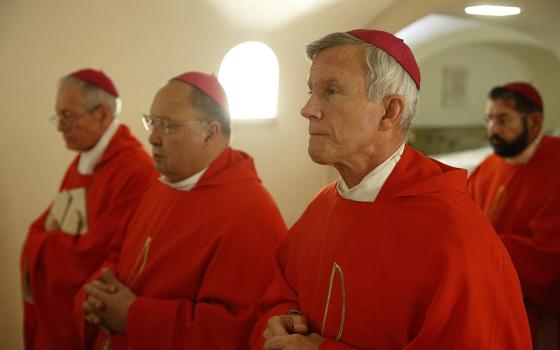
US bishops' meeting is a big snooze by Michael Sean Winters, National Catholic Reporter


 BY MICHAEL SEAN WINTERS

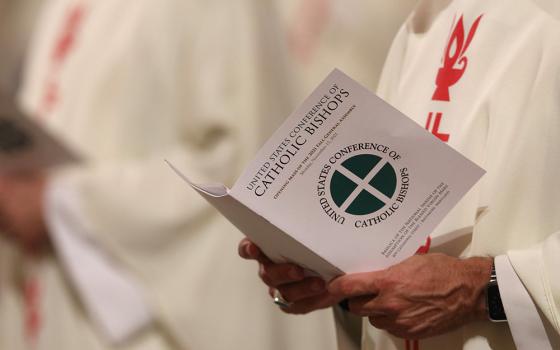
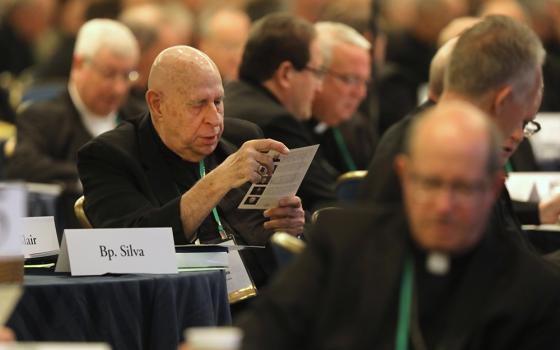
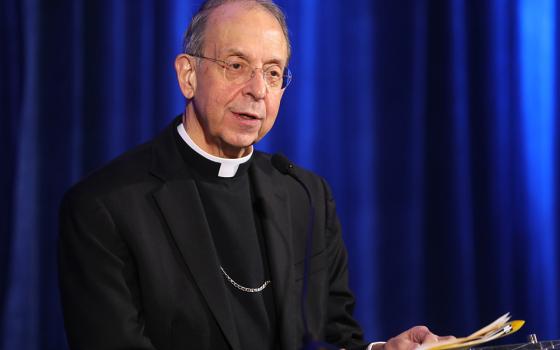
This year's meeting of the United States Conference of Catholic Bishops was like no other. There was very little in the body's deliberations that was newsworthy. Taken as a whole, the meeting demonstrated the sclerotic condition the U.S. hierarchy has created for itself. 

How bad is it?

It's not every day that a former general meddles in the internal politics of the Catholic Church. But if you needed any further confirmation that there is a group within the church that is completely unhinged, all the evidence needed came in a tweet this week from Michael Flynn, Donald Trump's short-lived national security adviser and long-term conspiracy theorist, telling disgraced former nuncio Archbishop Carlo Maria ViganĂ² and deposed Bishop Joseph Strickland to "STAND YOUR GROUND!!!" 

MAGA world wasn't content to storm the U.S. Capitol. It has broken into the realm of the sacred and defiled the temple. Those of us who subscribe to James Joyce's "Here comes everybody" ecclesiology understand that the Catholic Church will include a range of cultural dispositions, social classes, intellectual and moral attitudes. But it is appalling that the brutish and unhinged quality of the MAGA-sphere has become pronounced in a church that calls itself "one, holy, catholic and apostolic." Whatever the MAGA-sphere is, it is not one or holy or catholic or apostolic. The rants of Flynn and his ilk are not notes of the church.
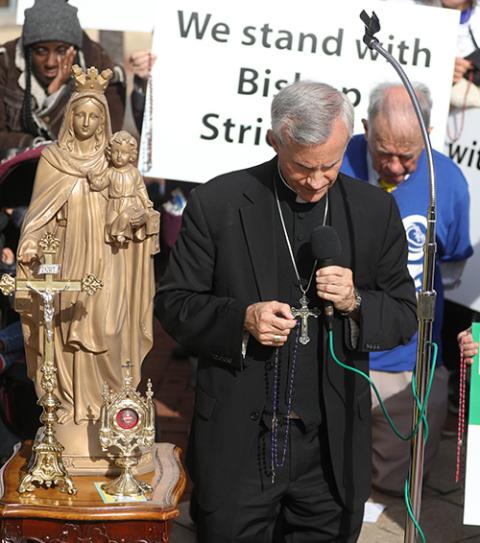
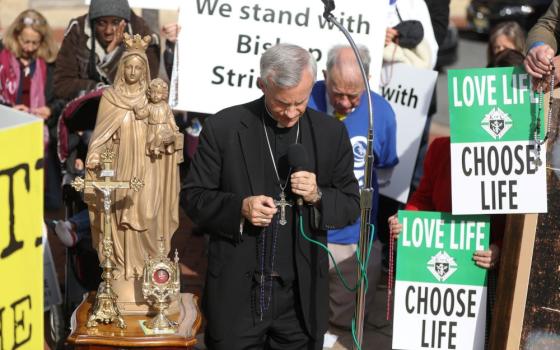
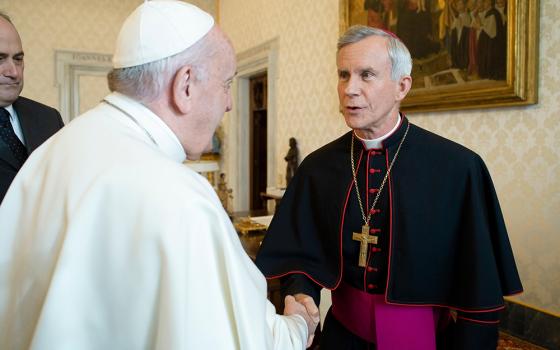
Bishop Joseph Strickland leads the recitation of the rosary Nov. 15 outside the site of the fall general assembly of the U.S. Conference of Catholic Bishops in Baltimore. (OSV News/Bob Roller)

Bishop Joseph Strickland leads the recitation of the rosary Nov. 15 outside the site of the fall general assembly of the U.S. Conference of Catholic Bishops in Baltimore. (OSV News/Bob Roller)

I saw Strickland at the local pub Sunday night. I have seen him each day in the lobby of the hotel where he is staying. He was seen outside praying the rosary with a few followers on Tuesday. 

What I have not seen? Strickland speaking with a brother bishop. He has isolated himself from the body of bishops. He is the walking antithesis of episcopal collegiality. He has exiled himself and has no one to blame but himself for his isolation. 

Isolation is the opposite of communion. The horror of death is the fear of absolute loneliness, of the loss of engagement. Put a snake into a tomb, and the dead do not flee. When Jesus rose from the dead, he spoke to those he encountered, he walked with the disciples headed to Emmaus, he ate a piece of fish, broke bread, he engaged. He promised that even though we must all die alone, we do not die into loneliness. 

There was Strickland, all alone. 

The bishops talked about their eucharistic revival. The nuncio, Cardinal Christophe Pierre, even linked that revival with the ongoing embrace of synodality within the life of the church

"What Jesus does with the disciples on the way to Emmaus is precisely the synodal path in its essential elements: encountering, accompanying, listening, discerning, and rejoicing at what the Holy Spirit reveals," the cardinal told the bishops in his address. "As a result of this process, the disciples' minds were enlightened, their hearts were set on fire, and then, through the breaking of the bread they were able to see what they had missed: Jesus was alive and he was with them!"

Too many of those who were listening did not have ears to hear. It is the principal characteristic of our time and place that we crave certainty. Both left and right cling to their orthodoxies, which have little to do with what Catholics mean by "orthodox." 

Our faith, our orthodox faith, demands that we engage this messy world, confident in the mission of proclaiming the faith: "Jesus is alive and is with us." The nuncio quoted from St. John of the Cross:

To come to the knowledge you have not you must go by a way in which you know not. To come to the possession you have not you must go by a way in which you possess not. To come to be what you are not you must go by a way in which you are not.

Only those who think they have nothing to learn from God, that they already possess the truth as if it were a private possession, who have no more to learn from life, only such persons could be unmoved by the nuncio's words. How many bishops were unmoved?

There is another word for those with nothing to learn, nothing to become. Dead.

The U.S. bishops' conference is not dead but it seems lifeless. The eucharistic revival is discussed as if the Eucharist was a noun, not a verb. 

When Bishop Daniel Flores of Brownsville, Texas, delivered his report on the recently concluded synod in Rome, there was not a single question from the bishops.

The bishops, without debate, adopted a new introductory letter to "Faithful Citizenship," adding to the list of documents no one will read. The bishops did vote overwhelmingly to approve a new rite for the consecration of virgins.
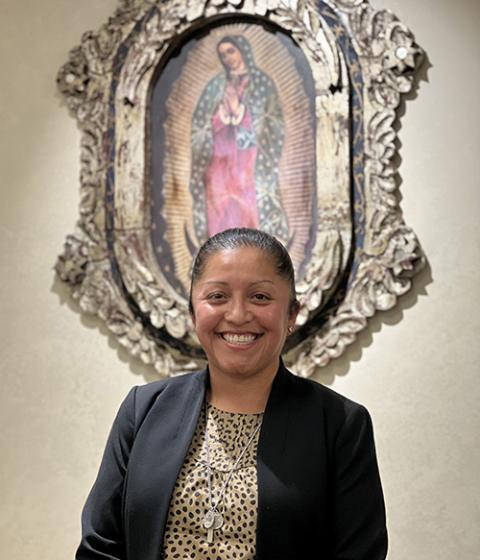
Ivonn Rivera, winner of the Cardinal Bernardin New Leadership 2023 Award from the Catholic Campaign for Human Development (OSV News/Courtesy of Fr. Angelbert Chikere, Diocese of San Jose)

Ivonn Rivera, winner of the Cardinal Bernardin New Leadership 2023 Award from the Catholic Campaign for Human Development (OSV News/Courtesy of Fr. Angelbert Chikere, Diocese of San Jose)

There is a glimmer of difference between being dead and being lifeless. That glimmer was provided by Ivonn Rivera, a community leader in the Diocese of San Jose, California. Rivera received the Cardinal Bernardin New Leadership award from the Catholic Campaign for Human Development. 

She spoke movingly about her work as a community organizer, lobbying municipal authorities to install crosswalks and stop signs in a poor neighborhood, so that children would not be struck by cars as they walk to school. Rivera also helped start Misas del barrio to bring the Eucharist to those afflicted by all the pathologies of urban poverty. She teared up when she introduced her daughter. 

In Rivera's work, the Gospel is evangelizing, pursuing justice, alive. The ceremony honoring Rivera and her work was a ray of hope. 

There was a time when U.S. bishops' conference meetings were consequential, when the bishops as a body were engaging the society and the culture. There may yet be such a time again. That time is not yet in prospect. In this thrilling papacy of Pope Francis, the absence of such engagement is astonishing, and not in a good way.

This story appears in the USCCB Fall Assembly 2023 feature series. View the full series.
Wednesday, November 15, 2023

The November 15th issue of Roman Catholic Women Priests Canada's online magazine, The Review, at rcwpcanada.altervista.org, features the following original and linked articles: Synod 2021 - 2024 Synthesis Report Women's Ordination Conference responds to final document of Pope Francis' October 2023 Synod on Synodality Synod coverage Save the date for WOC’s 48th Italian priest joins splinter Anglican Church, citing ‘inclusivity’ New national organization to hold the Roman Catholic church of Canada accountable for sex crimes A notification that went out to 35 households of a co-housing community Mourning Richard Gaillardetz, an exemplary Catholic theologian, mentor and friend The New Cosmology God 2.0 and Techno Sapien Life Comments to the Editor form Synod 2021 - 2024 Synod coverage Synod reports Complete 41-page Synthesis Report Association of Roman Catholic Women Priests Responds to Failure of Synod to Promote the Full Equality of Women in Ordained Ministries in the Church 'We will continue to be heard': Progressive Catholics react to synod report CANADIANS FOR A SYNODAL CHURCH Pope Francis reminds us — again — to reject clericalism Reflections and Homilies on the Sunday Readings of the Roman Missal and the Revised Common Lectionary Francis comic strip StatCounter.com for the previous issueb RCWP Canada Bishop's Message: Remembrance to Refuge EcoJustice Laudate Deum: the Pope’s cry for a response to the climate crisis Pope confirms trip for UN climate summit, calls Synod of Bishops ‘positive’ Gender Justice The good (and bad) spirits I experienced at the synod Le Parvis de QuĂ©bec vous invite Ă  une confĂ©rence Zoom Felix Kryzanowski Editor, RCWP Canada's The Review rcwpcanada.altervista.org


The November 15th issue of Roman Catholic Women Priests Canada's online magazine,The Review, at rcwpcanada.altervista.orgfeatures the following original and linked articles:


Synod 2021 - 2024
  • Synthesis Report
  • Women's Ordination Conference responds to final document of Pope Francis' October 2023 Synod on Synodality
  • Synod coverage

Save the date for WOC’s 48th
Italian priest joins splinter Anglican Church, citing ‘inclusivity’
New national organization to hold the Roman Catholic church of Canada accountable for sex crimes
A notification that went out to 35 households of a co-housing community
Mourning Richard Gaillardetz, an exemplary Catholic theologian, mentor and friend


The New Cosmology
  • God 2.0 and Techno Sapien Life

Comments to the Editor form


Synod 2021 - 2024
  • Synod coverage
  • Synod reports
  • Complete 41-page Synthesis Report
  • Association of Roman Catholic Women Priests Responds to Failure of Synod to Promote the Full Equality of Women in Ordained Ministries in the Church
  • 'We will continue to be heard': Progressive Catholics react to synod report
  • CANADIANS FOR A SYNODAL CHURCH
  • Pope Francis reminds us — again — to reject clericalism

Reflections and Homilies on the Sunday Readings of the Roman Missal and the Revised Common Lectionary
Francis comic strip
StatCounter.com for the previous issueb
RCWP Canada Bishop's Message: Remembrance to Refuge


EcoJustice
  • Laudate Deum: the Pope’s cry for a response to the climate crisis
  • Pope confirms trip for UN climate summit, calls Synod of Bishops ‘positive’


Gender Justice
  • The good (and bad) spirits I experienced at the synod

Le Parvis de Québec vous invite à une conférence Zoom

Felix Kryzanowski
Editor, RCWP Canada's The Review

Tuesday, November 14, 2023

Our Encounter with Vatican Guide and Article on Visiting Catacomb of St. Priscilla in Rome by Robin Cohn

My Response: I am deeply grateful to Robin Cohn for this wonderful article citing the archaeological evidence for women in ordained ministries in early Christianity.

 When a group of our ARCWP sisters visited the Catacomb of St. Priscilla in October, our guide shared the official Vatican interpretation. However, when challenged, admitted that he was aware of the recent scholarship about  the frescoes as evidence that women functioned in diaconal and priestly roles in the early communities of Jesus’ followers. After some animated dialogue, we agreed to disagree with mutual respect!


From right to left: Cathy,  our guide, Mary Kay, Mary Theresa , Andrea, Bridget Mary

 https://robincohn.net/visiting-the-catacombs-of-priscilla/

“It took me three trips to Rome to finally manage a visit to the Catacombs of Priscilla, the two previous attempts subverted by bad timing. It turns out that the Catacombs had been closed for five years for restoration work which was completed at the end of August, 2013. I had no idea the Catacombs had been closed for so long and how lucky I was to gain access shortly thereafter. I can say that by the third time I traipsed out to Via Salaria, I had the route down pat. Whether or not the waiting made my visit more precious, the site is indeed a marvel.

Dating back to the late second century C.E., the catacomb of Priscilla is the oldest Christian cemetery in Rome and best preserved. Though several legends suggest that the Priscilla from the New Testament, friend of the apostle Paul, was associated with the catacombs, scholars have debunked this myth. It takes its name from Priscilla, the mother of the Senator Pudens in whose house the apostle Peter, according to ancient tradition, found refuge. Priscilla likely donated a portion of her family land, once a stone quarry, as a burial place for the early Christian community. 40,000 tombs have been uncovered, many left undisturbed.  On account of the fact that seven early popes and many martyrs were buried in the cemetery, it was known as the “Queen of the Catacombs” in antiquity.

It is a common myth that early Christians used the catacombs as a place of hiding. The poor lighting and lack of storage makes it unlikely they made the underground graveyards their hideouts.

Of greatest interest to me were the frescos.

Screen Shot 2014-06-06 at 7.23.38 PM

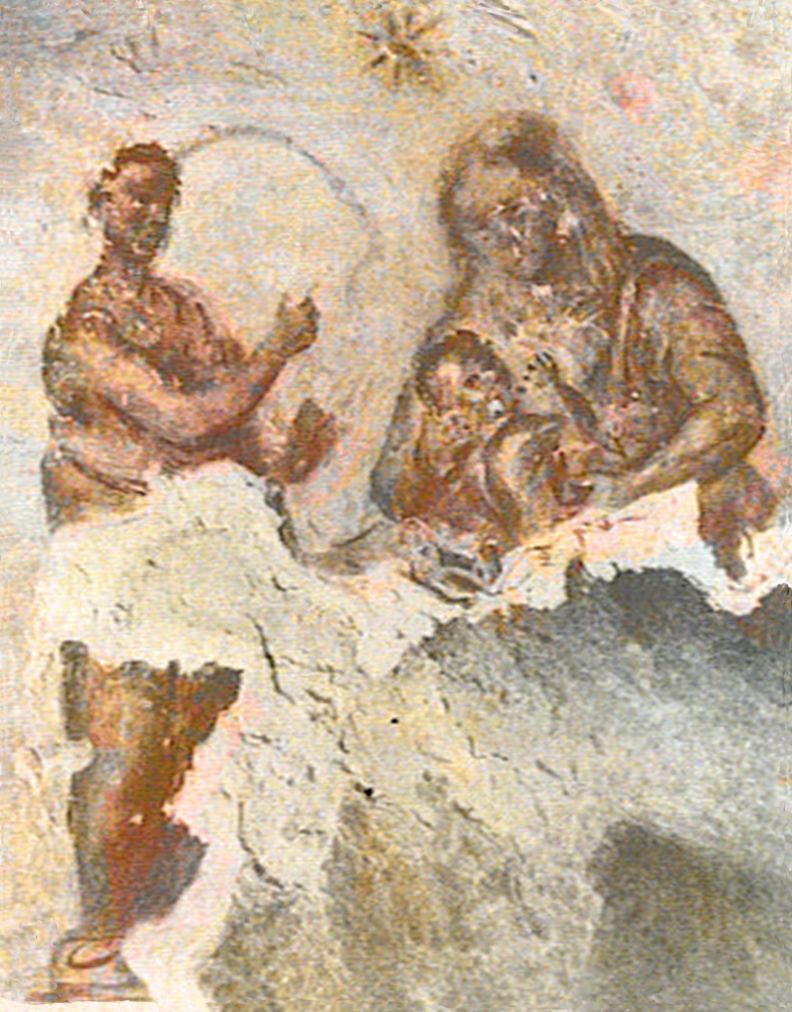
The world’s oldest known image of Mary depicts her nursing the infant Jesus (3rd century C.E.) Image source

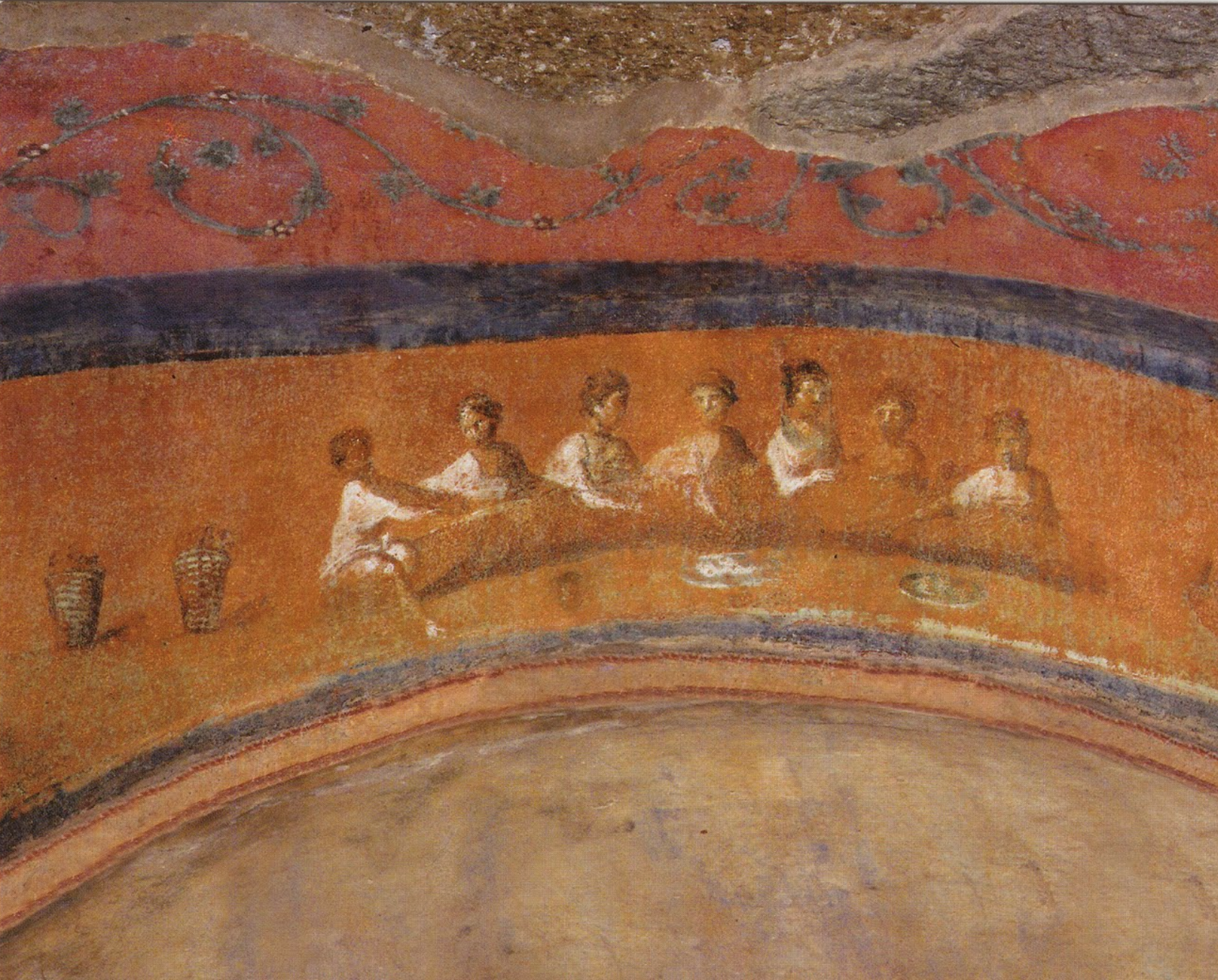
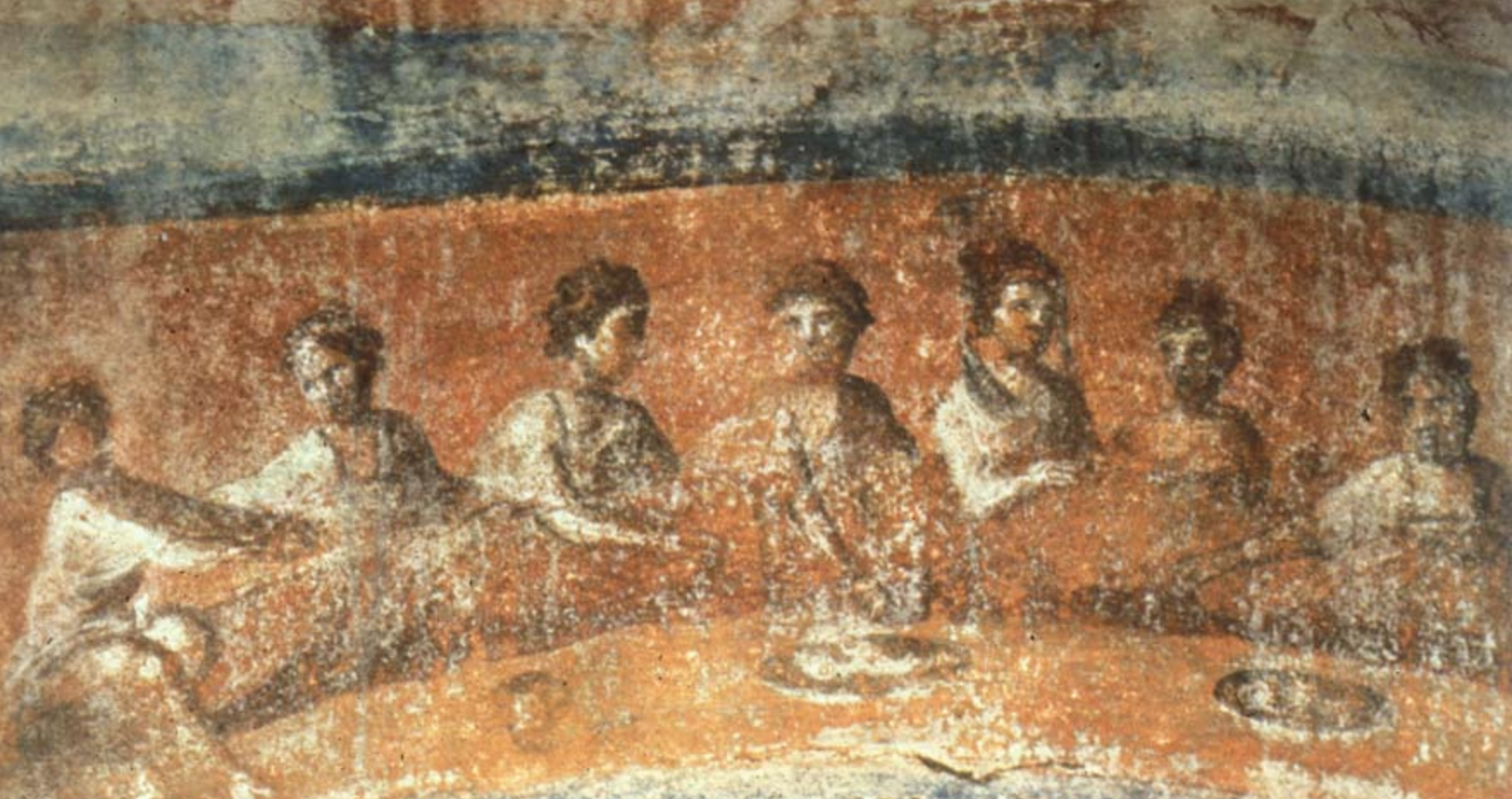
The most controversial fresco of the catacomb is the Fractio Panis. Some scholars believe that it illustrates a female priest breaking the Eucharist bread and giving it to the other women around the table. This is used as an argument for the ordination of female priests in the Catholic Church. Some believe that this represents a funerary meal instead. Others belive that all seven people seated at the table are men. The official guide book states that the gathering includes one woman.

Screen Shot 2014-06-06 at 7.39.35 PM

Fractio Panis – Image source

Archaeologist Dorothy Irvin has studied the frescos of this catacomb extensively. She notes that the seven baskets lined up on either side of the central image were a common symbol of the Eucharist in the early church. Women were chastised by the Church Fathers for leading early Eucharists so the depiction of one is not unthinkable. In addition, there is no food on the table other than the bread, only eucharistic elements, therefore it could not be an agape meal open to the entire Christian community regardless of gender.

Screen Shot 2014-06-06 at 10.07.05 PM

A close look at the fresco shows that the participants are all women.

“One wears a veil, and they are all characterized by upswept hair, slender neck and sloping shoulders, and a hint of earrings. The arrangement of the hair, in fact, in comparison with datable coins depicting emperors’ wives, has been an important factor in dating this fresco to the end of the first century AD, that is, to a time when the New Testament had not yet been completed” (Irvin, p. 83).

The person at the left end of the table is shown sitting rather than reclining like the others. She has both hands outstretched and appears to be breaking the bread (fraction pains). The modern discoverer of the Priscilla Catacomb, Josef Wilpert, understood this end figure to have a beard after cleaning the fresco of its encrusted mud and stalactites at the turn of the century. However, there is no beard now so it is hard to determine if he saw what he wanted to see since the principle celebrant seems to be presiding over the eucharist, a male only perrogative in our time. Irvin describes this figure further:

“The arrangement of the hair seems to be the same as that of the other definitely female figures, but it is the skirt length that is determinative. Skirt length for men at this period…was, for a working man, knee length or slightly shorter–top of kneecap–while ‘white collar’ length was below the knee, to the top of the calf. Women’s skirts were ankle length…The skirt of the left end person can be clearly seen, in the best photographs, to cover the calf, whose outline through the cloth is indicated…Thus the artist intended to paint here a woman.” (Irvin, p. 83)

In other words, early Christians did not exclude women from the priesthood and episcopate. Their exclusion would become a later development.

Screen Shot 2014-06-06 at 9.39.35 PM

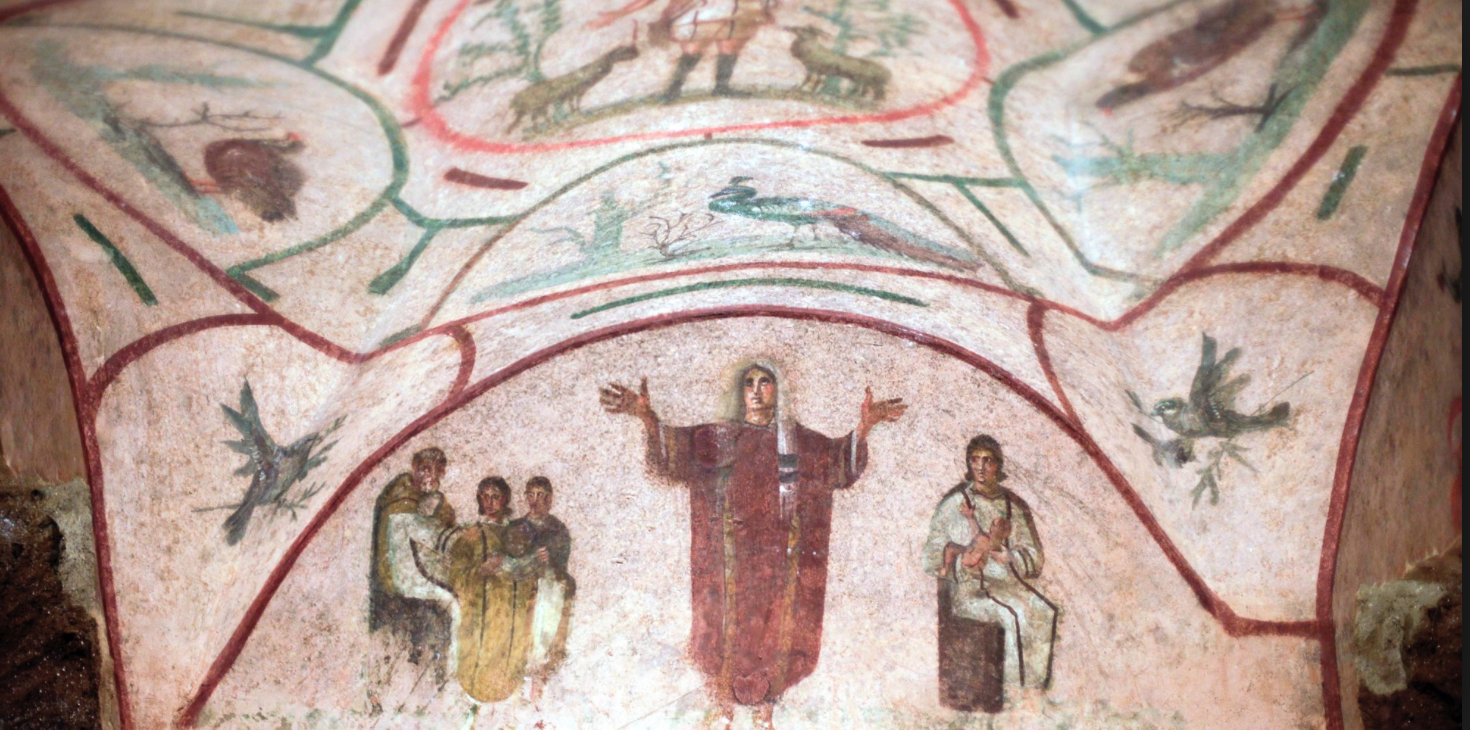
The Velatio – Image source

Another fresco in the catacomb has been described by some scholars as a “woman being celebrated, consecrated, blessed for some kind of leadership role” (Chris Schenk as quoted by Fincher).

“In the Catacomb of St. Priscilla, is a fresco, dated about 350 A.D. that depicts a woman deacon in the center vested in a dalmatic, her arms raised in the orans position for public worship. On the left side of the scene is a woman being ordained a priest by a bishop seated in a chair. She is vested in an alb, chasuble, and amice, and holding a gospel scroll. The woman on the right end of this fresco is wearing the same robe as the bishop on the left and is sitting in the same type of chair.” The woman in the center “depicts a woman deacon in the center vested in a dalmatic, her arms raised in the orans position for public worship.” (Meehan).

Not everyone agrees with this description of the fresco. Most commentators suggest that the three scenes depicted in this fresco represent three incidents in the life of a young woman: her marriage on the left, her life as a mother on the right and the woman after death in the center. I tend to agree that the Velatio fresco does represent the ordination of a woman to a church office since there are so many other archaeological examples of this practice in the early church. Here’s a list of examples.

Since I’m not Catholic or even Christian, I’m watching the debate over women’s ordination in the Catholic Church from the sidelines. But even from the sidelines I can see that an injustice has been done to religious women for centuries. Like the apostle Junia, early Christian women wielded a great deal more power and honor in the decades and centuries after Jesus’ death.”

For Further Reading

Barrois, Georges – “Women and the Priestly Office According to the Scriptures.” in Thomas Hopko, ed., Women and the Priesthood (Crestwood, N.Y.: St. Vladimir’s Seminary Press, 1983) 39-60.

Catholic Biblical Association of America’s Task Force on the Role of Women in Early Christianity – “Women and Priestly Ministry: The New Testament Evidence,” Catholic Biblical Quarterly 41 (1979) 608-13.

Denzey, Nicola –  The Bone Gatherers: The Lost Worlds of Early Christian Women (Boston: Beacon Press, 2007).

Eisen, Ute –  Women Officeholders in Early Christianity: Epigraphical and Literary Studies. (Collegeville, MN, Liturgical Press, 2000) Transl. from German original.

Fincher, Megan – “Women Priests ‘delighted” by Google, Vatican Catacombs Tour” National Catholic Reporter, Nov. 22, 2013 (http://ncronline.org/news/vatican/women-priests-delighted-google-vatican-catacombs-tour)

Ide, Arthur Frederick – Woman as Priest, Bishop & Laity in the Early Catholic Church to 440 A.D.: With a critical commentary on Romans 16 and other relevant Scripture and patrological writings on women in the early Christian Church (Mesquite, Tex.: Ide House, 1984).

Ide, Arthur Frederick – God’s Girls. Ordination of Women in the Early Christian and Gnostic Churches(Garland, Tex.: Tangelwuld, 1986)

Irving, Dorothy – “The Ministry of Women in the Early Church: The Archaeological Evidence” Duke Divinity Review 45 (1980): 76-86.

Kalugila, Leonidas – “Women in the Ministry of Priesthood in the Early Church: An Inquiry” Africa Theological Journal 14, no. 1 (1985) 35-45.

Kroeger, Catherine Clark – “Bitalia, The Ancient Woman Priest” Priscilla Papers 7, no. 1 (winter, 1993) 11-12.

Meehan, Bridget Mary  – “There Have Always Been Women Priests” (http://www.arcwp.org/art_always.html)

Morris, Joan – The Lady Was a Bishop: The Hidden History of Women with Clerical Ordination and the Jurisdiction of Bishops (New York: Macmillan, 1978)

Osiek, Carolyn – ‘”The Ministry and Ordination of Women according to the Early Church Fathers,” in Carroll Stuhlmeuller, ed., Women and Priesthood: Future Directions (Collegeville: The Liturgical Press, 1978) 59-68.

Rossi, Mary Ann – “Priesthood, Precedent, and Prejudice: On Recovering the Women Priests of Early Christianity. Containing a translation from the Italian of ‘Notes on the Female Priesthood in Antiquity,’ by Giorgio Otranto,’ Journal of Feminist Studies in Religion 7 (1991) 73-94.

Swindler, L.S. and A., eds. – Women Priests: A Catholic Commentary on the Vatican Declaration(New York: Paulist, 1977).

Torjesen, Karen Jo – When Women Were Priests: Women’s Leadership in the Early Church and the Scandal of their Subordination in the Rise of Christianity (San Francisco: HarperCollins, 1993)

This Article was published by Robin Cohn on June 2014 


Sunday, November 12, 2023

Article by Mary Hunt :Catholic Synod offers little hope

The Catholic Synod Offers Little Hope for Real Change in the Church

 https://womensmediacenter.com/news-features/the-catholic-synod-offers-little-hope-for-real-change-in-the-church

“The lightning rod my that is the priestly ordination of Catholic women was studiously avoided in the document. Ordination of women to the diaconate seems to be gaining traction. This makes a perverse kind of sense in that the model of diaconate is basically service-oriented and without decision-making power, a recipe for a woman’s job in patriarchy. The Vatican succeeded in having women participate fully in a process that was not, finally, in their best interest. No wonder the Catholic Church has endured for two millennia.”


Witness to end all wars yesterday in Baltimore by Janice Sevre Duszynska ARCWP


Yesterday, Saturday, November 11th, seven peace activists gathered in Baltimore’s McKeldin Square in the Inner Harbor to remember Armistice Day and the pledge of its signers in 1918, to end all wars.

We were there at 11 a.m., symbolic of the time the Armistice was signed. Lynn Robinson, Baltimore’s “Puppetista Lady,” was there with her giant puppets, including one mourning the dead. After the vigil we gathered to talk about the situation in the Gaza Strip and we pledged
to do all we can to end the genocide there.
Janice Sevre Duszynska ARCWP

Saturday, November 11, 2023

It’s National Vocations Week: Women are serving God’s people as priests, deacons and bishops now

 We are living the full equality of women now in inclusive Catholic communities where all are welcome and all are equal.


We ordain women in apostolic succession for public ministry to create a church for everyone. 

https://arcwp.org/

Bridget Mary Meehan ARCWP

I highly recommend the Links to Future Church’s Comprehensive Program on Synod


WOW- Prayer Walk for Equality in Rome during October Synod 

“This is a historic moment as 54 women took their place as co-equals alongside bishops at the October meeting discerning and voting on necessary reforms for the work of the Gospel today.   As promised we are sending you the video presentation, the link to the powerpoint slides, and a link to the Tribute to the Women of the Synod.  

Here is a link to the video presentation:  Synod Synthesis Review Video

Here is the link to the powerpoint presentation:  Powerpoint

Here is the link to the Tribute to The Women of the Synod: Tribute

We deeply appreciate everything you are doing to create a listening, discerning, and inclusive way of being church.  Every effort helps chip away at the clerical indifference and arrogance that stymies the work of the Gospel and ceates new, sacred spaces where love, compassion, and justice can take hold. “

Blessings, 

Deborah Rose          Russ Petrus
Co-Directors
FutureChurch

Friday, November 10, 2023

Was the Voice of Women Adequately Heard at the Synod? by Virginia Saldana, UCA News

 https://www.ucanews.com/news/was-the-voice-of-women-adequately-heard-at-the-synod/103205

The main issue is as, Virginia Saldana, points out, is equality in ministry including ordained ministries! 

We are past the stage where placating works and want our human rights equal to men recognized

Virginia Saldanha

Virginia Saldanha

Updated: November 09, 2023 05:08 AM GMT
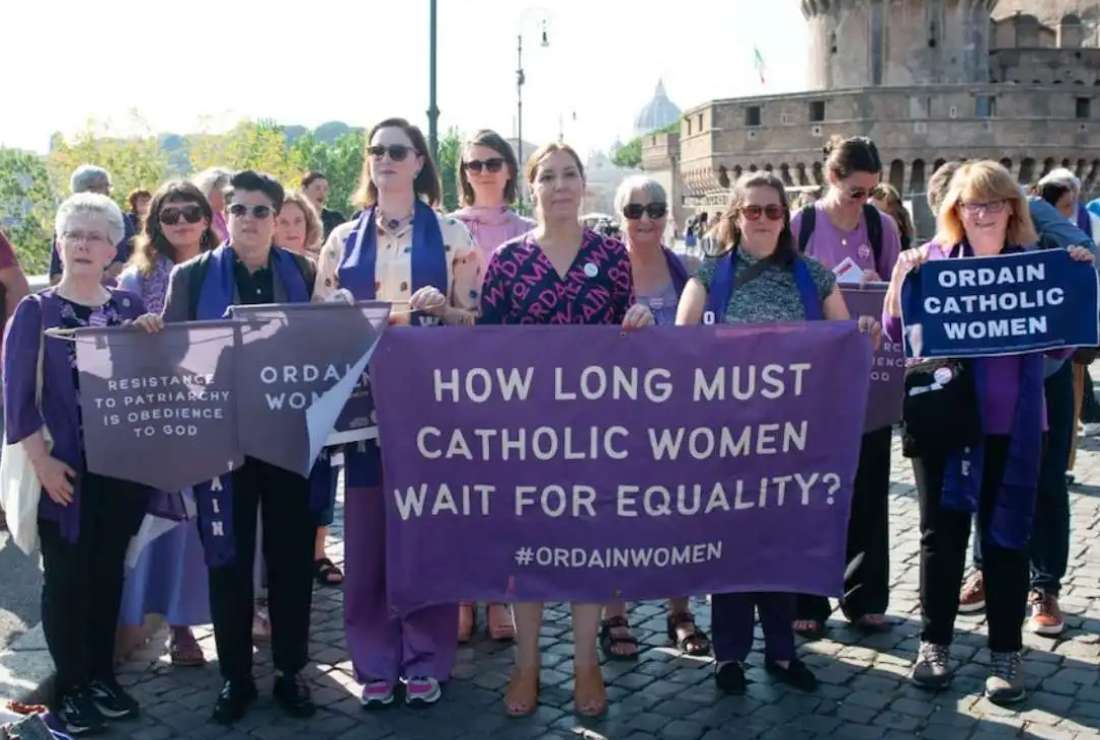
Women's groups demonstrate at the Vatican demanding the Synod of Bishops listen to all sections of women to do justice to them in the Church.

Women's groups demonstrate at the Vatican demanding the Synod of Bishops listen to all sections of women to do justice to them in the Church. (Photo: Virginia Saldanha)

The start of the Synod on Synodality gave women some hope — for the first time 82 women participated in a synod and 54 had voting rights. Women at the synod reported that the discussions were cordial, friendly and that they could express themselves freely. 

While we are aware that this first session sets the discussions on the table for the next session in 2024, women and LGBTQI+ persons express legitimate concerns that their aspiration for recognition of their baptismal equality and dignity has fallen off the table.

UCAN Ad

The synthesis report of the synod reveals that hierarchy and patriarchy are firmly in place in the Church structure. There is no indication that anything is going to change.

Most disturbing is the assertion that reinforces the complementarity of women and men. Scripture testifies to the complementarity and reciprocity of women and men. The covenant between man and woman is at the heart of God's plan for creation and Men and women are called to a communion characterized by non-competitive co-responsibility, to be embodied at every level of the Church's life. 

What exactly is meant by non-competitive co-responsibility? Does the hierarchy recognize that the teachings of the Church about women's complementarity place them in a secondary status and are the cause of a lot of violence to women both spiritual and sexual in the Church and the domestic sphere?

The synod asks the Church to grow in its commitment to understand and accompany women, pastorally and sacramentally. Women desire to share the spiritual experience of walking toward holiness in the different stages of life: as young people, as mothers, in friendship relationships, in family life at all ages, in the world of work, and in consecrated life. 

The synod process shows that there is need for a renewal of relationships and structural changes 

Not long ago the Church had structures even at the Vatican level, run by women, set up to dialogue with and empower women, I worked in these structures at the diocesan, national and continental levels and tried my best to help the bishops understand and dialogue with women. However, these structures did not last even two decades. Why?

Women have learned to accompany each other in their spiritual growth sharing their life experiences and helping each other along the ups and downs of their lives in the absence of these structures. 

We appreciate that the Synod admits that clericalism, machismo, and inappropriate use of authority continue to scar the face of the Church and damage communion. A deep spiritual conversion is needed as the basis for any structural change. 

The synod process shows that there is need for a renewal of relationships and structural changes. In this way we will be better able to welcome the participation and contribution of all — lay men and women, consecrated men and women, deacons, priests and bishops — as co-responsible disciples of the mission.  There is no clarity as to what structural change is being considered. Will they be substantial or effective?

The discussions regarding the diaconate for women were mostly negative — not in keeping with Church tradition.   To counter the negative argument about tradition, Pope Francis points out that synodality is an expression of the dynamism of the living Tradition. 

While there were some who pointed out that the diaconate for women was present in the early Church, the final verdict was to refer to the findings of the commission appointed by Pope Francis to look into the possibility of ordaining women to the diaconate. Mary Patricia McAleese, an Irish activist and an expert in both Church and civil law, described the decision as kicking the can down the road. 

The abuse of women, which is widespread in the Church, is not spoken of 

The role of deacon is described as being ordained for ministry, to serve the People of God in the diakonia of the Word, liturgy, and especially charity (cf. LG 29). It is clarified that the: The uncertainties surrounding the theology of the diaconal ministry are due to the fact that in the Latin Church, it has been restored as a proper and permanent degree of the hierarchy only since the Second Vatican Council. A deeper reflection on this will also illuminate the issue of women's access to the diaconate.   It is stressed that laymen have been admitted to the permanent diaconate, which in no way is a pathway to their ordination to be priests. 

Women's call for considering their ordination to priestly ministry has not been heeded.  Some women wonder if women should enter the permanent diaconate only to serve in works of charity when we are already doing this work without ordination and without being under any male authority or direction.

What women are asking for is equality in ministry — therefore the need for women's ordination is to serve as presbyters alongside men. 

The most painful is the fact that persons identifying as LGBTQI+ persons have been described as controversial because they raise new questions.  Their acceptance has been set aside with the excuse that the anthropological categories we have developed are not sufficient to grasp the complexity of the elements emerging from experience or knowledge in the sciences and require refinement and further study. Their basic human right to self-determination is not recognized.  Their basic human desire to form affective relationships has been denied. Yet the Church is described as Mother?

The abuse of women, which is widespread in the Church, is not spoken of.  I have followed up closely with all the amendments since 2019 on this issue. Till today justice for women survivors of clergy sex abuse is not adequately addressed.  Even the amendments made by Pope Francis are not being followed to give justice to survivors of clergy abuse in general.

So I ask: Was the voice of women adequately heard at the Synod on Synodality?  Even though Pope Francis kept reminding us todos, todos, todos, everyone, everyone, everyone, has to be heard!  There are just some crumbs here and there to placate women.

We, women, are past the stage where placating works. Women want our human rights equal to men recognized and made operational in the Catholic Church. Nothing less.