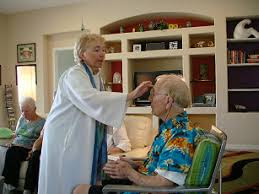
With deep gratitude, we thank all those who took the time to share your personal family experiences, concerns, and challenges with Pope Leo and with the Presidents of Bishops’ Conferences from around the world. Your willingness to speak honestly about the realities of family life today is an important contribution to the Church’s ongoing conversation about how best to support families.
The challenges families face today are significantly different from those many of us experienced growing up. The family life once portrayed in television programs such as Father Knows Best and Leave It to Beaver reflected a very different cultural and social reality from the one families navigate today. Programs such as Modern Family, Will & Grace, and The Secret Life of the American Teenager illustrate how profoundly family structures, relationships, sexuality, parenting, and the pressures facing young people have changed. Whatever our individual experiences or perspectives, one thing is clear: Families today are living in a new reality.
Our Church must therefore continue to listen carefully to the lived experiences of families and discern how its pastoral guidance can respond to the questions, struggles, and hopes they encounter today. The purpose is not to abandon the wisdom of our tradition, but to ensure that the Church’s guidance speaks meaningfully to families where they actually are—not simply to the families of another generation.
Your stories matter. Your experiences matter. And your willingness to share them creates an opportunity for the Church to listen more deeply, understand more fully, and accompany families with the compassion, wisdom, and pastoral care they need.
Thank you for helping make that conversation possible. And a special thanks to Dr. Charles Gibson for the well researched background information you have provided below to the Episcopal Conference Presidents.
Letter to His Holiness Pope Leo XIV Re: Vatican consultation with Presidents of Bishops' Conferences worldwide Dear Pope Leo, As our gift to you, we have gathered the responses of families from various countries around the world who’ve shared the issues they face in today’s world and where church leaders could be of help to them. It is their hope and ours that you will find this beneficial in your coming meeting October 7 – 14. The consultations show a common desire for a Church that listens more deeply, accompanies families beyond the wedding day, responds to practical needs, protects vulnerable people, and adapts its pastoral ministry to changing family realities. Across different cultures and contexts, families are asking not only for teaching, but also for presence, understanding, practical assistance, and ongoing accompaniment. Families, the Church and the Crisis of Moral Credibility Background Information for Episcopal Conference Presidents Introduction: Why Moral Credibility Matters This reflection is written by someone who loves the Catholic Church, even with all its “spots and wrinkles.” I believe a thoroughly reformed Catholic Church can be one of the greatest forces for justice, peace and reconciliation in our world. The world needs a credible, Jesus-centered Church—one capable of bringing its social teaching, its millions of faithful and its moral voice to the work of building a more just and compassionate human community. Yet the Church faces a growing crisis of moral credibility. Through conversations with Catholics, as well as surveys and the work of theologians and social scientists, a widening gap can be seen between many official Church teachings and the beliefs, experiences and moral decisions of Catholics themselves. Some of the Church’s most serious failures—particularly the cover-up of clergy sexual abuse—have begun to be confronted. Other issues remain unresolved. The movement toward synodality, initiated by Pope Francis and strongly continued by Pope Leo XIV, offers an important response. A synodal Church seeks to move from a predominantly hierarchical model toward a more participatory Church in which all the baptized have a genuine voice in discerning the movement of the Holy Spirit and in shaping the life and mission of the Church. This is a profound opportunity. It is also understandable that such a change encounters resistance, because synodality challenges deeply established patterns of authority and clericalism. The slow adaptation of canon law to a genuinely synodal model is another concern. But synodality is not fundamentally about changing doctrine. It is about asking how the Church listens, discerns truth and exercises authority.
That brings us to the central issue of this paper: Moral credibility requires trust. Trust requires truth. And truth requires that our beliefs and actions correspond as closely as possible to reality. The New Testament itself gives special importance to faith. The Greek word pistos conveys not only belief but trust and faithfulness. A Church that asks people to trust its moral teaching must itself demonstrate that it is willing to seek truth wherever truth is found—including in Scripture, history, human experience, science and the lived experience of its own people. Pope Leo XIV has provided an important example in Magnifica Humanitas, where he explicitly acknowledges the grave immorality of slavery that had been sanctioned by elements of the institutional Church. Such acknowledgment matters. It demonstrates that recognizing institutional error does not destroy the Church. Rather, honestly acknowledging the truth can strengthen its credibility. The Church has changed important teachings and practices before. Among the historical examples that deserve consideration are the Doctrine of Discovery, the belief that there was no salvation outside the Church, slavery, torture, the Inquisition, religiously sanctioned warfare, and earlier opposition to freedom of conscience, religious liberty and separation of Church and state. These changes do not prove that every current teaching is wrong. They do demonstrate something important: the Church has the capacity to recognize that an earlier understanding was inadequate and to develop its teaching in response to deeper understanding of the Gospel and reality. The question before the Church today is whether it can do the same regarding the status of women and sexual and reproductive morality. I. The Growing Gap Between Official Teaching and Catholic Experience The credibility gap is especially evident in questions concerning women, sexuality and reproduction. Increasing numbers of Catholics appear to be making moral decisions independently of official Church teaching. This is not necessarily because they have abandoned faith. Many continue to pray, attend Mass, raise their children Catholic and seek to live morally. Rather, they increasingly believe that their own experience, conscience, relationships and knowledge of the world must be considered when making moral decisions. The surveys cited in this paper illustrate the extent of this change. For example, the percentage of Catholics saying that the Church should permit birth control has risen dramatically over the decades. A 2024 Pew survey reported approximately 83 percent support. Other surveys show substantial majorities of Catholics supporting women’s ordination, allowing priests to marry, permitting IVF and allowing greater inclusion of people in nontraditional family situations. A 2025 Pew survey found that approximately 60 percent of Catholics favored making the Church more inclusive even if that required changes in some teachings, while 37 percent preferred maintaining traditional teachings even if that resulted in a smaller Church. The differences are also evident in questions concerning moral authority. Data from the American Catholic Laity Survey indicate that, between 1987 and 2017, Catholics increasingly identified the individual rather than Church leaders as having the final say in matters of sexual morality. For example, regarding artificial birth control, the percentage identifying the individual as having final authority increased from 64 percent to 68 percent, while the percentage identifying Church leaders decreased from 13 percent to 9 percent. For same-sex relationships, the shift was much more dramatic: those identifying the individual as having final authority increased from 43 percent to 58 percent, while those identifying Church leaders declined from 36 percent to 13 percent. The lesson is clear: Catholics are already exercising moral responsibility in ways that do not depend exclusively upon hierarchical teaching. The question is not whether this reality will disappear. It will not. The more important question is whether the Church will listen to this experience and enter into genuine dialogue with its people. II. Women: From Inequality to Full Equality Women constitute more than half of the Catholic community and have always played an indispensable role in transmitting the faith to succeeding generations. They are mothers, caregivers, teachers, theologians, parish leaders, administrators, catechists and ministers of countless kinds. Much of the daily work of the Church depends upon them. Yet women remain unequal under Church law in a fundamental respect: they cannot be ordained to the diaconate, priesthood or episcopacy. This disparity has become increasingly difficult for many Catholics to reconcile with the Church's proclamation of the equal dignity of women and men. The historical argument that women have never exercised ordained or sacramental ministry in the Church also deserves renewed examination. The early Church did not begin with the fully developed sacramental and hierarchical structures that characterize Catholicism today. The ministries described in the New Testament developed over time. The meaning of terms such as presbyter and episcopos evolved, as did the understanding of laying on of hands and ministerial authority. The New Testament itself names women who exercised significant leadership in the early Christian communities. Paul refers to women such as Phoebe, Prisca and Junia. The historical evidence concerning the precise nature of their ministries remains debated, but it is increasingly difficult to sustain an account of early Christianity in which women were simply passive members of the community. There is also archaeological and documentary evidence concerning women officeholders and women associated with Eucharistic and other forms of Christian ministry in the early centuries. The Church's understanding of ordination itself developed over time. The requirement that an ordained minister preside at the Eucharist was not expressed in its present form in the earliest Christian communities. These historical developments should encourage rather than frighten us. Tradition is not merely the preservation of every historical practice. Tradition also includes the Church's continuing discernment of what is faithful to Christ. Scripture offers a powerful theological foundation for this discernment. Paul declares: “There is neither Jew nor Greek, there is neither slave nor free, there is neither male nor female; for all of you are one in Christ Jesus.” This does not settle every question concerning ministry, but it establishes a fundamental principle: baptismal identity in Christ transcends distinctions that human institutions have often used to establish hierarchy. In the twentieth century, the question of women's ordination received renewed biblical examination. The Pontifical Biblical Commission's work in the 1970s is significant because its members did not find a clear scriptural prohibition against women being ordained to priestly ministry. Nevertheless, Pope Paul VI and subsequently Pope John Paul II maintained that the Church did not have authority to confer priestly ordination on women. John Paul II's Ordinatio Sacerdotalis therefore represents a major point of contention. One theological argument has been based on the concept of complementarity: women and men are understood as fundamentally different, with distinctive roles. Another has emphasized the priest acting in persona Christi, with Christ being male. These arguments deserve serious theological consideration. But they also deserve examination in light of contemporary understanding of human nature and equality. The question must be asked: Does a person's biological sex determine his or her capacity to represent Christ? Christ is represented not by one's genitalia but by one's conformity to Christ. The Church's treatment of women also has consequences beyond ordination. Women increasingly live in societies in which equality is assumed in education, government, business, medicine, law, and virtually every other sphere. When the Church simultaneously teaches the equal dignity of women while maintaining institutions in which women are excluded from ultimate sacramental leadership, many women experience an unresolved contradiction. The disengagement of women from active participation in Church life should therefore be taken seriously. Trust this Church because it seeks the truth. That is the Church the world desperately needs. Kathleen Sprows Cummings of the University of Notre Dame summarized the danger succinctly: “If you lose the women, you lose the children.” Women have historically played a primary role in the religious formation of children. If women increasingly conclude that the Church does not regard them as full participants, the consequences will extend well beyond women themselves. The issue is therefore not simply whether women may be ordained. It is whether the Catholic Church can credibly proclaim the equal dignity of women while maintaining a system of governance and sacramental ministry in which women remain structurally subordinate to men. A renewed Church should seek full equality of women and men in dignity, participation, leadership, and ministry. III. Sexual and Reproductive Morality: Listening to Experience The deepest credibility gap may exist in sexual and reproductive morality. Sexuality is a gift of God. It can express intimacy, love, commitment, and openness to new life. Yet throughout much of Church history, sexual morality developed through an increasingly elaborate system of rules concerning sexual acts. Jesus said relatively little about sexual morality compared with the enormous body of later Catholic teaching. His principal recorded teachings concerned marriage, divorce, adultery, and the dignity of human relationships. Much later teaching was developed through interpretations of natural law. Natural law itself need not be rejected. The question is how it is understood. A natural law approach rooted in reality should begin with human experience: What behaviors enable people and relationships to flourish? What behaviors cause unjust harm, exploitation, coercion, manipulation, or destruction? Moral discernment should therefore draw upon Scripture and tradition, but also upon the lived experience of married couples and single people and the findings of the biological, psychological and social sciences. This is particularly important when the people making the rules have little or no direct experience of marriage, sexual intimacy or parenthood. The Church should not simply ask, “What does the rule say?” It should also ask: Does this teaching promote human flourishing? Does it protect dignity? Does it strengthen love, fidelity and responsibility? Does it correspond to reality? Does it bring people closer to Christ? The work of Jesuit moral theologian James F. Keenan is relevant here. He argues for a Catholic sexual ethic that understands sexuality as a gift rather than a curse and notes how historically severe and absolute some sexual teachings became. This historical development deserves careful consideration. Sexual morality did not emerge fully formed from the teaching of Jesus. It developed over centuries, influenced by cultural assumptions, ascetical practices and understandings of human sexuality that have themselves changed. A more constructive framework is offered by Margaret Farley, RSM, in Just Love: A Framework for Christian Sexual Ethics. Farley's approach asks whether sexual relationships embody justice. She proposes seven norms: - Do no unjust harm. People must never be exploited, manipulated, deceived or treated merely as objects.
- Free consent. Genuine consent requires freedom from coercion.
- Mutuality. Both persons should participate freely and desire the relationship.
- Equality. Relationships should respect equality, including equality of power.
- Commitment. There should be a meaningful desire for union, intimacy and mutual knowledge.
- Fruitfulness. Fruitfulness includes procreation and the nurturing of children, but also the capacity of relationships to contribute to the good of others.
- Social justice. Sexual relationships exist within a community and should contribute to the well-being of that community.
These principles offer a possible foundation for a renewed Catholic sexual ethic—one centered not merely on the classification of individual sexual acts but on the quality and justice of human relationships. IV. Marriage, Divorce and Remarriage The Church's teaching on marriage also illustrates the need to consider Scripture, tradition and human experience together. Jesus strongly affirmed the permanence of marriage. Yet Scripture itself contains provisions that recognize difficult circumstances. Matthew includes an exception concerning porneia, while Paul addresses situations in which a Christian is married to a nonbeliever who refuses to live peacefully with the Christian. The biblical tradition therefore includes not only “binding” but also “loosing”—the discernment that a rule may not apply in precisely the same way in every circumstance. The Church has exercised this kind of discernment throughout its history. Margaret Farley challenges the idea that an absolute commitment can remain morally binding regardless of circumstances. A commitment can be genuine while the conditions that made the commitment possible can change profoundly. Abuse, abandonment, betrayal and other circumstances can destroy the very relationship that a commitment was intended to sustain. Vatican II also brought an important development in Catholic understanding of marriage. Gaudium et Spes described marriage as an “intimate partnership of life and love,” emphasizing mutual self-giving rather than treating procreation as the sole or primary purpose to which the other dimensions of marriage were subordinate. This development illustrates an important principle: Catholic teaching can deepen without abandoning its tradition. The Church should therefore continue to examine whether its present treatment of divorced and remarried Catholics fully reflects the mercy, compassion and pastoral realism of Jesus. V. Sexual Relationships Outside Marriage Catholic attitudes toward sexual relationships outside marriage have also changed substantially. Survey evidence indicates that Catholics increasingly believe that moral judgment cannot be based solely upon marital status. Increasing numbers evaluate relationships according to qualities such as love, fidelity, responsibility, commitment and mutual respect. This does not mean that every sexual relationship is morally acceptable. Casual sexual encounters, exploitation, coercion, manipulation and relationships lacking genuine concern for the other person may fail Farley's criteria of justice. But it does suggest that the Church should distinguish between relationships that are destructive and relationships in which two people are genuinely committed to one another and seeking to live responsibly. The moral question should be more than: “Are these people married?” It should also be: “How are these people treating one another?” VI. Birth Control and the Crisis of Humanae Vitae Perhaps no Catholic teaching has done more to damage the Church's moral credibility in the modern era than the prohibition of artificial contraception in Humanae Vitae, issued by Pope Paul VI in 1968. The decision was particularly painful because it followed years of discussion and the work of the Papal Commission on Birth Control. The development of modern contraception, particularly the birth-control pill, forced the Church to reconsider earlier assumptions about reproduction and marital sexuality. The Birth Control Commission eventually included lay people, theologians and bishops. According to the historical account presented here, the overwhelming majority favored changing the Church's teaching. Their deliberations were influenced especially by the testimony of married couples, including women, who described the practical realities of responsible parenthood. The Commission concluded that artificial contraception should not be regarded as intrinsically evil and that responsible parenthood required couples to be able to regulate births according to their circumstances. Yet Humanae Vitae retained the prohibition. For many Catholics, the result was a profound crisis of trust. The Church appeared to many to have asked ordinary married couples to accept a moral rule that did not sufficiently take into account their lived reality. The issue is not simply whether contraception is morally right or wrong. It is a question of how moral authority is exercised. A couple must make decisions about whether and when to have children. Those decisions involve health, economics, psychological readiness, existing children, family circumstances and the capacity to provide loving care. Responsible parenthood requires serious moral discernment. A credible Church should accompany couples in that discernment rather than simply impose a universal rule that many cannot reconcile with their experience. The continuing gap between official teaching and Catholic practice is enormous. Survey after survey demonstrates that large majorities of Catholics do not accept the prohibition of contraception. The question therefore becomes: What has the Church learned from this experience? One lesson should be that changing or developing teaching after careful listening does not necessarily destroy authority. Sometimes the refusal to acknowledge that a previous position may have been inadequate damages authority far more. VII. Natural Family Planning and the Question of Reality The Church has traditionally distinguished artificial contraception from natural family planning. Whatever one's theological assessment of that distinction, the effectiveness and practical use of family-planning methods should be considered honestly and in light of contemporary evidence. The original document cites research indicating a significant difference between perfect-use and typical-use effectiveness of natural family planning methods. The larger point is more important than any statistic: Moral teaching should never be separated from reality. If couples are expected to practice responsible parenthood, the Church should engage honestly with the methods available to them, the evidence concerning their effectiveness and the circumstances in which families actually live. VIII. HIV/AIDS and the Responsibility to Protect Life The experience of HIV/AIDS in Africa and elsewhere provides another painful example of the consequences that can arise when moral teaching is separated from public-health realities. The Church has made enormous contributions to caring for people living with HIV/AIDS. At the same time, its opposition to condoms has generated serious controversy, particularly in communities where HIV transmission has been widespread. The moral question must be approached with the protection of human life as a central concern. If a particular teaching or pastoral practice contributes to preventable death or disease, the Church has an obligation to examine that teaching honestly. The goal should not be to assign blame but to ask what a Church committed to the sanctity of life should do when scientific evidence, pastoral experience and public health raise urgent questions. IX. What the Church Can Learn From Its Own History The history of Catholicism demonstrates that teachings and practices once regarded as settled have changed. The Church once tolerated or sanctioned slavery. It supported forms of religious coercion. It accepted torture in certain circumstances. It endorsed religious warfare. It restricted freedom of conscience and religious liberty. It developed understandings of Church-state relations that are difficult to reconcile with contemporary Catholic teaching. The Church eventually changed. Those changes did not destroy Christianity. They allowed the Church to move closer to the Gospel. This history should make Catholics neither cynical nor despairing. It should make us humble. If the Church has changed its teaching on slavery, religious liberty, democracy, human rights and the relationship between Church and state, then the claim that every existing teaching must remain unchanged simply because it is traditional is historically unsustainable. The real question is: What does fidelity to Christ require of the Church now? X. Toward a Church of Truth, Trust and Moral Credibility The Church does not need to choose between tradition and reform. It needs to recover the best of its tradition. A genuinely Catholic reform begins with Scripture, the person and teaching of Jesus, the wisdom of the Christian tradition, the experience of the faithful and the continuing work of the Holy Spirit. It also requires humility. The Church must be willing to say: We were wrong. Such a statement is not a defeat. It can be an act of profound Christian courage. The Church should therefore listen more intentionally to those most affected by its teachings: - married couples;
- women;
- young people;
- divorced and remarried Catholics;
- LGBTQ Catholics;
- single people;
- parents;
- theologians and Scripture scholars;
- scientists and social scientists;
- people who have left the Church;
- and those who remain Catholic but struggle with particular teachings.
Synodality provides an extraordinary structure for doing this. But listening must be more than consultation. If people are invited to speak but their experience has no influence on discernment or decision-making, synodality will become another form of clericalism. The Church must move toward a model in which the baptized genuinely participate in discerning and shaping the Church's life and mission. That requires transparency, accountability and a willingness to change. Conclusion: A Credible Church for a Changing World The Catholic Church remains one of the world's greatest potential forces for justice, peace, reconciliation and human dignity. But that potential depends upon moral credibility. And moral credibility depends upon trust. Trust depends upon truth. Truth requires the courage to look honestly at reality—even when reality challenges long-held assumptions. Rather than fear the experiences of its people, we need our Church to welcome them as part of the discernment process. The experiences of women challenge the Church to move from formal equality in dignity to full equality in service and ministry. The experiences of married couples challenge the Church to reconsider how sexual and reproductive morality is developed and applied. The experience of divorced and remarried Catholics challenges the Church to distinguish the permanence of Christian love from rules that may fail to recognize the complexity of human relationships. The experience of LGBTQ Catholics challenges the Church to examine whether its language and pastoral practices communicate the unconditional love of Christ. The experience of Catholics who use contraception challenges the Church to reconsider whether its understanding of natural law adequately reflects responsible parenthood and human flourishing. And the experience of millions who have disengaged from the Church challenges all of us to ask why. The answer cannot simply be that people have become less faithful. Perhaps some have. But perhaps many are telling the Church something important. Perhaps they are saying: We love the Church, but we need the Church to listen to us. We want a Church whose teachings reflect the mercy of Jesus. We want a Church that recognizes the equality of women. We want a Church that respects conscience and human experience. We want a Church that is willing to learn. We want a Church whose moral authority is earned through truth and trust rather than demanded through institutional authority. That is not a rejection of Catholicism. It may be a call to recover something essential to Catholicism. The Church's future will not be secured by defending every historical position. It will be secured by remaining faithful to Christ while having the courage to discern what must change. A truly synodal Church can become such a Church. A Church that listens. A Church that learns. A Church that acknowledges its mistakes. A Church that honors the equal dignity of women and men. A Church that takes seriously the lived experience of families. A Church that engages science rather than fears it. A Church that welcomes rather than excludes. And ultimately, a Church whose teachings and actions once again make it possible for people to say: We trust this Church when she seeks the truth. That is the Church the world desperately needs.
Dr. Charles Gibson Auburn, California September 7, 2026 FAMILY CONSULTATIONS 2026: Country-by-Country Summary
With special thanks to Alloys Nyakundi, organizer of our CCRI Young Seekers Community, for sorting through all the responses. The following represents the responses sharing the issues families face in their country and where they most seek the guidance of Church leaders:
1. Australia Key issues i. Inclusion of Divorced and Remarried Catholics: Uncertainty about their place in the Church and their full participation in parish life, including blended families. ii. LGBTQ+ Inclusion: Experiences of judgment or exclusion and the need for greater respect, welcome, and pastoral care. iii. Pastoral Support for Families: A desire for clearer, compassionate, and welcoming guidance that recognizes families’ diverse circumstances. iv. Financial Challenges: Economic difficulties affecting families and their well-being. v. Faith and Family Responsibilities: Limited understanding of faith, marriage, and family responsibilities. vi. Family Planning: Questions and concerns about birth control, family size, and responsible parenthood. vii. Gender Inequality and Violence: Misogyny, gender inequality, domestic violence, and femicide. viii. Wider Social Challenges: Climate change, inflation, and political divisions affecting families and communities.
Recommendations on how the Church Can Help i. Provide clearer pastoral guidance and accompaniment for divorced, remarried, and blended families. ii. Encourage priests and parishes to create welcoming and non-judgmental environments. iii. Offer respectful pastoral accompaniment for LGBTQ+ people and their families. iv. Provide marriage education and ongoing support for families. v. Strengthen faith formation and teaching on family life. vi. Promote equal participation of women and men in the Church. vii. Address gender-based violence and promote social justice. viii. Support families facing economic and environmental challenges. 2. India Key issues i. Marital and Family Breakdown: Family separation caused by migration for livelihood and Pressure on marriage, parenting, and care for children and elderly family members. ii. Parenting and Intergenerational Relationships: Differences between parents and young people concerning education, careers, marriage, technology, and personal autonomy. iii. Addiction and Related Social Pressures: Alcohol, gambling, drugs, and digital dependency affecting families. Also, exposure of adolescents to harmful digital content, including pornography. iv. Weakening Faith Transmission Within the Family: Faith formation increasingly centered on parish and school activities. v. Lack of Accessible and Competent Family Counselling:Uneven access to professional counselling and pastoral accompaniment. vi. The Gap Between Listening and Action: Limited visibility of what happens after consultation and discernment. vii. Accountability and Transparency in the Synodal Process:Absence of clear records of decisions, responsibilities, and implementation. Also, Limited communication with the People of God about outcomes. viii. Pastoral Competence and Co-Responsibility: Lack of adequate formation, resources, and clear responsibilities ix. Indian Social, Cultural, and Economic Context: Caste and socioeconomic vulnerability influencing family experiences.
Recommendations on how the Church Can Help i. Strengthen Marriage and Family Accompaniment: Provide marriage preparation, ongoing support, and family support groups, address separation, migration, and diverse family needs. ii. Promote Parent–Young People Dialogue: Encourage intergenerational communication and conflict resolution. Involve young people in developing family pastoral programs. iii. Address Addiction and Social Pressures: Provide pastoral support, referrals, and digital safety education. iv. Strengthen Family-Based Faith Formation: Encourage family prayer, Scripture sharing, and faith reflection. Also promote use Small Christian Communities to support family faith formation. v. Provide Accessible Counselling Services: Train pastoral workers and establish professional referral systems. ensure confidential and specialized support for families. vi. Turn Consultation into Action: Develop clear action plans and communicate implementation progress and explain decisions and report on outstanding recommendations. vii. Promote Accountability and Transparency: Assign responsibilities, document progress, and share outcomes. And also apply the 5R Reality Check to evaluate existing initiatives. viii. Strengthen Pastoral Competence and Co-Responsibility: Train clergy, religious, and lay leaders. Promote collaboration with qualified lay professionals and service providers. ix. Rebuild Trust in Synodal Listening: Show how consultation findings influence decisions and actions. Avoid repeated consultations without reviewing previous recommendations. x. Develop Context-Sensitive Pastoral Responses: Adapt family ministry to India's cultural, social, and economic diversity. Address caste and socioeconomic vulnerabilities through locally appropriate solutions. 3. Indonesia Key issues i. Economic hardship, unemployment and changing social expectations place pressure on families. Financial insecurity and changing expectations about marriage, work and family roles are making family life more difficult for many people. ii. Domestic violence, emotional abuse and gender inequality. These problems can remain hidden when families fear stigma or do not know where to seek confidential assistance. iii. Young adults are delaying marriage because of economic uncertainty, mental-health concerns and fear of repeating unhealthy family patterns. Many young people are carefully considering whether they can build a healthier family than the one they may have experienced growing up. iv. Single parents, widows/widowers, separated people and people from broken families can feel excluded. Such families may need greater assurance that they remain valued members of the Church community. v. Families want to be listened to rather than judged. This was a particularly important pastoral message: people often need a safe person who will hear their story before offering advice or solutions.
Recommendations on how the Church Can Help i. Provide ongoing marriage accompaniment covering communication, conflict resolution, finances, parenting and abuse awareness. ii. Establish safeguarding and confidential referral systems. iii. Create men's, women's, couples', parenting and family-support groups. iv. Provide practical support for families experiencing poverty. v. Listen seriously to young people and accompany those delaying marriage. vi. Use SCCs as spaces for prayer, healing, peer supp My Response: Bridget Mary Meehan ARCWP Thank you for this courageous, pastoral letter to Pope Leo XIV and the presidents of the world’s bishops’ conferences. I am especially grateful for the families whose lived experiences ground this consultation and for Dr. Charles Gibson’s reflection on the Church’s crisis of moral credibility. One message resounds: people love the Church, but they want a Church that listens. Families seek accompaniment rather than judgment, compassion rather than exclusion, and meaningful participation rather than consultations without action. They ask Church leaders to face honestly the realities of marriage, divorce and remarriage, poverty, migration, violence, sexuality, parenting, LGBTQ+ family members, young people, and the changing forms of family life. Among the document’s most urgent questions is the full equality of women. Women have carried the faith across generations. Our mothers and grandmothers taught us to pray, served those in need, educated children, built parish communities, cared for the sick, proclaimed the Gospel, and sustained the Church through countless ministries. Yet women remain excluded from ordained ministry and full sacramental leadership. We cannot proclaim that women and men are equally created in God’s image while reserving sacramental ministries on the basis of gender. The early Christian communities reveal a broader vision. Phoebe was named a diakonos and benefactor; Prisca was Paul’s co-worker and helped teach Apollos; Junia was remembered among the apostles. Mary Magdalene was commissioned by the risen Christ to proclaim, “I have seen the Lord.” Jesus entrusted the Easter message to a woman. Our baptism, not our gender, is the foundation of our call to ministry. This letter rightly insists that synodality must mean more than listening sessions. If the People of God speak but their discernment does not shape decisions, we are not yet a fully synodal Church. A community of baptized equals requires shared responsibility, accountability, transparency, and genuine participation in discernment and decision-making. The document also rightly honors conscience and lived experience. Catholic tradition recognizes conscience as central to moral life. Listening to married couples, women, young adults, divorced and remarried Catholics, LGBTQ+ persons, scientists, theologians, and those who have left the Church is not a threat to faith. Their experiences may be places where the Spirit speaks. The Church has developed its understanding throughout history. Growth need not mean abandoning tradition; it can mean entering more deeply into the Gospel and asking what Jesus’ love, justice, compassion, and inclusive ministry require today. My prayer for Pope Leo and the bishops gathering in October is that they will listen with open hearts and holy courage. May they hear those whose voices have too often been marginalized, recognize the Spirit already at work in families and communities, move beyond fear toward trust in Divine Wisdom, and open doors closed for too long. For women, this means full equality in every ministry, including ordained ministry. For families, it means compassionate pastoral care grounded in real life. For LGBTQ+ people, divorced and remarried Catholics, and all who have experienced exclusion, it means knowing they are beloved members of the Body of Christ. For the whole Church, it means becoming the community Jesus calls us to be—a Church where everyone has a place at the table. The Holy Spirit has never stopped moving among the People of God. May Pope Leo and the bishops listen. May all of us listen. And may we have the courage to follow where the Spirit leads. Be a Church for all including women priests and all called to ordained ministries in a community of baptized equals. With gratitude, hope, and blessings,
Bridget Mary Meehan
Association of Roman Catholic Women Priests
|