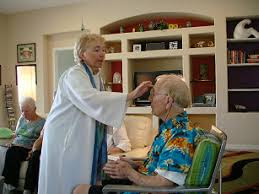

The statistics are startling, but they require careful qualification. The most recent national study of U.S. women religious by the Center for Applied Research in the Apostolate (CARA), based on data collected in 2022, reported 31,742 sisters in 411 institutes, with an average age of 80.5. Only 1.1 percent were age 30 or younger.[^1]
These figures reveal a profound change in religious life—but not necessarily its death. The old forms of convent-based vocation are declining, while new forms of discipleship, ministry and spiritual community are emerging beyond traditional structures.
I know something about religious life from the inside.
I entered the Immaculate Heart of Mary Sisters in 1966, when convents were filled with young women and religious communities staffed Catholic schools, hospitals, parishes and social-service institutions throughout the country.
It was an extraordinary time. I received a world-class education in the novitiate and a degree from Immaculata College to prepare me to teach in elementary schools.
Women religious were among the best-educated women in the Church. They became teachers, theologians, nurses, hospital administrators, social workers, pastoral ministers and advocates for justice. They served immigrants and people experiencing poverty, marched for civil rights and peace, challenged unjust corporate practices and advocated for the protection of Earth.[^2]
They were—and still are—prophetic women whose selfless service has blessed countless lives.
So when I hear that the decline in numbers proves that progressive religious life has failed, I strongly disagree.
The more important question is not simply: Why aren’t young women becoming nuns?
It is: Where is the Spirit calling women today?
Vatican II Opened the Windows
The Second Vatican Council called religious institutes to renew themselves by returning to the spirit and intentions of their founders while responding to the signs of the times. Perfectae Caritatis explicitly directed religious communities toward this renewal, while Gaudium et Spes challenged the entire Church to discern the presence and action of God in the contemporary world.[^3]
Women religious took that invitation seriously.
They studied Scripture and theology. They rediscovered the radical message of Jesus. They listened to the experiences of women, people living in poverty and marginalized communities. Many moved from large convents into neighborhoods where people were struggling and became deeply involved in movements for justice, peace and ecological sustainability.
And they began asking questions the institutional Church did not necessarily want women to ask.
Why are women barred from sacramental leadership?
Why is decision-making predominantly in the hands of ordained men?
Why does a Church that proclaims the equality of all the baptized maintain structures that discriminate against women?
My own awareness deepened dramatically in 1979 when Sister Teresa Kane, RSM, welcomed Pope John Paul II to the National Shrine of the Immaculate Conception in Washington, D.C. and publicly asked that women be included in all ministries of the Church. I stood among sisters from religious communities across the United States as she spoke.
It felt as if the ceiling might collapse!
Her courageous words articulated what many Catholic women were already experiencing: the Spirit was calling women into forms of ministry that the institutional Church was unwilling to recognize.[^4]
Those questions have not disappeared.
They are even more pressing today.
Young Women Have Choices Their Grandmothers Never Had
For generations, religious life provided Catholic women with opportunities that were rarely available elsewhere. Sisters could pursue higher education, become teachers, principals, nurses, hospital administrators and missionaries, travel throughout the world and exercise significant leadership.
Historians of women religious have documented their crucial role in building the educational, health-care and social-service institutions that served generations of Americans.[^2]
Today, women can pursue similar vocations outside convent walls.
A young woman inspired to serve God and others can become a theologian, doctor, teacher, chaplain, community organizer, environmental advocate, nonprofit leader, spiritual director or minister.
The Spirit continues to call women.
The ways of answering that call have expanded.
Perhaps the container is evolving.
This is why I resist describing the aging of religious communities simply as a “vocation crisis.”
Perhaps we are witnessing something much larger.
The traditional container for women’s religious vocation may be disappearing while new forms of discipleship are being born.
We can already see them.
Women are forming intentional spiritual communities, creating house churches and inclusive Catholic communities, and serving as theologians, spiritual directors, chaplains, retreat leaders, activists and ministers.
Some Catholic women—including women who have belonged to canonical religious communities—are also answering calls to ordained ministry despite the institutional Church’s refusal to recognize their vocations.
The Roman Catholic Women Priests movement ordains women as deacons, priests and bishops and understands these ordinations as valid within the Roman Catholic sacramental tradition. The institutional Roman Catholic Church does not recognize these ordinations and continues to teach that it has no authority to ordain women to the priesthood.[^5]
In the Roman Catholic Women Priests movement, I have witnessed women answering the Spirit’s call to serve inclusive communities where all are welcome at the Eucharistic table.
We are exploring something different: a community of equals in which leadership is shared, authority is relational and ministry grows from the gifts of the baptized.
This, too, is religious vocation.
Their Charisms Will Live On
As communities of religious women age and some congregations move toward completion, we should be profoundly grateful for the legacy they leave behind.
Generations of sisters educated children, established hospitals, cared for people who were poor, accompanied immigrants, advocated for peace and justice and nurtured the spiritual lives of millions.[^2]
Many continued their prophetic ministry even when Church authorities investigated, criticized or attempted to silence them. The Vatican’s doctrinal assessment of the Leadership Conference of Women Religious, which culminated in the 2012 mandate for reform, is an important example of the institutional tensions that shaped this period.[^6]
These women taught us something essential: faithfulness to the Gospel sometimes requires prophetic obedience to the Spirit in the face of institutional resistance.
Their communities may become smaller. Some congregations may eventually disappear.
But their charisms will not disappear.
Many religious communities have developed networks of associates, companions and lay partners who share their spirituality and are committed to carrying their missions into the future.[^7]
The structures may change.
The charisms—Mercy, Charity, Providence, Peace, Justice, Healing, Education and Compassion—can continue in new forms.
Something New Is Being Born
So when I hear that the average Catholic sister in the United States is around 80 and that scarcely one percent are young women, I feel sadness because an extraordinary generation of women is passing from our midst.
But I also feel profound hope.
Christian history teaches us that spiritual movements are born, flourish, change and sometimes give way to something new.
I believe the Holy One is still calling women today.
Calling women to justice work and educational initiatives serving marginalized communities.
Calling women to preach.
Calling women to preside at Eucharist.
Calling women to sacramental ministry.
Calling women to create new forms of spiritual community that we cannot yet fully imagine.
Perhaps, then, the vocation crisis is something quite different from what we think.
Perhaps the Spirit is doing what She has always done—moving beyond our boundaries, disrupting our expectations and birthing something new.
And perhaps our task is not to mourn the disappearance of one form of religious life, but to recognize, bless and nurture the new life already emerging among us.
Footnotes
[^1]: Center for Applied Research in the Apostolate (CARA), Population Trends among Religious Institutes of Women in the United States, data collected in 2022. CARA reported 31,742 sisters in 411 responding institutes, an average age of 80.5, and 1.1 percent age 30 or younger. See also CARA, “Frequently Requested Church Statistics,” Georgetown University. These figures should not be interpreted as a census of every Catholic woman religious or every Catholic woman engaged in ministry.
[^2]: Margaret M. McGuinness, Called to Serve: A History of Nuns in America (New York: New York University Press, 2013); Suellen Hoy, Good Hearts: Catholic Sisters in Chicago’s Past (Urbana: University of Illinois Press, 2006). These histories document the enormous contribution of women religious to education, health care, social services and public life in the United States.
[^3]: Second Vatican Council, Perfectae Caritatis: Decree on the Adaptation and Renewal of Religious Life, October 28, 1965, especially §§2 and 20; Second Vatican Council, Gaudium et Spes: Pastoral Constitution on the Church in the Modern World, December 7, 1965, especially §§4 and 11.
[^4]: On October 7, 1979, Sister Theresa Kane, RSM, then president of the Leadership Conference of Women Religious, welcomed Pope John Paul II at the Basilica of the National Shrine of the Immaculate Conception in Washington, D.C. In the presence of the pope, she called upon the Church to provide “the possibility of women as persons being included in all ministries of our Church.” Her intervention became a landmark moment in the history of Catholic women’s advocacy for equality in ministry.
[^5]: See Roman Catholic Women Priests, “About Us” and “Frequently Asked Questions,” for the movement’s understanding of its ordinations and apostolic succession. For the institutional Roman Catholic Church’s position, see John Paul II, Ordinatio Sacerdotalis, May 22, 1994, especially §4, which states that the Church has “no authority whatsoever to confer priestly ordination on women.” See also Congregation for the Doctrine of the Faith, General Decree regarding the delict of attempted sacred ordination of a woman, December 19, 2007.
[^6]: Congregation for the Doctrine of the Faith, Doctrinal Assessment of the Leadership Conference of Women Religious, culminating in the mandate announced April 18, 2012. The mandate initiated a period of Vatican oversight of LCWR. The process concluded in 2015.
[^7]: See Leadership Conference of Women Religious materials on the changing landscape of religious life and Catholic Religious Vocation Network resources concerning associates and lay partners. Such relationships vary considerably among congregations and do not ordinarily constitute canonical membership in a religious institute.
I used ChatGPT as an editorial tool to help refine this article, reduce repetition, improve organization, and assist with research and footnotes. The ideas, theological perspective, personal experiences, conclusions, and final editorial decisions are my own.
No comments:
Post a Comment