Translate

Thursday, June 14, 2018

NCR Archives: Untener 3rd bishop to challenge male priesthood Jun 14, 2018 by Catholic News Service

https://www.ncronline.org/news/parish/ncr-archives-untener-3rd-bishop-challenge-male-priesthood

SAGINAW, MICHIGAN — In a 2,000-word article, Bishop Kenneth E. Untener of Saginaw has asked whether the church can ordain women as priests.
The question "clearly has arguments on both sides which cannot be taken lightly," he wrote in the fall issue of Seasons, a quarterly publication of the Saginaw diocese. The "fundamental question," Untener said, is whether the ban on women priests involves unchangeable "church doctrine," as has been argued in official church documents, or only changeable "church rules," as is argued by "some theologians and scripture scholars."

In early September, Bishop Michael H. Kenny of Juneau, Alaska, published an article in America, a Jesuit national weekly, in which he said he found Rome's arguments against ordaining women unsatisfactory. Later that month, Auxiliary Bishop P. Francis Murphy of Baltimore wrote in Commonweal, a lay-edited national Catholic magazine, that he believes women should be ordained because "justice demands it."
Untener did not say in his article whether he accepts or rejects the possibility of ordaining women priests. Instead, he laid out first the four main arguments from the 1976 Vatican declaration on the subject as to why the prohibition against women priests is a matter of doctrine, then the main counterarguments by scholars in response to the Vatican's position.
The four arguments center on what Jesus intended, whether the church's tradition in this area is normative, whether only males can act "in the person of Christ" as priests, and whether the bride-bridegroom symbolism of Christ and his church is such that a priest must be male.
Last year in a more scholarly article in Worship, a national magazine on liturgy and theology, Untener argued against the current interpretation of "in the person of Christ" as requiring male priests (see accompanying story).
In his new article, Untener suggested that if the church were to move away from the position that the ban on women priests is a binding doctrine to a different position, it would not be the first time the church has made such a shift. As an example, he cited the teaching, once held firmly as doctrine but now repudiated, "that Moses wrote the first five books of the Bible."
Sorting out which teachings are really "an essential part of our apostolic tradition" and unchangeable, and which are views subject to change, "is not always self-evident," Untener wrote. He urged people to discuss the issue in an atmosphere of faith and charity "rather than simply dismiss the other side as Neanderthal or heretical."
Like Murphy, Untener suggested that the question of women's ordination today is of major importance, "not unlike the early church when it grappled with the question of whether gentiles could be members of the church without submitting to Jewish law regarding circumcision and unclean foods."
"Jesus followed the Jewish law but did not speak explicitly on the question, so the early Christians did not know what he intended by his actions," he wrote. "They had to struggle with the issue, and Peter and Paul had differing opinions during the struggle. We must face it with the same honesty as the early church and trust that the Spirit will guide us down right paths."
This story appeared in the Oct 23, 1992 print issue under the headline: Bishop Untener 3rd to challenge male priesthood .

Tuesday, June 12, 2018

Vatican-backed family rally to have speech on welcoming gays, World Meeting of Families in Dublin

http://www.tampabay.com/vatican-backed-family-rally-to-have-speech-on-welcoming-gays-ap_world58b56c841cf943f29eb3bba958917b77

ATICAN CITY (AP) — An international family rally the Catholic Church is hosting in Ireland will feature workshops on hot-button issues facing Catholic families, including protecting children from clergy sexual abuse, weathering divorce and ministering to lesbian and gay faithful.
Pope Francis will join the Aug. 21-26 World Meeting of Families for the last two days and preside over the final Mass in Dublin.
Organizers on Monday unveiled the pastoral program leading up to Francis' arrival, and it includes some surprising entries. Perhaps none is more surprising than the inclusion of the Rev. James Martin, an American Jesuit scheduled to deliver a presentation on welcoming LGBT Catholics and their families into parishes.
Martin, author of "Building a Bridge," about Catholic outreach to the LGBT community, has had several talks canceled in the United States in recent months because of pressure from conservative groups who oppose his call for the church to better accompany gay Catholics.
Martin told The Associated Press it was "immensely significant" that a Vatican-backed meeting would include his presentation, saying it showed "that LGBT Catholics and their parents are an important part of our church."
"The message from the Vatican to LGBT Catholics is this: you belong," he said.
Martin recalled that during the previous World Meeting of Families, held in Philadelphia in 2015, the only official event about gay Catholics featured a gay man and his mother speaking about chastity.
Martin's talk is not the only meeting event indicating that organizers were keen to follow Francis' lead and reach out to some of the most marginalized Catholics. Other workshops are on Catholics suffering from addiction and domestic violence, coping with family members in prison and homelessness.
Others are perhaps addressed to a broader audience: how to find time to pray in a digital age, women in leadership, teenagers in the digital world.
One of the major panels is on child protection, and features the pope's top adviser on sexual abuse prevention, Cardinal Sean O'Malley. Joining him is Marie Collins, an Irish survivor of abuse who resigned from O'Malley's panel last year in frustration over the Vatican's resistance to listening to victims.

"Papal advisor claims Francis would not give ‘strict no’ to women’s ordination" by Maike Hickson, Possible Ordination of Teams of Elder Including Women to Preside Over Eucharist in their Communities- Interesting idea and article!

https://www.lifesitenews.com/news/papal-advisor-claims-francis-would-not-give-strict-no-to-womens-ordination

Featured Image

June 12, 2018 (LifeSiteNews) – 
The new preparatory document for the 2019 Pan-Amazon Synod of Bishops is calling for the Church to open an “official ministry” to women, and seeking “courageous” and inculturated proposals for an “inclusive ministerial action.” Bishop Erwin Kräutler, one of the organizers of this forthcoming October 2019 Synod, is promoting the idea of ordaining married men to the priesthood for that Amazon region, and even women. He carefully claims that Pope Francis would also be open to that larger idea of the ordination of women.


These claims stand in contrast to Pope Francis' own public statement during his flight from Sweden to Rome on November 1, 2016, namely that Pope John Paul II had closed the door to female priests with his 1994 Apostolic Letter Ordinatio sacerdotalis. Pope Francis said: “As for the ordination of women in the Catholic Church, the last clear word was given by Saint John Paul II, and this holds.” Moreover, on May 30, 2018, Archbishop Luis Ladaria, the Pope's Doctrine chief, restated this truth and insisted that the ban of female priests is part of the Church's infallible teaching. Those Catholics in favor of female ordination, however, have now interpreted this recent May 30 statement as a possible opening toward at least female deacons since Ladaria did not explicitly mention them in his text and also since Pope Francis himself had appointed Ladaria in 2016 to lead a study commission on the issue of women deacons.


Bishop Kräutler is a retired Brazilian bishop who is a member of the pre-synodal council that met with Pope Francis in April for a two-day preparational meeting. He has spoken and written amply about the idea of ordaining women to the priesthood, since, as he also insists, in the Pan-Amazon region women are often the leaders of the local communities. As LifeSiteNews recently reported, Kräutler said in a 2016 interview that he is “skeptical” about ordaining merely the so-called viri probati (morally proven married men) to the priesthood, because then “there would be half of humanity excluded! At the Xingu [a river in Brazil], there are two thirds of the communities that are now being led by women.” Here, the prelate makes it clear that he wishes for both female and male (married) priests. In another 2017 interview, he expressed his hope that the Pan-Amazon region at least could receive married priests and female deacons.


What now comes added to this statement is that Kräutler claims Pope Francis would be somehow open to such an idea.


As presented in greater detail in a OnePeterFive report, Kräutler published in 2016 a book in Austria which is entitled Habt Mut! (“Be Courageous!” – Tyrolia Verlag). In it, the Austrian-born bishop candidly sums up his private audience with Pope Francis on April 4, 2014. In that meeting he spoke with the Pope on the ecological problems of the Amazon region (in preparation for the papal encyclical Laudato si') and then about the lack of priests in his Diocese of Xingu, Brazil. In this context, the Pope asked Kräutler and his fellow bishops in Brazil to make “bold proposals” for mitigating the shortage of priests. (Reportedly, there are parishes in that part of Brazil where a visiting priest is able celebrate Mass only a few times a year.)


Kräutler himself favors for the Pan-Amazon region the ordination of local women to the priesthood. He discusses in his 2016 book the fact that Pope John Paul II, in 1994, ruled out female priests in his Apostolic Letter Ordinatio Sacerdotalis. The bishop insists that “this is not a doctrine de fide.” He makes it clear that he believes Pope Francis would, nevertheless, be open to ordaining women.


“It is true that Pope Francis has his background in Argentina. Nevertheless, I do not believe that he would say a strict 'no' to the ordination of women, a quod non,” Kräutler explains. “I do not believe that he thinks in the logic of 'either – or',” he adds. “Of course he would not come and say 'everything that the popes said before me is checked off.'”


But in Kräutler's eyes, the Pope well knows that sometimes in the Church's history, there were decisions made “which a few decades earlier, nobody could have imagined.” Here, the bishop mentions as an example how the Church changed her positions with regard to the themes of separation of Church and State, as well as of democracy. Additionally, the bishop refers to Vatican II's text Dignitatis Humanae, “which did away for good with” the Syllabus of Errors of Pius IX, especially with regard to religious liberty. “Certain convictions and interpretations,” adds the prelate, “which once were presented with vehemence, and even defended as being unchangeable, have often, nevertheless, completely changed during the course of history.” Kräutler claims that this is also how Pope Francis looks upon changes in the Church's teaching: “I am convinced that Francis stands in this tradition which is finally open for the dialogue and for changes.”


Bishop Kräutler continues, saying that, since Pope John Paul II's statement on the question of female priests “is very determined,” Pope Francis “will not do anything alone in the question of priesthood, celibacy and female ordination, but, if so, then it will be together with the bishops.” Any decision in that regard “certainly” should not be “immediately implemented world-wide,” but only regionally at first (for example in the Pan-Amazon region?). Kräutler's own proposal is that there should first be some “regional solutions.”


Referring back to Pope Francis, Kräutler adds that such a regional solution with regard to the priesthood “is not about a 'yes' or 'no' to celibacy.” He continues, saying: “Sometimes, people accuse me of wishing to abolish celibacy. No, I do not wish it at all, and the Pope does not wish it, either.”


Kräutler also details in his 2016 book the idea that those women who are already preparing and leading the liturgy of the word on Sunday in certain regions in the Pan-Amazon region could be further prepared “so that they could preside over the Eucharist for their parish. For their parish! This limitation seems to me important.” The Austrian bishop thinks that this group of people are men and women who are ordained only for their own parish. “Ideally, this could be even two or three people, in the sense of the Teams of Elders, as proposed by Bishop Lobinger.” In this regard, Kräutler insists upon the ordination of these persons.


The name of Bishop Lobinger had been mentioned by Pope Francis during the 2016 private audience with Bishop Kräutler. Kräutler reports in his book that Pope Francis himself brought up two topics that came to his mind when considering this problem of a lack of priests. First, he spoke about an experiment as conducted by a Mexican Bishop, Samuel Ruiz García. In the words of Kräutler, Pope Francis spoke about “a diocese in Mexico, where the bishop mitigated and softened, in part, the problem of the lack of priests by ordaining 300 married leaders of his parishes as deacons.” Here, the Pope was referring to Samuel Ruiz García, Bishop of San Cristóbal de las Casas (in Chiapas).


The German journalist Giuseppe Nardi has shown that this bishop had an “indigenous priesthood” in mind when ordaining those 300 indigenous deacons in the 1990s. Being mindful of the important role of women in this Mexican culture, he included some of the wives in a strange way in the ordination of these deacons. In 2001, after the bishop had retired the year before, the Vatican stopped this novel endeavor. (However, in 2014, under Pope Francis, the Vatican gave permission to resume that earlier practice.) Pope Francis himself gave honor to Bishop García (who died in 2011) when visiting his grave in Mexico in 2015.


Next to Pope Francis' reference to the unusual practice of ordaining many married men to the diaconate and also somehow including their wives in the ordination rite, the Pope then brought up the ideas of a controversial bishop from South Africa (Aliwal), Bishop Fritz Lobinger, also an Austrian by birth. Kräutler says: “The Pope also brought up the proposal of a bishop in South Africa – it is Bishop Fritz Lobinger – according to whom parishes without priests could be led by a 'Team of Elders.'” This Team of Elders, in Bishop Lobinger's view, should be ordained, so that they can also celebrate the Eucharist with their parishes. Important to know is that Bishop Lobinger propagates the idea of having women among that ordained “Team of Elders” who are persons respected by their own local community. It was in the context of considering Bishop Lobinger and his ideas that Pope Francis told Bishop Kräutler to make some “bold proposals.” As Bishop Kräutler explains in his own book, the pope used here the incisive word “corajudos,” which means boldness, fearlessness, and openness.


A year later, in 2015, Pope Francis himself discussed with the German bishops also the books of Bishop Lobinger. At that time, the Pope told the German bishops on their Ad Limina visit to Rome that he had read the three major books of Lobinger which deal with the shortage of priests and with possible solutions.


After this consequential 2014 papal audience, in September of that year, Kräutler helped found the Panamazonian Ecclesial Network REPAM (a network of nine Churches of the Pan-Amazon region) which is currently working together with the General Secretariat of the Synod of Bishops in order to organize the Pan-Amazon Synod in Rome. Kräutler himself is now the coordinator of the Brazilian branch of REPAM. Pope Francis appointed both REPAM's President – Cardinal Cláudio Hummes – and its Vice President – cardinal-elect Pedro Ricardo Barreto Jimeno, S.J. – as well as REPAM's executive secretary as members of the small pre-synodal council. As Kräutler recently said in an interview: “REPAM will play a key role at the Synod,” since the pope “is really counting on our [REPAM's] contributions to the Synod.” Cardinal Hummes is a close friend of Pope Francis and he is said to have inspired the pope to take the name Francis for his papacy.


It will be seen how many of Bishop Kräutler's ideas as he presented them in his 2016 book will be picked up at the 2019 Synod. On June 8, the Vatican presented at a press conference its new preparatory document, the so-called Instrumentum Laboris, for this synod in Rome. This document indirectly quotes the 2014 discussion between Pope Francis and Bishop Kräutler when it asks synod participants to make “'courageous' proposals, that is, the 'daring' and fearless attitudes that Pope Francis asks of us.” This text also proposes to “evaluate and rethink the ministries” and to develop “methods, and attitudes necessary for an inculturated pastoral ministry” that would assist and suit the Pan-Amazon regions' needs in light of a strong lack of priests. It is in this context that the document brings up the idea of fostering “indigenous and local-born clergy” and of identifying “the type of official ministry that can be conferred on women, taking into account the central role which women play today in the Amazonian Church.”


This 2016 book as written by Bishop Kräutler has been in the public for 2 years now, and there has been no denial of his presentation of his private conversation with the Pope who still works with him closely. (Kräutler also co-authored Laudato si'.) LifeSiteNews reached out to the Vatican Press Office, asking for comment. LifeSiteNews also reached out to Bishop Kräutler and requested a statement from him as to whether he has changed his position, now that Archbishop Luis Ladaria has stated publicly that the interdict against female priests is part of the infallible teaching of the Catholic Church.

Ecclesiastes Redone by Silvia Brandon Perez ARCWP


To everything there is a time and a season 
but we have reveled too long 
on seasons of hate, disaster and mourning 
It is time to proclaim the season of pure love
It is time to proclaim the season of peace
It is time to proclaim the season of generosity 
It is time to proclaim the season of kindness to every living thing
It is time to proclaim the season of respect 
For the Earth, for animals, 
For creatures large and small
For children and their children and 
their children 
It is time to proclaim that we are here for each other always
Praise God, praise God, praise God.
Amen.

National Catholic Reporter Editorial: Family separation is an immoral, ineffective policy

https://www.ncronline.org/news/opinion/editorial-family-separation-immoral-ineffective-policy
Central American migrants walk to the U.S.-Mexico border crossing April 29 in Tijuana, where they presented themselves for asylum. Now, however, following the Trump administration's "zero tolerance" policy, families who enter without first presenting for asylum are being separated. (CNS/David Maung)


My Response: I agree that the Trump administration policy of separating families is a "serious violation of the right of the child." It is contrary to the spirit of the Gospels: Do unto others as you would want them to do unto you." Bridget Mary Meehan ARCWP #womenpriestsnow
We say: Making family separation a point of government policy is unacceptable and immoral. That is exactly what the Trump administration's "zero tolerance" policy is, and, according to the United Nations human rights office, is also "a serious violation of the rights of the child." 
As Bishop Joe Vásquez of Austin, Texas, chairman of the U.S. bishops' Committee on Migration, said in a statement June 1, "Family unity is a cornerstone of our American immigration system and a foundational element of Catholic teaching. ... Rupturing the bond between parent and child causes scientifically-proven trauma that often leads to irreparable emotional scarring."
"My brother bishops and I understand the need for the security of our borders and country, but separating arriving families at the U.S.-Mexico border does not allay security concerns," Vásquez said. "Children and families will continue to take the enormous risks of migration — including family separation — because the root causes of migration from the Northern Triangle remain: community or state-sanctioned violence, gang recruitment, poverty, and a lack of educational opportunity."
"Policies should address these factors first as we seek to repair our broken immigration system," the bishop said. 

What is Creation Spirituality? Matthew Fox

WHAT IS CREATION SPIRITUALITY?

Honoring all of creation as Original Blessing, Creation Spirituality integrates the wisdom of Eastern and Western spirituality and global indigenous cultures, with the emerging scientific understanding of the universe,and the passion of creativity. It is both a tradition and a movement, celebrated by mystics and agents of social change from every age and culture.It is also the tradition of the historical Jesus himself since it is the wisdom tradition of Israel.
                                                                                                                                                                                                                 –Matthew Fox

PRINCIPLES

1)The universe is fundamentally a blessing.
Our relationship with the Universe fills us with awe.
2) In Creation, God is both immanent and transcendent. This is panentheism which is not theism (God out there) and not atheism (no God anywhere).
We experience that the Divine is in all things & all things are in the Divine.
3) God is as much Mother as Father, as much Child as Parent, as much God in mystery as the God in history, as much beyond all words and images as in all forms and beings.
We are liberated from the need to cling to God in one form or one literal name.
4) In our lives, it is through the work of spiritual practice that we find our deep and true selves..
Through the arts of meditation and silence we cultivate a clarity of mind and move beyond fear into compassion and community.
5)  Our inner work can be understood as a four-fold journey involving:
– awe, delight, amazement (known as the Via Positiva)
– uncertainty, darkness, suffering, letting go (Via Negativa)
– birthing, creativity, passion (Via Creativa)
– justice, healing, celebration (Via Transformativa)

We weave through these paths like a spiral danced, not a ladder climbed.
6)  Every one of us is a mystic.
We can enter the mystical as much through beauty (Via Positiva) as through contemplation and suffering (Via Negativa). We are born full of wonder and can recover it at any age.
7) Every one of us is an artist.
Whatever the expression of our creativity, it is our prayer and praise (Via Creativa).
8) Every one of us is a prophet.
Our prophetic work is to interfere with all forms of injustice and that which interrupts authentic life (Via Transformativa).
9) Diversity is the nature of the Universe..
We rejoice in and courageously honor the rich diversity within the Cosmos and expressed among individuals and across multiple cultures, religions and ancestral traditions.
10) The basic work of God is compassion and we, who are all original blessings and sons and daughters of the Divine, are called to compassion.
We acknowledge our shared interdependence; we rejoice at one another’s joys and grieve at one another’s sorrows and labor to heal the causes of those sorrows.
11) There are many wells of faith and knowledge drawing from one underground river of Divine wisdom. The practice of honoring, learning and celebrating the wisdom collected from these wells is Deep Ecumenism.
We respect and embrace the wisdom and oneness that arises from the diverse wells of all the sacred traditions of the world.
12) Ecological justice is essential for the sustainability of life on Earth.
Ecology is the local expression of cosmology and so we commit to live in light of this value: to pass on the beauty and health of Creation to future generations.

HISTORY

Creation Spirituality is an ancient tradition, named and articulated most emphatically beginning in the 1970s by spiritual theologian Matthew Fox.
Drawing on the experiences, writings and rituals of all wisdom traditions, including indigenous cultures, eastern and western spiritualities and contemporary science, Creation Spirituality runs too deeply and broadly to be considered as ‘founded’ or invented’ by one person, or indeed, one tradition.
From his own perspective as a former Dominican priest, Fox writes: “Creation Spirituality is not a newly invented path, but for twentieth century Westerners it is a newly discovered path.”
He further suggests, “Creation Spirituality is a tradition: it has a past; it has historical and biblical roots; it boasts a communion of saints.”
In further works, Fox develops the conversation between western spirituality and other traditions (see One River, Many Wells, ISBN-13: 978-1585423262); and with science (see Natural Grace, by Matthew Fox and Rupert Sheldrake ISBN-13: 978-0385483599); and with the passionate creativity of art (see Creativity, ISBN 1-58542-178-2).
The term “Creation Spirituality” was named for Fox in 1967 by the French Theologian MD Chenu, with whom he studied at L’Institute Catholique in Paris. Fox’s teaching and writing career led him to discover more deeply the common threads in countless traditions, and the principles of Creation Spirituality came to be named as Fox further explored and articulated the tradition. “As a movement, Creation Spirituality becomes an amazing gathering place, a kind of watering hole for person whose passion has been touched by the issues of our day – deep ecologists, ecumenists, artists, native peoples, justice activists, feminists, male liberationists, gay and lesbian peoples, animal liberationists, scientists seeking to reconnect science and wisdom, people of prophetic faith traditions – all these find in the Creation Spirituality movement a common language and a common ground on which to stand.”
Creation Spirituality derives from the oldest tradition in the Bible (the J source) and it is the Wisdom Tradition in the Hebrew Bible–the tradition that scholars agree was the tradition of the historical Jesus..  Thus creation spirituality brings together the root sources of Christian spirituality (along with other world traditions), those being 1) the historical Jesus and 2) the Cosmic Christ.  These represent the prophetic and the mystical roots of Christianity.
______________
References: Matthew Fox, Original Blessing: A Primer in Creation Spirituality (Santa Fe: Bear and Company, 1983), 12-1

Psalm 7: A Passionate Prayer for Today- Silvia Brandon Perez ARCWP

I come to Thee with broken heart 
O lover of my soul 
O soul of mine 
I come to thee with restless breath 
To pray your blessing on my woundedness 

O open up each interstice of loneliness 
And make it new with love
And soothe the anger, smooth the sharp retort 
I stand here as your bride, O joy 
O sweet and everlasting joy 

I weep in prayer and love 
For this our world so long in mourning 
I weep be in prayer and joy 
To be your instrument 
O love 

Morning has risen in the East again
Light after dark, O lover of my soul 
May all souls rise in fragrant offering 
I weep in prayer and love 
O sweet and everlasting joy

Rejoice for love is here 
Darkness and light are here 
The darkness of the womb of Earth 
The light of suns and stars 
O sweet and everlasting love 

I stand here, every tear 
A blessed reminder of a heart so full 
Be Thou my hearts companion
O  love O light oh joy 
O sweet and everlasting love.


__._,_.___

"Pope to Visit Knock as Part of Trip to Ireland in August

https://www.rte.ie/news/ireland/2018/0611/969687-papal-visit/


The Vatican announced this morning that Pope Francis will visit Knock Shrine


Pope Francis is to visit Knock in Co Mayo when he travels to Ireland in August for his first visit as pope.


The announcement was made by the Vatican this morning in a statement outlining his itinerary, which spans the weekend of 25 and 26 August.


The main purpose of his visit is to attend the Catholic World Meeting of Families in Dublin's Croke Park and to celebrate the closing mass of the gathering at the capital's Phoenix Park.


The Dublin venues were already well flagged by the WMOF's host, Dublin's Archbishop Diarmuid Martin.


But the pope's decision to publicly recite the Angelus prayer at Knock's main Marian Shrine, while strongly rumoured, has only now been confirmed.


The basilica of Our Lady, which has recently undergone a multi-million euro makeover, was the principal destination of St Pope John Paul II when he paid the first papal visit to Ireland in 1979.


Read More:


Itinerary of Pope Francis' visit to Ireland
Pope Francis to visit Ireland for two days in August
Pope's Phoenix Park event set to attract 600,000 people
Pope Francis to visit homeless shelter during Ireland visit


The pontiff will be welcomed by President Michael D Higgins at Áras an Uachtaráin when he arrives in Ireland.


He will also visit Dublin Castle and the Pro-Cathedral, before a private visit to the Capuchin Day Centre for Homeless Families.


He is expected at Croke Park at 7.30pm where the WMOF is being held.


On Sunday 26 August, Pope Francis will travel by plane to Knock for the short visit there before returning to Dublin where he will celebrate mass in the Phoenix Park at 3pm.


The itinerary was simultaneously released in Rome today and Cardinal Kevin Farrell, Prefect of the Dicastery for Laity, Family and Life, told RTÉ News that everybody is welcome to attend the gathering.


He said: "Everybody is welcome to attend the gathering of the families, and the church is always open and always has its arms wide open.


"Perhaps in the past it was not like that, perhaps we still need a change in many parts to accept people for who they are and what they are."


Archbishop Martin said the pope's visit will cost €20m and the Office of Public Works said the capacity of Knock Shrine would be capped at 45,000 people.


The State will pay the cost of security and other logistical costs during the pope's visit. The arrangements will be similar to that of a visiting Head of State. The church will pay the remainder and €5m has already been raised in collections.


Taoiseach Leo Varadkar described the visit as "significant" and a "hugely important opportunity to showcase Ireland as images of this visit will be viewed around the globe".


Leader of the Catholic Church in Ireland, Archbishop Eamon Martin, said there will be a lot of disappointment and sadness that the pope will not be visiting Northern Ireland.


However, Archbishop Martin said he expected thousands of people to come south to see him in Knock and the Phoenix Park.


Knock Parish Priest Fr Richard Gibbons said that while he only received official confirmation today that the pope would be visiting, he has been liaising with Rome for a number of weeks.


Speaking on RTÉ's Today with Sean O'Rourke, he said he believed Pope Francis wanted to visit Knock and that he has a great devotion to Our Lady and St Joseph.


Fr Gibbons said the pontiff would spend around an hour at the shrine where he will greet the public before having some private time for prayer ahead of reciting the Angelus outside the shrine.


Those wishing to attend the all-ticket events must register on the World Meeting of Families website.


Corless hopes pope will acknowledge church failings


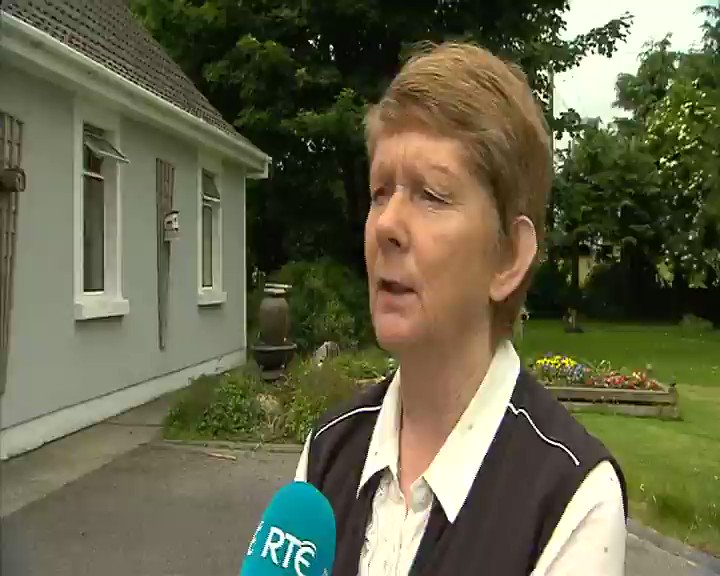
Historian Catherine Corless, whose research led to the discovery of infant remains at a former Mother and Baby Home in Co Galway, has said she hopes Pope Francis will acknowledge the failings of the church during his visit.


The visit to the Marian Shrine will bring him to the Catholic Archdiocese of Tuam, where the Bon Secours Order ran the home for several decades.


Following research by Mrs Corless, it was confirmed that "significant quantities" of human remains were buried in the grounds of the home.


A consultation process on how best to proceed with the investigation was completed earlier this year and the Department of Children is expected to indicate whether a partial or full exhumation of remains will take place.


Speaking today, Mrs Corless said survivors and their families were hoping that the pope would make reference to what happened in Tuam during his visit to the area.


She called on him to be mindful of the all survivors, as well as the hundreds of babies that were buried at the home.


The historian has written to the Vatican seeking a public acknowledgement of the role the church played in the lives of the mothers and infants in question.


She said that if the pope was to accept the wrongdoings of the past "it would turn the country around", as it would mean so much to so many people.


Pat McGrath
✔@patmcgrath


VIDEO: Catherine Corless calls on the Pope to acknowledge past failings of the Catholic Church during his visit to Knock. The shrine there is in the Tuam Archdiocese, where the Bon Secours Order ran a Mother and Baby home for several decades. More on @rtenews


2:58 PM - Jun 11, 2018
153
49 people are talking about this

Monday, June 11, 2018

Ordination of Catholic Priests: Christin Moreira ARCWP, Video in Spanish

Cristina Moreira 1
Impressive testimony about the priestly ordination of women in the Catholic rite and in apostolic succession. Although the Code of Canon Law forbids it, it is impossible to put doors to the field and since 2002, Catholic women have been ordained. There are already more than 200 priests who exercise their ministry in many countries of the world. They belong to the Association of Roman Catholic Presbyters (ARCWP).

Confronting Our Nakedness – Genesis 2-3 by Pastor Dawn


June 11, 2018
https://pastordawn.com/2018/06/11/confronting-our-nakedness-genesis-2-3/


My granddaughter Audrey is just four years old. A couple of weeks ago, I received a text message from Audrey’s mother Laurel about a conversation over dinner. Said four-year-old Audrey, “Who made the world?” Her mother Laurel responded, “God made the world.” To which Audrey asked, “Who is God?” Audrey’s Dad, Jeff is a lawyer responded with a marvelous answer, “God is an all-powerful spirit who is everywhere. He made everything including you.” My brilliant granddaughter Audrey took her father’s answer in her stride and just like a four-year-old does, she pushed her parents even further by asking, “Who made God?” Jeff and Laurel answered in unison, “You should really talk to Gran.”


While I chuckled with delight at my granddaughter’s ability to stump her parents, I couldn’t help hoping that they might have spared me the prospect of trying to answer the unanswerable question of the ages. Little Audrey’s line of questioning echoes the questions of all the generations that have gone before her. I suspect that her parents swerved her theological challenge to their answers in much the same way as generations of parents have, by passing the question back to the generation that went before them; perhaps hoping that there might be an inkling of an answer that they might have missed along the way. But even though as Audrey’s Gran, I have spent the better part of my adult life dwelling in Audrey’s questions about the nature of reality, when it comes to questions about who made us, and who made God, all I can really do is look back to the wisdom generated by the generations who have gone before me. Just like my granddaughter, each answer that I discover, only generates a deeper more piercing question that leaves me to cope with the MYSTERY that lies at the very heart of reality, that which is beyond every answer, beyond the beyond, and beyond that also. So, this morning as we peer back beyond the beyond, we turn our attention to a story that has been handed down from generation to generation.

Genesis, the very name of this the first book of the Torah, genesis means the beginning. But don’t let the name of this ancient book fool you into believing that it will reveal the answer to age old questions. For we know that Genesis is but the beginning of a multitude of questions. Most of us have heard the answers that have been wrestled from Genesis so many times that we have already formed opinions about the stories in Genesis based on arguments about whether or not the creation stories are literally true. I have little or no interest in such childish arguments, as our friend Dom Crossan insists, it “is not that those ancient people told literal stories and we are now smart enough to take them symbolically, but that they told them symbolically and we are now dumb enough to take them literally.” Let’s just agree that the mythological stories contained in the book of Genesis were told to symbolize the nature of reality.

Let’s also demonstrate that we are grownups and do our best to move beyond the simplistic theological answers that have been offered to explain the symbolic meaning of these stories. When it comes to the myth of Eve and Adam, the answers that have been offered for generations have led us down the garden path in ways that have allowed our culture to destroy the garden. For far too long know the church and indeed our culture has looked at this familiar tale as if we’ve got it all figured out. But no matter how many times I read this story, I never fail to find some new detail that reveals something about this myth that I’d never grasped before.

So, this morning rather than focus on the abusive habits religious types have when it comes to the interpretation of this particular text, I’d like to explore this story as if we’d never ever heard it before. So, forget about “The Fall.” This story is not about the theological concept that humans were created as perfect beings and would have stayed that way, if only Eve hadn’t succumbed to temptation and then tempted Adam to do likewise. Apart from the millennia of misogyny that has resulted from that particular patriarchal reading of the text, it’s just plain bad theology to suggest that humans were created in some perfect state and that thanks to Jesus we can find our way back into the garden.

The MYSTERY responsible for creation created humans thousands and thousands, no millions and millions of years before this story was ever told and humans have been evolving ever since. We were not created perfect, only to fall from grace and be punished by a vengeful Father, who can’t abide the idea of his creatures growing up, so he kicks them out of the garden, condemning them to a life of hardship and toil, who later relents and demands a blood sacrifice in order to save us from ourselves. This misinterpretation of Scripture is what comes from a particular reading of the text that masquerades as a literal interpretation of the story. So, let’s forget that interpretation and read the text.

Eve and Adam may not have been the first people to walk the earth, but these characters certainly bear a striking resemblance to every person who has ever walked this earth. In the Genesis story, the Creator, whose name in Hebrew is El Shaddai, which translated literally means “She Who Has Breasts or Breasted ONE.” If only the translators would take that literally for a change!Anyway, El Shaddai, reaches into the dirt, in Hebrew the ‘adamah and creates ‘adam, which literally means earth creature. In Hebrew this play on words is meant to set you up for the punch line, but sadly the joke loses something in the translation and we rarely even see the punch line coming. So, the earth creatures created in the image of the Creator, male and female, these earth creatures, Eve and Adam, are placed in the Garden of Eden, in order that they might garden. Some translations suggest that they are placed in the garden to “till” the earth, but the Hebrew word in the text is often used to mean serve. That changes things, because “till” implies some sort of control, where “serve” makes it clear that they were there to care for the earth. Older translations also translate the Hebrew word for “protect” or “guard” as “keep.” This leaves the impression that as keepers we own the earth, when the Hebrew literally says that we are to protect or guard the earth.

There are lots of lovely details that are lost in our translations. But let’s move on to the temptation that drives this myth. El Shaddai, the Breasted ONE insists that the earth creatures may eat as much as they like from any of the trees in the garden, except for this one very special tree. Of that tree they may not eat. Now, right away you know this is a set up because everybody knows that forbidden fruit tastes great. Put a bunch of kids in a room full of toys; tell them they can play with all the toys, except for that shiny one smack dab in the middle of the room. Everyone who has ears to listen, already knows which toy the kids are going straight for. Our ancestors weren’t any less intelligent that we are. They knew that the storyteller was setting them up. What they didn’t expect, and how could they in their patriarchal world, how could they expect that the protagonist in this story would not be Adam. Adam just stands there, quiet as a mouse, and as subservient as can be doing whatever Eve tells him to do. Now the storyteller has the attention of our ancient ancestors. There they are in the Garden of Eden, Eve and Adam, and Eve is obviously the power broker here because who does the snake march up to but Eve. Pardon the pun, but it really is all about Eve.Eve and that tree! Not just any tree, but the tree of knowledge of good and ….what? “Evil” you say, but the Hebrew text doesn’t say evil. The Hebrew text uses the word “ra” which simply means bad, not evil….and in Hebrew the phrase good and bad is simply a way of saying, everything. A literal translation of the Hebrew text would read the tree of knowledge of everything.

So, the Creator God, El Shaddai, who presumably is the possessor of the “knowledge of everything,” wants to be certain that God’s created creature does not seek such vast and intimately divine knowledge. Except if God knows everything, then surely God knows that that’s exactly what the creature is going to go after: knowledge of everything. That’s what we are, seekers of knowledge. That’s our quest to know everything, to possess the knowledge, to be like God: the ultimate temptation. What a set up!

The storyteller has us right where any storyteller wants their listeners: wanting more. And onto the stage comes the cleverest of all the Creator’s creatures, the serpent. But not just any serpent, this one is described as “arum.” Careful, we’re being set up for another play on words: “arum” is the Hebrew for clever. Not to be confused with “arumin” which means naked. For the cleverness of the snake will confront the nakedness of the earth creatures.

“Did God say, ‘You shall not eat from any tree of the garden?’” The question is both a request for information and a challenge. Eve responds to the challenge by amplifying God’s command. “We may eat of the fruit from all the other trees in the garden. But of the fruit from the tree in the middle of the garden, God said, ‘Don’t eat it and don’t touch it, or you will die.’”

But in the story, God never says “don’t touch it.” The storyteller has Eve add this as if to hint at her desire for that which is forbidden. But the arum serpent, the clever snake, insists: “Die? You won’t die. God knows well that on the day that you eat it, your eyes will be opened and you will be like gods, knowing everything!”

Now even we are tempted, because the fruit of that tree holds the promise of divine knowledge; eat it and you will be like God. The woman falls silent, her eyes are fixed on the tree, she is tempted beyond measure. The woman knows that the tree was enticing to the eye and now sees the fruit is good to eat—that it is desirable for the knowledge it can give.

So, Eve took some of its fruit and she ate it. She gave some also to the man beside her, and he ate it. Then the eyes of both of them were opened, and they realized that they were arumin. Not arum – clever, but arumin naked.

Now get ready because here comes the punch-line and if you’re not very careful you’ll miss it.“Then the eyes of both of them were opened, and they realized that they were naked. So they sewed fig leaves together and make loincloths for themselves.”Our ancient ancestors would have been rolling in the aisles. “Fig leaves” Ha! What a joke! You’ve got to be kidding me. Have you ever seen a fig leaf? Have you ever touched a fig leaf? Why the mere thought of a fig leaf anywhere near their genitals would have sent the average ancient listener into gales of laughter.

What a joke! The ancient Hebrews knew all too well what fig leaves feel like. Talk about rough and prickly! How many of you would ever consider sewing the roughest sandpaper together to use as underwear! Why it’s ridiculous. They sewed what together? Fig leaves indeed! By now the ancient Hebrews would have collapsed into laughter. But like most plays on words, there’s truth to be found in this pun. The adam, earth creatures, created out of the adamah, the dirt, see the tree of knowledge of everything as the key to becoming like God and so trying to be arum, clever, they succeed only in exposing their arumin, nakedness and they are reduced to sowing fig leaves together to hide their plight.

Scratchy loincloths, guaranteed to irritate them. That’s the whole point of this little story. When human beings try to become like God, they sew fig leaves together to cover their nakedness, because, as we ought to expect, God is all too right about us. We simply cannot eat of the tree of divine knowledge; it is far too dangerous for us human beings to do so. Whether our fig leaves are nuclear ones or fossil fuel or monetary ones, they remain scratchy fig leaves nonetheless. God made us to serve and protect the great Garden of God. But we would rather control and plunder and take over, forgetting that God is creator and sustainer of all that is and ever shall be and we stand, over and over again, scratching ourselves in our fig leaf loincloths.

Today the earth continues to shake, and the alarms continue to sound warnings that the waters may surge. Earthquakes and volcanic eruptions are evidence that the earth continues to evolve. But the birth pangs of the Earth as painful as they are, are magnified by our desire to know everything. So as reactors threaten to melt down and spew their toxins into the air, and plastics strange sea creatures, the ancient storytellers warning rings in our ears. “You may eat as much as you like from any of the trees of the garden—except the Tree of the Knowledge of Everything. You must not eat from that tree, for on the day you eat from that tree that is the day you will die—yes, die.” And yet we must eat of the tree. For that is who we are. That is who we were created to be: seekers of knowledge, ever-evolving.

Have we succumbed to temptation and chosen what appears to be knowledge of everything, the manipulation of atoms, because it provides what has been hailed as safe, clean, efficient power? Our efforts to cover our nakedness have left us with little more than uncomfortable loincloths, exposed to the elements we remain in all our cleverness, naked, our eyes fixed on the meeting of two mad earth creatures who stand between us and nuclear folly. So, what do we do? Do we stop eating of the tree of knowledge? I think not. For that is who we earth-creatures are, constantly evolving, constantly striving, constantly wanting to be like God; in whose image we long to believe we were created.

So, we will go on partaking of the tree of knowledge, but we must do so aware of the fact that we are not God, aware of our need for the MYSTERY that lies beyond the beyond. Aware that our MYSTERY lives and breathes, in with, through, and beyond us and so when this task of evolving on this ever-evolving earth, becomes dangerous, and our sisters and brothers in this grand enterprise suffer the from the birth pains of creation, we must remember who we are and whose we are and reach out to our fellow gardeners to aid them in their nakedness. Only each time we do, we must stitch together loincloths that are less irritating than the last. We must try again and again. Mindful of all that we have learned from those who have gone before us, not repeating the mistakes of the past, but striving to do better, evolving, into all that we have been created to be. Trusting that the MYSTERY at the core of reality, our Creator, El Shaddai, the Breasted ONE will not leave us alone in the wilderness, for She will nurture us at her Breast, with tenderness and compassion as She weeps at our misfortunes and delights in our growth. For like a good mother, She knows that she can’t do it for us. So, She comforts us when we fail and cheers us on when we succeed. Today, when the evidence of our hubris threatens Her creation, She weeps for us and waits for us to be what She knows we were created to be: servers of the earth and sisters and brothers to one another.

So, what shall I say to my darling Audrey, when she asks her Gran, “Who made God!” “I don’t know Audrey.” For I don’t know, my friends is an answer; an answer that leads us beyond answers. I shall tell my darling girl that she is a daughter of Eve who, just like her, wanted to know everything, but we cannot know, not yet anyway, but wanting to know is who we are, so ask away my darling girl, ask away. The MYSTERY you seek is all around you. I will reach into the earth from which she was made and I will tell her that the answer to her question lies beyond the earth, beyond the stars that gave birth to the earth, beyond the knowledge of all we now know, beyond the beyond and beyond that also. Then I will take her by the hand and together we shall go for ice-cream and together we will evolve in the LOVE that is the Breasted ONE in whom we live and move and have our being. Let it be so, El Shaddia. Let it be so. Amen.

I am indebted to the exegetical work of John Holbert for the insights into Hebrew humour!

A Tribute to Joe Adler RIP, Member of MMOJ Community, Sarasota, Fl.

https://www.caringbridge.org/visit/joeadler

Obituary: https://fredcdames.com/tribute/details/5145/Joseph-Adler/obituary.html


We at MMOJ treasured Joe and Jodie as loving, enthusiastic members of our community over the years. 
It was a joy to see them in the winter season when they made Sarasota their home.
They were  enthusiastic supporters of the Association of Roman Catholic Women Priests https//arcwp.org

Joe often cut out articles to share with me about the growth of our movement that he found in articles in the National Catholic Reporter and other media that supported the ordination of women priests in the Roman Catholic Church.
This year, on one occasion, he took delight in introducing us to some of  his family members who accompanied him to one of our 4PM liturgies. 
We were so excited to hear the voices of little ones and experience their glee as our members are mostly retirees living here or visiting to escape the cold weather up north. 
On another occasion this year, Joe shared a wonderful homily starter on our social justice mission highlighting some practical steps our community could take to advance inclusivity and equality in our Church and reach out to the marginalized and oppressed in our world. 
He always wanted to spread the word about our MMOJ community that numbers between 20 in the summer and 50 in snowbird season. 
I am also grateful for his generous donations to our  MMOJ Community and to  the Association of Roman Catholic Women Priests. 
Joe was proud of us and a happy member of our warm and welcoming faith community.
We have lost a dear brother and loving friend, whom we will never forget.
We will keep Joe and your entire family in our loving thoughts and prayers as you grieve his loss and celebrate his life.
 Bridget Mary Meehan ARCWP

Joseph “Joe” Adler 

August 30, 1930-June 9, 2018


The Adler Family would like to extend an invitation to a celebration of Joe’s life. Joe has made a great impact in the lives of so many people and we look forward to sharing memories and celebrating the amazing life he lived. 


A celebration mass will take place at 11:00 am on Saturday, June 16, 2018 at the Cathedral of St. Raymond’s (addresses below). 


The celebration and shared reflection of Joes impact on your life will continue Saturday from 1:00-3:30 in the Victorian Ballroom at The Jacob Henry Mansion Estate. 


We look forward to seeing everyone on Saturday to celebrate our dear Joe! 


Much love,

The Adler Family 


Locations:

Cathedral of St. Raymond 

604 N. Raynor Ave

Joliet, IL 60435


Jacob Henry Mansion

Victorian Ballroom

15 E. Richards St. 

Joliet, IL 60433

"Sermon to Village Church" by John Pavlovitz


Pavlovitz, J. (2016) Sermon to Village Church, NC. https://youtu.be/0vSOi1ayqwY

Book:
Pavlovitz, J. (2017). A Bigger Table: Building Messy, Authentic, and Hopeful Spiritual Community. Louisville, KY: Westminster John Knox Press.